The Bawah Reserve destination is a premium getaway where gentle tourism and hands-on conservation work efficiently side by side. Under the banner of the “Guardians of the Wilderness,” travellers and locals collaborate as equals to protect and “restore” the surrounding nature on land and at sea.
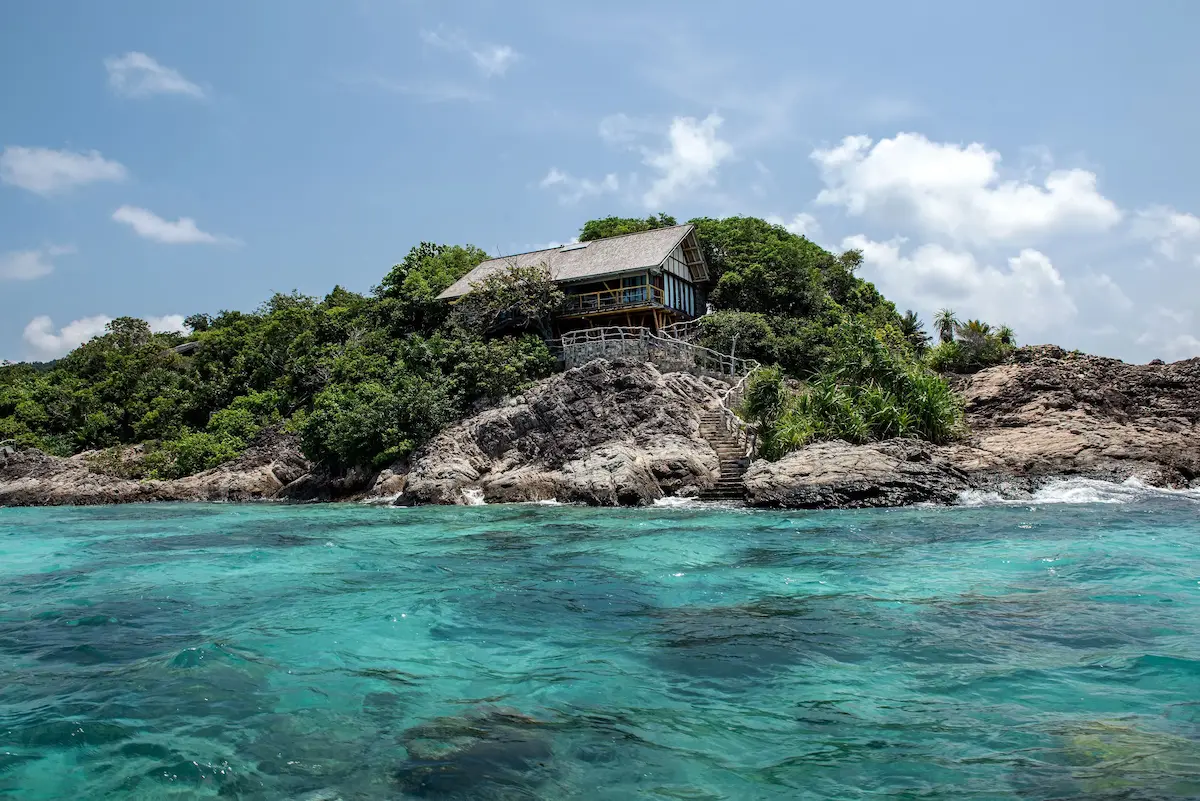
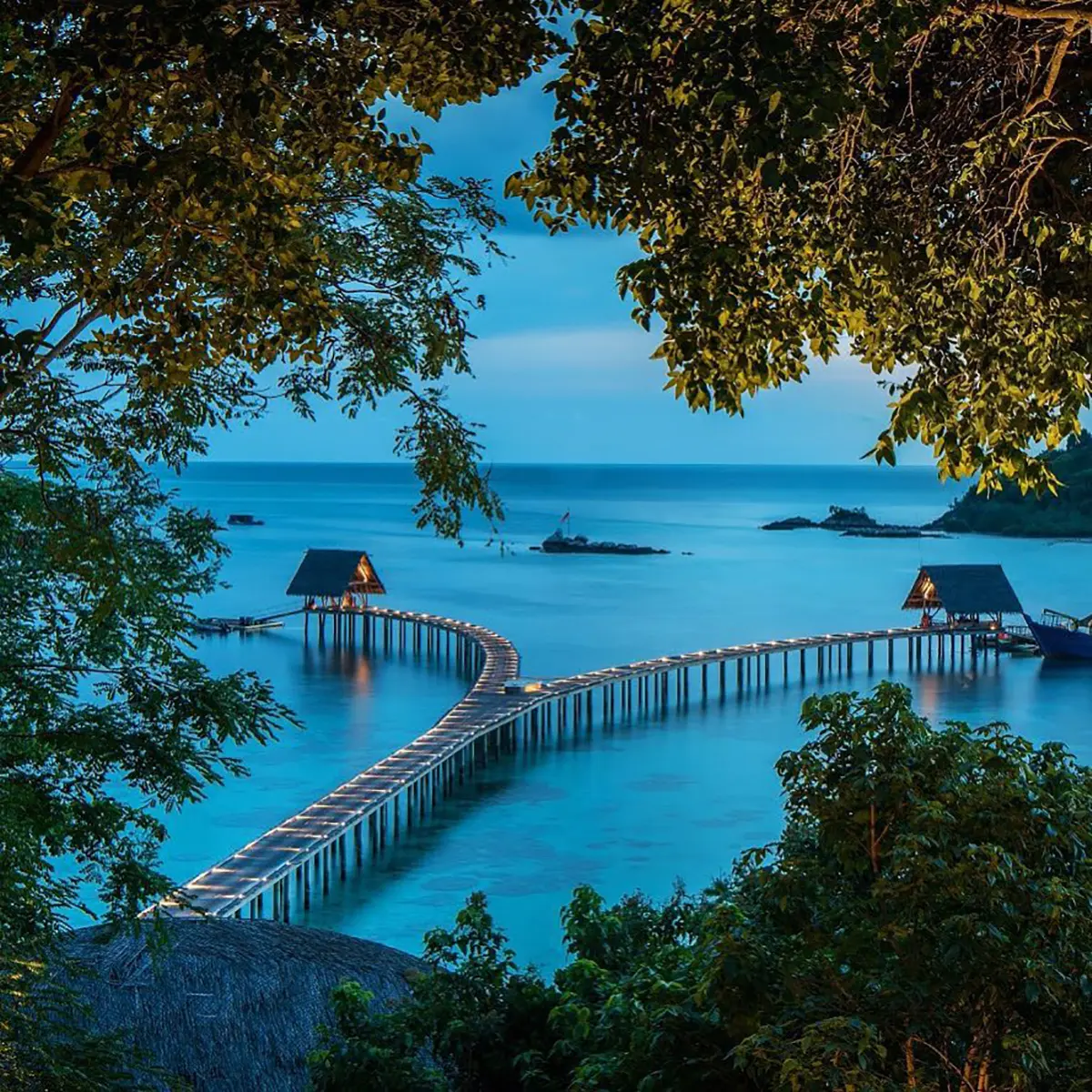
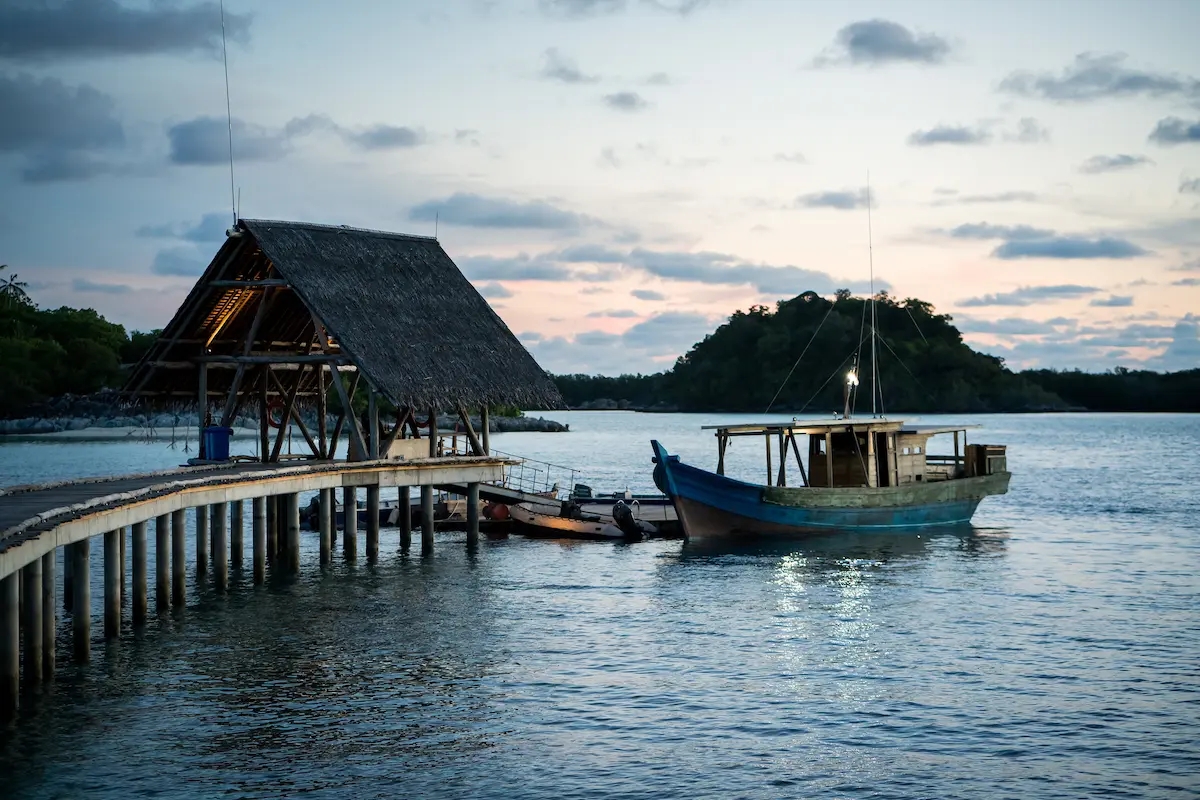
Bawah Reserve comprises six pristine islands of the Anambas Archipelago, lying around 150 nautical miles north-east of Singapore between the Malay Peninsula and Borneo, blessed with species-rich coral reefs, tropical rainforest and white sandy beaches. Scattered gently across them, and tailored to local conditions, are accommodations for holidaymakers.
The Bawah destination supports the independent Anambas Foundation in its efforts to preserve the region's nature and biodiversity, and to raise awareness among the local population of environmental issues and the need for conservation measures.
Specifically, this involves protecting marine life, above all the sea turtles that lay their eggs here and the corals threatened with bleaching by rising water temperatures, as well as preserving the forest ecology and the mangrove forests, with all their effects on biodiversity. Added to this is support for local residents, who are given access to education and a livelihood. Another central priority is the ongoing fight against environmental pollution, primarily from plastic waste and its breakdown products, both on land and in the sea itself.
The Role of Tourism
The region grapples with a wide range of environmental threats, some global, some regional in origin, and is making various efforts to safeguard its still largely untouched, natural state for the future. A core insight here is that tourism must be woven into these efforts; the point is not to forgo the value that tourism creates, but to understand it as a chance and a lever to protect nature and support the local population.
Challenges
Rising sea levels and ever-warming waters are having an enormous impact on coral growth and on the mangrove belt within the atoll. The corals bleach and die off, the mangroves retreat, their aerial roots sinking beneath the sea. Added to this is the pollution of the ocean with plastic waste. Plastic comes in all sizes; particularly dangerous to aquatic fauna are the small and tiniest particles, with the well-known consequences. But there is plenty of “work to be done” on land too: the littering of beaches, the over-exploitation of forests, be they mangroves or old-growth trees, the illegal collection of turtle eggs and much more besides. All of this can only be curbed or prevented if the population is, on the one hand, made aware of the issues and, on the other, given a perspective for the future through conservation and tourism, in other words, if it gains access to education and work. This outlines the scope of the foundation's work and that of the destination supporting it.
Guardians of the Corals
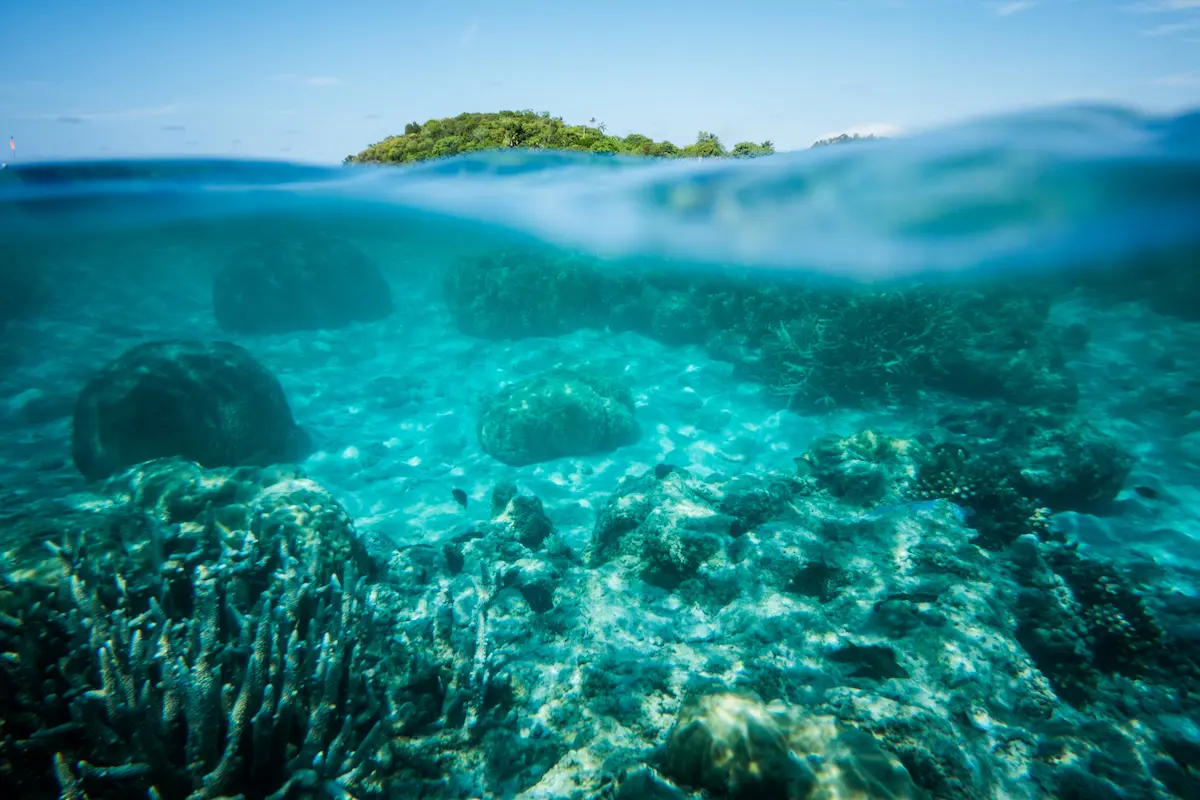
According to the US National Oceanic and Atmospheric Administration and the International Coral Reef Initiative, we are currently experiencing the fourth global coral bleaching event in roughly ten years. The cause is the rising ocean temperature.
The high temperatures disrupt the exchange between the corals and the microalgae (zooxanthellae) living within them. These symbiotic partners contribute significantly, through photosynthesis, to the corals' energy budget and to their colouration. Under heat stress they turn toxic and are expelled by the corals, which helps in the short term but means death in the long run. What remains are white limestone skeletons. Bleaching also occurs temporarily for natural reasons, which does the corals no harm, as they recover from it regularly. But for some time now these events have been growing in frequency and scale, and recovery is no longer able to take place.
The only real remedy would be a global slowing of the temperature rise, for if the pace of change eases, the corals, like many other animal and plant species, can adapt to it. Locally, raising corals in the laboratory and subsequently “releasing” them into the wild can limit the damage, especially when coral species that are more robust in this respect are used. This is precisely where the Bawah Anambas Foundation comes in.
In detail, this involves monitoring, surveying and keeping watch over the situation, as well as raising and replanting suitable corals. The Foundation also takes some original approaches: people anywhere in the world can sponsor “baby corals.” When these are transferred from the laboratory into their natural habitat, they are adorned with small labels bearing the names of their “adoptive parents.”
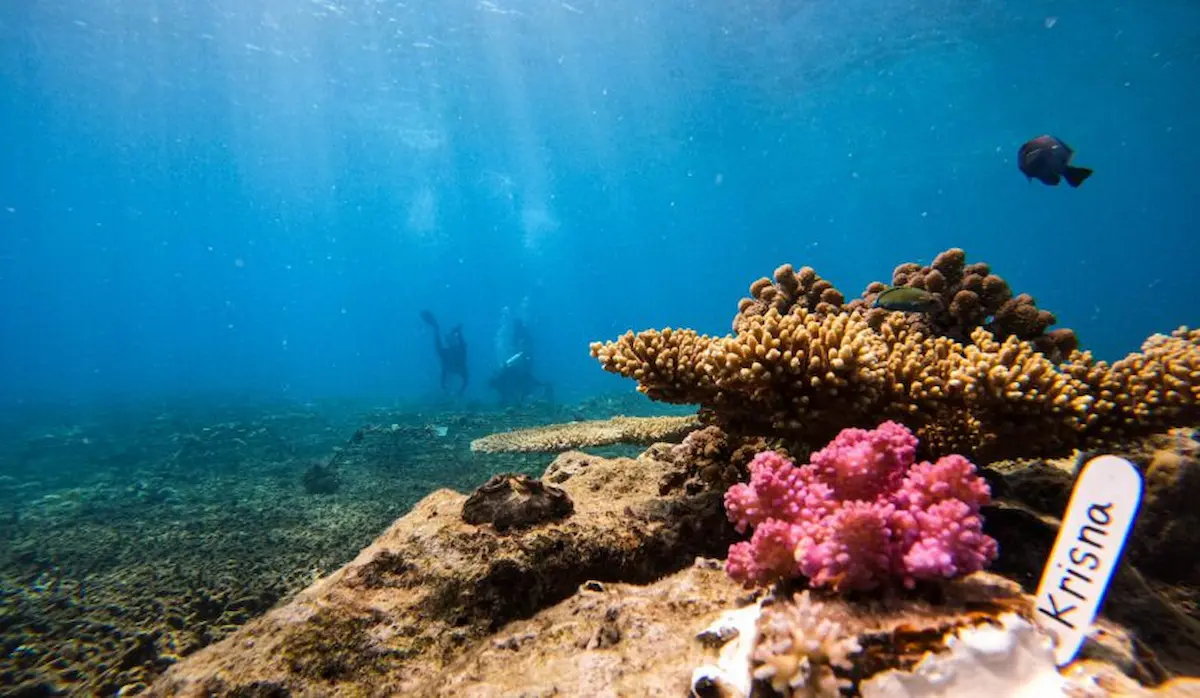
The coral banks, strengthened in part with the help of settlement aids, are watched over by trained divers to allow them to grow undisturbed by humans.
Planters of Mangroves
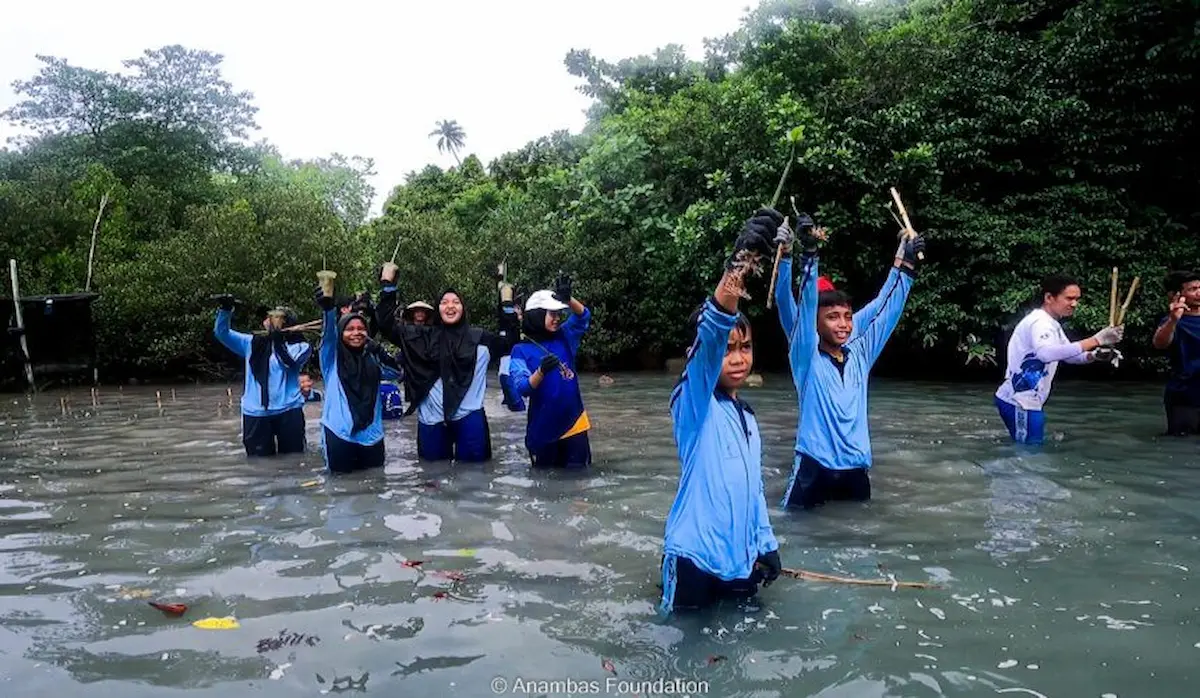
Mangroves are true all-rounders. They provide a habitat for many fish, amphibians and small creatures, shield coastlines from the pounding of the waves, aid sedimentation and store three to five times more carbon dioxide than rainforests on land. The leaves that fall from the mangroves into the water rot far more slowly than they would on land, and therefore release the gas stored within them only gradually. The main range of the mangroves lies in the Indonesian region. That is also where the principal threats are found: shrimp farming, soy cultivation, over-exploitation, territorial conflicts of interest and, as the overarching source of danger, climate change.
Here the Anambas Foundation is active with a reforestation programme.
Guardians of the Sea Turtles
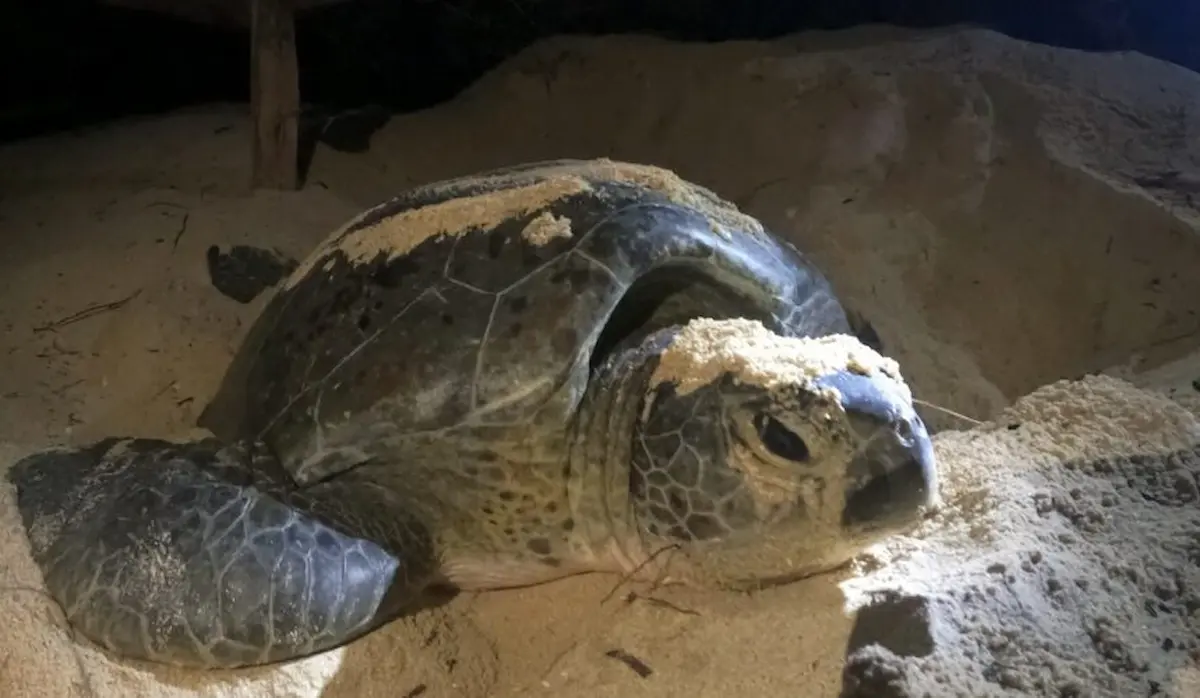
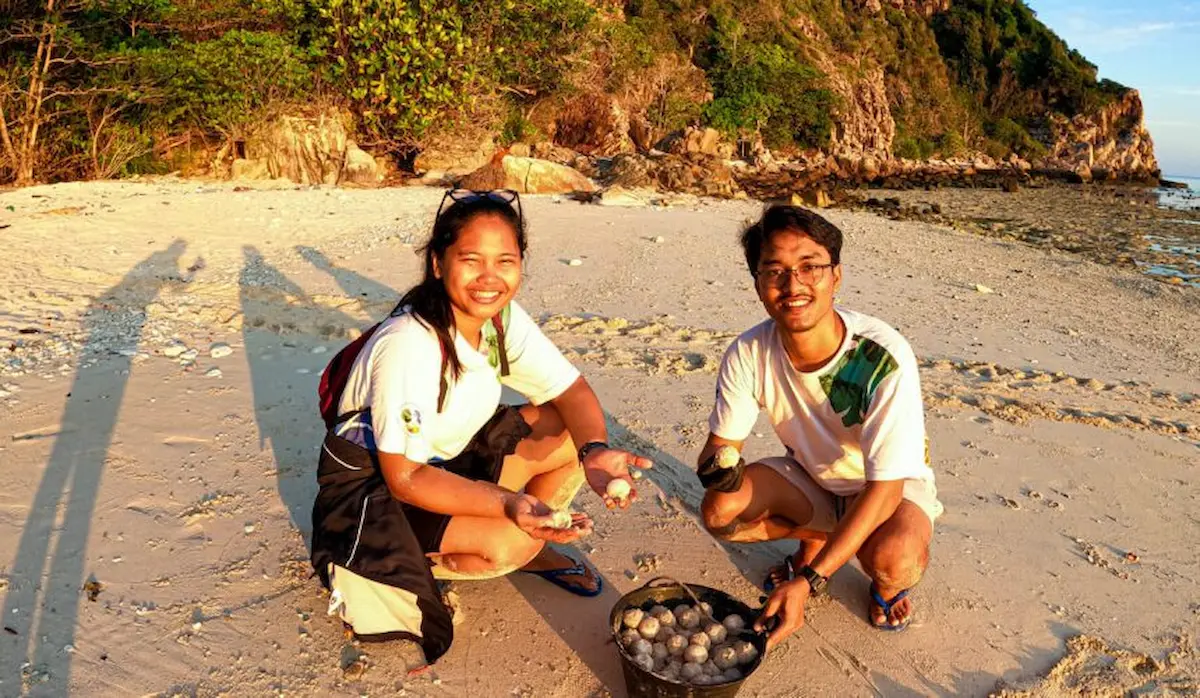
The green sea turtle (Chelonia mydas), also known as the “soup turtle,” is classified as “endangered” by the IUCN. The adult animals are hunted and prized as a delicacy, particularly in Asia; the eggs in the nests on the beach are not safe from predators, and the hatching young are threatened by lizards and birds on their way to the sea.
Caring for the mother turtles, watching over the nests and safely escorting the turtle babies through the first steps of their lives are a central field of activity for the Foundation.
“Sweeping Squad” for Beach and Coastal Waters
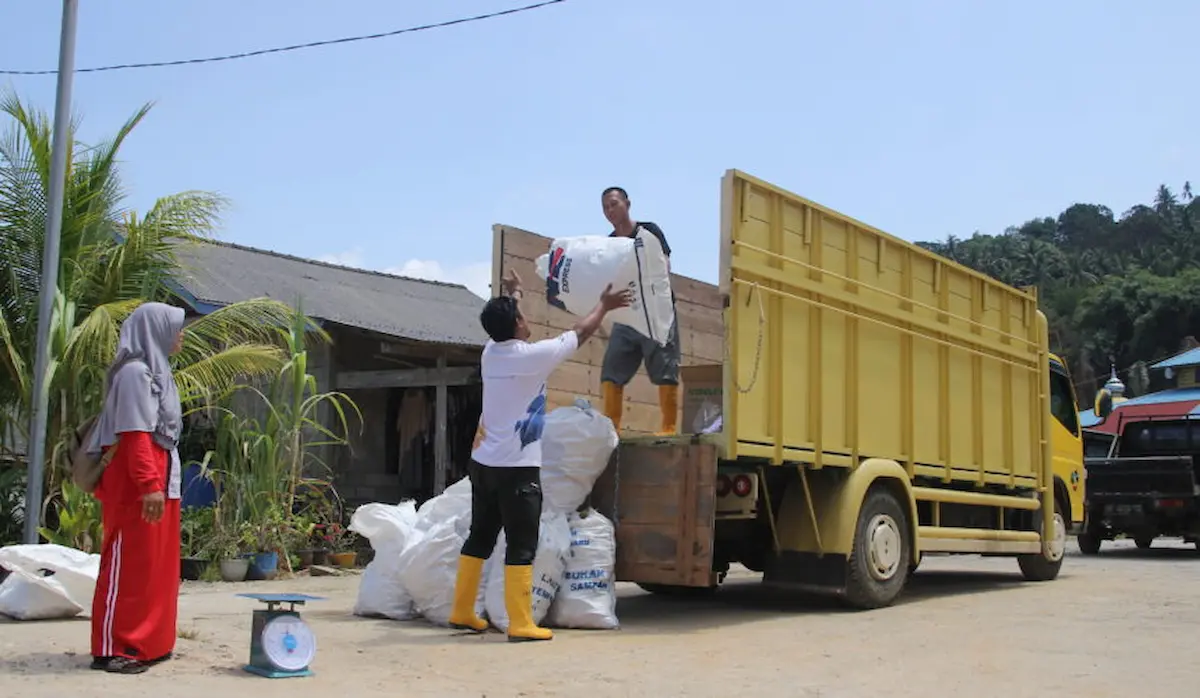
In Asia especially, awareness of the waste problem has not yet taken deep root in the local population's consciousness. Just as mangrove wood is burned, packaging, mostly plastic, is “disposed of” right where it is used or consumed. The remedy is meant to come from raising public awareness of the problem, paired with concrete, ongoing “clean-up campaigns” and the routing of waste to proper disposal, along with the establishment of a suitable system for recycling or upcycling usable raw materials.
“Agency” for Education and Job Creation
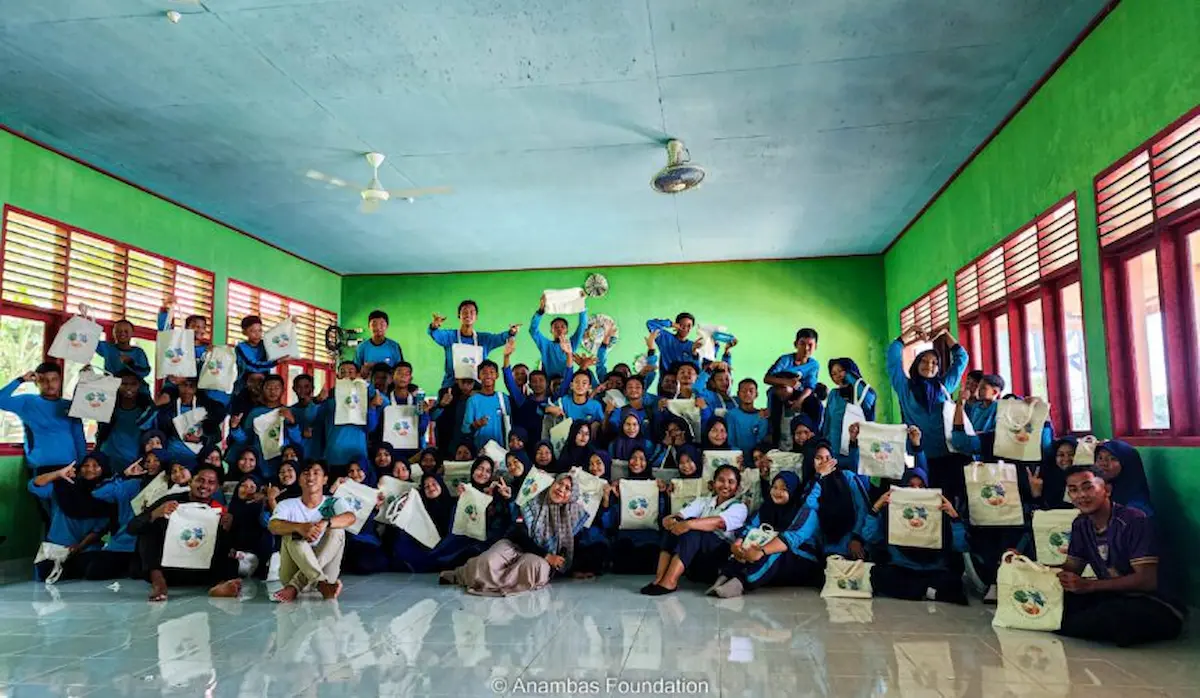
Both the resort and the foundation are aware that involving and educating the local population is essential to the long-term success of these efforts. Passing on knowledge, and language skills in particular, above all English, is therefore a focus of the foundation's work. In this way, career opportunities in tourism are opened up. Equally important in the tourism context is teaching skills for making products from the collected waste, and also, for instance, dyes from the wood of the mangroves. The result is accessories and everyday objects that are as beautiful as they are practical, such as bags, towels and woven goods of every kind, shape and purpose. For only a harmony of nature, local population and tourism players can secure the region a sustainable livelihood.
The Bawah Resort
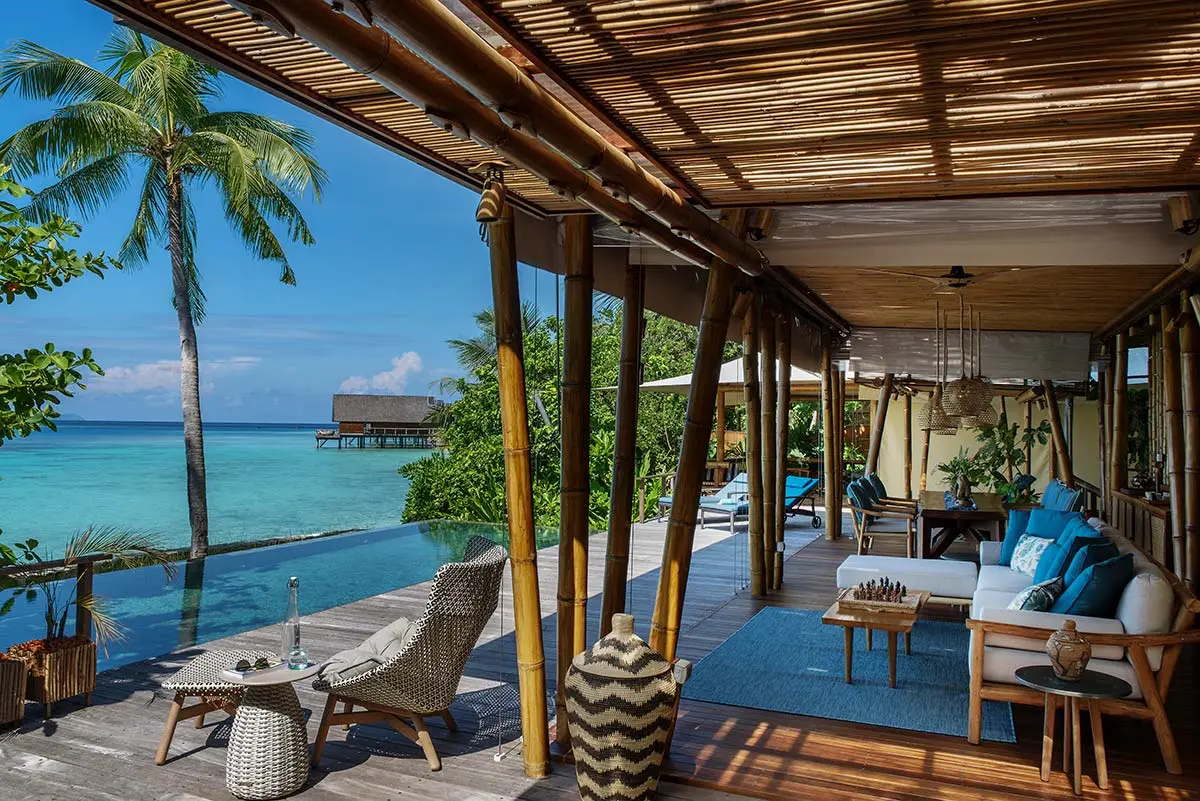
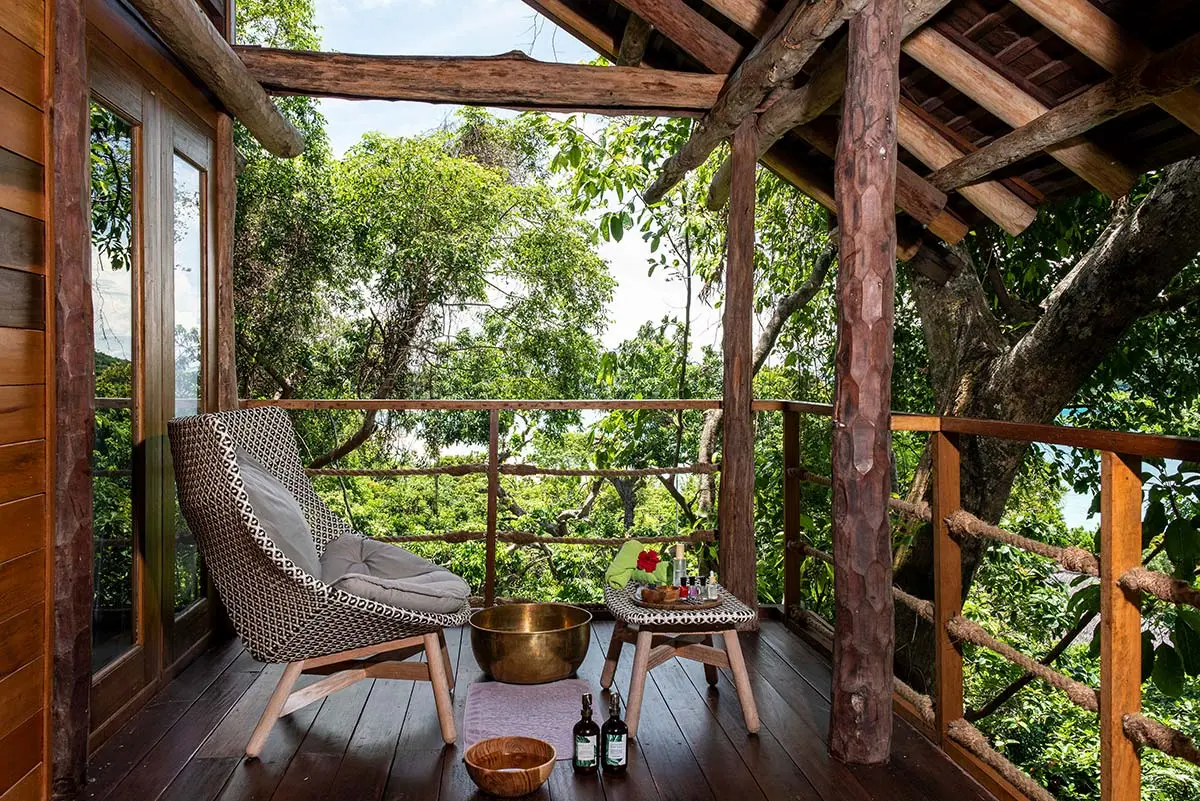
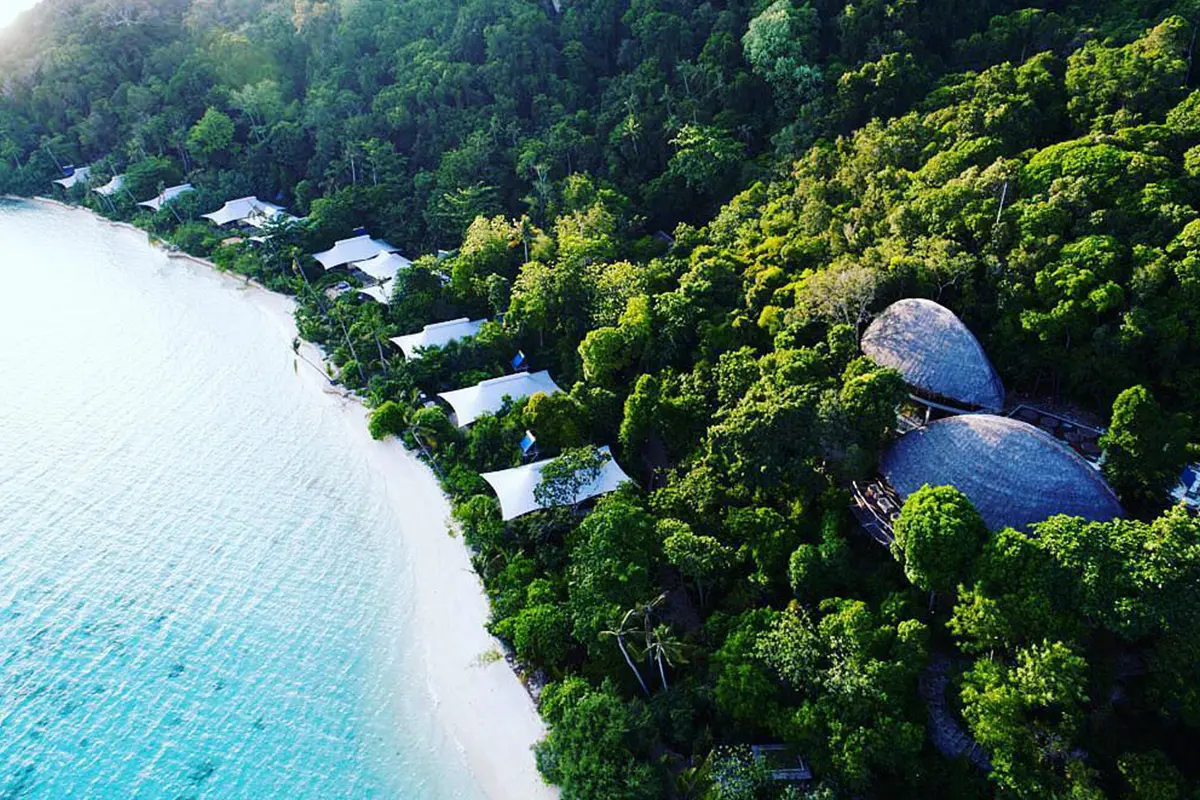
Spread across six islands, the resort's grounds extend over 300 hectares. Densely cloaked in rainforest, it boasts three sheltered lagoons and thirteen gloriously nestled sandy beaches. Guests can choose between 35 tented suites and stilt bungalows picturesquely set into the edge of the forest.
What makes the destination special is its philosophy of realising, from the very beginning, a synthesis of conservation and tourism use. All business decisions are subject to the “sustainability-first” principle.
The resort is fully up to date on all the relevant sustainability criteria. Effective waste-avoidance management is as much a matter of course as a dedicated water-management system tuned for low consumption. Energy use is constantly optimised, a floating solar array delivers absolutely clean power and also helps lower the ambient temperature. Not least, catering for guests is likewise grounded in the sustainability principle. The “Asian fusion kitchen” draws on regional produce, nothing is thrown away, and unnecessary packaging is consistently avoided.