When Queen Maria Cristina chose San Sebastián as the capital at the end of the 19th century to spend the summer season and care for her son, King Alfonso XIII., she could not have imagined the magnetic attraction this city would exert on the rest of Spain and beyond. Since then, thousands of visitors have come to San Sebastián, drawn by the mild climate, the magnificent beaches, the exquisite gastronomy and the diverse cultural offerings.
A few years later, her granddaughter, Queen Victoria Eugenia, joined Maria Cristina, and the city honored her by naming streets, theaters, hotels and bridges after them, which still retain their aristocratic charm. This has made San Sebastián one of the most beautiful cities in Spain.
San Sebastián is located in a privileged position on the Bay of Biscay and invites visitors not only in the summer, but also in the spring and autumn, as the climate is pleasant at any time of year. We decided to explore the city by electric bike, to discover both the most famous sights and hidden gems such as the university campus or Tabakalera on one day – places that have charm but are often overlooked in travel guides.
The Old Town
Our tour begins on foot through the streets of the historic Old Town of San Sebastián. At Plaza Sarriegi, we meet Hegoi from Go Local, who first leads us along Calle 31 de Agosto to Plaza de la Trinidad. Here stands the Basilica of Santa María del Coro, an impressive Baroque building from the 18th century, whose facade features a statue of the saint Sebastian. The main altar is dedicated to the Virgin of the Coro, the patron saint of the city. Afterwards, we walk to the beautiful Plaza de la Constitución in neoclassical style, whose balconies are numbered, as they were once used as boxes for bullfighting events.
A visit to San Sebastián is unthinkable without a stop at a Pintxos bar. To our surprise and delight, Hegoi took us to Casa Urola on Fermín Calbetón 20, which is also recommended in the Michelin Guide. This fantastic restaurant has a bustling Pintxos bar and a dining room on the first floor, offering traditional Basque cuisine with fresh local products and grilled fish and seafood.
Refreshed, we continue our walk to the Church of San Vicente and the San Telmo Museum, dedicated to Basque culture and history. It houses an impressive collection of ethnographic, archaeological, historical and artistic objects, which provide deep insights into Basque society. The museum consists of a former Dominican monastery from the 16th century and a modern building, which creates a striking contrast.
Discovering San Sebastián from an electric bike
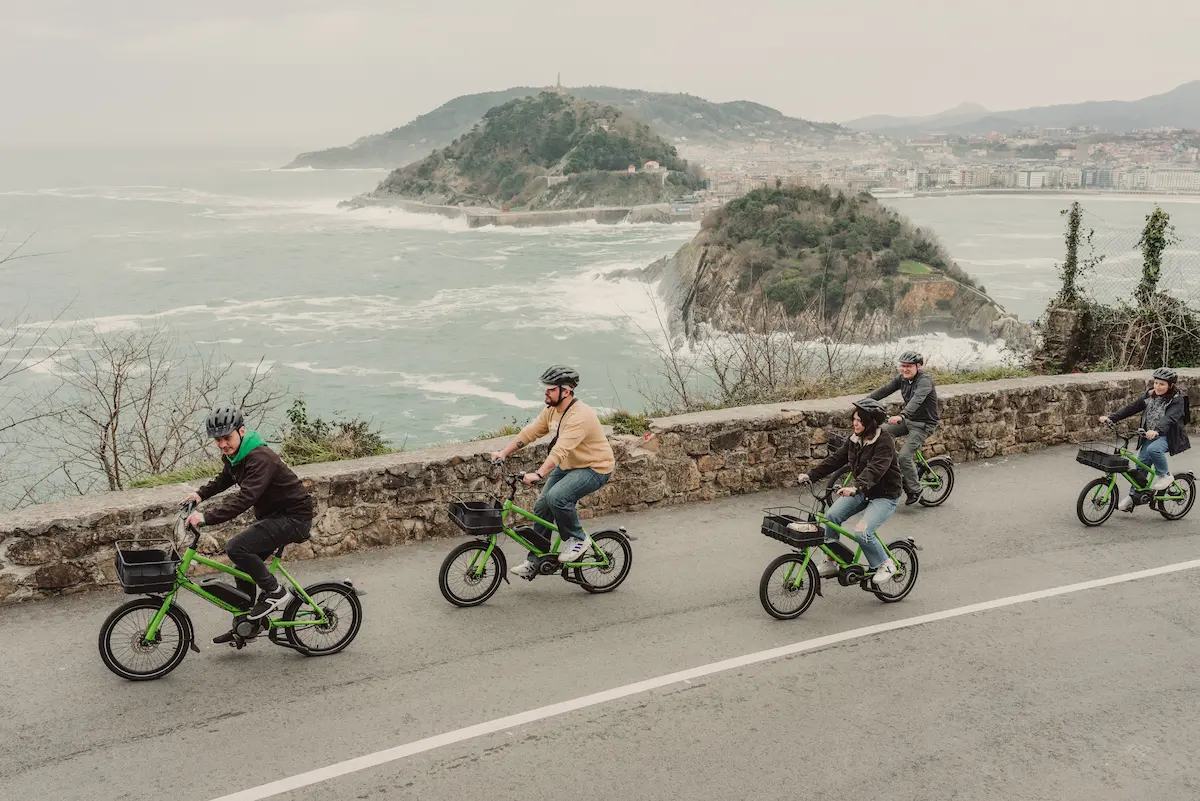
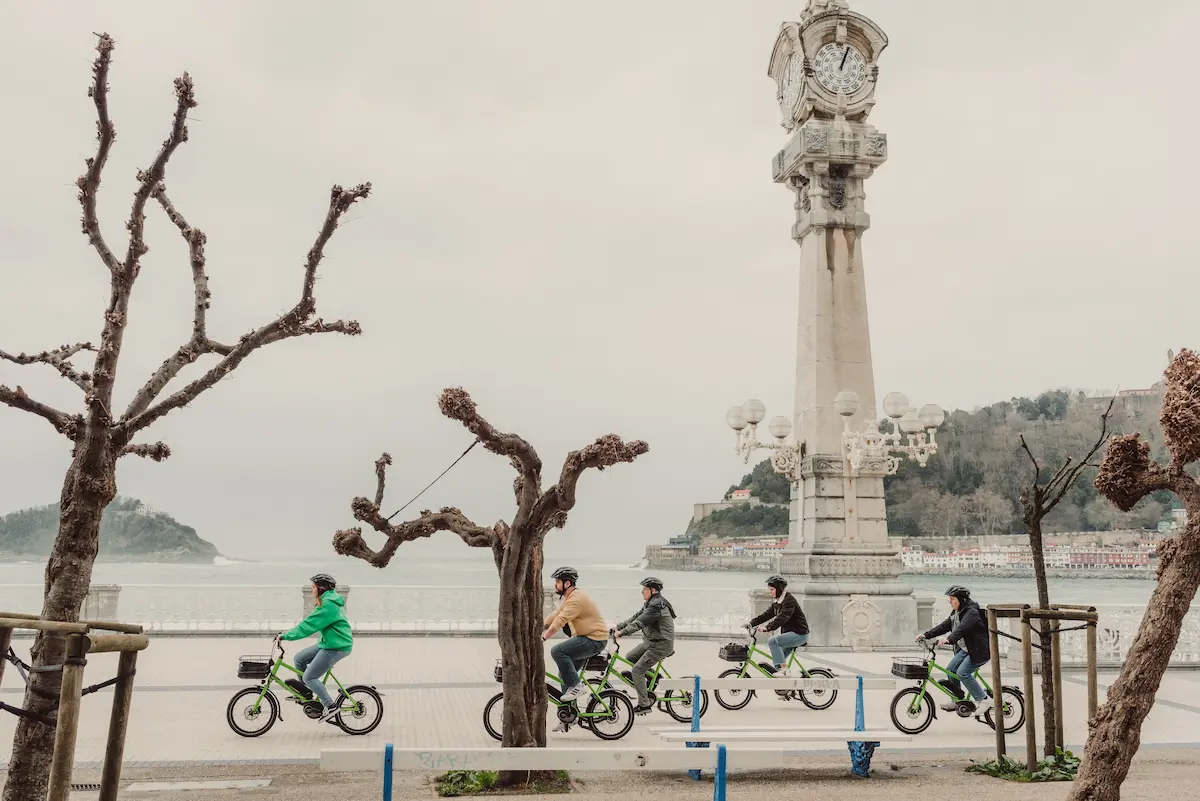
San Sebastián is ideal for exploring by bike. For those who prefer a less sporty approach, the electric bikes from „Go Local“ offer an ideal alternative. Under the guidance of Hegoi, who explained how to use the bikes and the appropriate helmets, we started our ride. Along the popular Bidegorris – as the Basque call the roads marked with red, bide means road, gorri means red – we delved deep into the history and traditions of the city.
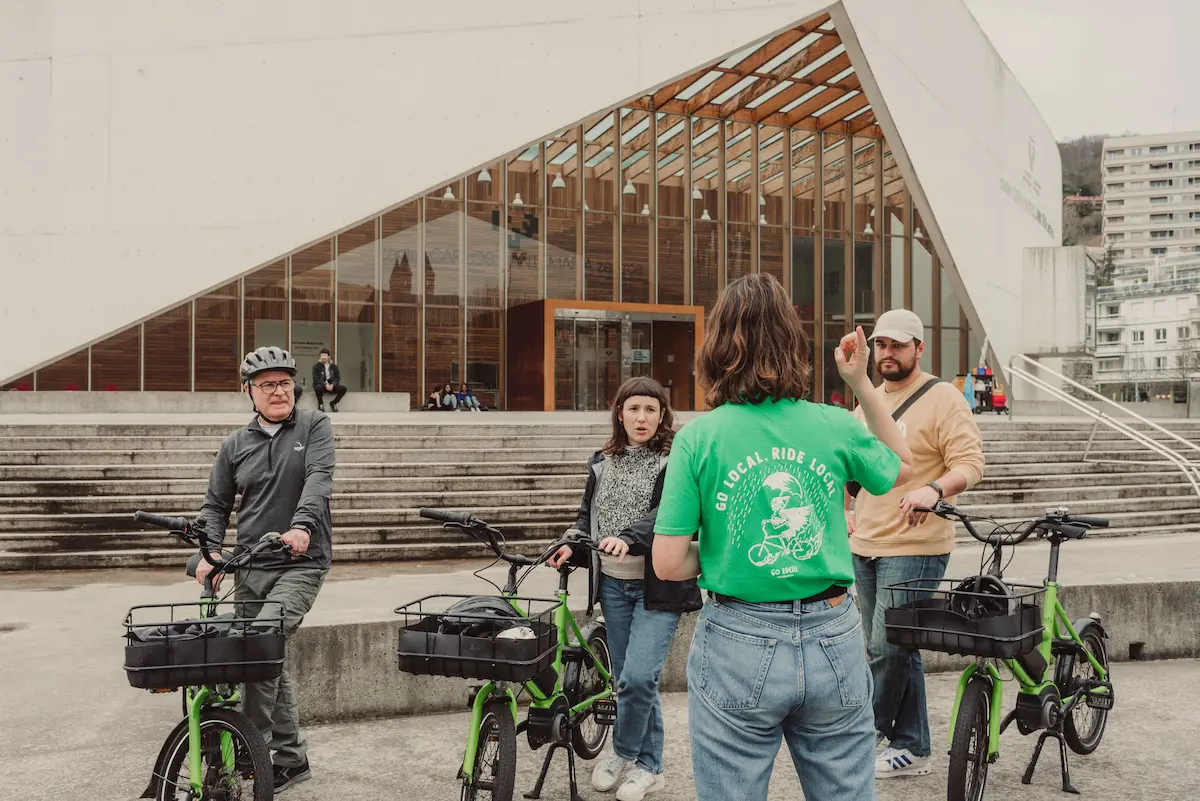
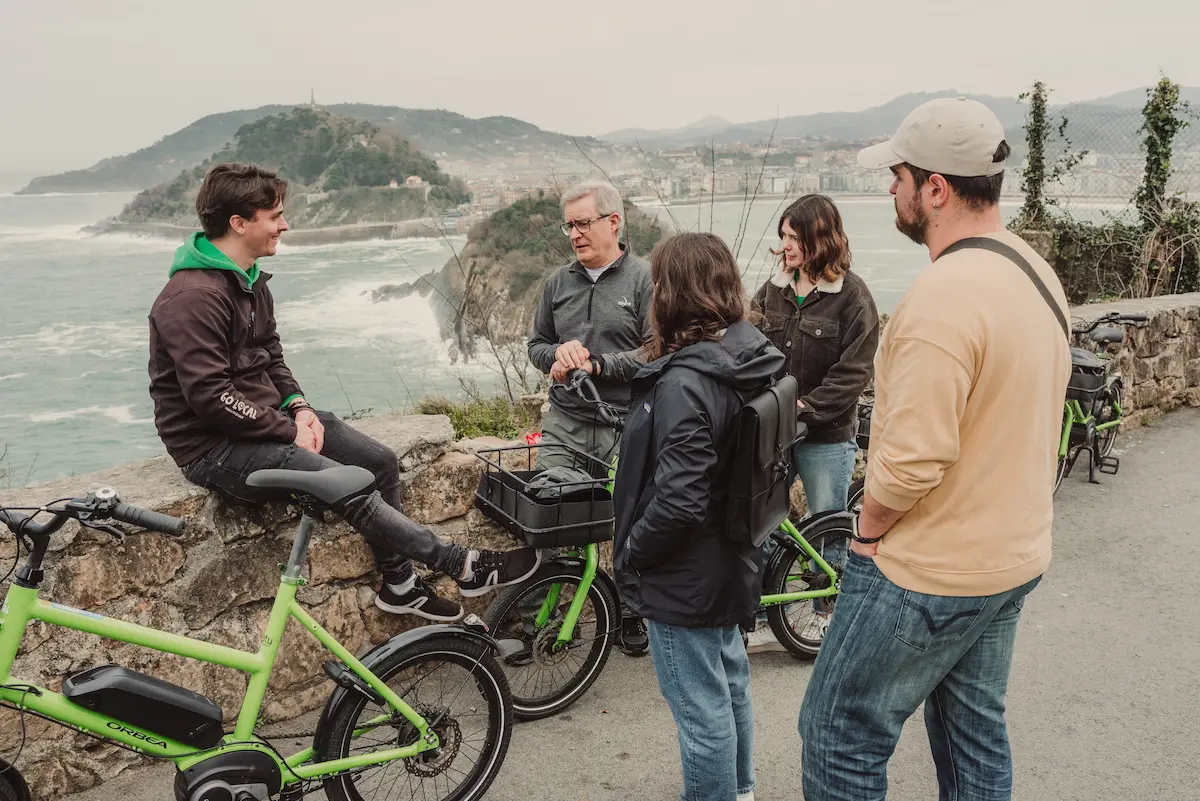
Our first stop was the impressive „Kursaal“, a modern congress center designed by the renowned Spanish architect Rafael Moneo. It rises on the edge of the bay, resembling two rocks, and unfolds its full splendor at night when the entire facade is illuminated. Right next to it is Zurriola beach, a paradise for young people and surfers who seek the powerful waves of the open sea. Unlike the sheltered beaches of the bay, Zurriola is exposed to the unrestrained forces of the Atlantic. Surf schools and board rentals make it the ideal place for water sports enthusiasts. From here, you have a spectacular view of Monte Urgull and the more distant Ulia. A special highlight is „the wall“, a place where you can enjoy the breathtaking sunsets, while surfers ride the waves.
Shortly afterwards, we reached Plaza Euskadi and crossed the Santa Catalina Bridge. We admired the magnificent Hotel María Cristina, which was opened in 1912 in Belle Époque style, with beautiful chandeliers, elegant columns and exquisite decoration inside. Shortly afterwards, the Teatro Victoria Eugenia rises, also from 1912, which combines neo-renaissance and neo-plateresque styles. Here takes place the famous International Film Festival of San Sebastián.
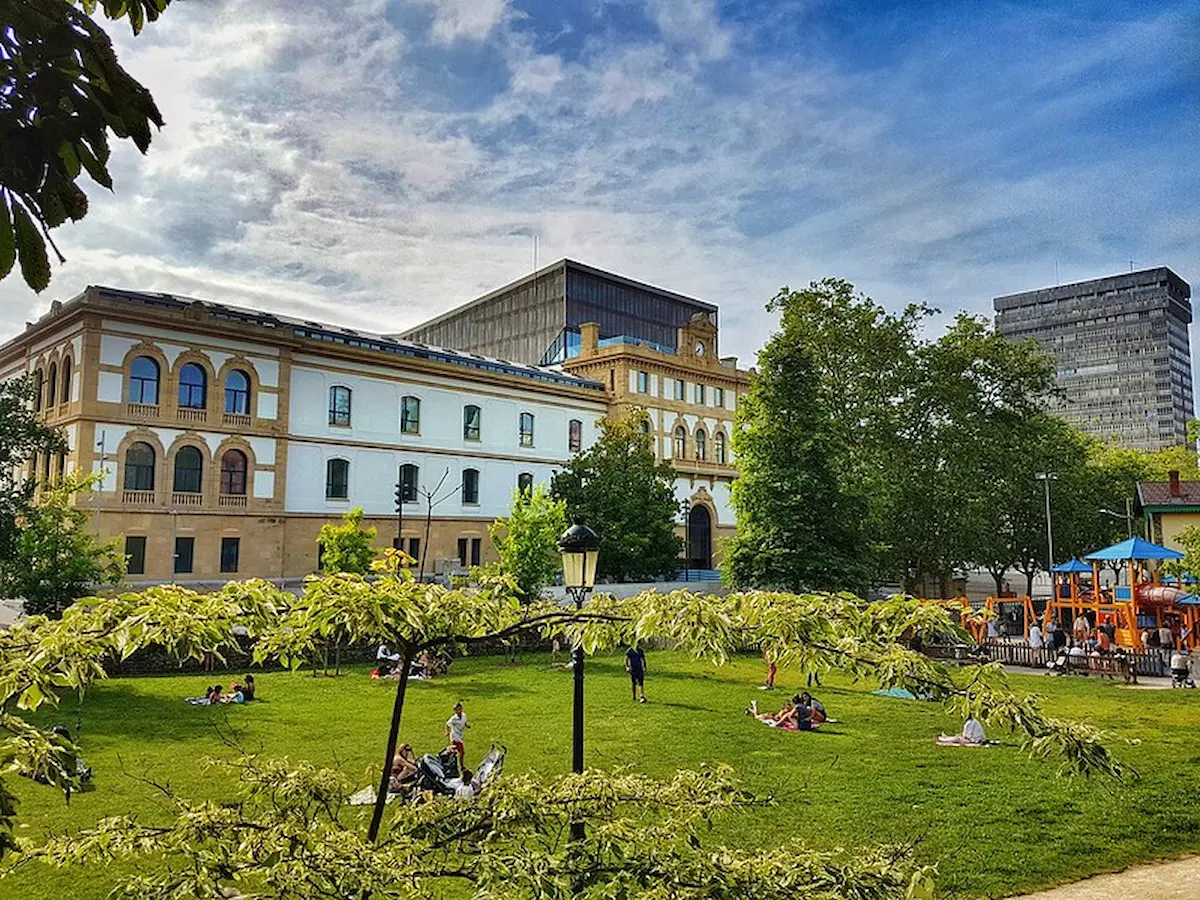
We continued our tour along the Urumea River, through the Egia district, where Tabakalera is located, a center for artistic and cultural creation in a former tobacco factory, which offers free guided tours both through the building and the exhibitions. If you are traveling to San Sebastián this year, we recommend visiting the special exhibition „Topalekuak“, which celebrates the 100th birthday of Eduardo Chillida and shows the creative universe of this great Basque artist, in particular the moments in which he defined his aesthetic ideals and his pictorial imagination. The museum houses works from various areas such as photography, dance, film and fashion. The exhibition is open until October 6, 2024.
Then we reached the Morlans district, where we discovered the longest bicycle tunnel in Europe, 1.99 kilometers long, which led us without obstacles to the other side of the city. We passed by the Gipuzkoa campus, the university of the Basque Country, with its large modern buildings, and continued our route until we reached the beautiful beach of Ondarreta.
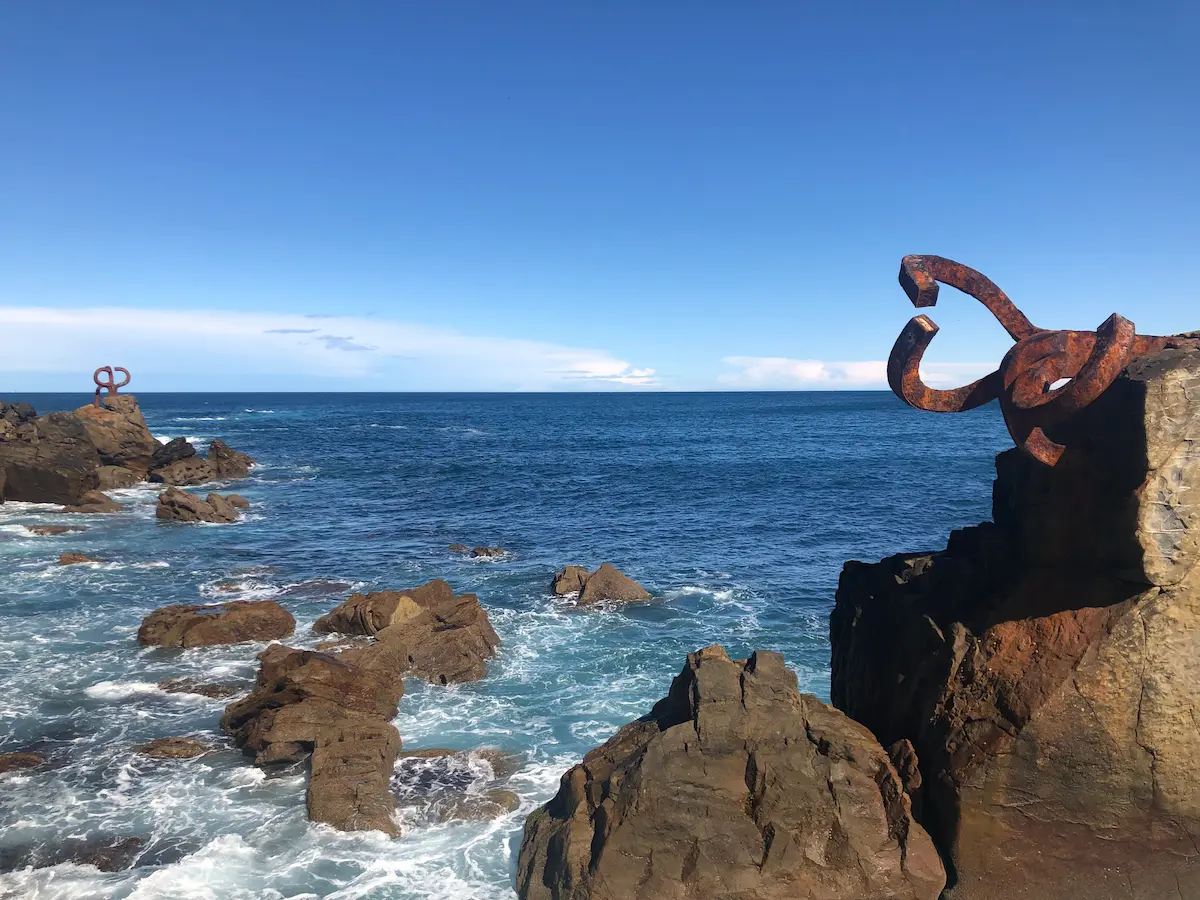
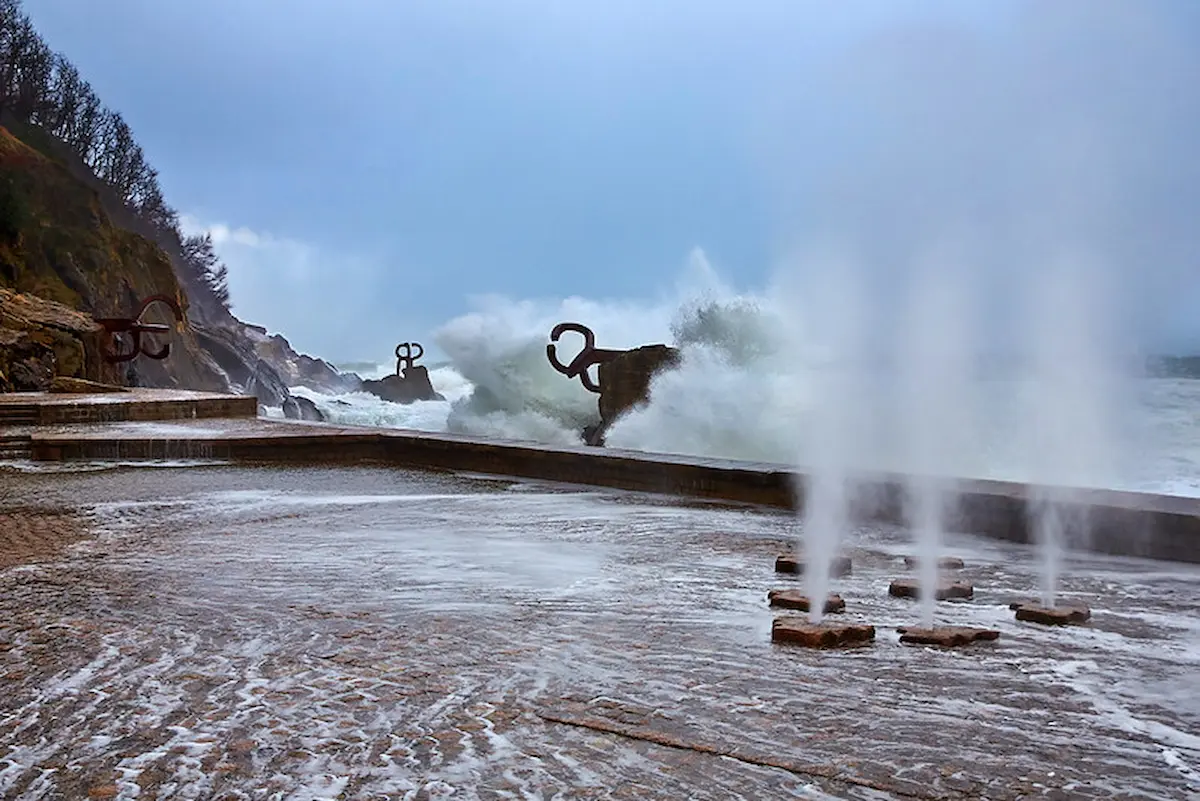
At the end of this beach, at the foot of Monte Igeldo, is the landmark sculpture group of the city: El peine del viento by the great Basque artist Eduardo Chillida. The impressive sculptures made of wrought iron were cast on the rocks in front of the Bay of Biscay. The waves crash powerfully against their foundations, while the wind blows through the metal structures. The image of steel, stone and sea is spectacular and leaves us an unforgettable memory of this great Basque artist, who respected the materials with which he worked, considering the corrosion process or the changes that iron or stone could undergo as part of the work. In addition to the sculptures, Chillida also designed several holes in the ground, through which the waves, passing through them, are catapulted to the surface and into the sky. When we reached „El peine del viento“, the tide was high and the water jets reached several meters in height. One had to be careful not to get wet.
La Concha beach
Our ride took us along the Ondarreta beach to the spectacular La Concha beach, which is considered one of the most beautiful city beaches in Europe. This beach became popular in the 19th century thanks to Queen Maria Cristina and developed into a hotspot for European aristocracy, and a center of culture and fashion. So, elegant palaces and elegant villas around the beach were created, many of which are still preserved.
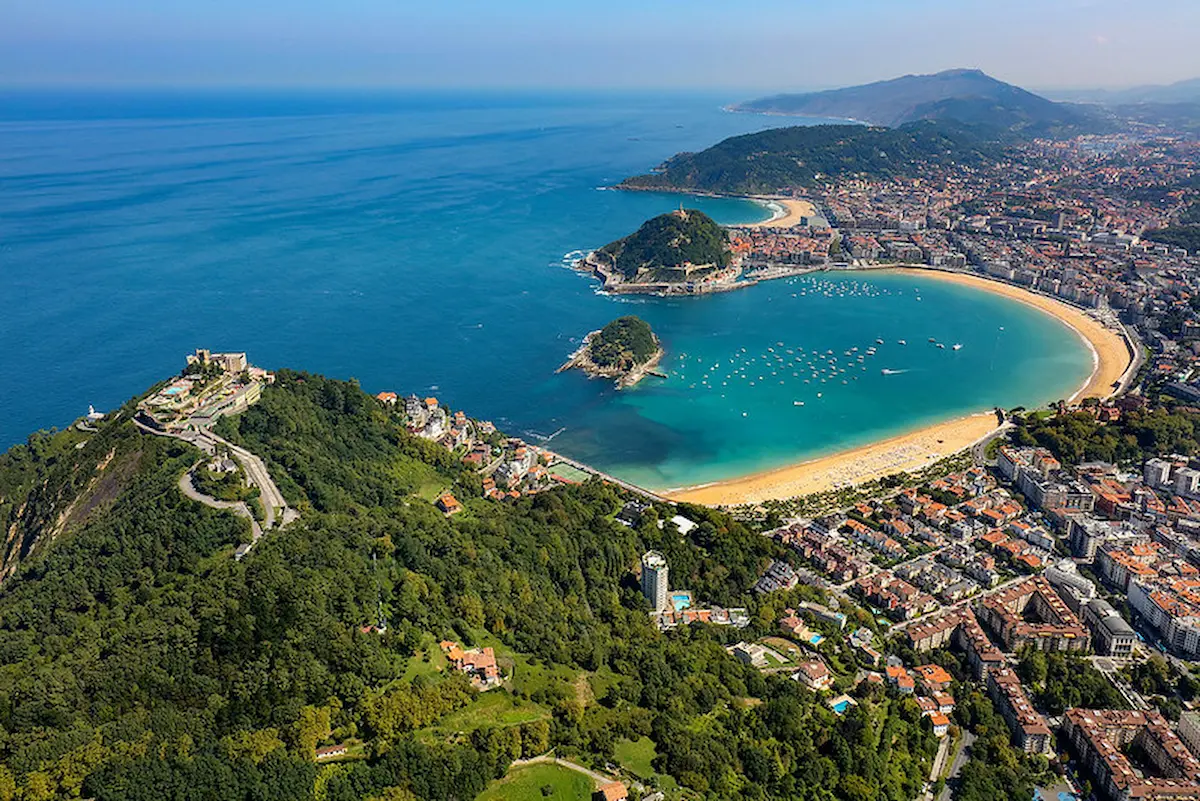
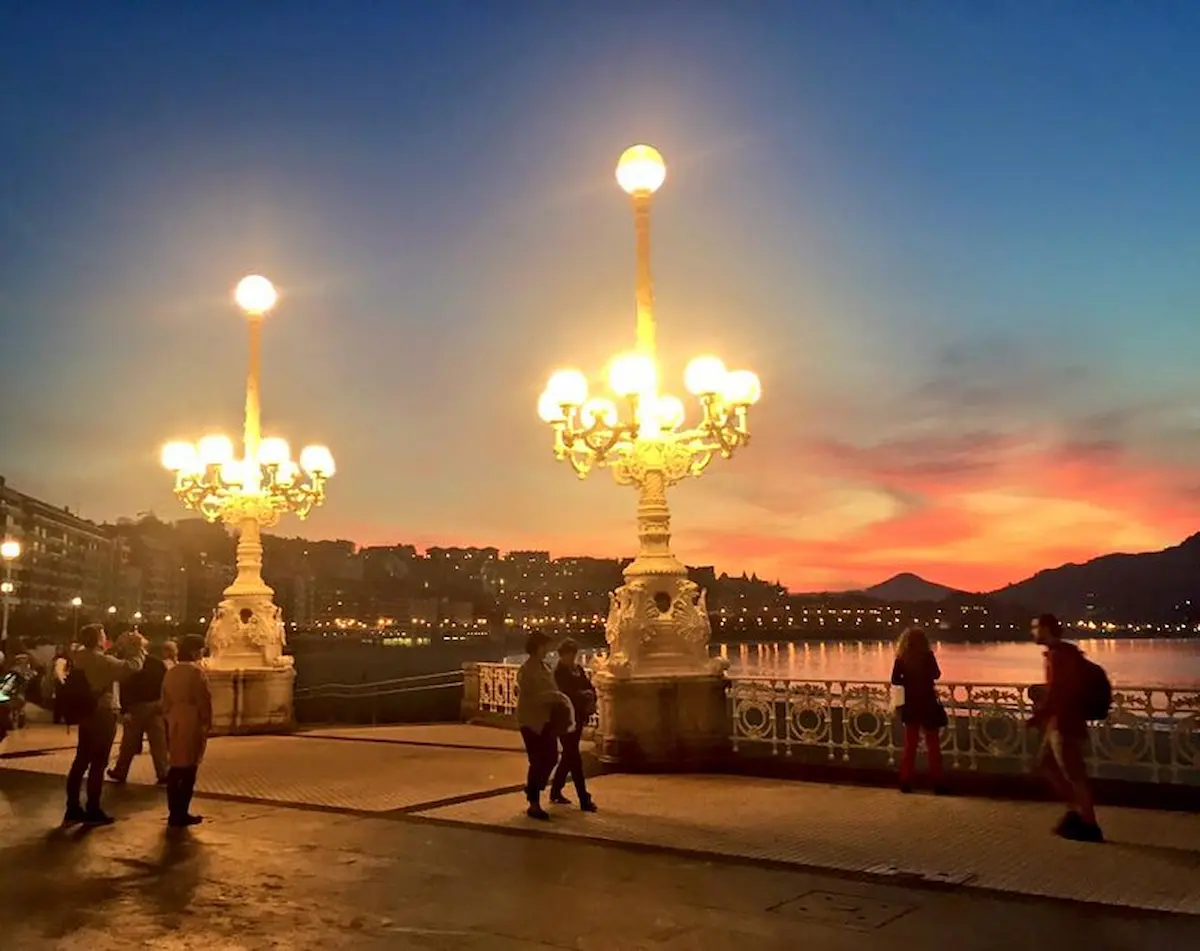
On the way to the Old Town, we passed the Palacio Miramar, which once served as the summer residence of the Spanish monarchy. This magnificent palace, built on a hill and resembling an English villa, offers a breathtaking view of both beaches, the Igueldo and Urgull mountains and the Santa Clara island from its gardens. To reach La Concha beach, we passed through a tunnel that runs through the gardens. During this, we also passed by the famous Spa La Perla, a renowned wellness center from the time of the Queen.
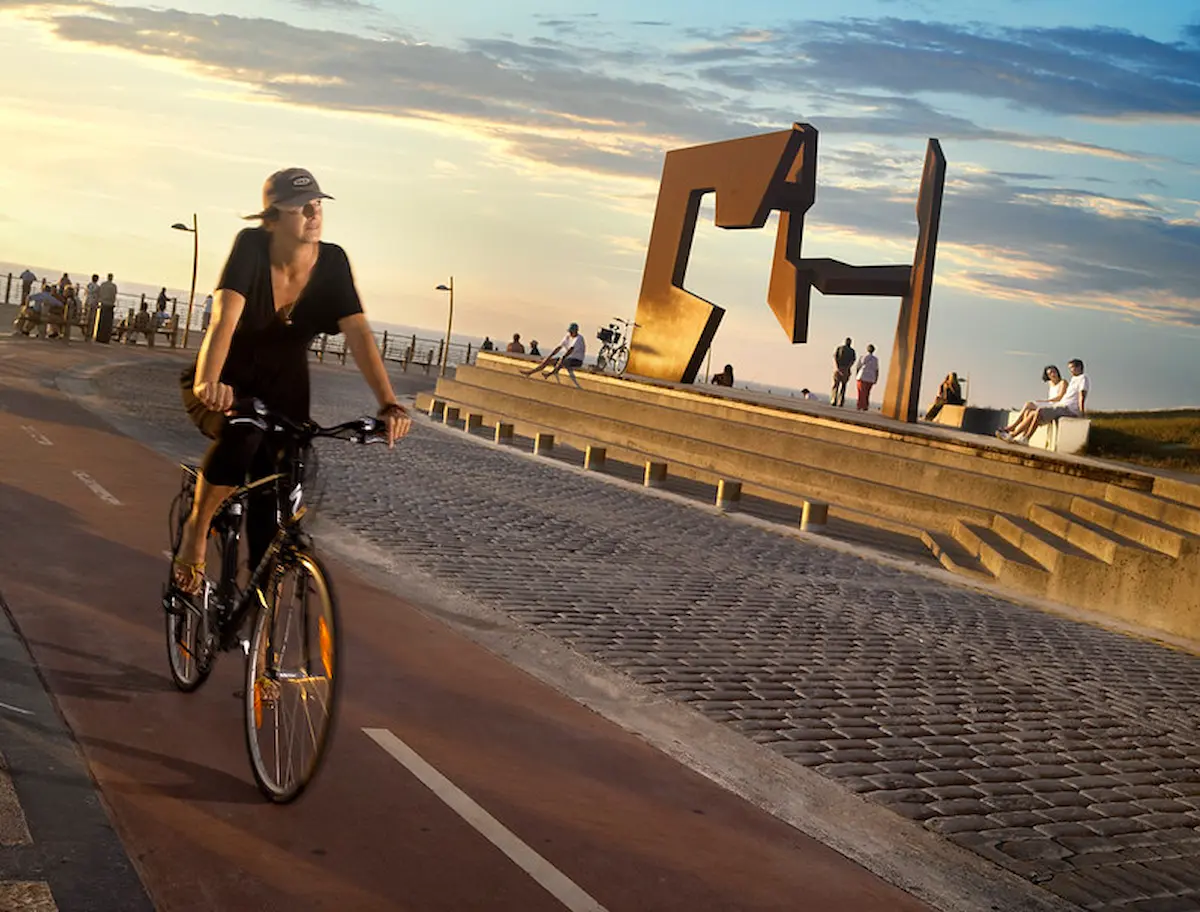
The tour along the Concha is wonderful and we enjoyed it to the fullest, without any effort, with our electric bike on the „Bidegorris“. The beach was bustling with artists who created temporary works and graphic fantasies on the sand, which was exposed at low tide. Afterwards, we had the pleasure of visiting another spectacular bar and enjoying the delicious „Pintxos“of the famous Basque cuisine again. It is recommended to move from bar to bar and try something different at each one, as each one offers its own specialty. The more bars you visit, the greater the chances of discovering the best Pintxos in San Sebastián.
After a three-hour bike ride, we said goodbye to San Sebastián with the certainty of having discovered one of the most beautiful cities in Spain, which is world-renowned for its excellent gastronomy.