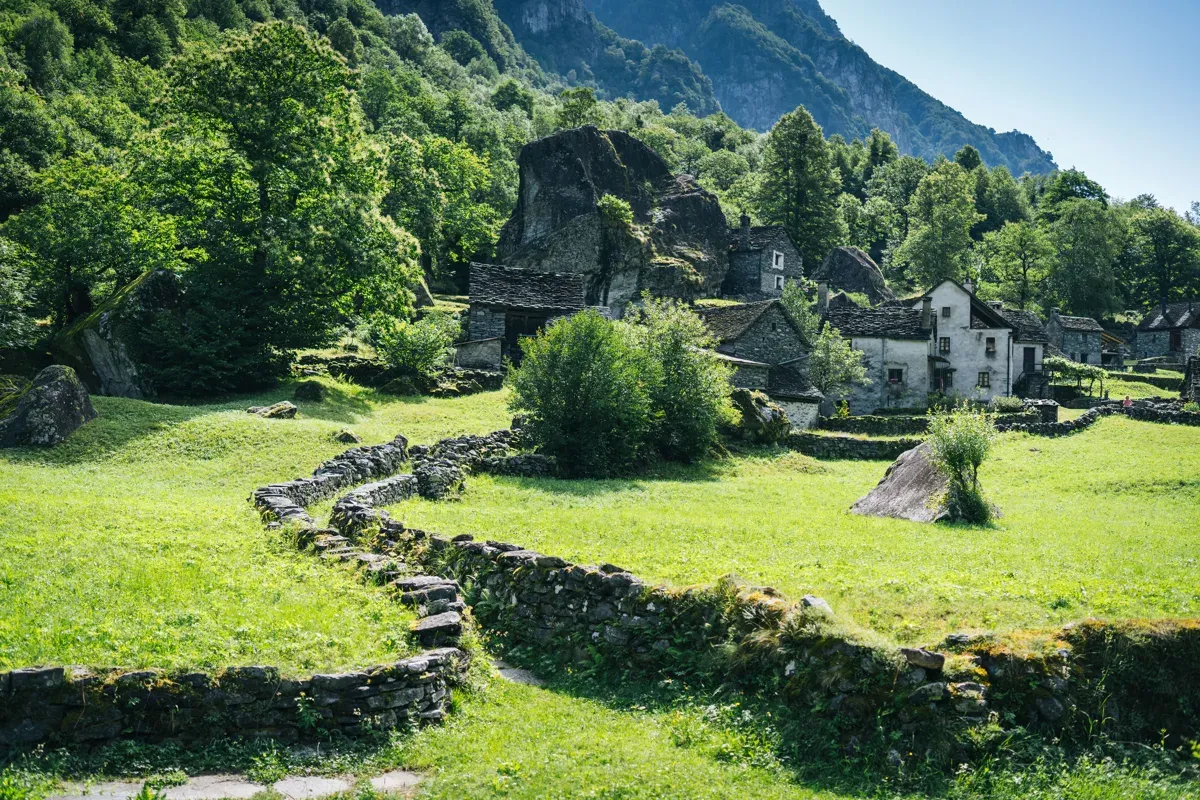
A must-see for any visitor to Ticino is exploring the steepest and most rocky valley of the entire Alps. It received its name from the Bavona River, whose clear water meanders through countless turns between fallen rock formations in the valley floor. Far from being "rich in stone," the early settlers of the region lived an extremely hard and impoverished life. In fact, life in the 12 villages, the "terre," was extremely difficult and impoverished. Today, the once poor Bavona Valley still looks largely as it did centuries ago.
After months of closure, the Bavonatal valley has been fully accessible again since April 2025, following devastating floods in the summer of 2024 that caused massive rockfalls. Approximately 300,000 cubic meters of debris that had fallen, particularly affected the village of Fontana, where two people died, as well as three others in other locations.
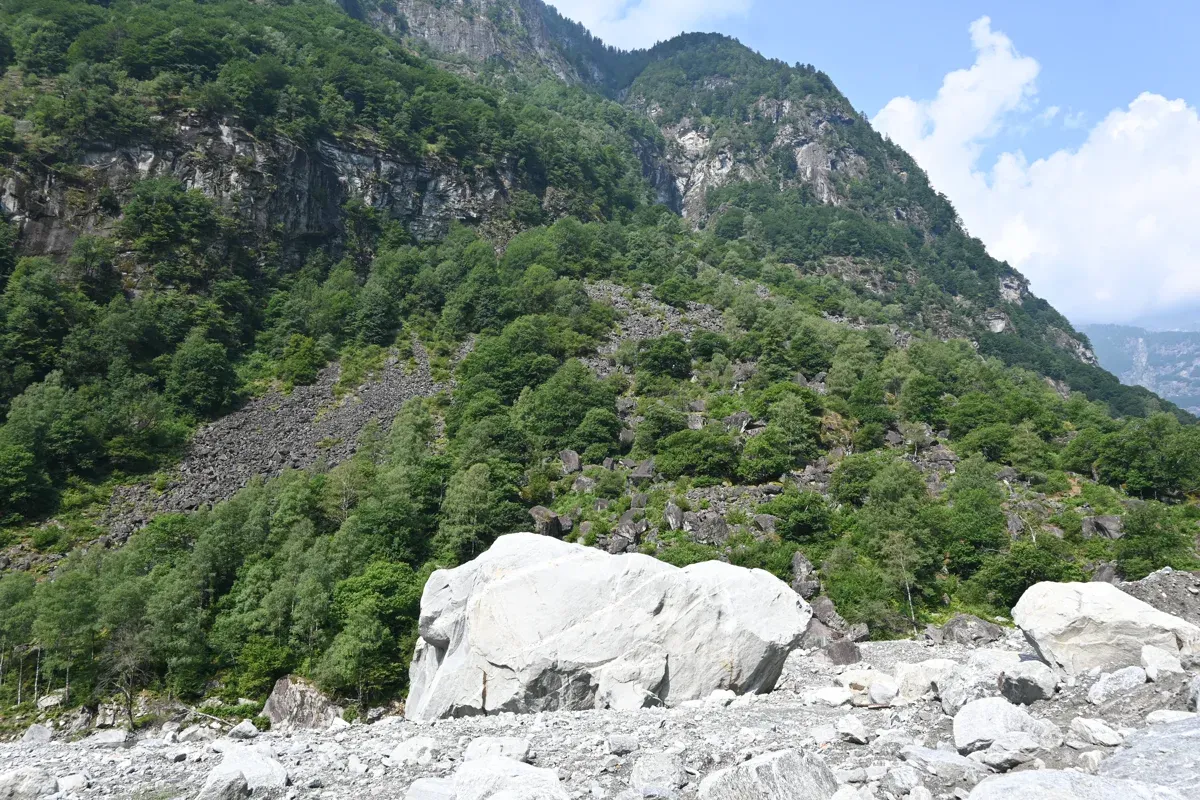
Previously, a similar disaster had occurred near the settlement in 1594. There is concern that the increasing frequency of extreme weather events will lead to significantly smaller distances between the Muren outflow channels in the future.
He finds creative solutions.
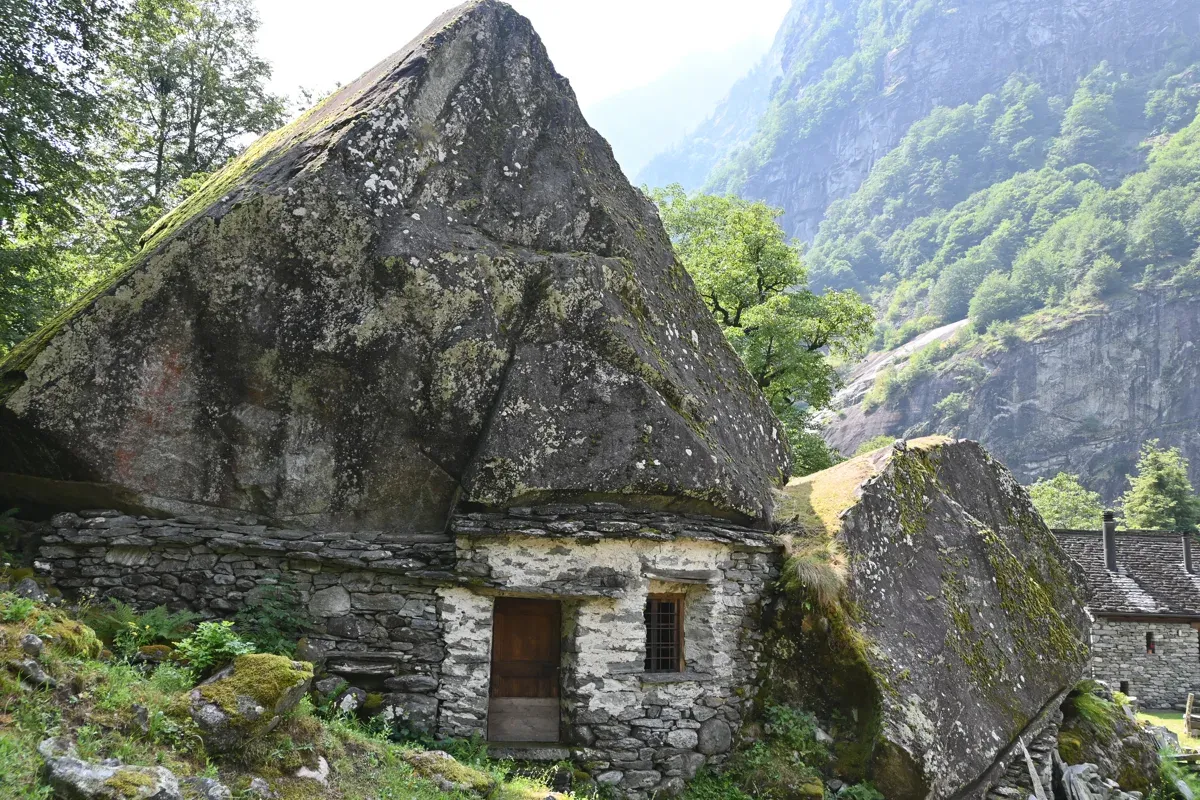
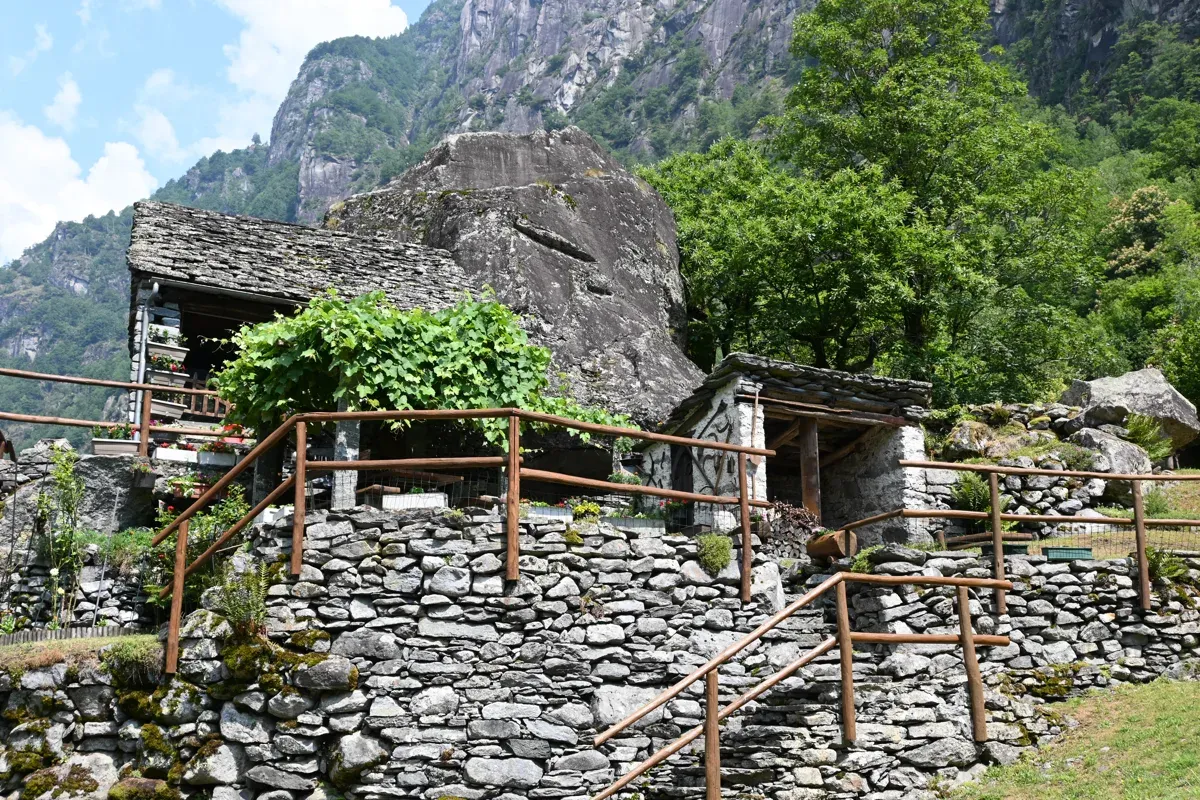
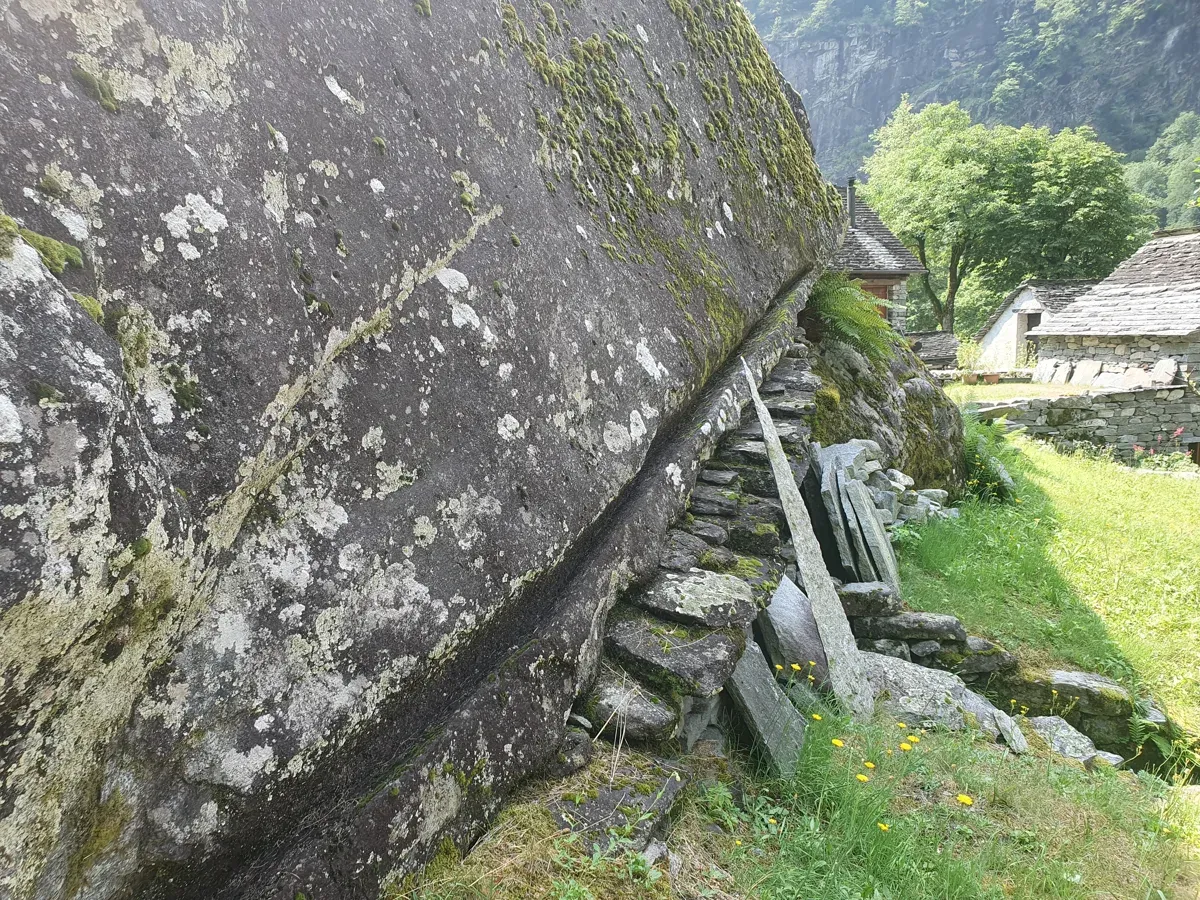
The valley floor along the Bavona is almost entirely covered by forest, rock and rubble slopes, landslides, and cliffs. Only about three percent of the area is available to people as meadows, pastures, and settlements, and only 1.7 percent as usable agricultural land. Consequently, every area that offered even a partial opportunity had to be utilized, such as large rock formations, provided they were relatively flat on top. Initially, the large rock formations, known as "pradone," were only used for obtaining building materials, or for constructing underground dwellings beneath them. In 1600, the right was granted to use them as arable land. Once access was created via ladders, natural ledges, or steps carved into the rock, organic material was added. This consisted of soil from the excavation work for the underground dwellings, as well as manure and straw from the stables. On these newly created, often fenced areas, potatoes, lettuce, chicory, onions, and garlic were mainly grown. In sheltered areas, beans were occasionally also grown. The harvest on these rock terraces was usually meager, but it ensured the survival of the farmer families. In some of these "hanging meadows," as they are commonly called, the effort and care that were once invested in their creation and protection from plundering animals can still be seen today.
Relaxing in the "Rustici" – Relaxation away from all the hustle and bustle.
The houses in the valley were mostly built in the 16th century or earlier from massive granite stone and were initially used as seasonal accommodations for shepherds and farmers. Today, many of these simple, but lovingly renovated accommodations serve as summer homes or as authentic holiday homes for some descendants of the former residents, offering guests peaceful alpine nature experiences. Even today, due to preservation reasons, there is no connection to the electricity grid in the traditional stone houses, the "Rustici", but some use solar power to operate small electrical devices.
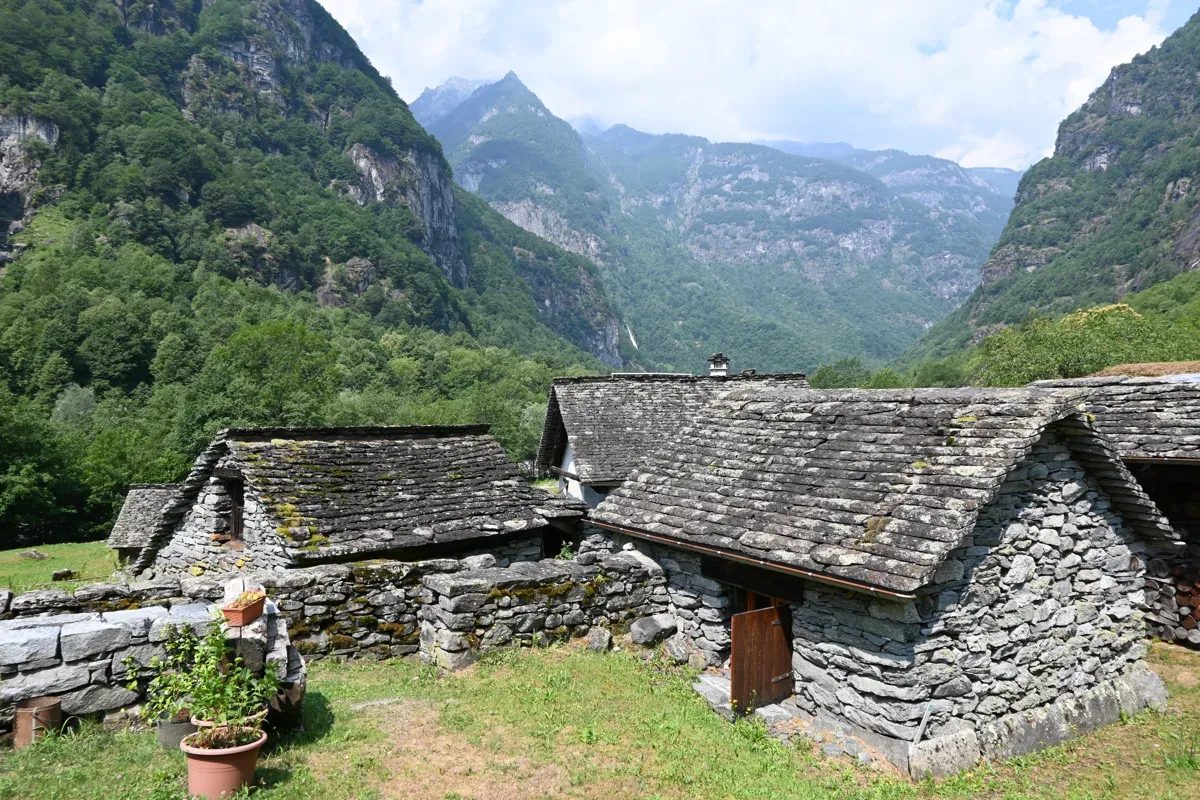
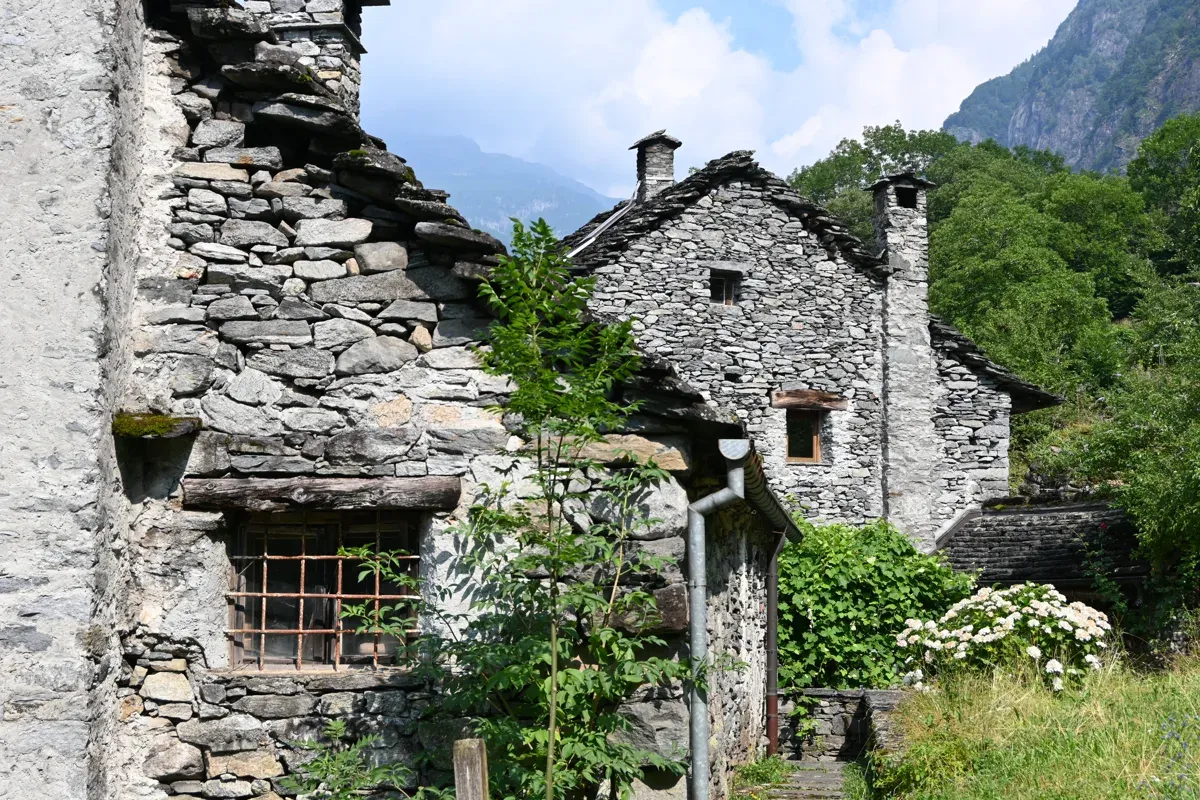
A highlight of our tour was a guided tour with Nicoletta Dutly from the "Fondazione Valle Bavona", who provided us with many interesting insights into the settlement of the valley and the harsh living conditions of its inhabitants. The foundation not only works to preserve and maintain the unique settlements, but also aims to raise awareness among a broad audience about the importance of the traditional alpine cultural landscape.
The impressive worlds of the "Splüi"
Nicoletta accompanied us through two settlements and showed us some of the approximately 400 "Splüi" in the valley. These are historical, human-made spaces located beneath large rock formations, which have been used as shelters, simple dwellings, stables, and storage areas since ancient times. Typically, only walls were built under the large stones to make the spaces weatherproof.
These oldest of the sub-rock structures likely served as shelters for humans already over 5000 years ago. Wooden charcoal found from a campfire, according to the results of a C-14 analysis, dates back to around 2300 BC, i.e., the Bronze Age.
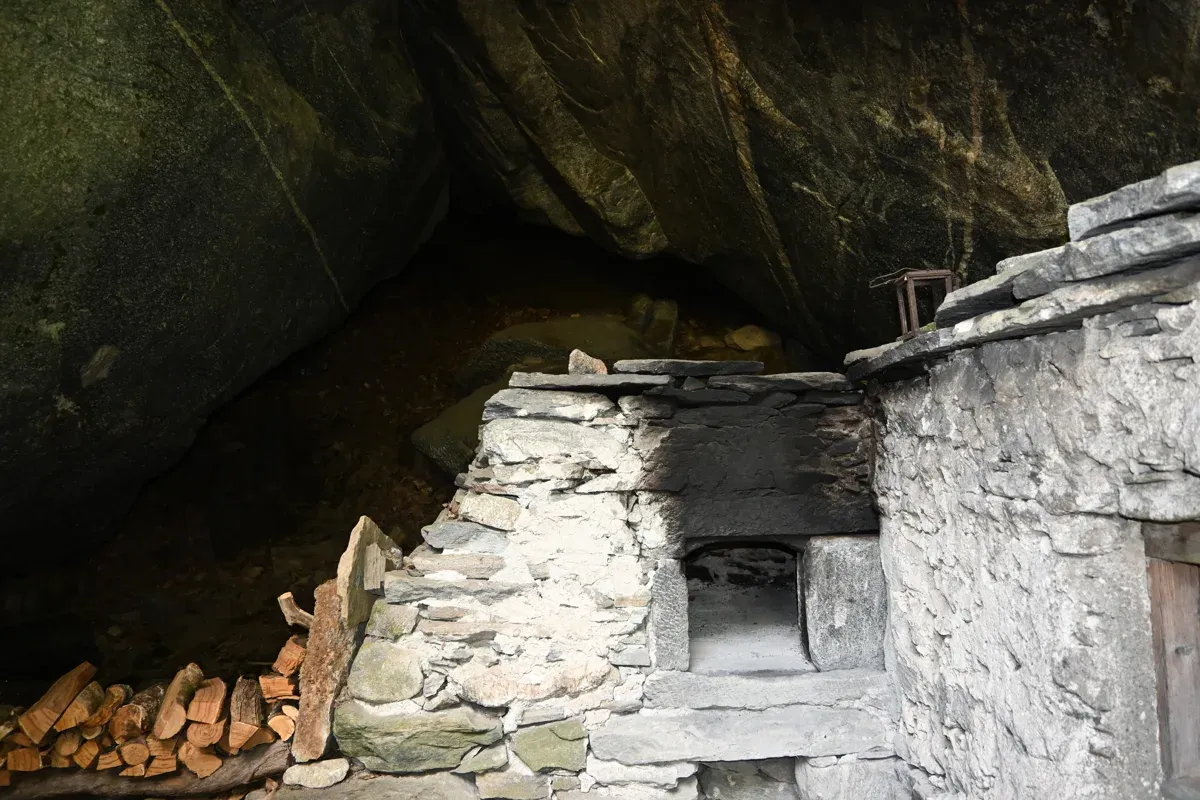
Everything produced in the valley was solely for self-sufficiency, in order to trade, as the barren soils yielded little. The main staple food was the chestnut, which was processed into flour together with rye. The wool from the sheep was brought to a communal weaving house, which is visible in the main image of the article, and was then spun separately by each farming family. Goats provided milk and meat, as did the few, extremely rugged, small cattle. Their pens or stables were mostly underground in the splüi, often only accessible via steep steps.
Natural disasters, art, and culinary delights: sustainable impressions from Foroglio.
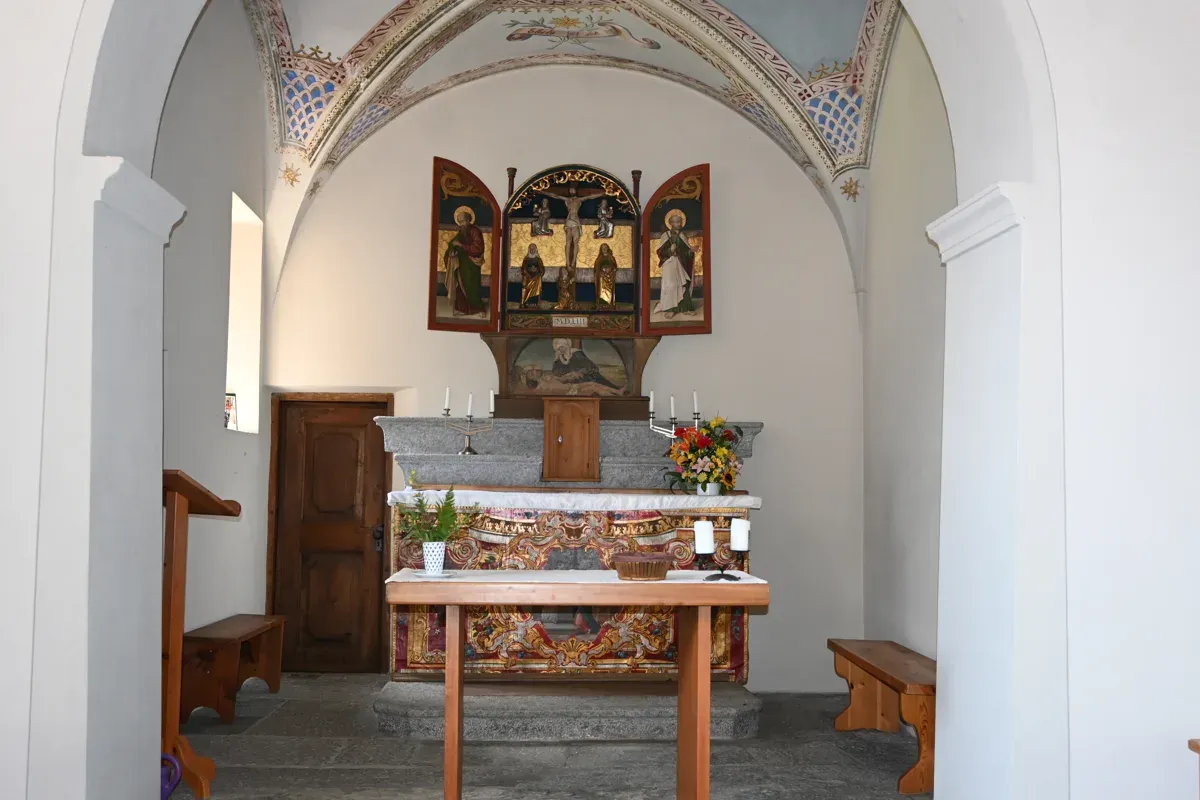
Of course, we couldn't miss the opportunity to visit the charming village of Foroglio, where a few houses of the hamlet are clustered around a chapel built in 1483, in which we admired a triptych from 1553, as well as a painting depicting "The Virgin in the Temple".
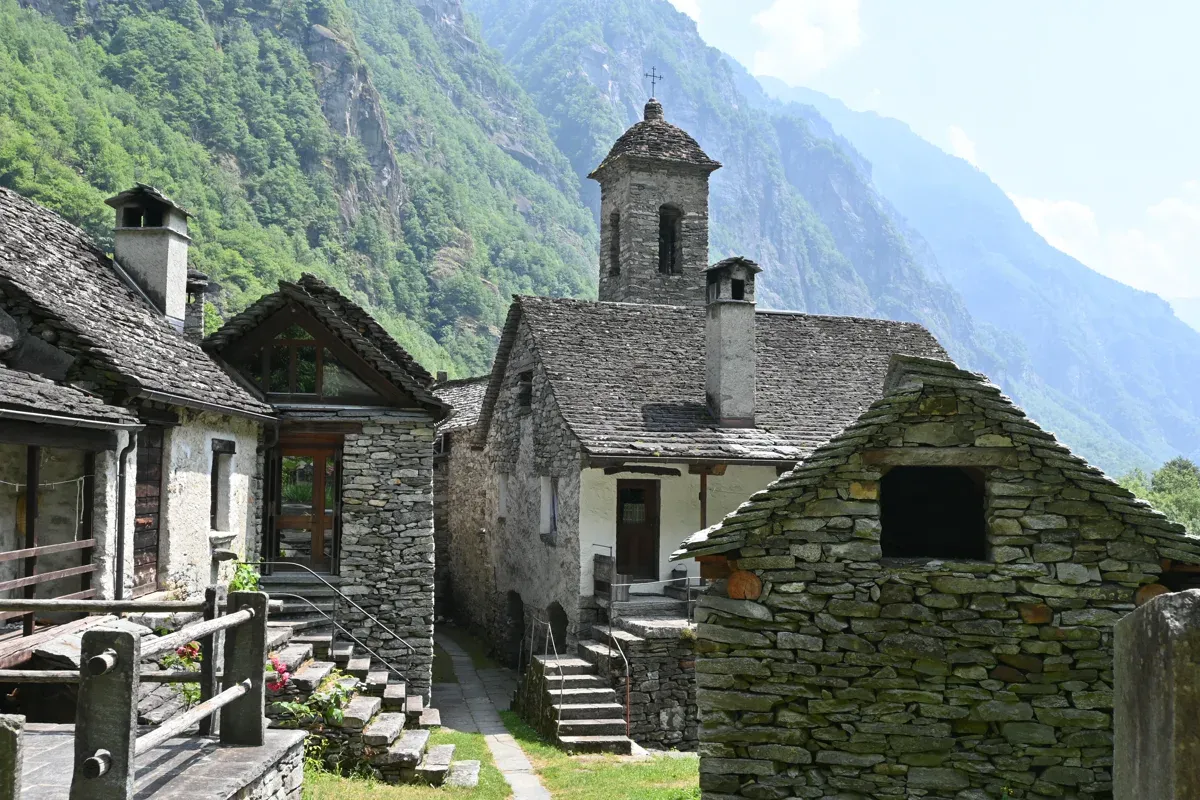
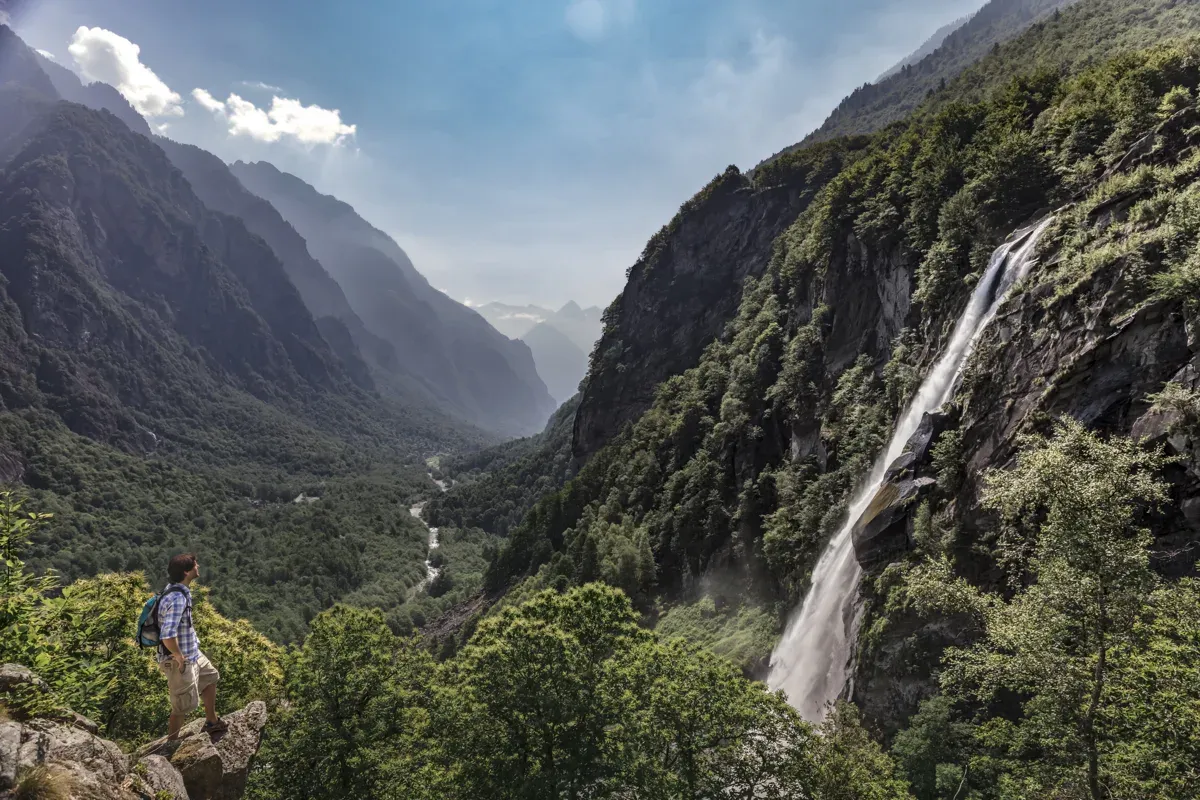
This small village is particularly known for the natural wonder of the nearby waterfall, which, along with the rustic stone houses, has already served as a film location and filming site several times, for example in "The Black Brothers" by Xavier Koller from 2013.
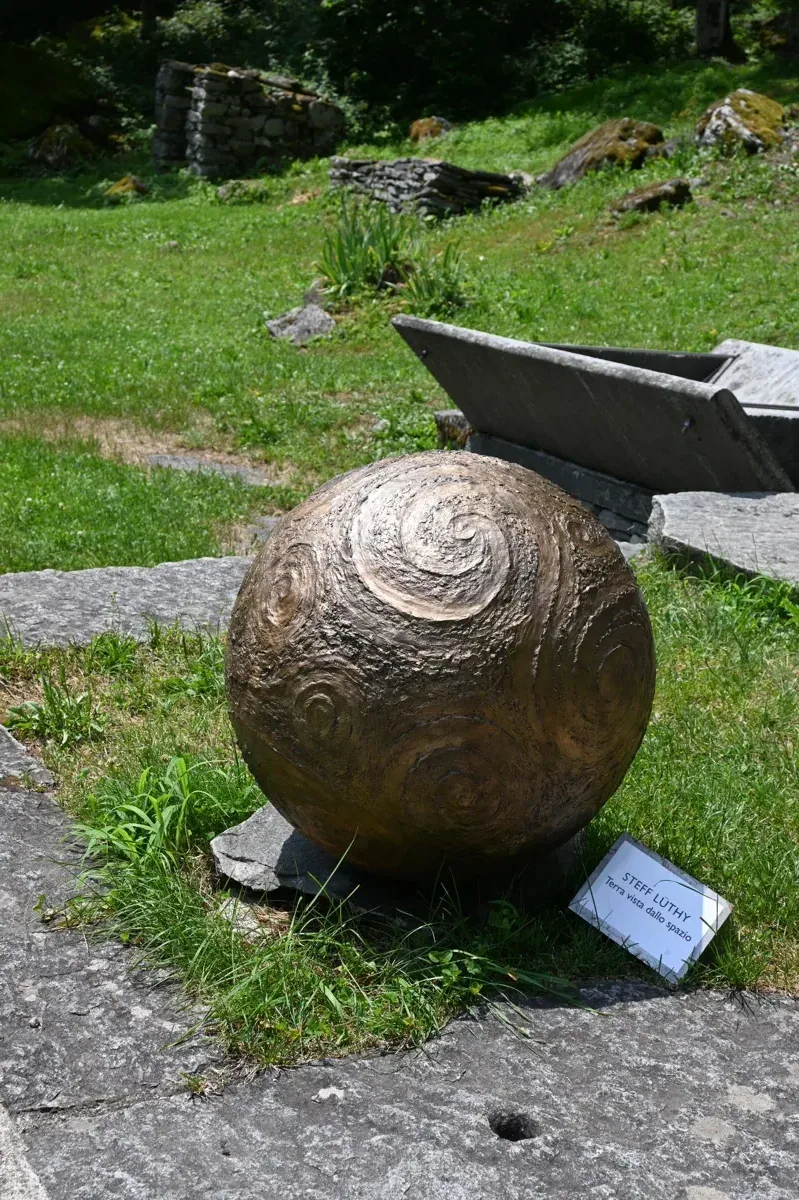
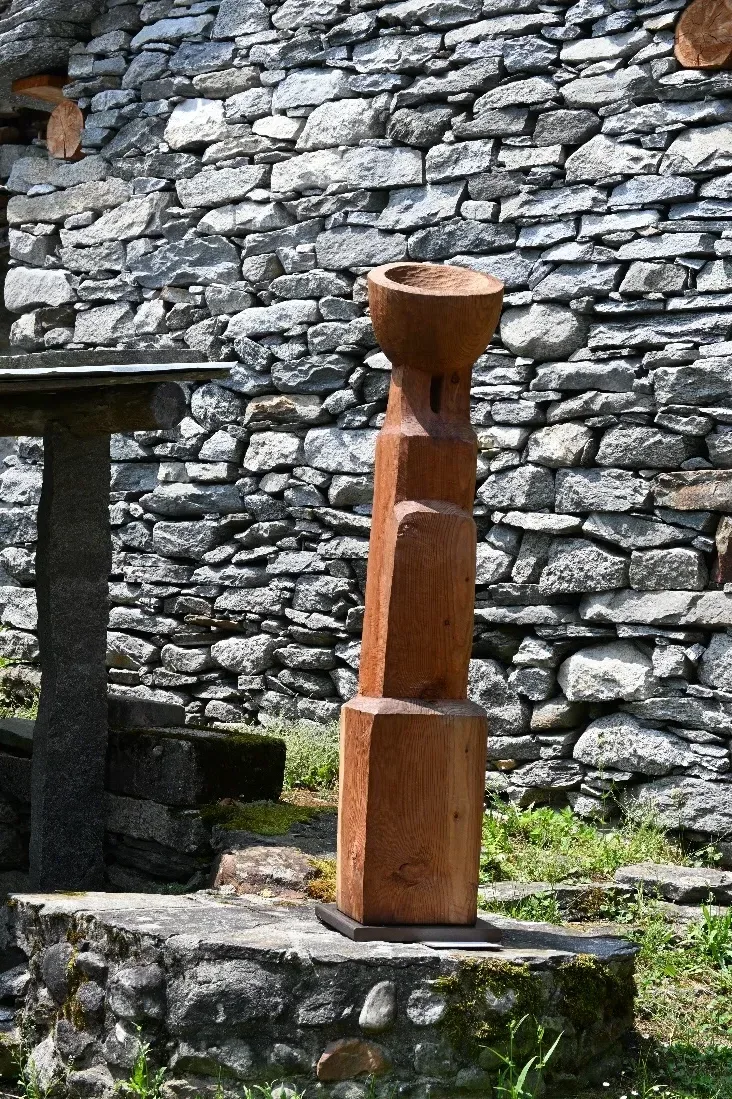
Recently, an increasing number of artists – at least temporarily – have settled in Foroglio and are exhibiting their works outdoors during the summer months. However, unlike places like Ascona, Foroglio is not a true artists' village, but it nevertheless inspires numerous painters, photographers, and sculptors due to its originality. Cultural events and exhibitions occasionally take place in the village.
High-level handcrafted cuisine in "La Froda"
One should definitely plan to visit the „Ristorante La Froda“, where cuisine is prepared with a clear focus on the culinary traditions of the Alpine region. It has been around since 1928, when Leonardo Solaro, a professor from Cavergno, decided with his wife Cesarina to convert a rustico into a tavern. For over twenty years, the Giovanettina family has been serving a „simple“ but high-quality cuisine. The restaurant is particularly appreciated for its salami („mazza“), liver sausage, and „Codighe“ (pork sausages) produced in-house according to an old family recipe. This is complemented by products such as Coppa, bacon, belly bacon, raw ham, and dried meat, which form the classic „affettato“ (cold cut).
Local products are always at the forefront. This includes excellent cheeses such as aged and fresh cheeses made from cow and goat milk from the Alp Vallmaggia, as well as "formaggelle" (a young cheese from the region), "formaggini" (fresh cheese), and salted "mascarpa," which is known as ricotta in the Tessin.
We enjoyed a delicious mixed bread platter, about which we are still raving. Due to the usual high demand, a telephone reservation is recommended.
Hiking trips starting from the village.
Foroglio is also a popular starting point for various mountain tours. Via a steep staircase along the roaring waterfall, one reaches the high valley of "Val Calnègia" with Punid, where one can find a first alpine meadow with blooming flowers, an arched bridge, and a babbling brook. This film shows:
https://www.youtube.com/watch?v=QWLiNNa0qIE
The second Alp, Gerra, is used as grazing land for dairy cows and goats. The white-red marked route crosses this diverse landscape, featuring forests, meadows, rocks, and streams. Calnègia, the third Alp, is characterized by traditional huts and forms the valley floor.
Links:
Wonderful impressions:
https://www.ascona-locarno.com/en/explore/vallemaggia/valle-bavona
Five places in the Bavonatal: https://www.ticino.ch/en/travel-inspirations/top-5-bavona.html
Trekking: https://www.ticinotopten.ch/de/wanderungen/bavonatal-tessin
Accommodation in the Rustici:
https://www.ticino.ch/en/inspirations/experiences/rustico-bavona-valley.html
Article in our partner medium „Bergparadiese“, which also reports on Foroglio: https://bergparadiese.de/8-erfrischende-wanderungen-im-tessin
Vacation in Ticino: https://www.ticino.ch/en/