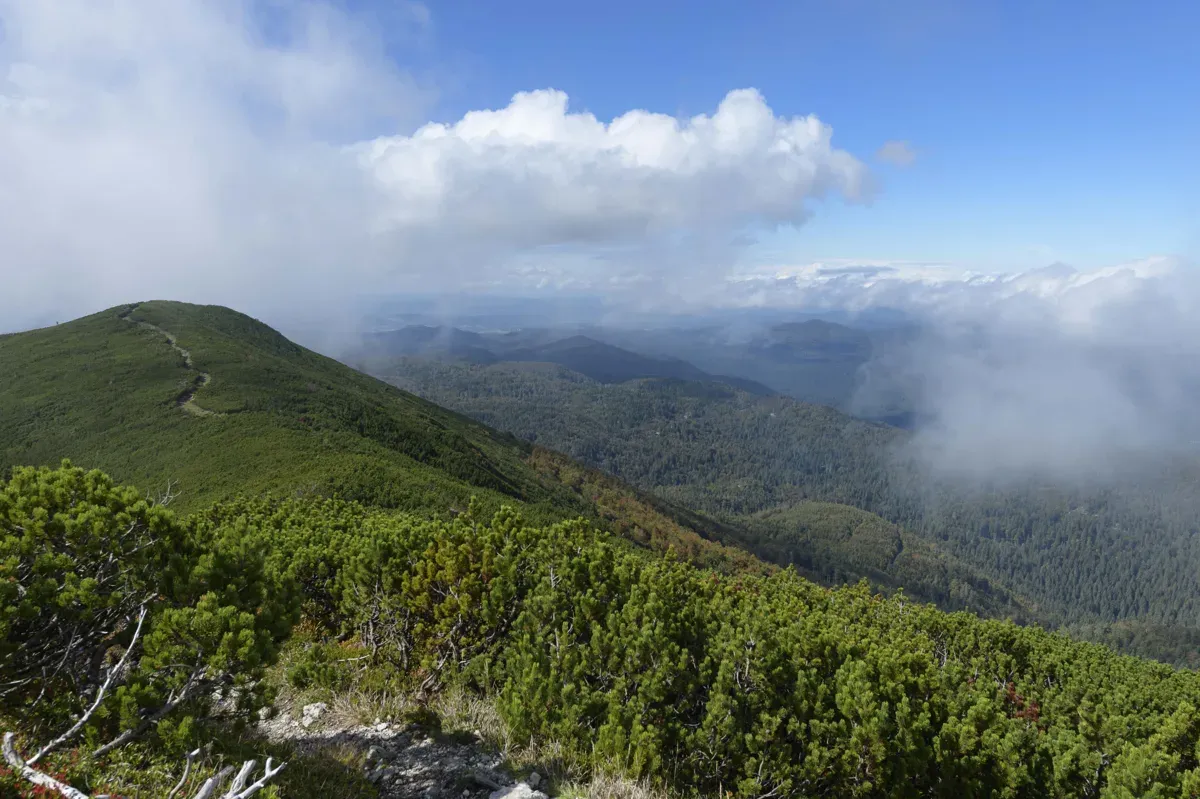
The highest mountain in southern Slovenia bears the beautiful name Snežnik, in Italian Monte Nevoso or German: Krainer Schneeberg. The almost 1800-meter-high peak rises high above the surrounding forest ridges. From its tree-less summit, both the sea and the islands in the Kvarner Bay, as well as the peaks of the Julian Alps, are visible. And: The view over the vast, dense forests of the south Slovenian Karst is a special experience.
In this area, several hundred brown bears live. These temperamental, furry animals know why: There are still vast, isolated, undisturbed forest areas here, some of which are even primeval forests.
In Slovenia, it has long been recognized that ancient forests provide more benefits when they are preserved and (at least at their edges) accessible to visitors. No other country in the EU offers comparable tourist opportunities. This is what I wanted to explore. Therefore, I set off for Slovenia in the autumn of 2025.
After spending a night at the remote forest inn, Gostišče Mašun (with hearty specialties from the forest), I meet Matej Kržič, who works here as a guide and cave explorer. We drive up narrow forest roads, through increasingly primeval beech forests. Below the rocky peaks of Snežnik, which rise out of the forest, and in the heart of the Snežnik forest reserve, lies the primeval forest area of Zdrocle. This is our destination. Since 2017, the Snežnik forest reserve has even been designated as a UNESCO World Natural Heritage site.
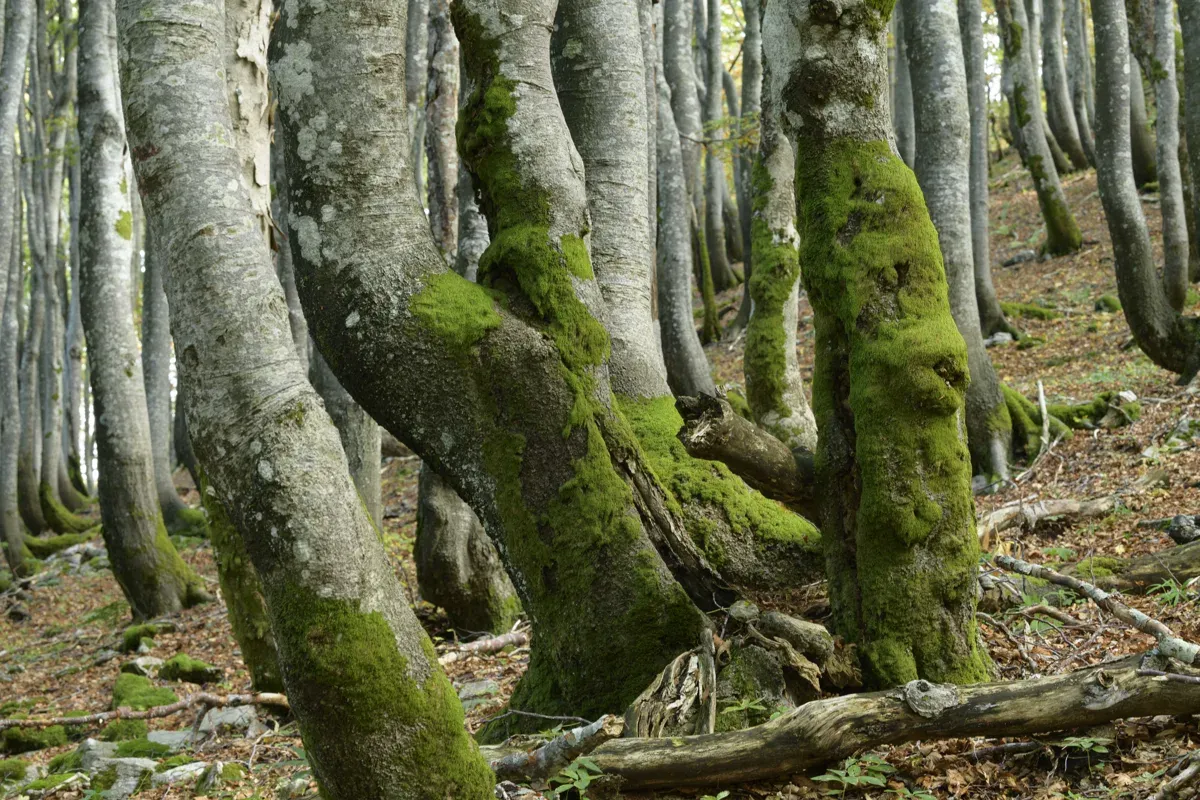
In reality, the most peculiar, gnarled beech forest with its serpentine trunks is actually not a true primeval forest, but rather a forest that has developed on cleared, old alpine pastures. However, this (re-established) biodiversity and fascination are not diminished.
Matej explained that in many of the dolines, which are often valley-sized karst depressions that cut through the slopes of Snežnik, there are still small, ancient tree populations that grow, because they were previously difficult for humans to access due to the steepness of the holes.
We descend into one of the wild forest chasms and enter a world that has been scarcely exploited by forestry. Here, ancient, moss-covered beech and fir trees rise above the dizzying depths of the doline. These hidden corners are also often refuges for bears. Therefore, we must be vigilant. But the bears do not appear today.
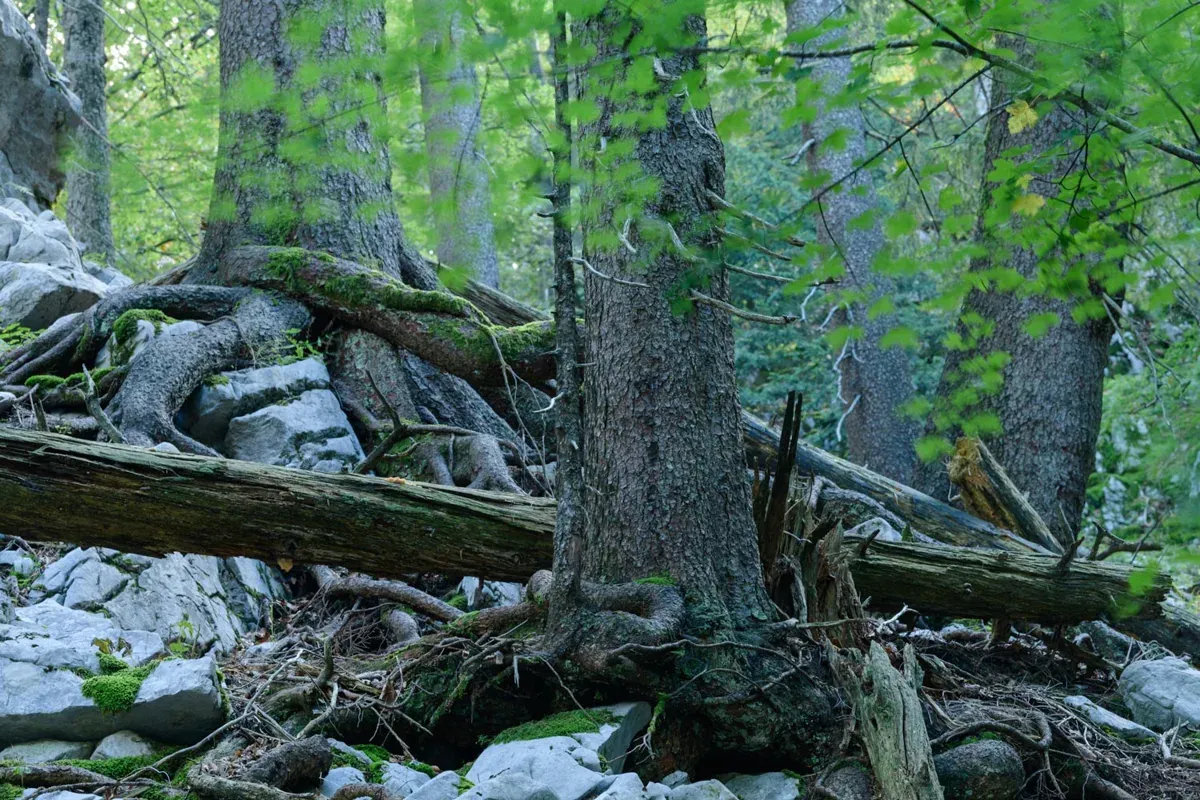
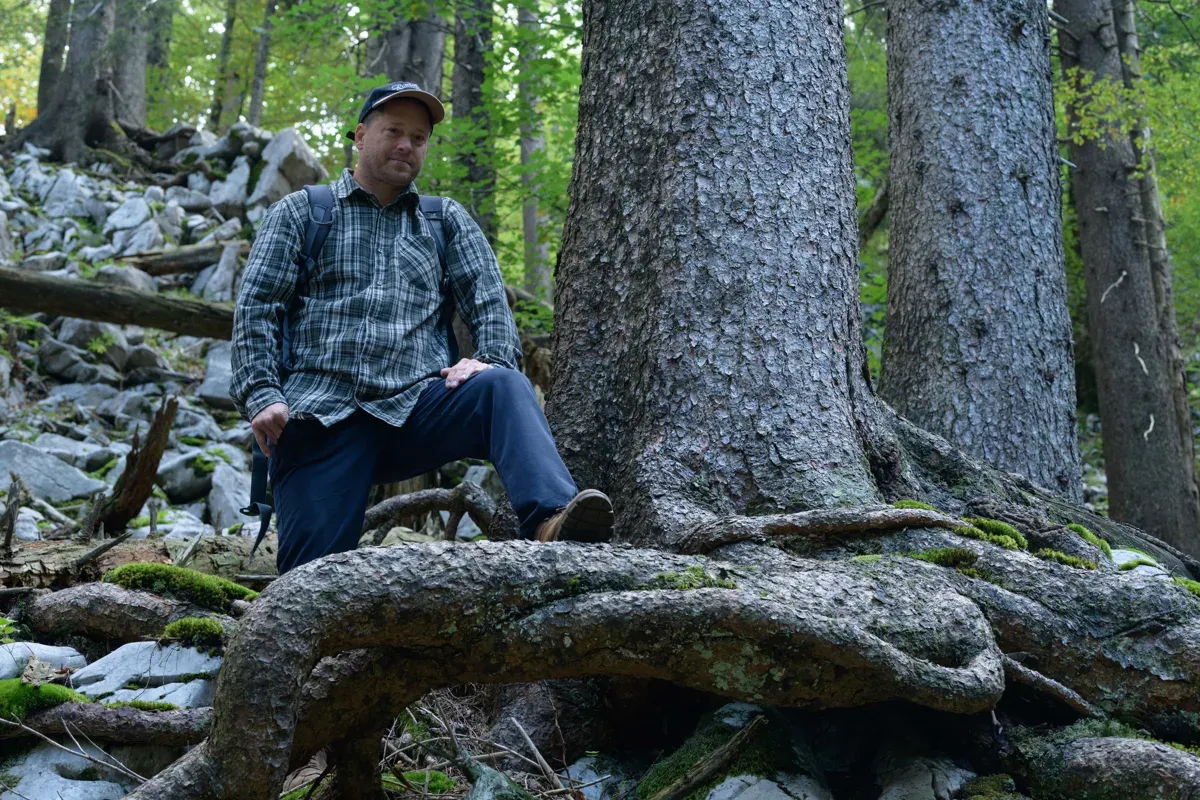
Later, further up, we reach the UNESCO reserve. In this strictly protected area, there is a designated path, so we follow it obediently. The difference between the remaining remnants of the primeval forest and the secondary beech forest on the former pastures is clearly visible: The primeval forest beech trees are thicker, more gnarled, and not all of them are the same age.
Wild Beech forests once shaped vast parts of the European continent 6,000 years ago. Today, little remains of this ancient beech forest wilderness: Original beech forests must almost be searched for with a magnifying glass. This prompted UNESCO to preserve the most valuable original and old beech forests in a transnational, multi-part World Heritage site. The enormous protected area complex now encompasses 93 individual areas in 18 countries, which are protected by humanity.
In the forested country of Slovenia, which is also considered a pioneering example of natural forestry and forest protection in Europe, several ancient forests have survived to this day. In addition to the Zdrocle reserve, the southern Slovenian ancient forest of Krokar has also been added to the UNESCO list.
After a short visit to the Cerknica Lake, a seasonal karst lake, I continue north-east to the former German-speaking Gottscheer region around the small town of Kočevje. There are several other forest jewels and huge, very natural forests, mainly beech mixed forests. Hiking trails lead to the edges of the Urwaldreservate Krokar and Rajhenavski rog (Reichenauer Urwald). The depopulation of the Gottscheer region in and after the Second World War, as well as the military exclusion zone around Gotenica, are also - tragic - reasons for the naturalness of the forests in the south-east corner of Slovenia.
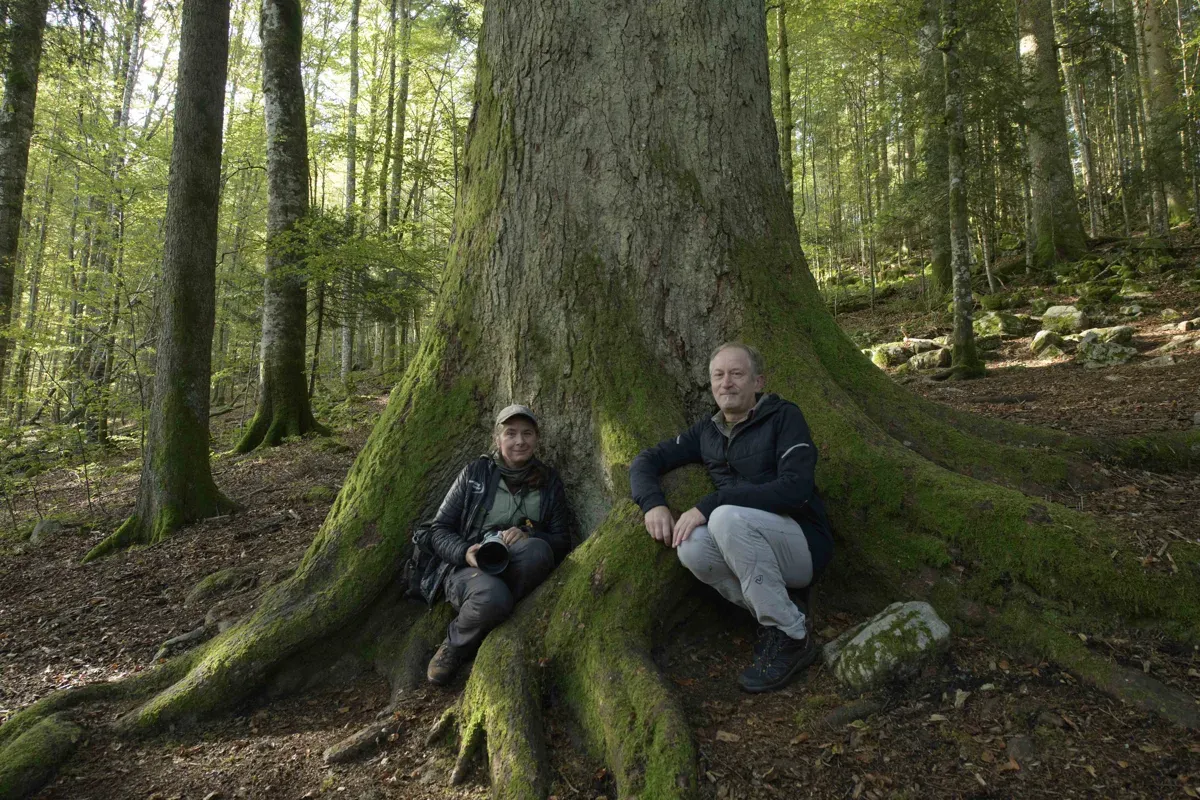
My wilderness companion is named Petra Draškovič Pelc. She is one of the leading nature photographers in Slovenia and knows the wild forests like the back of her hand. Petra is expecting me at the charming hostel Bearlog, the first hostel in the Kočevsko region, right in the center of Kočevje. I will be staying here for the next few days.
The friendly hostel is located in a renovated building with a rich history and is operated by the tourism association to support nature tourism in the region with a high-quality accommodation. (It holds the international "Travelife" environmental label and the "Slovenia Green Accommodation" label.) With 30 beds in 8 rooms decorated with a theme, named after trees and animals, the hostel offers a pleasant stay that also introduces guests to the adventurous world of the forest right outside the door, with photos and information.
The region of Kočevsko's consistent focus on the themes of wild nature, primeval forests, and bears is unique in Europe: Under the motto "the secret forest," the region's special natural wonders are highlighted and made accessible through bookable packages and tours. Here, one is clearly proud of the protected nature and its enormous diversity. And the friendly and dedicated Petra is the best address for experiencing the fantastic nature in the Kočevsko region, as an experienced nature and photography guide.
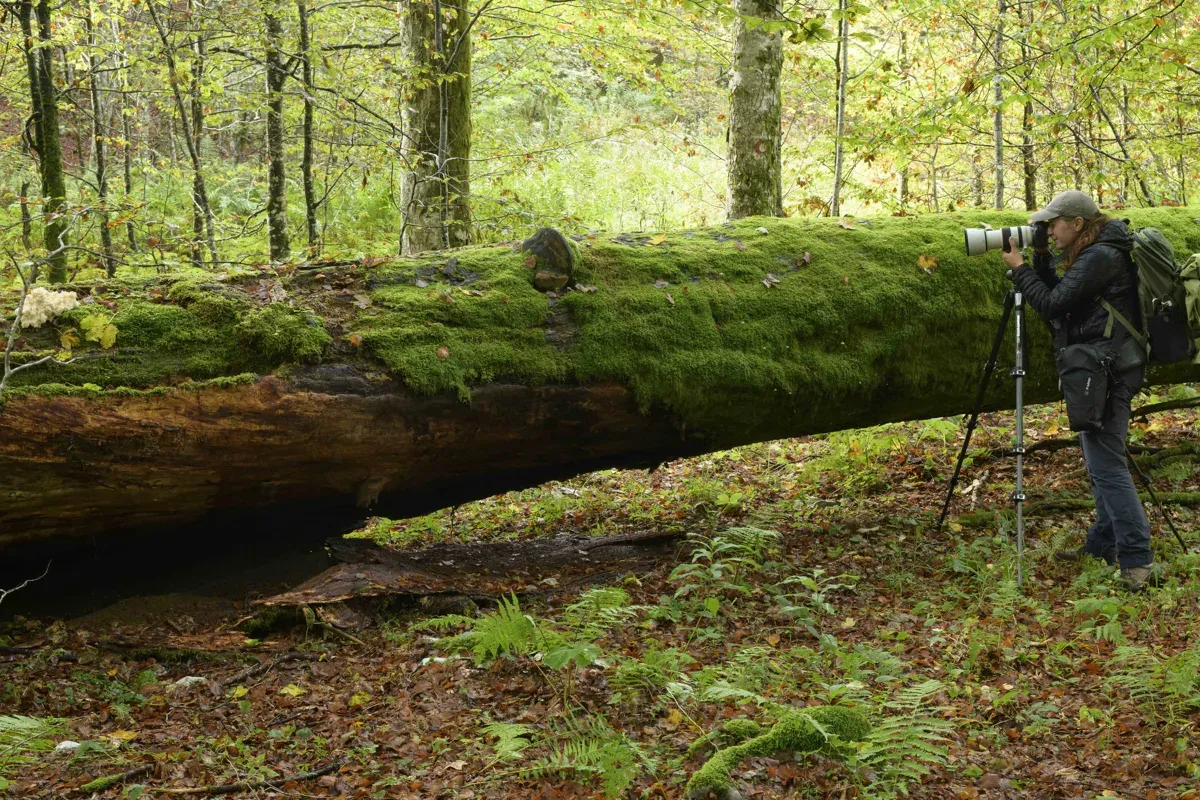
Immediately after the greeting, Petra takes me in a vehicle of the tourism association and drives us to the approximately 40-minute-away primeval forest of Krokar, almost on the border with Croatia. After a picnic (with regional specialties), we set off into the enchanted forest. The approximately 75-hectare primeval forest reserve is also designated as a UNESCO World Natural Heritage site and is not allowed to be entered. This does not diminish the authentic forest experience.
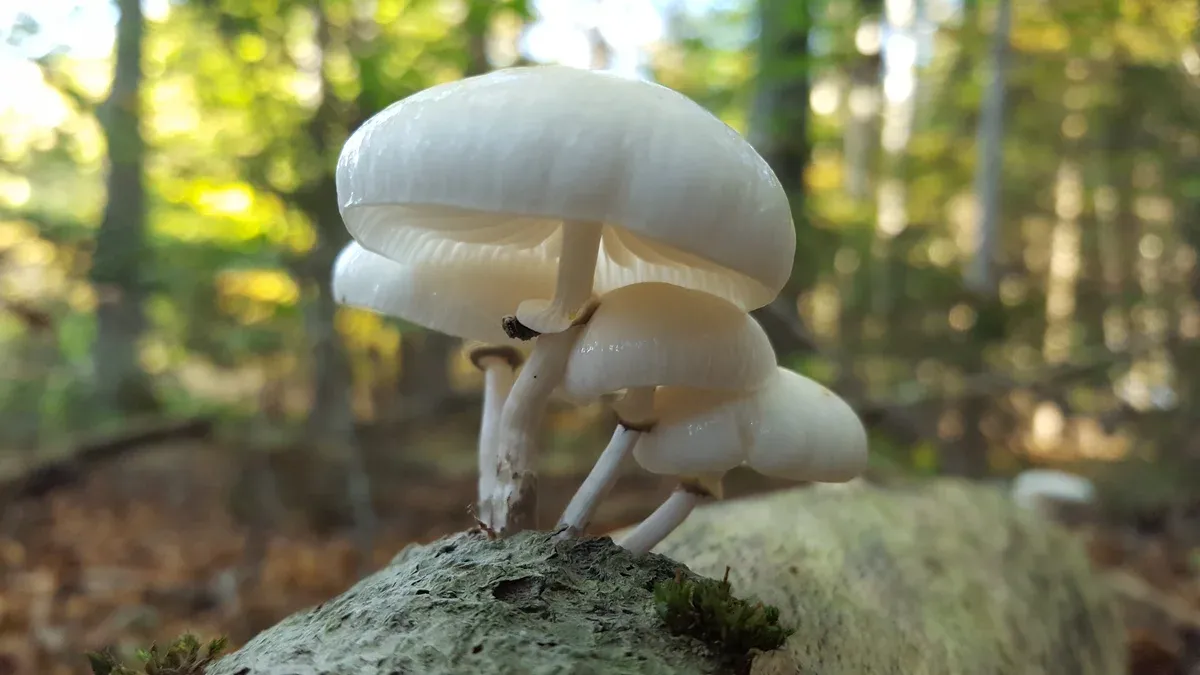
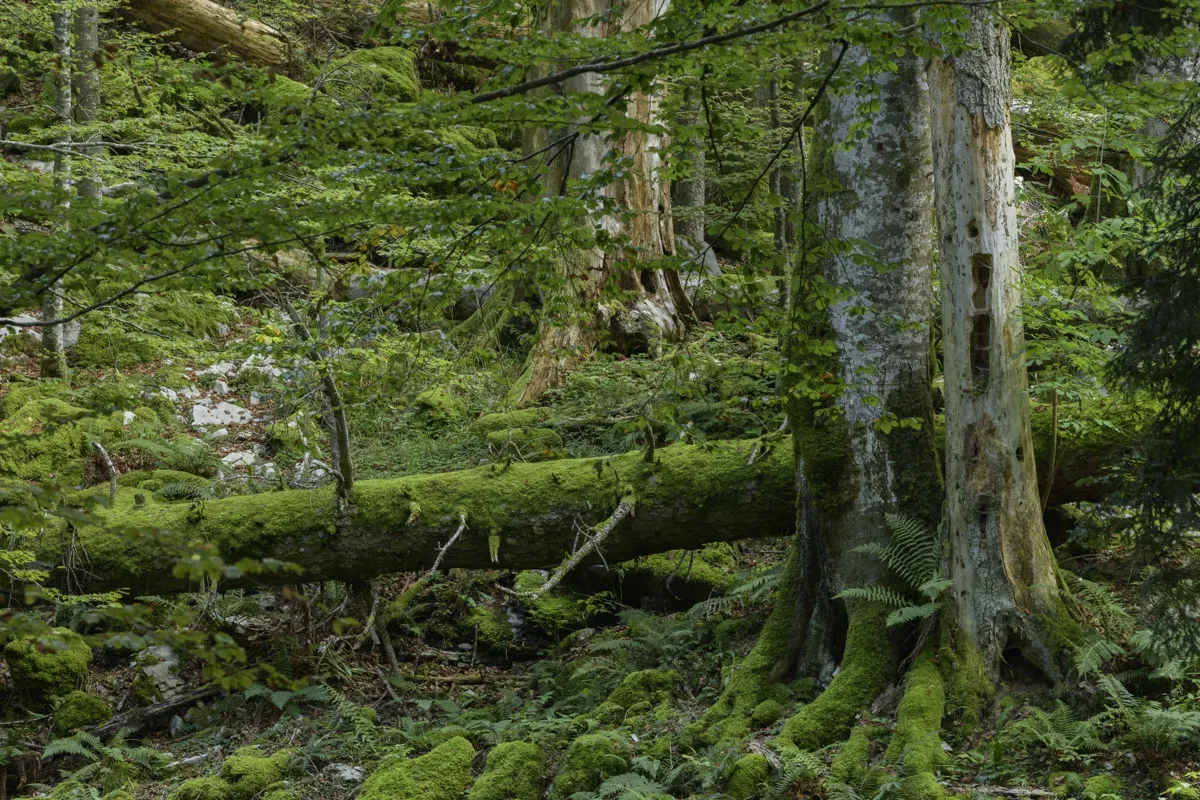
Around the strictly protected area, a buffer zone has been established, which includes almost untouched remnants of old-growth forests with giant firs and beeches. And we are allowed to enter. The nature trail "Borovška naravoslovna učna pot" leads us right into this mossy and shadowy other world. Forests like these are hardly found in Europe anymore: We walk reverently through one of the last forests on the "old continent", which has been largely free and uninfluenced by humans since the last ice age. This 'uncivilized' past can be seen in the forest: Different large and old, partly already dead, beech, fir, and maple individuals stretch upwards towards the canopy. There is a refreshing mix of shapes and shades of green. The scent, of mushrooms, moss, and decaying wood, is also typical. Huge tree trunks are used as food and habitat by mosses, fungi, and insects. In old-growth forests, which can develop without human influence, there is an enormous species diversity. This is mainly due to the old trees (often 200-300 or more years old), with their caves and crevices, and the standing and lying deadwood. However, in commercial forests, deadwood and veteran trees are hardly found anymore, because the trees are usually harvested at the age of 80-100 years.
With reverence, we ascend the slope towards the rocky peak of the Cerk, where gaps in the forest allow views of the surrounding wooded hills. Monumental old beech trees have grown on the slopes around the small peak for centuries. Tree sponges and lush moss carpets adorn the "Tree of Methuselah". Dead trees slowly decay and are gradually transformed into humus, "sinking" into the thick, soft primeval forest floor.
After intensive photography, we listen to the ancient forest. The wind rustles through the towering tree canopies, and blackbirds do what they must.
The Slovenian Tourism Centre has awarded the experience "The Secrets of the UNESCO-Protected Krkonoše Forest" with the label "Slovenia Unique Experience" as one of the 5-star tourism offerings in Slovenia. As we are experiencing firsthand.
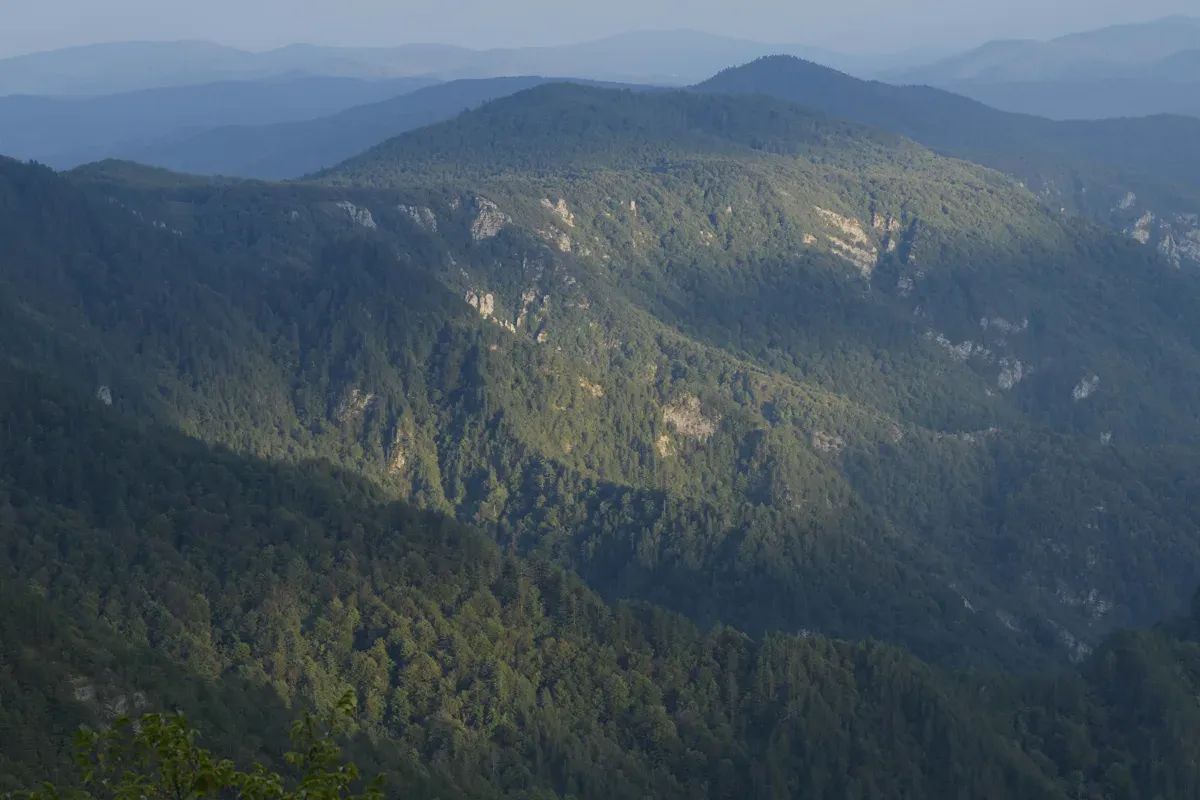
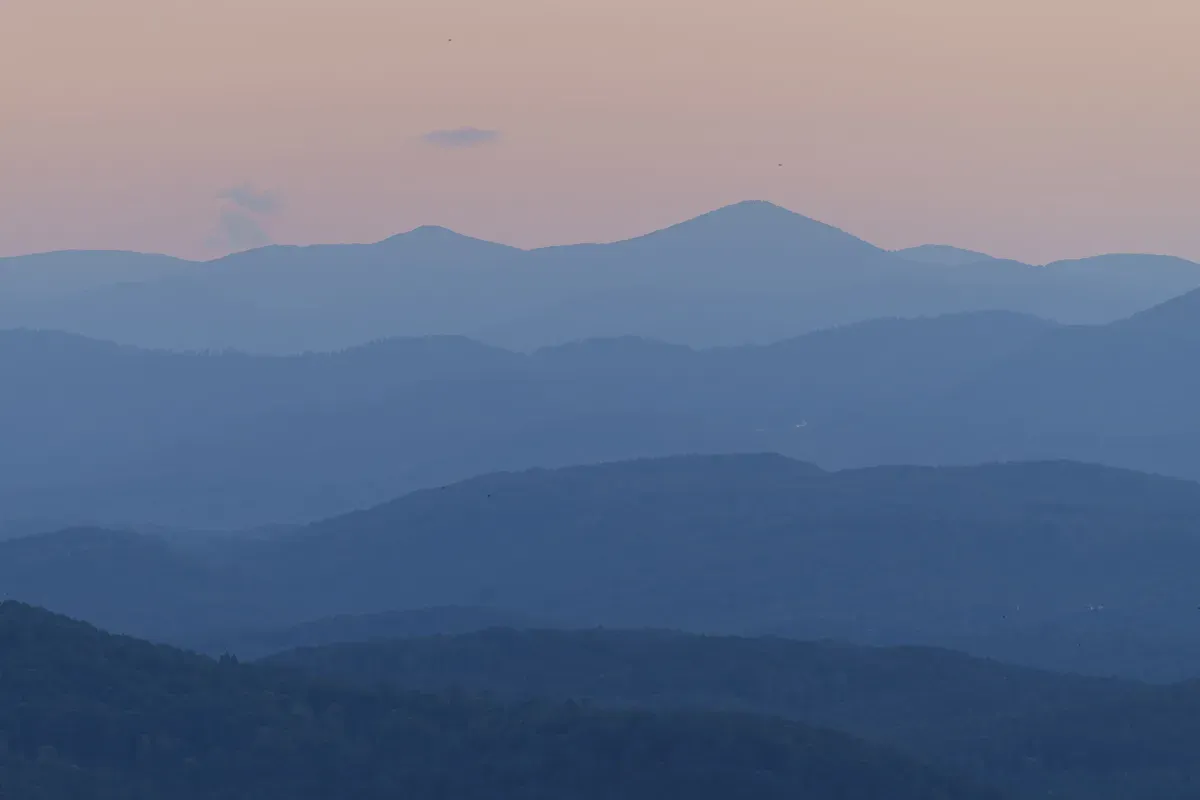
As evening approaches, Petra shows me another magical place: A rocky outcrop (Loška stena) in the dense forest slope, high above the Kolpa River valley (Kupa in Croatia), the border river to Croatia. The silhouettes of the forest slopes stretch out to the horizon, one on top of the other, in shades of blue. Human traces are barely visible. It's like a glimpse back into times before human settlement in Europe. In Slovenia and Croatia, large-scale clear-cuts in the Karst region are prohibited to prevent soil erosion. Therefore, the forest appears continuous and almost untouched. Just before the shadows of the night rise from the narrow valley, the sun breaks through the evening clouds and "ignites" the scene with soft reddish tones.
After the exertions of the hikes, Petra brings me to a tourist farm, Padovac, located deep in the forest. The friendly owner is already waiting for us with a hearty evening meal – delicious, homemade sausages with sauerkraut and potatoes.
North of Kocevje lies a vast forest area that contains some of the most beautiful remnants of primeval forest in Slovenia: the "Richau Primeval Forest" (Rajhenavski rog) and the small, jungle-like primeval forest remnant of Prelesnikova koliševka, located in an inaccessible valley. Rajhenavski Rog was declared the first nature reserve in Slovenia in 1892 and the second nature reserve in the world, just 20 years after the famous Yellowstone National Park. Forester Dr. Leopold Hufnagl had laid the foundation for modern nature conservation in the Kočevje region (Gottschee) at that time: he stipulated in the forest management plan for the properties of Duke Auersperg that some forest areas should be completely excluded from management. He wanted to preserve "primeval forest for future generations".
The 75-hectare strictly protected area is not allowed to be entered directly, but the hiking trail "Rog" ("Roška pešpot", Bear Claw symbol) leads through an equally unspoiled buffer zone to the edge of the enchanted forest. The primeval forest is a world in itself. We listen to the forest (many woodpeckers communicate in the branches) and allow ourselves to be carried away by the creative experience of photography. What a fascinating place! And what a luck that this wild forest still exists and that we can experience it! The creation is directly palpable here. This is a very spiritual experience.
Not far from the Reichaner Forest, the "Queen of Rye" rises into the sky. This is a giant fir tree, approximately 55 meters tall, which is also an "enduring" survivor of the once dominant forests. Petra stands next to the enormous, centuries-old, wooden, living being - and appears very small.
To conclude my forest experience tour through Slovenia, Petra guides me to the 15-hectare small, but equally fascinating, primeval forest of Strmec. Here, partly biblical old beech and fir trees also populate the steep slope below a forest road, which gives us a glimpse into the strict reserve. I think: This is how God (or, if you prefer, the Universe, Evolution) created the forest. Here, we are in touch with truly "holy" places, where the full spectrum of creation still lives and thrives - and touches us.
Unfortunately, our "real" forests have largely been sacrificed to the will of humans and their demands for use.
The Kocevje primeval forest reserves are all the more valuable – and the particularly nature-friendly management around them, which also allows the economic forests to approach the diversity and richness of the primeval forests. It is very desirable that many people experience the "secret forests" around Kocevje and experience their "divine" essence. Because: We must take better care of our forests. We can learn from the primeval forests what intact forests need and how we can use their riches as little as possible.
Tips: - Maroni → chestnuts - Maronimehl → chestnut flour - Roggen → rye - Roggenmehl → rye flour - Rinnen → channels - Splüi → Splüi - Fiàscia → Fiàscia
Directions
Car: Via Austria (A10, A2) to Ljubljana and the regional road 106 to Kocevje.
Train: International connections to Ljubljana, then further with regional trains (transfer in Grosuplje) to Kocevje.
Flight connections: to Ljubljana
Informationen über Giant Sequoia in Slovenia, the "mysterious forests" and tourist opportunities:
Accommodation
Snežnik area:
Gostišče (Gasthaus) Mašun 1, SI-6253 Knežak, Slovenia
Contact at Gostišče Mašun is Mitja Bolčina
Tel +386 31 623 053 or
+386 51 661 611
Region Kočevsko:
Hostel Bearlog
- Maroni → chestnuts - Maronimehl → chestnut flour - Roggen → rye - Roggenmehl → rye flour - Rinnen → channels - Splüi → Splüi - Fiàscia → Fiàscia
Address: Ljubljanska cesta 4, 1330 Kočevje
Phone: +38631544744 e-mail: hostel.bearlog@kocevsko.com
Padovac Tourist Farm
The farm is a historic estate in the Kostel municipality, which has been comprehensively renovated. It is located high above the Kolpa Valley, in idyllic natural surroundings.
Rajhenav Farm
https://www.kocevsko.com/en/poi/farm-rajhenav
The Rajhenav farm is located in the eponymous village in the heart of the Kočevje forests, near the Reichauer Forest. It offers visitors a combination of traditional agriculture (livestock farming - Limousin cattle, horses, goats, donkeys… - and beekeeping) and tourism (gourmet dining and accommodation).
Restaurant
Gostišče (Gasthaus) Mašun
Mašun 1, SI-6253 Knežak, Slovenia
The solitary inn in the forest is widely known for its game dishes.
Padovac Tourist Farm
The farm is a historic estate in the Kostel municipality, which has been comprehensively renovated. It is located high above the Kolpa Valley, in idyllic natural surroundings.
Rajhenav Farm
https://www.kocevsko.com/en/poi/farm-rajhenav
The Rajhenav farm is located in the eponymous village in the heart of the Kočevje forests. It offers visitors a combination of traditional agriculture (livestock farming - Limousin cattle, horses, goats, donkeys… - and beekeeping) and tourism (gourmet dining and accommodation).
Falkenav Restaurant
Mahovnik 90, 1330 Kočevje
Tel.: 0038618931850
https://www.kocevsko.com/sl/poi/falkenau
Restaurant in Kocevje, known for its specialities featuring wild game and homemade soups.
The trip was made possible with the kind support of the Slovenian Tourist Board.
Those who wish to experience primary forests, for example in Romania, can find information here: www.primaryforests.org