The name "Bamberger Hörnla" is associated with bakeries in the Franconian city, creating a delicious, croissant-like pastry. Among connoisseurs and gourmets, this special potato variety also enjoys a legendary reputation. Nevertheless, it was long gone from the menus of even the most upscale restaurants and is no longer available in stores. Fortunately, enthusiasts in a support association and Slow Food Germany brought this specialty back into the "Ark of Taste" list, which means that consumers can now enjoy what is claimed to be "the best potato salad in the world."
A delicacy with a long history
The first reports about the cultivation of the Bamberger Hörnla, also Bamberger Hörnle or Bamberger Hörnchen in German, date back to the mid-19th century in the Franconian region, and this potato variety was officially documented in 1854. However, it is suspected that the variety is even older. Today, the Bamberger Hörnla are exclusively cultivated in southern Germany. This is because they have never been bred by seed producers, which is why they are not listed on the official German list of potato varieties, which is why this excellent potato variety has not been widely distributed.
Characteristics and reasons for decline
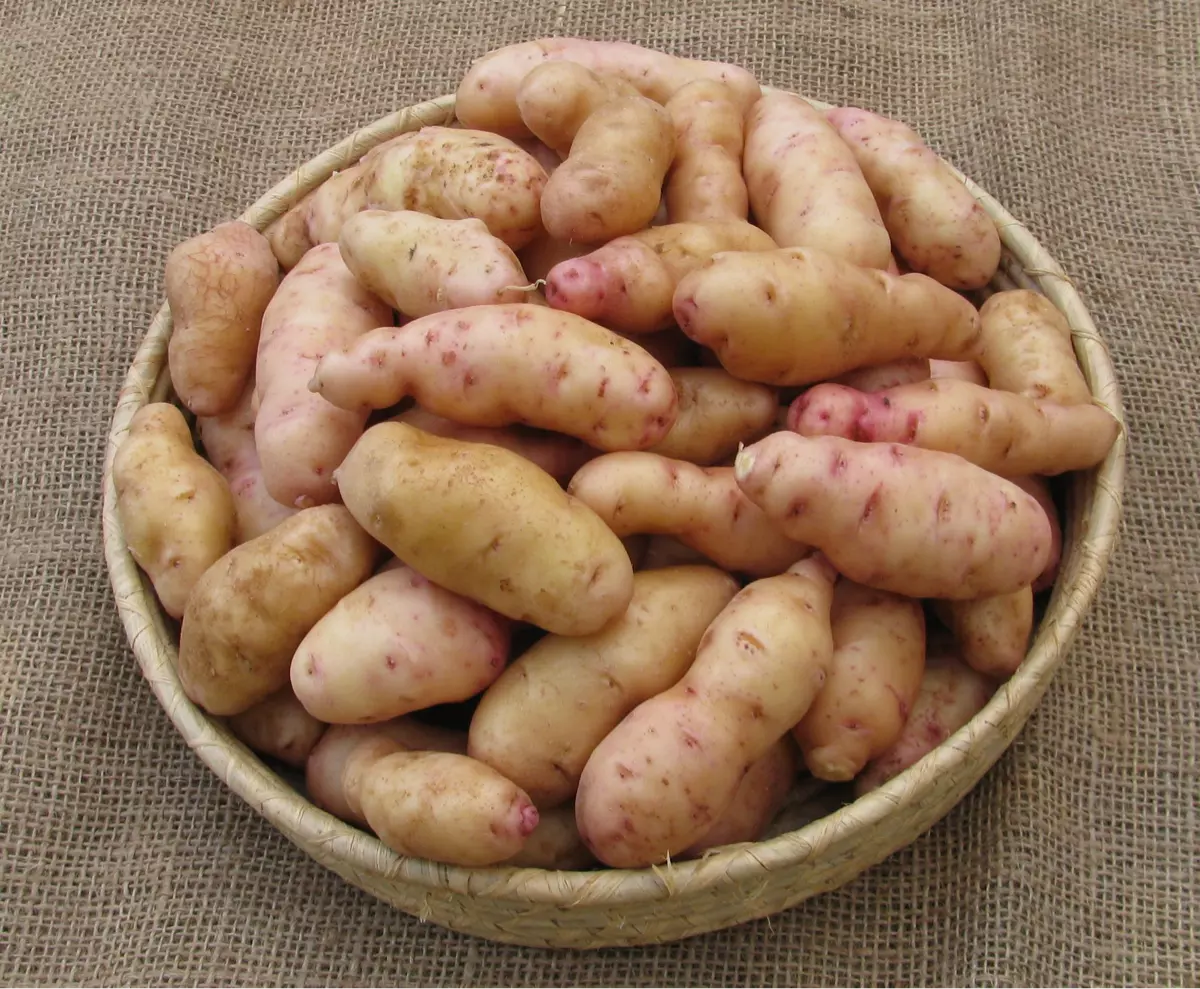
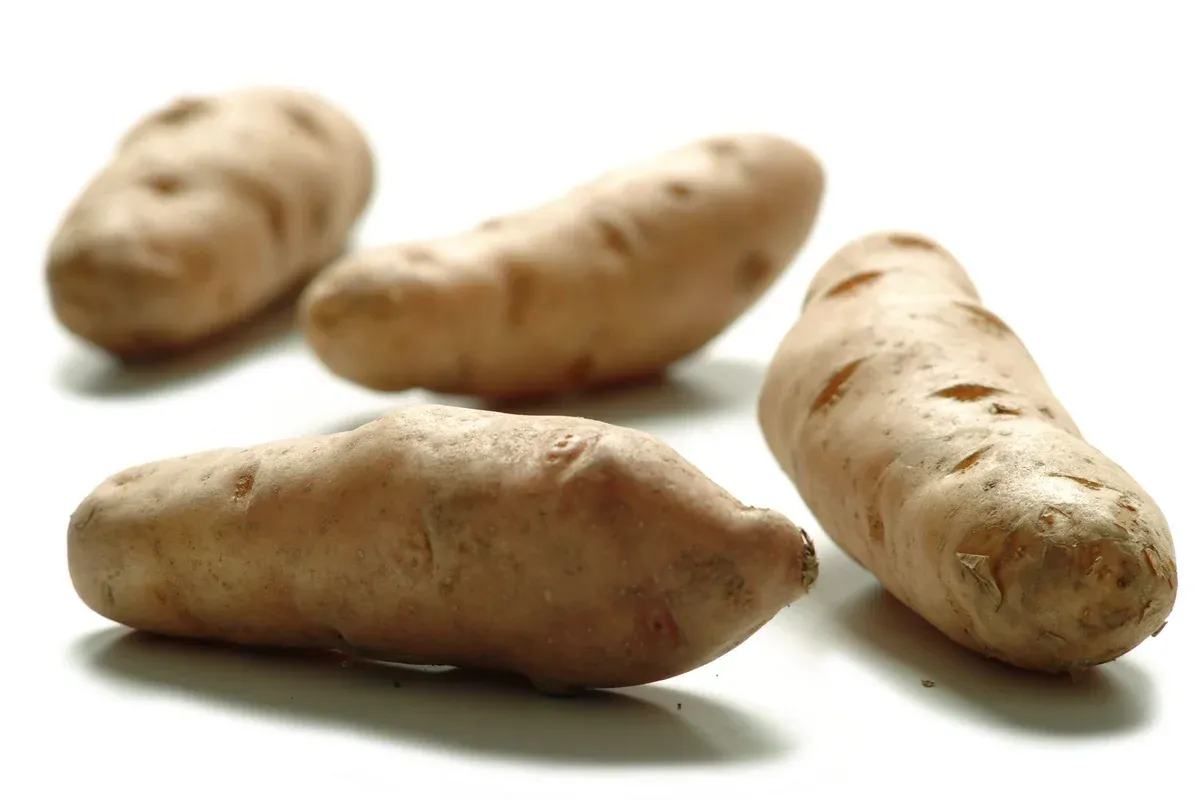
The potato plant is small and bushy with delicate leaves and white flowers. The potatoes are small and finger-shaped with a length of approximately 3-10 cm, are about 1.5-4 cm thick, are slightly curved like a "Hörnle" and sometimes have bumpy protrusions. The skin is smooth, silky and glossy, and light in color with a slight reddish sheen. At the base of the deep eyes, there is a red spot. The reddish sheen is most intense after harvest in September and gradually decreases with longer storage. Under optimal storage conditions, the Bamberger Hörnla has an extremely long dormancy period and can be stored without significant loss of flavor until mid-July.
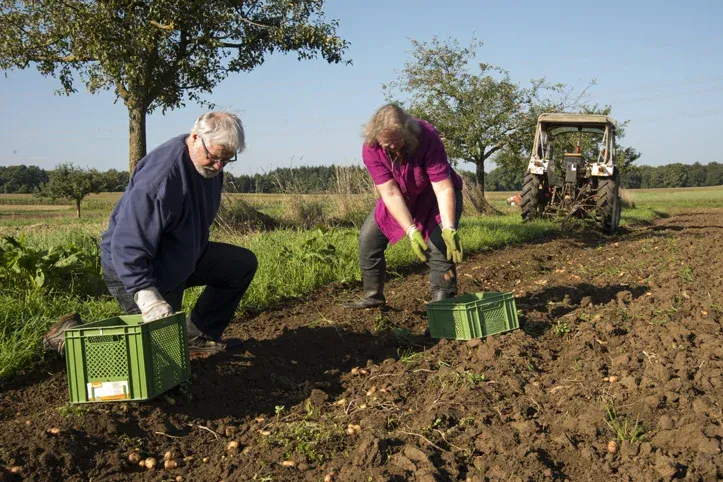
The potatoes, which are susceptible to potato rot and pests, require light, nutrient-rich soil. In the past, they were planted and harvested by hand, but with the increased use of planting and harvesting machines, the variety disappeared from field cultivation in 1950, as the elongated potatoes were not suitable for machine harvesting and sorting. Thus, the Hörnla were for a long time only secured by horticulture and direct marketing. The high maintenance requirements and low yields have also made cultivation less profitable over the years, so other varieties that are easier to cultivate and guarantee larger harvests were also preferred in the original area. However, these do not have the characteristic properties of the Bamberger Hörnla.
A special taste experience
The yellow flesh of the Bamberger Hörnla has a firm consistency. This makes them ideal for cooking as firm-cooked salad and boiled potatoes. Grown in the typical Franconian terroir, the variety has a very high starch content of over 13%, which ensures a special, intense and nutty flavor. This "firm" texture, the intense flavors and the multi-layered and intense potato flavor make this variety a special taste experience. In the Franconian regional cuisine, it is served with buttered or lightly browned fish and meat dishes, fine vegetables and, of course, Franconian asparagus. The delicacy is mainly used in its traditional preparation as a (festive) potato salad.
The Bamberger Hörnle consists of about 75% water and has a fat content of only 0.1 percent, up to 20% of the dry matter is easily digestible starch, which has a positive effect on metabolism. In addition, many fibers provide a high level of satiety, making the variety suitable for diets. Many fibers, magnesium, potassium, calcium, iron, vitamins B1, B2, B6 ensure a high nutritional value. The also present vitamin C is of high quality and comparable to that of an apple.
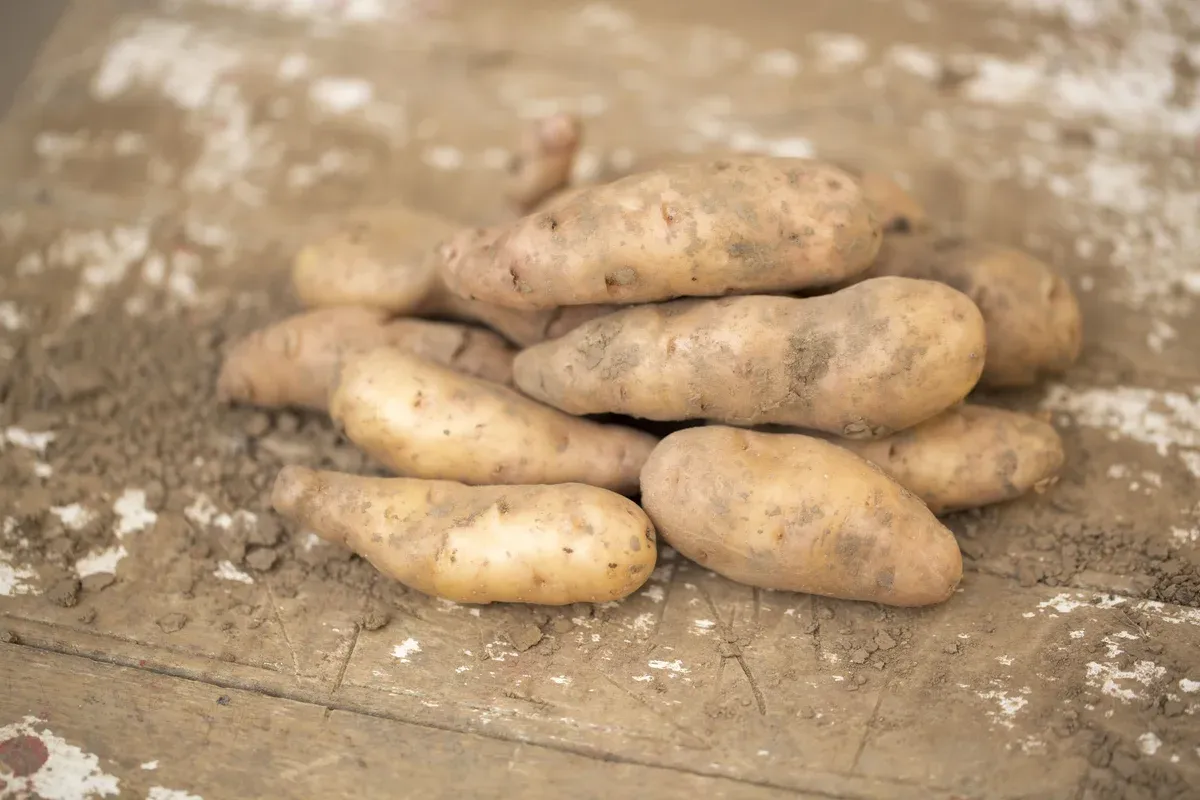
When considering that the real Bamberger Hörnla only represents about 0.001 percent of the total potato volume in Germany, it becomes clear that this is a truly special variety.
The best potato salad in the world…
Experts and private individuals disagree on whether mayonnaise should be added to potato salad and whether it should be served warm or cold. However, many agree that those who have been lucky enough to buy Bamberger Hörnla should definitely use this variety.
Here is a preparation recommendation from the website of the Bamberger Hörnla support association:
Zutaten für zwei Personen:
- 12–14 Bamberger Hörnchen
- 200 ml Rinder- oder Geflügelbrühe
- 1 Essiggurke
- Blattpetersilie
- 50 ml Essiggurkensud (aus dem Glas)
- 1 ½ Teelöffel mittelscharfer Senf
- 40 ml Rapsöl
- Salz/Pfeffer
- 3 Radieschen
- 2 Schalotten
- 3 EL Weißweinessig
Zubereitung:
Die Kartoffeln waschen, dann ungeschält in reichlich Salzwasser weich kochen. Ausdampfen lassen und noch heiß schälen. Die warmen Kartoffeln in Scheiben schneiden.
Schalotten in feine Würfel schneiden und mit der Brühe in einen kleinen Topf geben und auskochen. Die Schalotten mit der Brühe über die warmen Kartoffeln geben, dann Weißweinessig dazu und kurz umrühren. Die Kartoffeln abkühlen lassen.
Die Petersilienblättchen von den Zweigen zupfen und fein hacken. Die Essiggurke in feine Würfel schneiden. Zusammen mit dem Essiggurkensud und dem Senf verrühren und zu den Kartoffeln geben. Den Kartoffelsalat mit einer Gabel vermengen, dabei darf ein Teil der Kartoffeln zerfallen.
Rapsöl langsam dazu gießen und erneut vermengen. Mit Salz und Pfeffer sowie bei Bedarf nochmals etwas Weißweinessig abschmecken. Den Kartoffelsalat dann mindestens 30 Minuten ziehen lassen.
Die Radieschen in hauchfeine Scheiben hobeln, diese unter den Kartoffelsalat heben und den Salat servieren.
The concerted rescue effort bears fruit
In 2005, the variety was also included in Slow Food's "Ark of Taste" as a outstanding, endangered, traditional regional food. In March 2009, the "Bamberger Hörnla in Franken e.V." was founded with the local Slow Food Convivium Mainfranken-Hohenlohe and the regional producer association. This was recognized as a "Presidio," which are projects that the International Slow Food Foundation supports for the protection and support of local and artisanal foods.

Thanks to the commitment of Slow Food and the "Bamberger Hörnla in Franken" support association, consumers can once again enjoy this specialty
When this culinary specialty had almost completely disappeared, various communication and promotion initiatives were launched, which were carried out by a small group of producers, market traders and restaurants in Bamberg and throughout Franconia, as well as experts from the Bavarian Agricultural Administration. This group currently consists of 15 farmers and gardeners who dedicate a piece of their land to the cultivation of the Bamberger Hörnla. The support association initiated the application for the protection of a geographical indication (GGI), which was finally granted in 2013. Since then, it has not been grown or marketed outside the origin region.
In addition, the old potato variety was also listed in the official German list of genetic resources. This allows the support association to carry out conservation breeding on a secure legal basis.
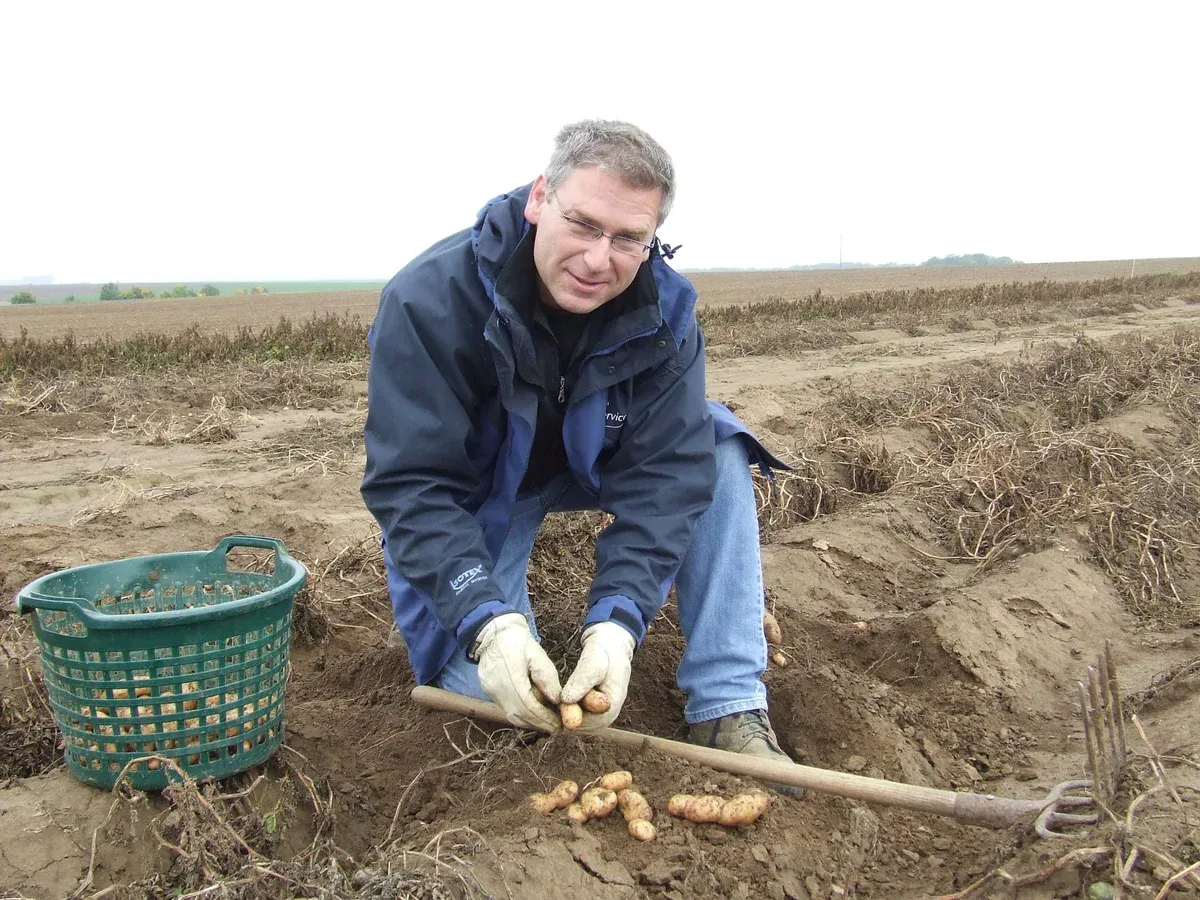
This is now also thanks to the help of the Bavarian Institute of Agricultural Research. The producers in the support association have had certified seed potatoes since 2011. The choice of the variety as "Potato of the Year 2008" also played an important role in preserving the fine tuber.
What remains to be done
Despite all the previous successes in patiently educating about the real Bamberger Hörnla, there are still future tasks that should be tackled systematically. This includes, for example, that Slow Food continues to promote this fine tuber at its international trade fairs such as Terra Madre in Turin, but also at regional events and markets. Similarly, Franconian restaurateurs should be further convinced to include the Hörnla on their menus. Guests can also provide important impulses by asking about it. Finally, the efforts of the support association to achieve a coordinated marketing among the individual producers should be continued, and attention should also be paid to preventing the still occurring labeling fraud, in which the similar-looking French variety La Ratte is marketed as Bamberger Hörnla.
Where the noble tuber can be found
The Hörnla can only be grown in Franconia, especially in the traditional cultivation areas around Bamberg, Schweinfurt and Kitzingen, but also in the more recently added areas around Nuremberg, Würzburg and Neustadt/Saale.
A list of the current producers is available on the website of the "Bamberger Hörnla in Franken e.V."
Bamberger Hörnla in Franken e. V.
Hauptstr. 19
97253 Gaukönigshofen
Tel. (0 93 37) 9 01 14
info@bambergerhörnchen.de
www.bambergerhörnchen.de
Contact of the producer representative and Presidio coordinator:
Rainer Lesch
Tel.: (0 93 37) 9 01 14
E-Mail:r-lesch@t-online.de
At markets and in the organic food trade, consumers can also find Bamberger Hörnla outside of Franconia. Anyone who has the opportunity to buy them should definitely take advantage of it.