Cities are not today known as the preferred habitat for plants. And yet, they are here on every step and turn. Wherever there is a little soil between paving stones, on walls, on tree trunks, under hedges and on rails, they are – the ones that are often overlooked – there.
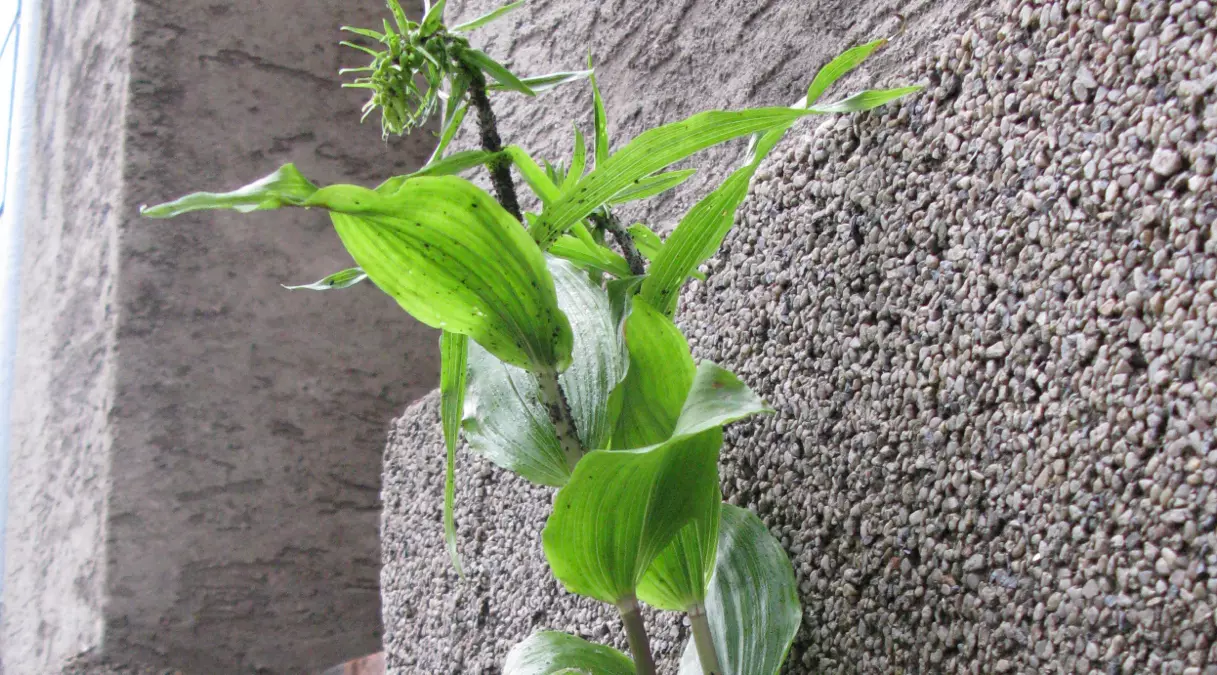
This also applies to the city plant of the year 2025, the broad-leaved Stendelwort (Epipactis Helleborine), also often written as Ständelwurz. As often as it is overlooked, so often is not recognized that it is actually a species of orchid. And one that is very different from other orchids. Although it also grows in forests, on meadows and in gardens, its distribution is as a more modest splash of color in the paved space. And it does not decline in stock, but rather multiplies in a cheerful way. Thus, it has become the only city orchid, which is why it was elected as the city plant of the year 2025 by the members of the Bochumer Botanical Association.
Morphology
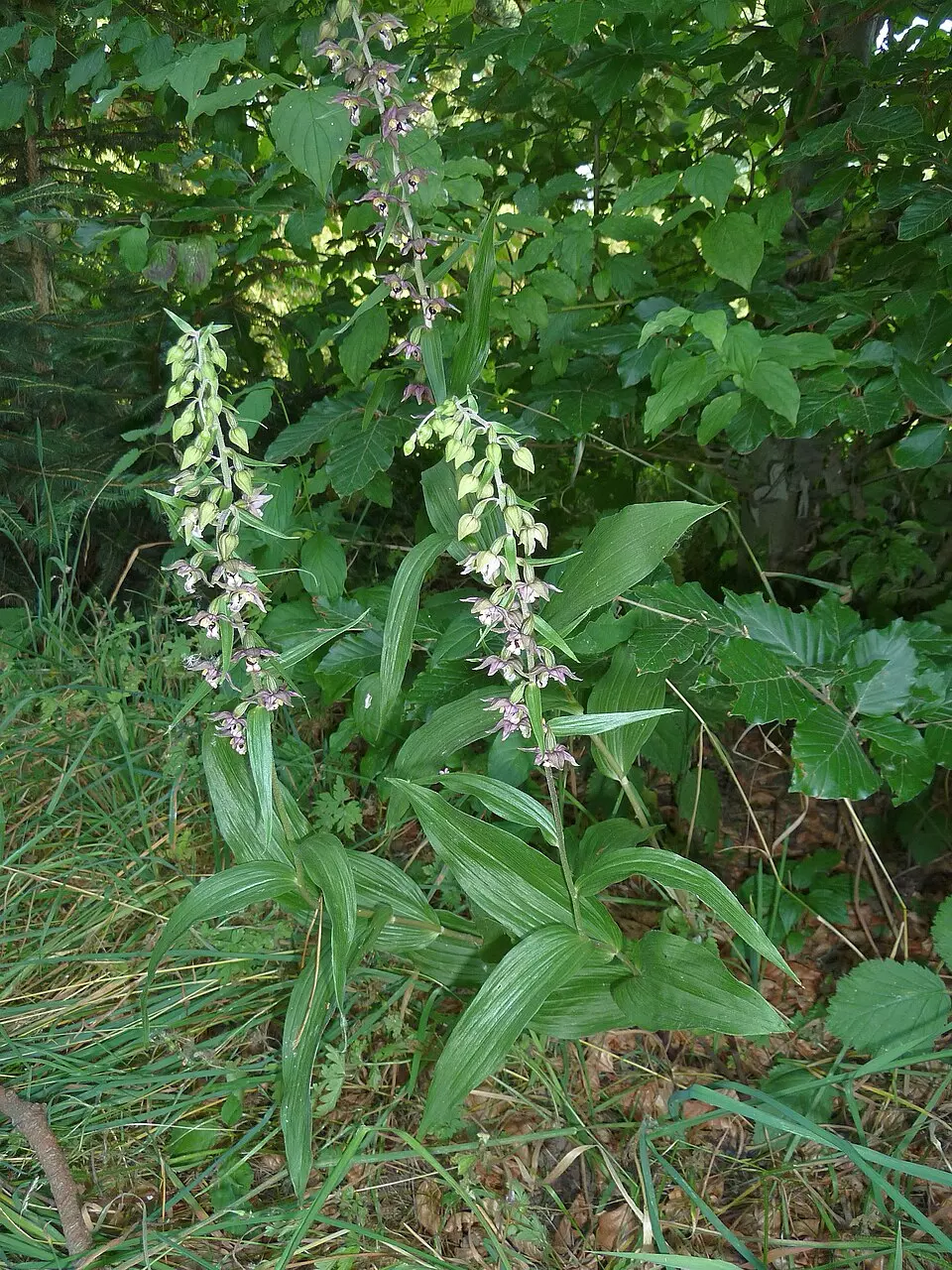
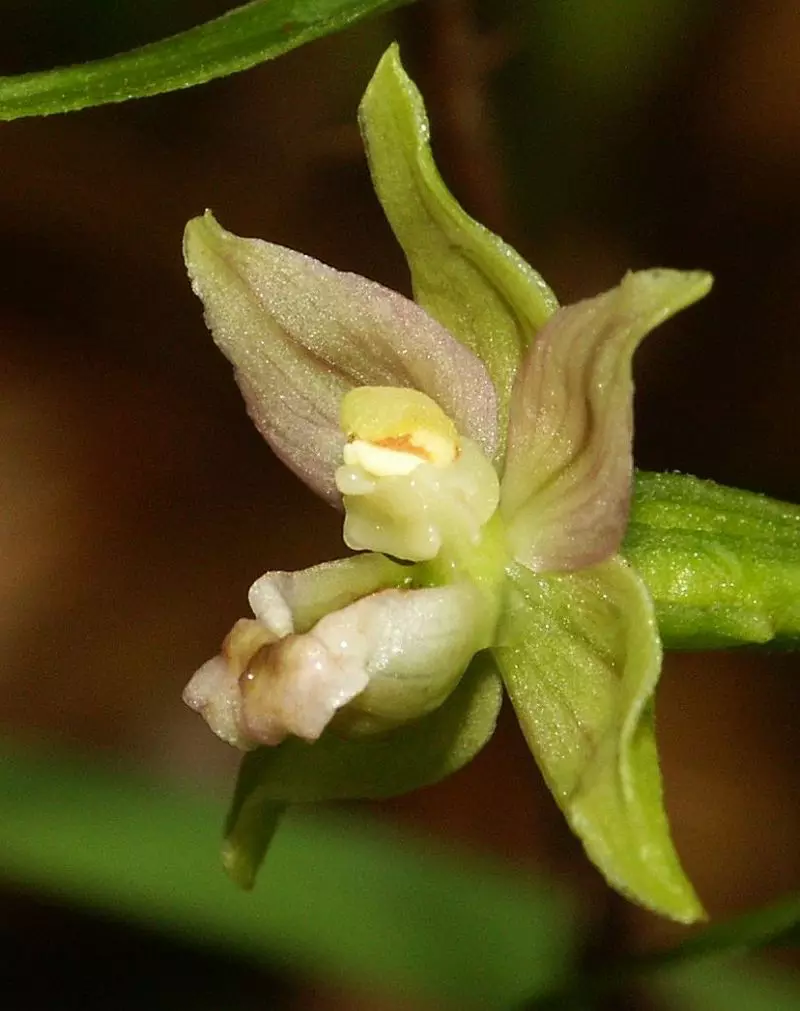
The plant is very variable in habit, it often remains quite small, but can also reach a height of over a meter. The oval and broad leaves with clear veins are located near the base, and become increasingly narrower towards the top. The inflorescence can have up to 80 individual flowers and often takes up most of the entire plant length. A peculiarity: the bud is angled when closed, as if it is bent, but only straightens out when blooming. The individual flowers are very variable in form and color. They usually have a greenish or greenish white base color and are more or less intensely brown-red to purple-purple. Often the plant appears almost black, because it is very often affected by aphids.
The trick with the caterpillars
The Stendelwort is a late-blooming plant, it mainly reproduces through pollination by insects, especially bees, to which it pretends to be the presence of caterpillars of the cabbage white butterfly, with which they feed their brood. This "refined deception" is typical of so-called bait-deceiving flowers, a rather rare and recently discovered trick of a representative of the native flora.
Occurrence
The seeds mature in elongated capsules that open longitudinally and release their cargo to the wind. The Stendelwort obtains its nutrients by being involved in the symbiosis of trees with mycorrhiza fungi. What the orchid does not like are bogs and marshy meadows. It will be too moist for it, otherwise it has hardly any requirements for soil quality, it is almost worldwide distributed in its occurrence. The stocks are not endangered, but increasing dryness due to climate change is causing problems for it. Digging up and picking the plant is not allowed, it falls under the protection conditions for orchids.
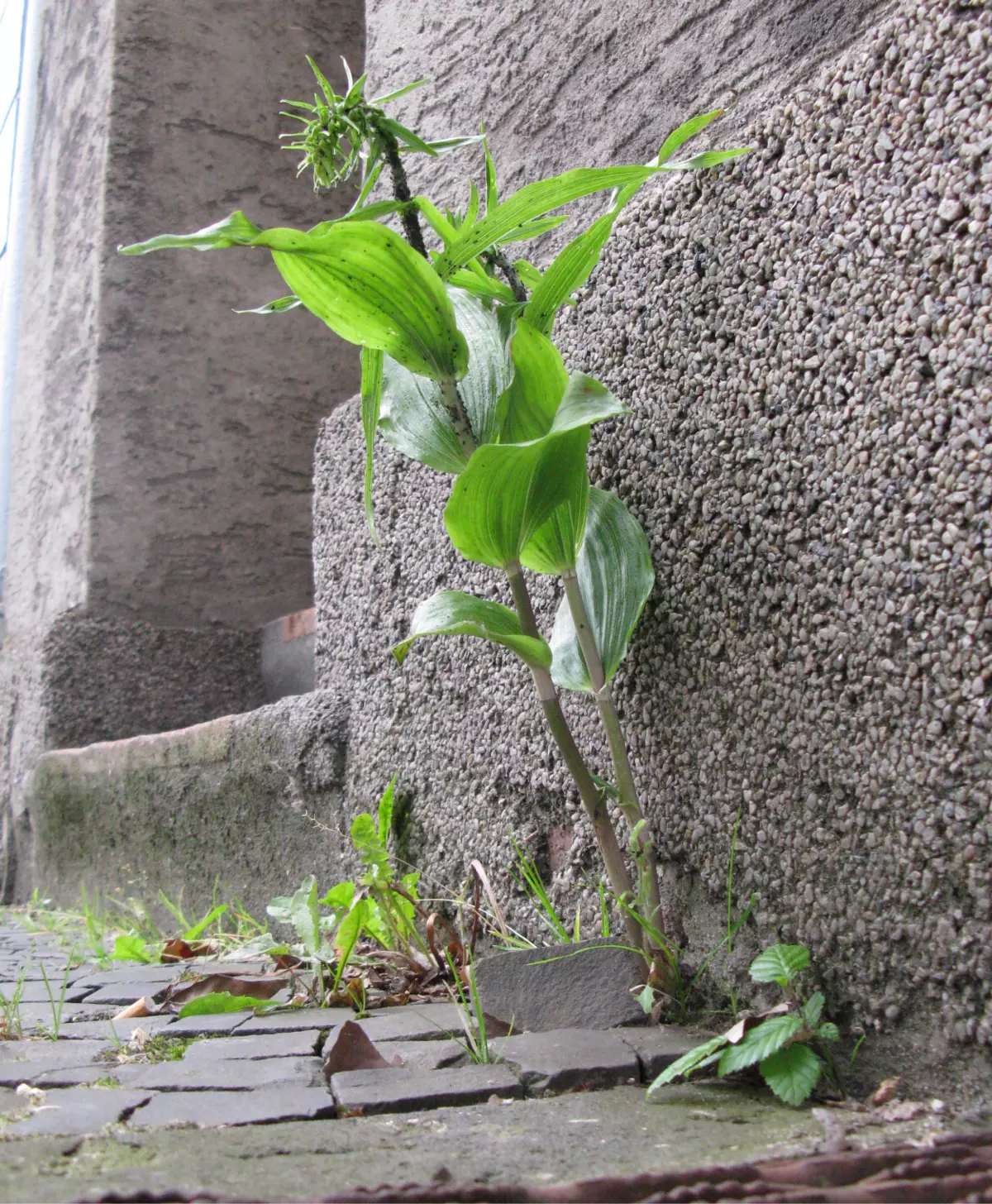
Anyone who keeps their eyes open on their daily journeys will encounter the broad-leaved Stendelwort almost daily.