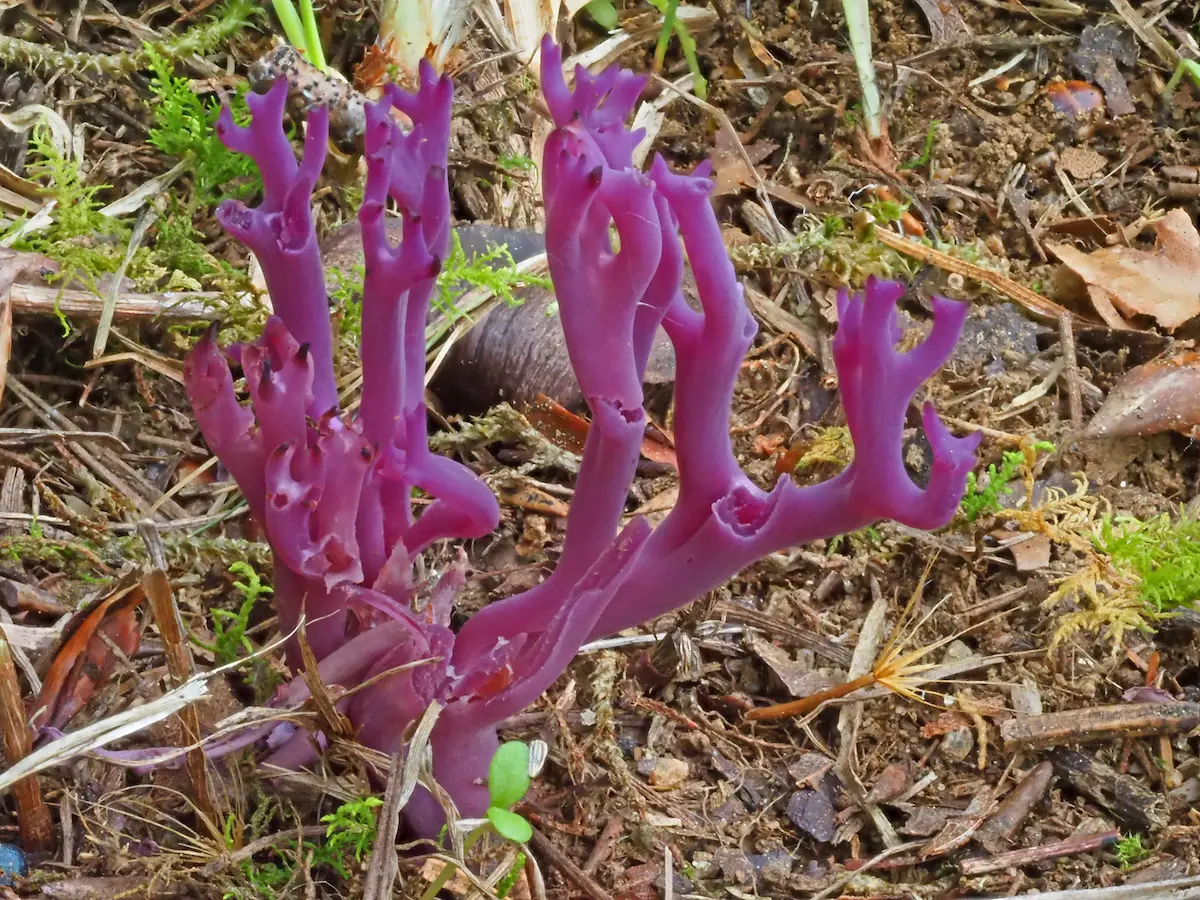
Since 1994, the German Society for Mycology e.V. (DGfM) has chosen one of the over 10,000 large mushrooms native to Europe annually as the Mushroom of the Year. Naturally, this selection is about the species itself, especially if it is rare, but each "Yearly Mushroom" also serves as an exemplary representation of the mushrooms and their overall ecological importance. The selection aims to raise public awareness of nature and mushrooms and their endangerment.
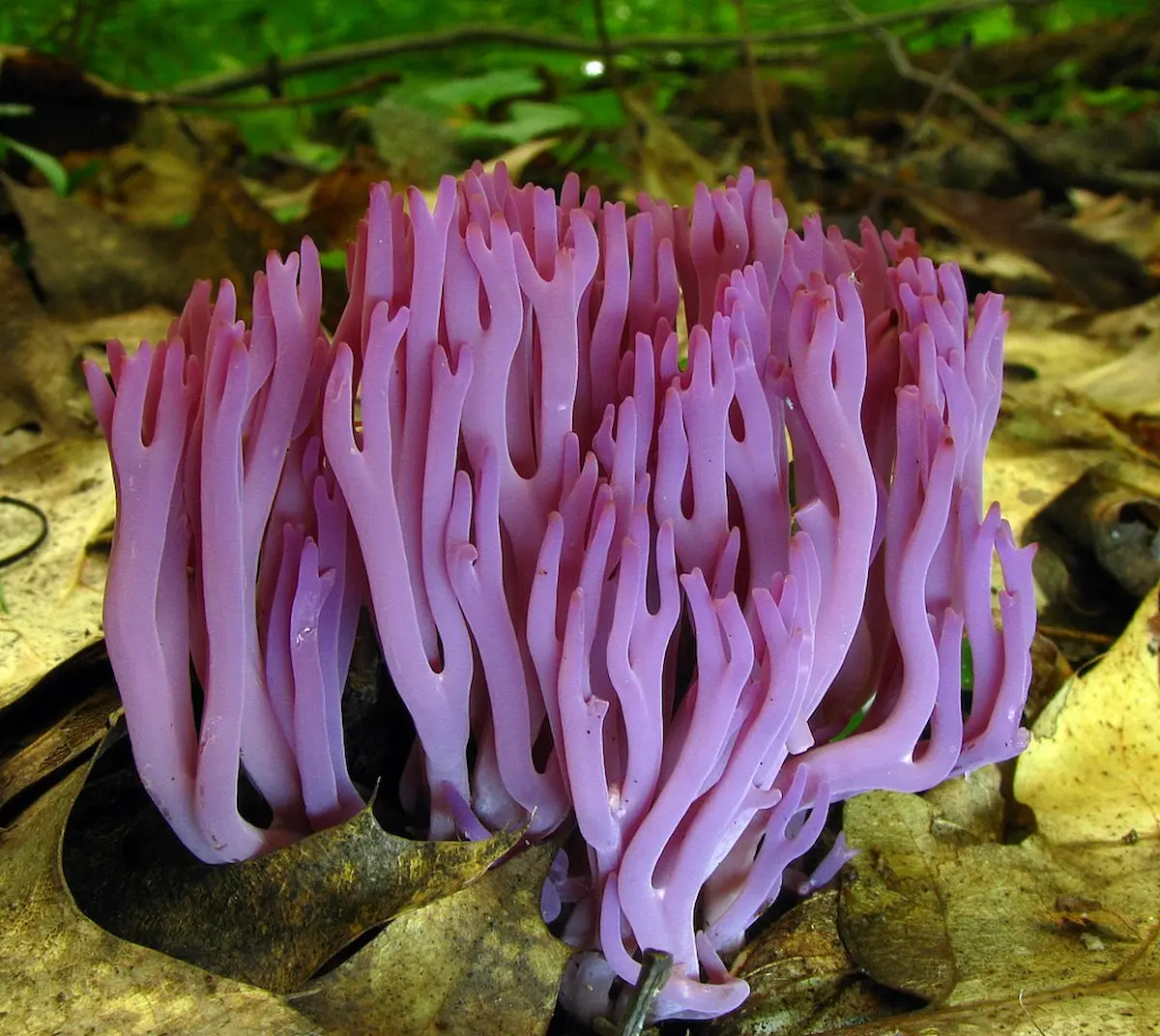
The Mushroom of the Year 2025 does not look like a mushroom as the average person might imagine. But mushrooms are diverse, and some of them are so unusual that they seem to have evolved from a coral reef and settled in forests and meadows. Clavaria Zollingeri does not have the usual structure with a stem and cap, and it also looks quite unusual in color, such as red cabbage from a jar. Just as the mushroom does not have a clearly defined shape, it also lacks a lamellar, tubular, or pored layer, which would house the pollen-bearing basidia (stalks). Instead, the entire surface of the forked branches is occupied by these basidia.
Rare "primitive" and indicator plant
The Meadow Coral is native to all continents of the Earth, which suggests that this species is very old, possibly existing even during the time of Pangaea, and has simply migrated with the parts that formed the recent continents when the original continent split.
Furthermore, this species is very rare, with only about forty locations in Germany. This is because it is almost exclusively found in nutrient-poor meadows. Where fertilization occurs, the species is absent, which provides an indication of the state of the site in terms of exogenous nutrient inputs.
The amethyst-colored Meadow Coral from the family of Club-shaped relatives (Clavariaceae) is closely related to similar club-shaped species, which can only be distinguished from each other by microscopic examination, as well as from small, usually dome-shaped meadow mushrooms with vibrant colors, which also live in symbiosis with the plants of the habitat, just like Clavaria Zollingeri.
Nothing is known about the nutritional value of the mushroom, but its rarity, small size, and fragility make collecting it undesirable anyway.