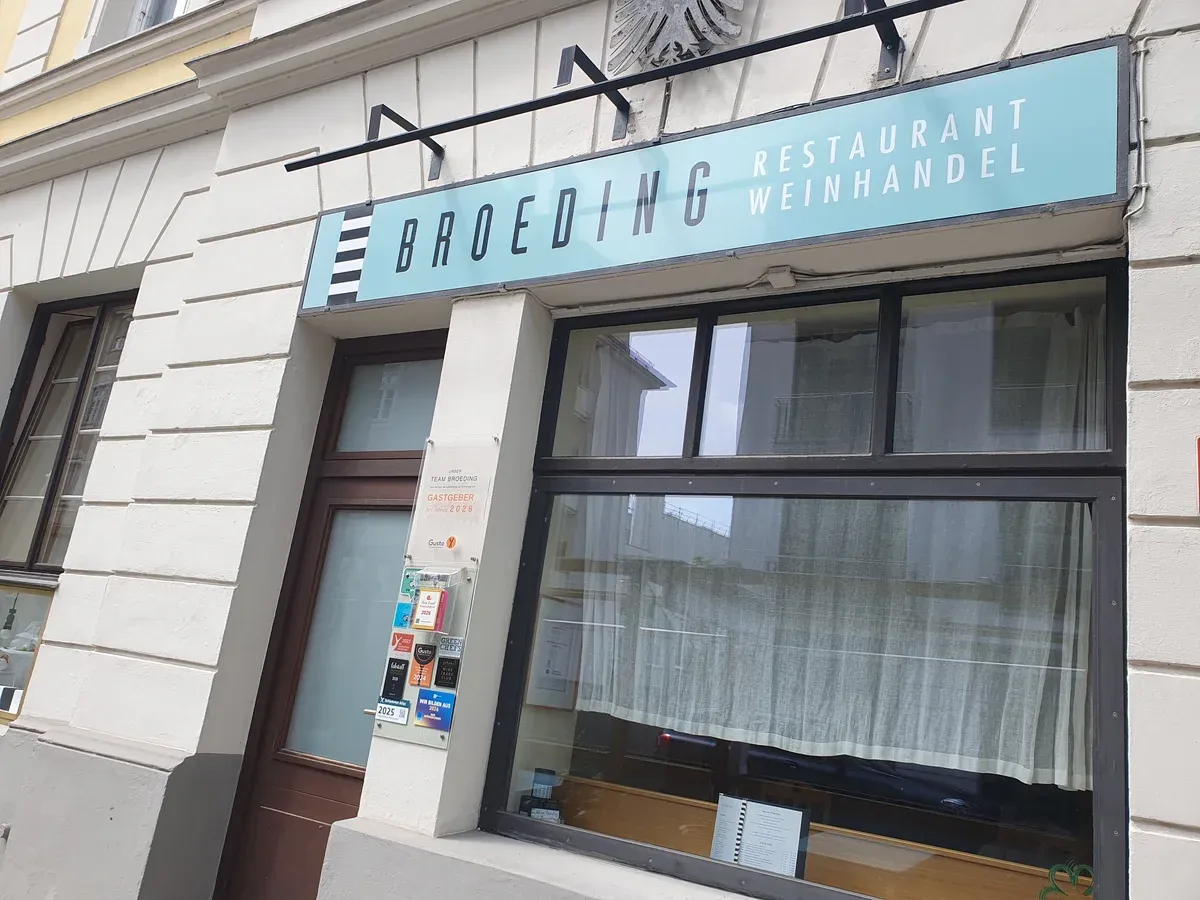
When a big-city restaurant stays true to its distinctive approach over a span of 36 years and is successful for precisely that reason, one can rightly speak of a culinary institution. In the specific case of the „Broeding“ in Munich’s Neuhausen district, one can even speak of a steadily shining star in the gastronomic firmament. Admittedly without the well-known Michelin star, yet very much at that level.
A Special Concept: A Set Menu Instead of à la carte
While the lyrical self-descriptions of some restaurants read as though they came from the pen of resourceful marketing experts, the Broeding team gets straight to the point without any frills:
„Clarity and precision in the restaurant, on the plate and in the glass. That’s why there’s a set menu.“
So a single, perfectly coordinated menu that changes daily, available with three, four or five courses instead of an extensive à la carte list. With the exception of the one reserved for the wines, which are offered to guests and buyers – the Broeding is also a wine merchant – from 30 winemakers, primarily Austrian. When selecting the wines to match each course, guests benefit from the expert advice of two sommeliers. A special feature: there is even a specialist for the non-alcoholic drink pairing available to guests. He ferments, prepares extracts and creates new beverages to match the menu.
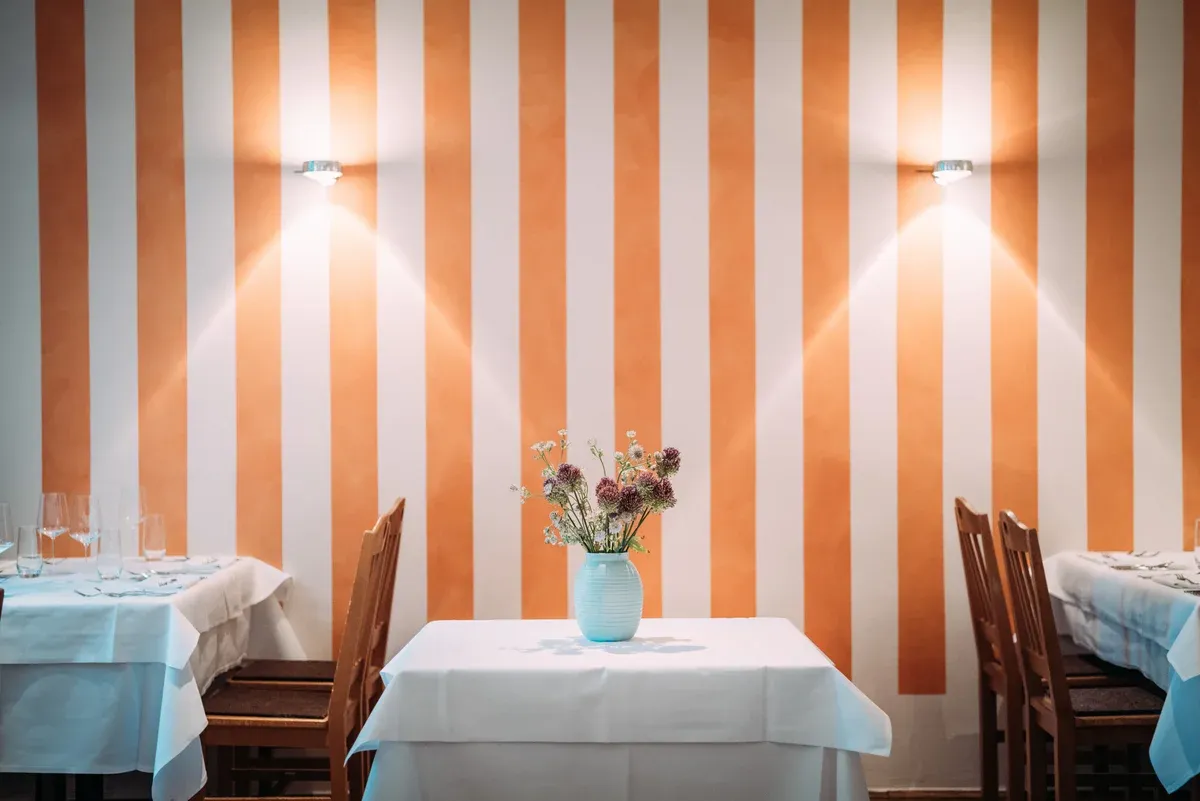
The dining room, with its plain wooden chairs and the striking block-striped look on the large wall, seats 45 guests and, for all its sobriety, conveys an exceptionally pleasant atmosphere.
During the summer half of the year, gourmets can also enjoy themselves in the „Schanigarten“ in front of the restaurant.
On the day I began writing about the Broeding phenomenon, the menu featured the following courses and dishes:
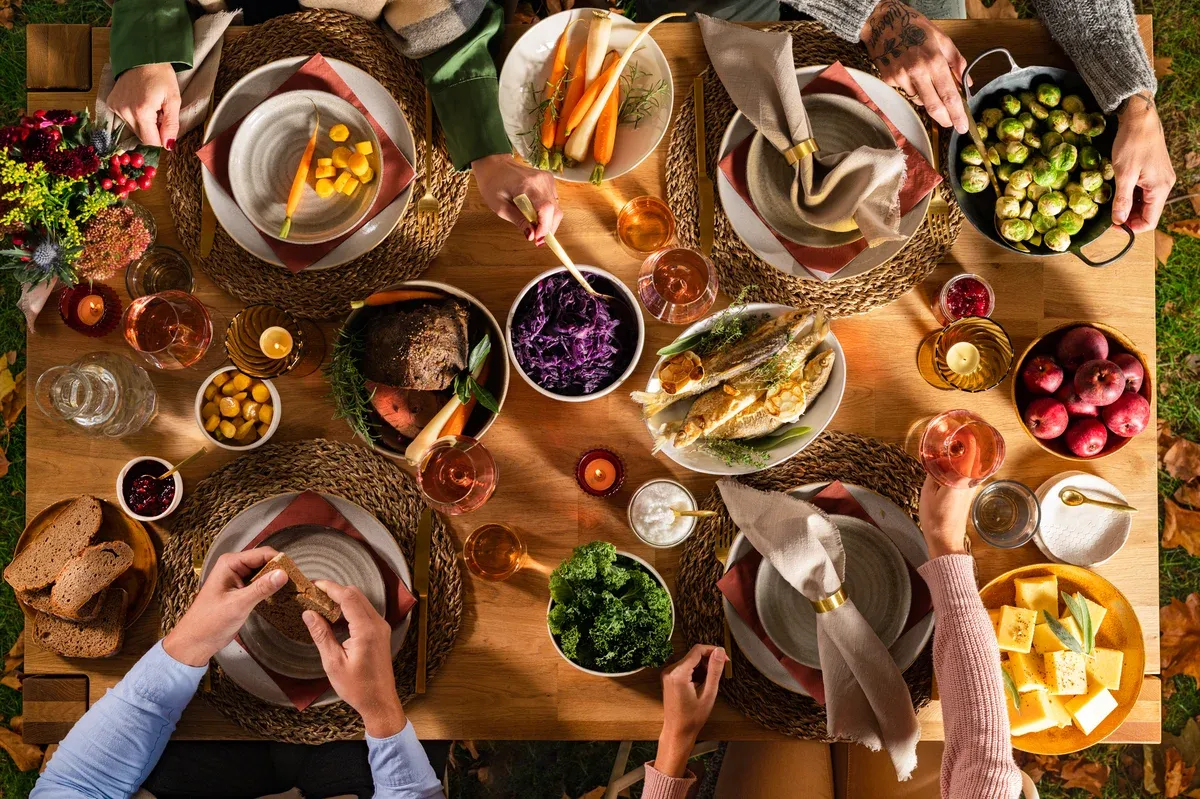
An evening at the Broeding offers no spectacular staging, no background music, no décor, but simply and „only“ a concentration on the essentials – namely, a product-centred taste experience with seasonal and regional ingredients. Friendly service included.
The Team
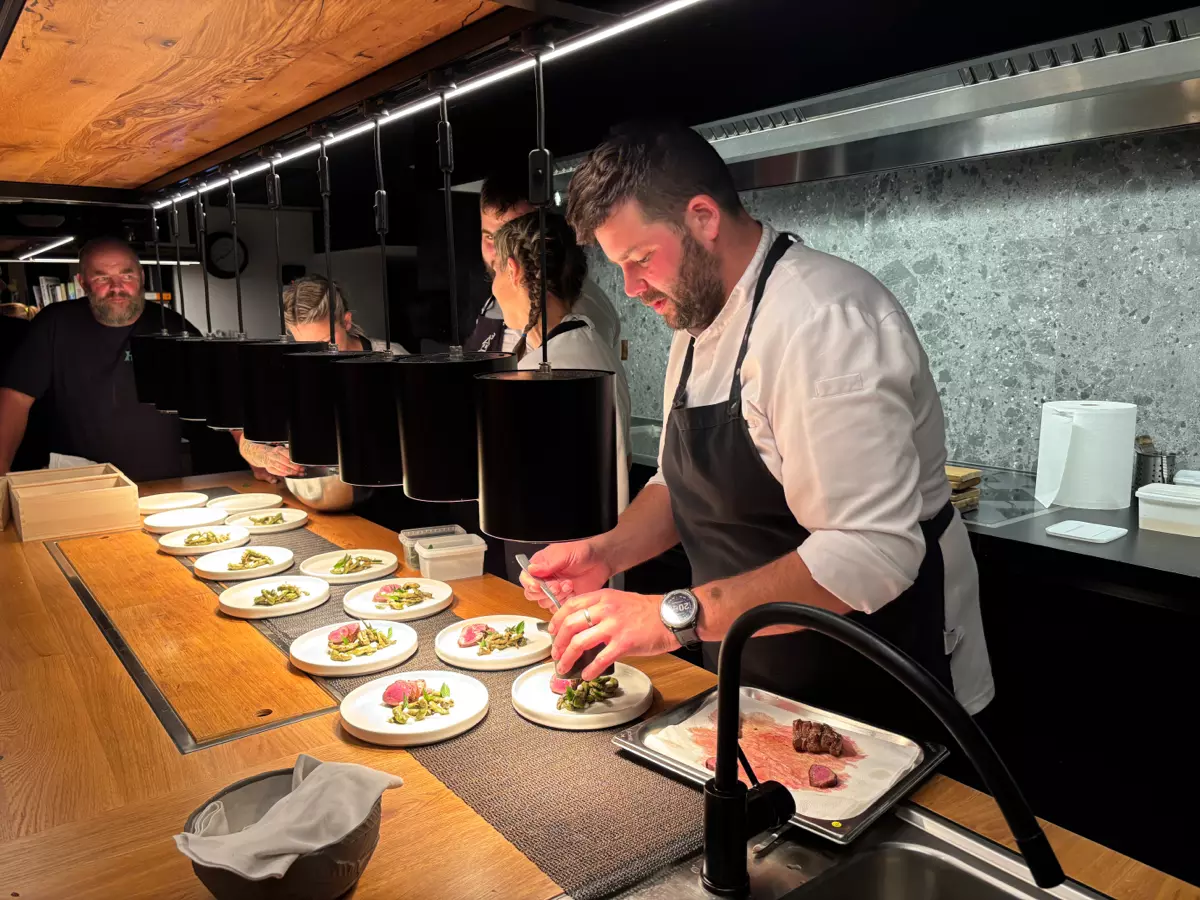
I had already discarded, in advance, the idea of meeting head chef and co-owner Manuel Reheis to conduct an interview with him, or at least a thematically structured conversation. The top chef has too many fascinating things to report, and too many follow-up and interjected questions would spontaneously occur to me. So I didn’t weave a narrative thread in the first place, but simply dived straight into the subject with the question about the name of the establishment. It would seem obvious that it is dedicated to the founder of the business. But far from it, because in 1990 there was not a single founder, but a collective of seven people, and they wanted to create a culinary reference when finding the name. At first a vineyard site in the Wachau was considered. After that was discarded, they finally decided to honour the Alsatian char, that is, the Broeding. This breed, created by crossing a female brook trout with a male lake char, is a delicacy and thus fits perfectly with the culinary aspirations of the team around head chef Manuel Reheis, who joined as early as 1995. First as a cook, later as head chef and partner. Today he runs the restaurant together with founder Gottfried Wallisch, assisted in the kitchen by, among others, sous-chef Benny Darchinger, a recognised expert in vegetarian and vegan dishes. He had previously developed his craft at the „Tian“ under Paul Ivic in Vienna, then spent three years with the Tian offshoot in Munich, at the time Germany’s only purely vegetarian restaurant with a Michelin star.
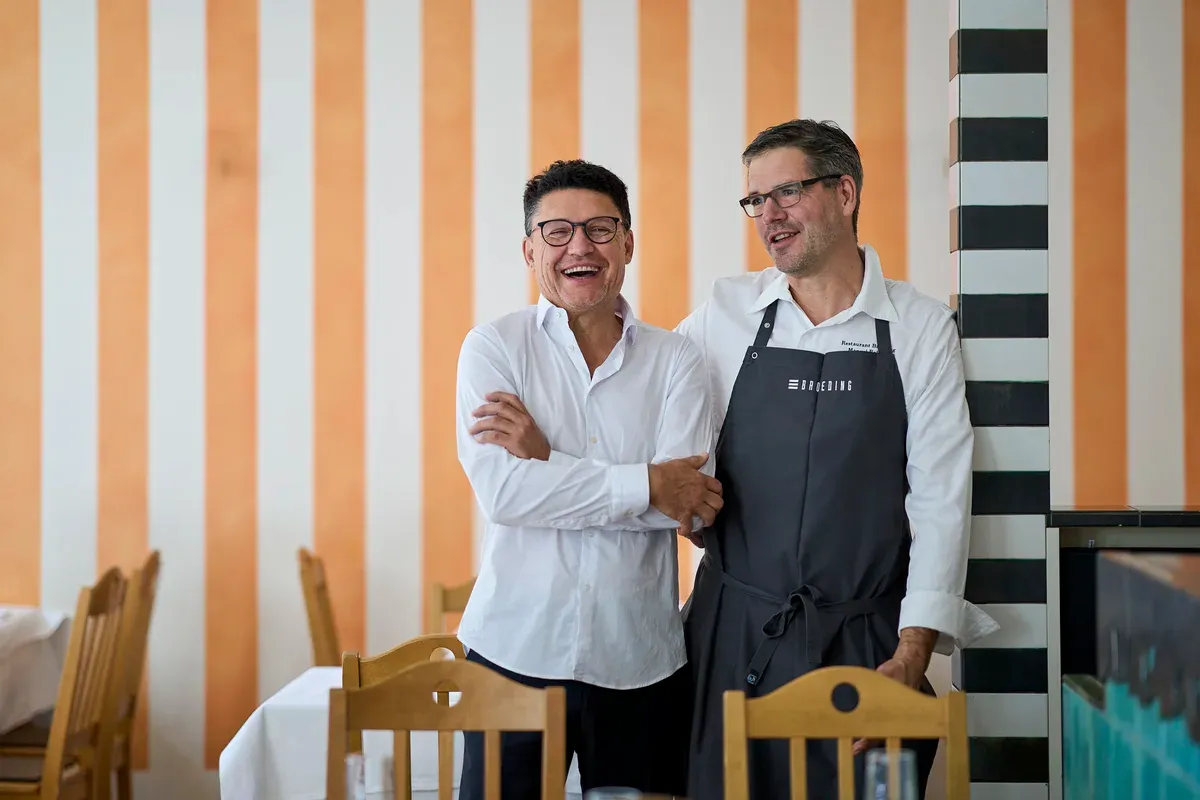
Manuel Reheis, a head chef with a clear concept
„Because as a cook you can impress people,“ is Manuel’s witty answer to the question about the reasons for his career choice. He had, however, shown an interest in preparing dishes from an early age, since the family had always cooked well. His grandmother spoiled him with hearty Bavarian dishes, while his mother contributed Mediterranean specialities she had come to know as an au pair in France, Spain and Portugal. But his path to becoming an ambitious cook was not entirely clear-cut. After his Abitur, the Munich native was initially at a loss as to which direction to take. When he did finally, more or less at the last minute, enquire at the employment office about vacant apprenticeships in fine dining, he ultimately found, through his own initiative, an unexpectedly perfect entry into working life at the renowned Pfeffermühle in nearby Unterhaching.
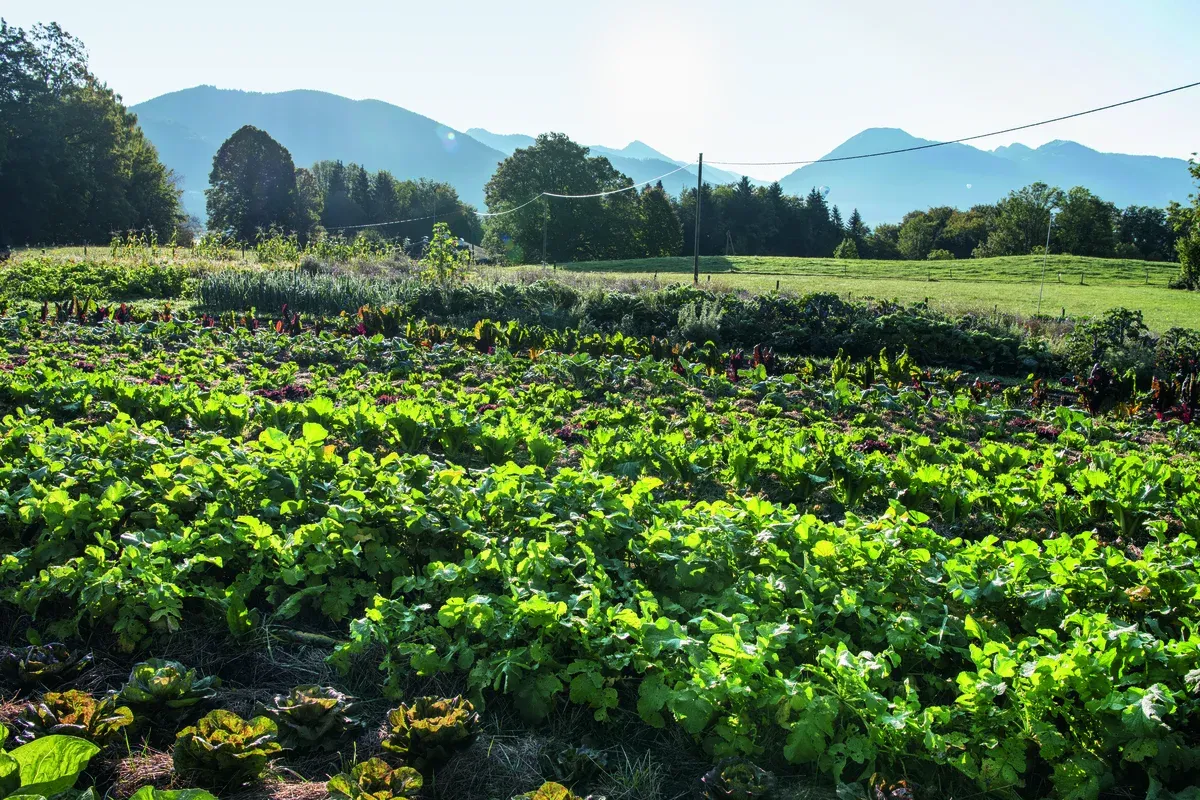
Manuel Reheis’s concept is clearly defined. Regionality and seasonality are the guiding principles of his culinary approach. Thus he attaches great importance to receiving healthy, organic-quality vegetables without long transport routes and therefore delivered fresh. His gardening partners, with whom he is in constant exchange, all manage without intensive cultivation and chemical sprays.
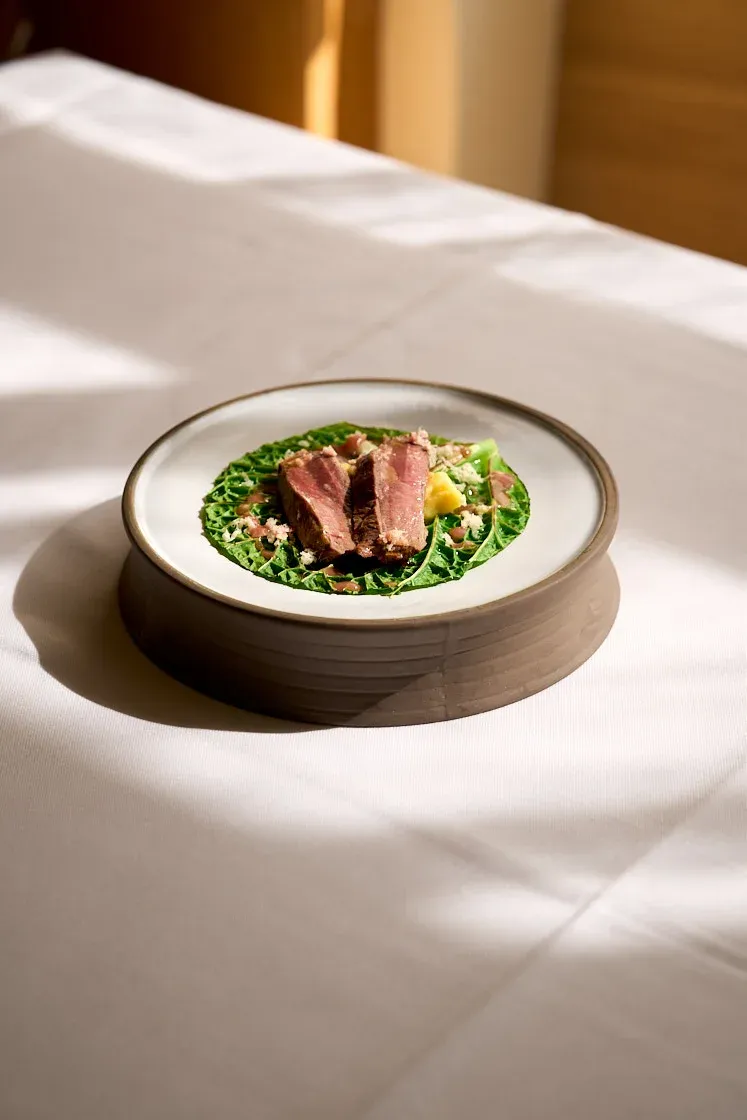
Calves come from Demeter and Bioland-farms, cattle and chickens from small producers, and the stone sheep from the ark farm „Wolle&Kraut“, which we already presented in detail in our portrait of these animals in the „Varieties & Breeds“ section.
Guests will search in vain for wines from, say, California, Chile or Australia that are transported halfway around the world. Instead, they get to enjoy selected specialities, primarily from top Austrian vineyards.
Involvement in the „Chef Alliance“ of Slow Food
Manuel Reheis’s approach, however, goes beyond the characteristics described. It is not only the use of regional products from small farms that is the focus of his work. He is especially keen to present his guests with as broad a spectrum as possible of old cultivated plant varieties. Because of their variety of flavours, but also to make a contribution to preserving genetic diversity.
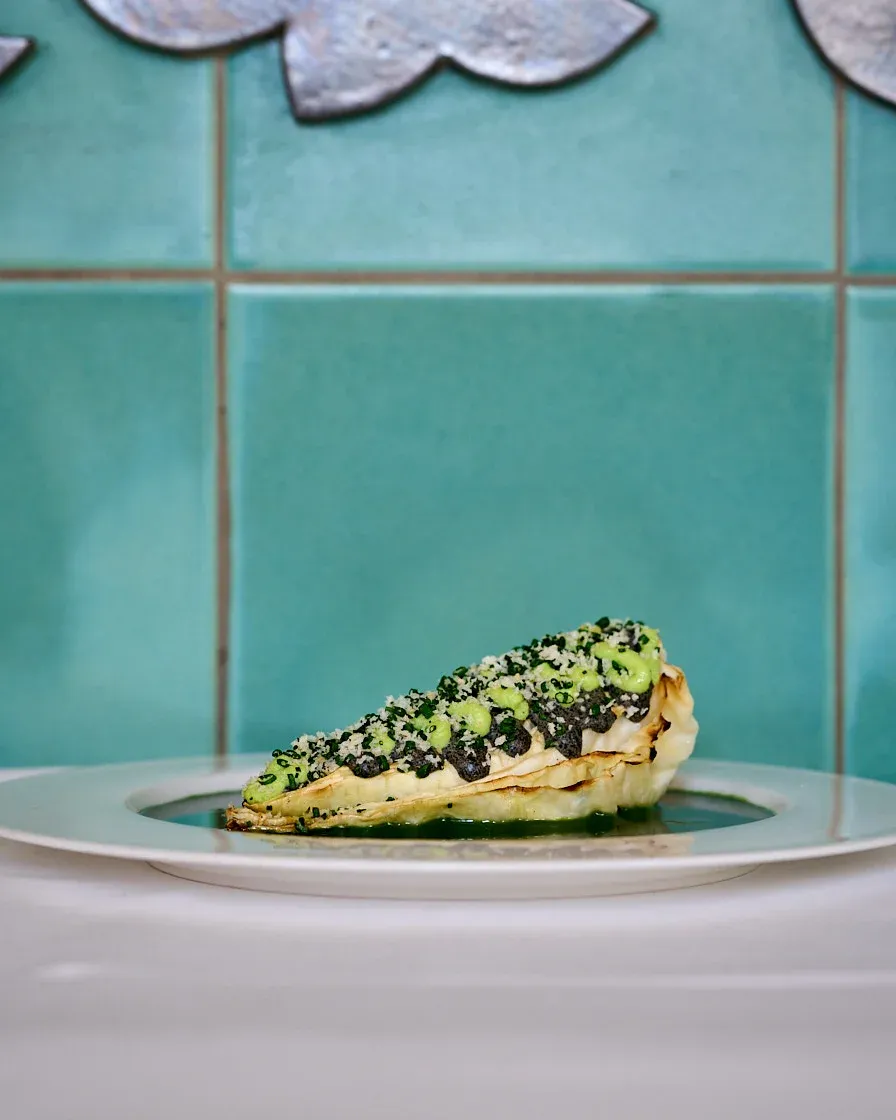
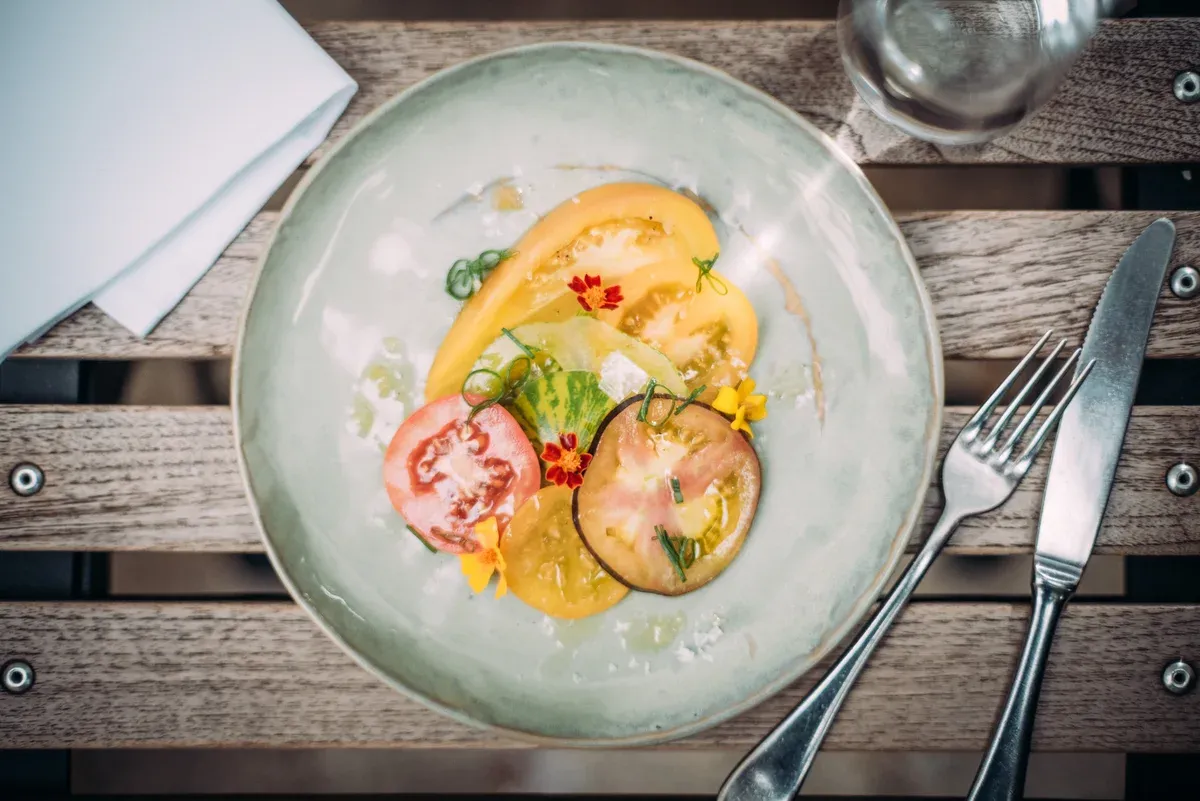
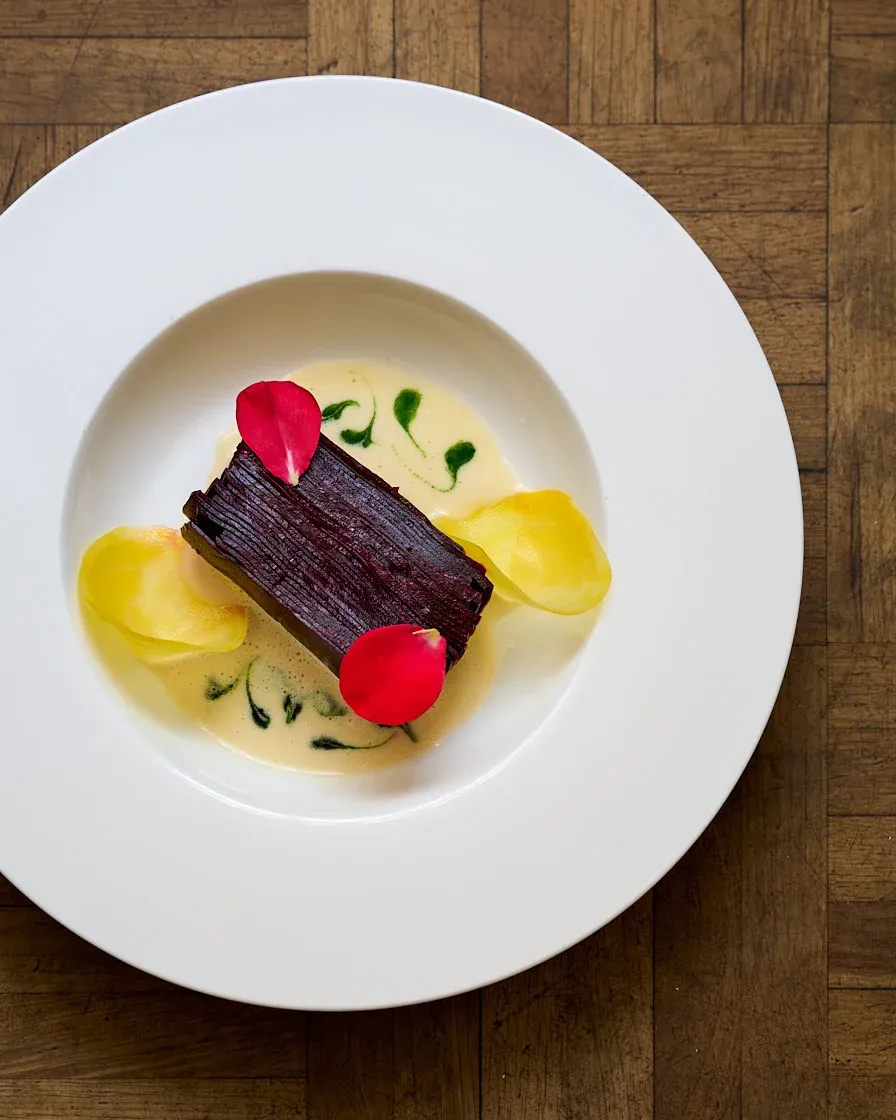
Where else do restaurant guests get to enjoy delicacies made from the beetroot called „Tonda di chioggia“, from the Filder pointed cabbage (see our portrait), from the beefsteak tomatoes „Berner Rose”, “Costoluto Genovese”, “Old German”, or from the aubergines “Zora”, “Dourka”, “Tarim” or “Tombergine”? The Broeding obtains these and many other flavourful varieties from, among others, the “Boarhof” on Lake Tegernsee, which has dedicated itself to growing primarily old varieties using the permaculture method. We will soon devote a separate portrait to this unique operation.
With the principle of whole-animal utilisation („nose to tail“) as well, the top chef puts the philosophy of the Slow Food movement into practice. Among other things, this involves restoring to the kitchen rare and worthy-of-preservation „Presidi“ products and „passengers of the Ark of Taste“ – namely old, open-pollinated varieties as well as original breeds. True to the motto „Preservation through eating“.
And so it is no surprise that the „gourmet ambassador“ Manuel is involved in the Chef Alliance of Slow Food, a network of cooks who use local and seasonal ingredients, pass on their culinary know-how and cultivate a strong bond with their region in order to preserve small farms and local food craftsmanship.
Schuastabuam, Beuschel and Co.
The “Ark of Taste” also includes artisanally produced, regionally typical products such as the elongated small loaf „Allgäuer-Oberschwäbische Seele“ or the „Nordhessische Ahle Wurscht“ – both made in the traditional way.
In Munich, only a few bakers still offer at least individual products of the Ark passenger „Münchner Brotzeitsemmeln“, whose names, such as „Schuastabuam“ or „Pfennigmuckerln“, are usually familiar only to long-established locals.
And there is one restaurant, the Broeding, that keeps alive gastronomic traditions that can only rarely be found elsewhere. Which brought us to another exciting topic in our conversation: the prerequisites for good meat quality. And who could give better information about that than my conversation partner, who can point to the additional qualification of meat sommelier? Even if he makes no fuss about it.
The starting point for our exchange was my statement that many people are of the opinion that the meat from young bulls, which is frequently offered in restaurants, is particularly tasty. According to the notion that young equals tender. Highly concentrated protein sources such as maize or soya meal (mostly from South America) in the concentrated feed contribute to early slaughter maturity. What can hardly develop, however, by the slaughter age of 16 to a maximum of 20 months – especially with exclusively indoor housing – are the intramuscular fat veins deposited within the muscles, whose presence is referred to as marbling and lends the meat a special quality. Among connoisseurs, on the other hand, the rarely obtainable meat of heifers – that is, cows before their first calving – which has finer muscle fibres and is therefore particularly tender, juicy and aromatic, is regarded as a delicacy. The same goes for the meat of pasture-raised oxen.
Speaking of slaughter maturity: the chef tells of the purchase of a 16-year-old cow of the original dual-purpose breed „Original Braunvieh“, which had given birth to 16 calves (two sets of twins) and was approaching its natural end of life. The farmer wasn’t quite sure what to do with the animal, which was no longer able to bear calves and had consequently fallen out of lactation. In the end it was decided to separate it from the herd, to provide it with the best feed to allow a certain gain in meat, and then to slaughter it calmly and free of stress. Even today Manuel Reheis’s eyes light up when he recounts the enthusiasm that the various preparation methods aroused at a large dining table.
But what, in addition to the factors mentioned, influences meat quality overall? The breed less so per se; however, old breeds, thanks to their greater robustness, are particularly suited to extensive forms of husbandry with grazing. Thus the soil and the feed play a significant role. Likewise, quite generally, the farmers’ respect for their animals and a stress-free slaughter without preceding, lengthy transport routes – ideally within walking distance and in the presence of the trusted farmer. For agitation and stress before and during slaughter are to be rejected not only for ethical reasons; through the release of hormones they also reduce meat quality. One factor contributes to this quite particularly, namely the maturation of the meat. Thus the hanging time should absolutely be at least three weeks, ideally longer. In this regard, here is an interesting additional piece of information from Manuel Reheis: the meat of Irish cattle is generally of outstanding quality because the animals benefit from mostly optimal husbandry conditions, but in particular also because of a traditional method of meat maturation. The animal halves are not fixed by the Achilles tendon but by the aitchbone of the pelvis. As a result, the animal’s own weight pulls the muscles of the leg and back into a natural length, which makes the meat especially tender.
At the end came a lively exchange about the traditional „Münchner Voressen“, a ragout of offal – usually seasoned sweet-and-sour – made from lung, tripe, heart, sweetbreads and hanger steak (French „onglet“). The latter is also known as skirt meat and consists of the supporting muscle of the diaphragm. A true delight, provided the cook knows his craft. Just like Manuel Reheis. And after I had also learned about the advantages of the now scarcely practised hot-meat processing, which makes the use of enzymes in sausage-making unnecessary, the theory finally culminated in the practical experience of a small tasting. Ever since every spoonful of the „Beuschel“ of Alpine stone sheep offered by the head chef – as the sour lung (Lüngerl) is called in Bavaria and Austria – had given me a magnificent experience, I have been firmly convinced that guests who usually keep their distance from offal would develop a taste for it at the Broeding. And by no means only with the wonderful Beuschel with capers.