When you think of the Algarve, you often see the postcard image: golden cliffs, turquoise bays, a sky that never gets tired. But between the beaches lies a second world, quieter and yet more intense. A world that you can taste. Those who allow themselves to do so will quickly realize: The south of Portugal tells its stories less in words than in flavors, scents and tastes.
Delicate salt, harvested by "butterflies"
The journey begins in the bright, very distinctive light of the Castro Marim salt pans. Where the sun sets the horizon, and the wind only says the necessary, a product is created that is hardly to be surpassed in its simplicity – and that is precisely why it is so precious. Flôr de Sal, the delicate salt flower, grows on the surface of the water like a rare plant.
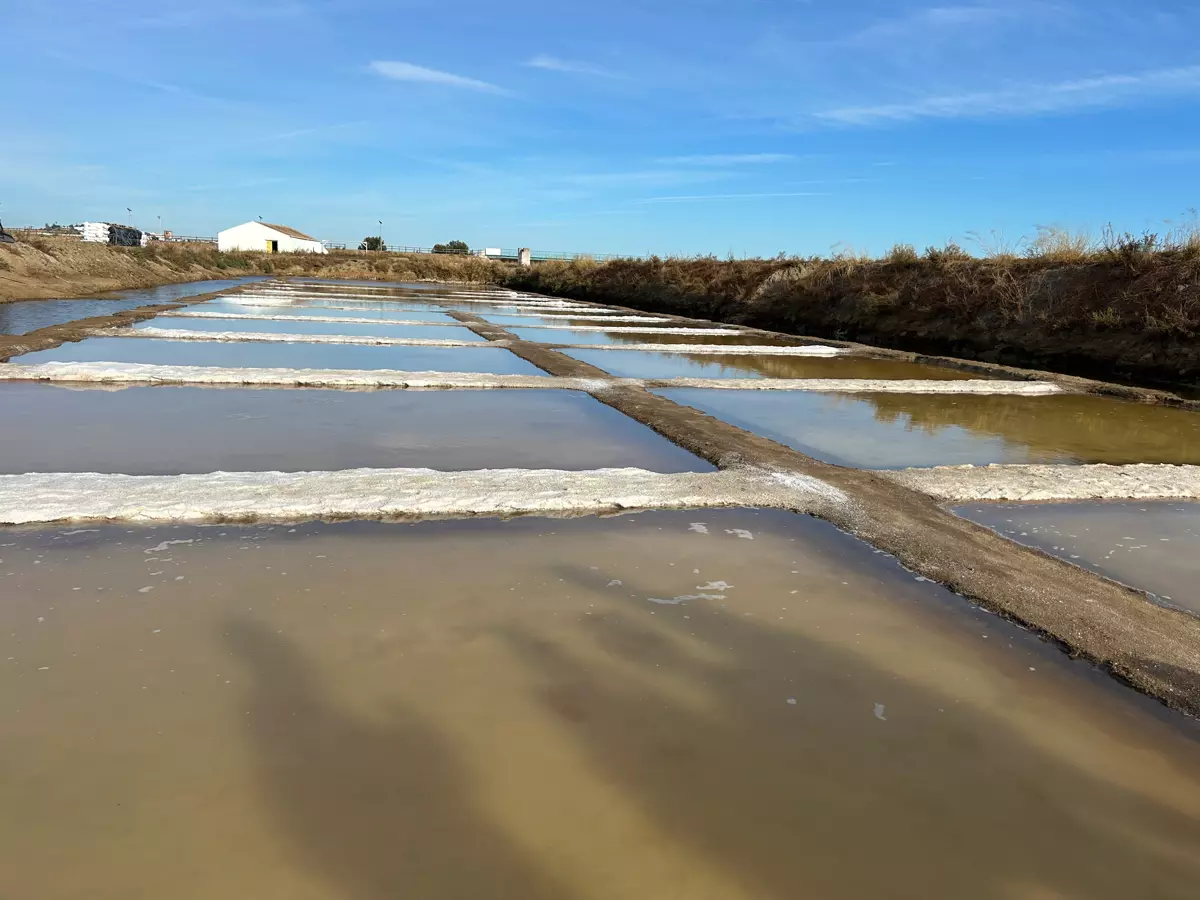
This was also recognized by Jorge Raiado, who in 2007 began to revive the neglected salt pans in the Sapal nature reserve in Castro Marim and to produce Flôr de Sal there – the company Salmarim was born. Picked by hand, with the "butterfly", it almost seems like a natural wonder in crystal form. A few grains are enough to turn every meal into a revelation. A simple bread, with aromatic tomatoes and good olive oil, becomes a sensation with this salt.
Olives, finely ground
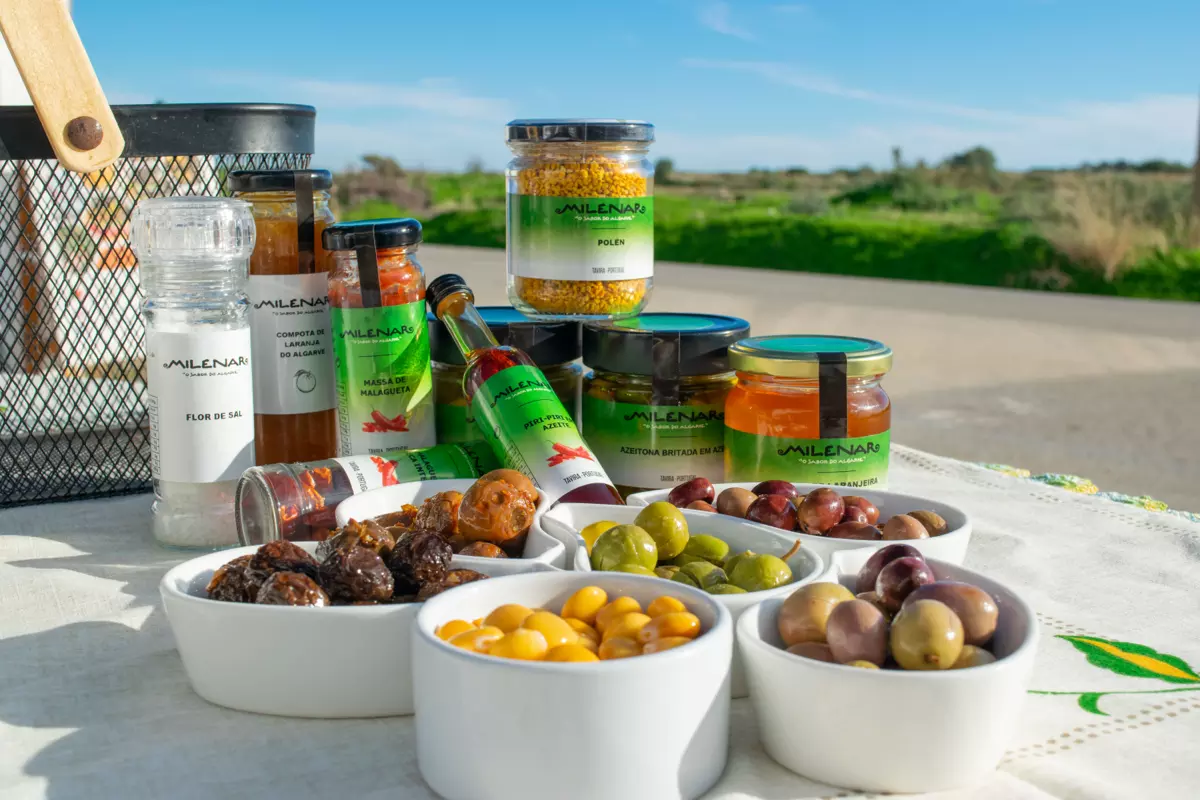
Only a few kilometers further inland, another culinary treasure is harvested: the olives. Between Tavira and Olhão, olive trees stand, whose trunks look as if they have lived several lives, so twisted and venerable they are. The olives harvested here do not go to industrial processes, but to small workshops that, despite their size, resemble family kitchens. The company Hélder Madeira was founded in 1986 in Tavira on a mere 35 square meters. Today, the production facilities extend over more than 1500 square meters. A lot of manual work and modern machines guarantee a constantly good quality. Almost all ingredients are sourced from local producers, and the use of chemicals in production is frowned upon. Here, the olives are pickled, fermented, spiced – sometimes with garlic, sometimes with chili, sometimes simply pure. You can immediately feel how much care goes into this seemingly everyday fruit.
The gold of the olives – best oil
Or they are further processed into olive oil. In Monterosas mill, the machines work in rhythm with the harvest, and the green gold flows in a scent that reminds of freshly cut branches. In 1996, the Swede Detlev von Rosen began to grow vegetables for the northern European market in the Algarve during the winter months. The mild climate of the Algarve proved to be perfectly suitable for this.
It was only later that olive trees were planted on a former orange grove and the production of high-quality oil began. The oils are clearly structured, variety-specific, uncompromising in their taste.
Citrus fruits for the whole year
In the direction of Silves, the character of the landscape changes. Citrus aromas fill the air, subtle but perceptible. The Algarve is one of the most fertile orange regions in Europe, and some families have dedicated themselves to citrus cultivation for generations. On the agricultural estates of the Algarve, the Quintas, fruits grow, whose thin skin smells aromatic and whose juice tastes like a sweetness that is more due to the sun than to sugar. For example, on the Quinta da Lameira near Alcantarilha, the grandfather of the current owners of Dona Laranja planted the first orange trees in 1952. He cared for the plants, tried to give them the best conditions for healthy growth – and was rewarded with sweet, ripe, delicious fruit.
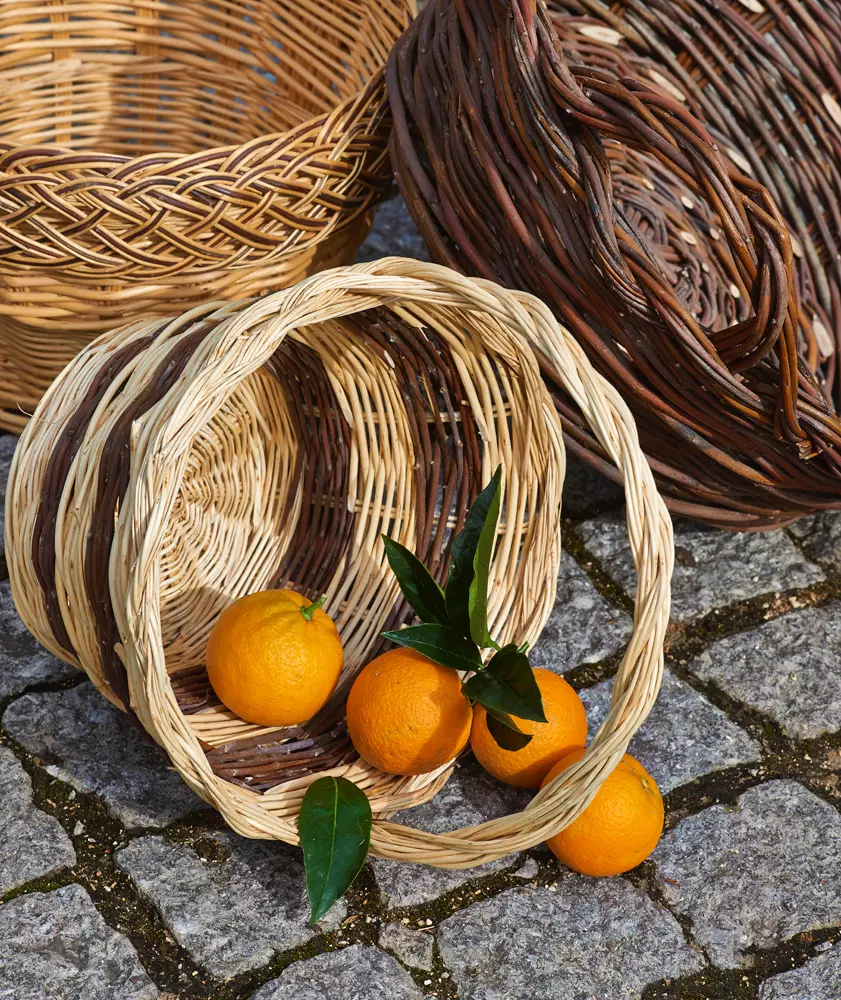
An engagement that his son and his grandchildren have successfully continued to the present day. Today, Dona Laranja supplies consumers throughout Europe with the sweet fruits of the south all year round. More than 20 different varieties ensure that oranges and clementines can be harvested at nine months of the year, and juicy-aromatic lemons at any time.
Popular since the Bronze Age: Figs
Further inland, large fig trees cast round shadows, under which people have sought refuge for millennia. Their fruits are one of the oldest cultural varieties in the region, and were already enjoyed with pleasure in the Bronze Age. They taste warm, almost velvety, and are even more concentrated in dried form. Figs are sweet, nutritious and healthy – and yet also low in calories. The large-leaved fig trees love the sun and are relatively undemanding to grow – provided they are given sufficient water. Even better: the trees even produce two harvests per year. The Figos Lampos ripen in May and June, while the Figos Vendomos are harvested in August and September – and largely by hand.
Traditional delicacy: Almonds
And then there are the almonds. When they bloom, the Algarve seems as if it has forgotten that winter exists. The beautiful, pale pink blossoms on the trees are a natural spectacle, but the fruit itself is the real culinary miracle. But the blossoms of the small trees, which were brought to the Algarve by the Moors, are only the beginning. For connoisseurs, the fruits are the main focus, which at the beginning look a bit like peaches or green apricots. The flesh is initially hard and inedible. At the end of summer, the samara opens, falls off and reveals the shell of the almond. Only the almond kernel is edible. Many of the traditional recipes come from monastery kitchens, in the 16th century, the production of almond sweets was mentioned.
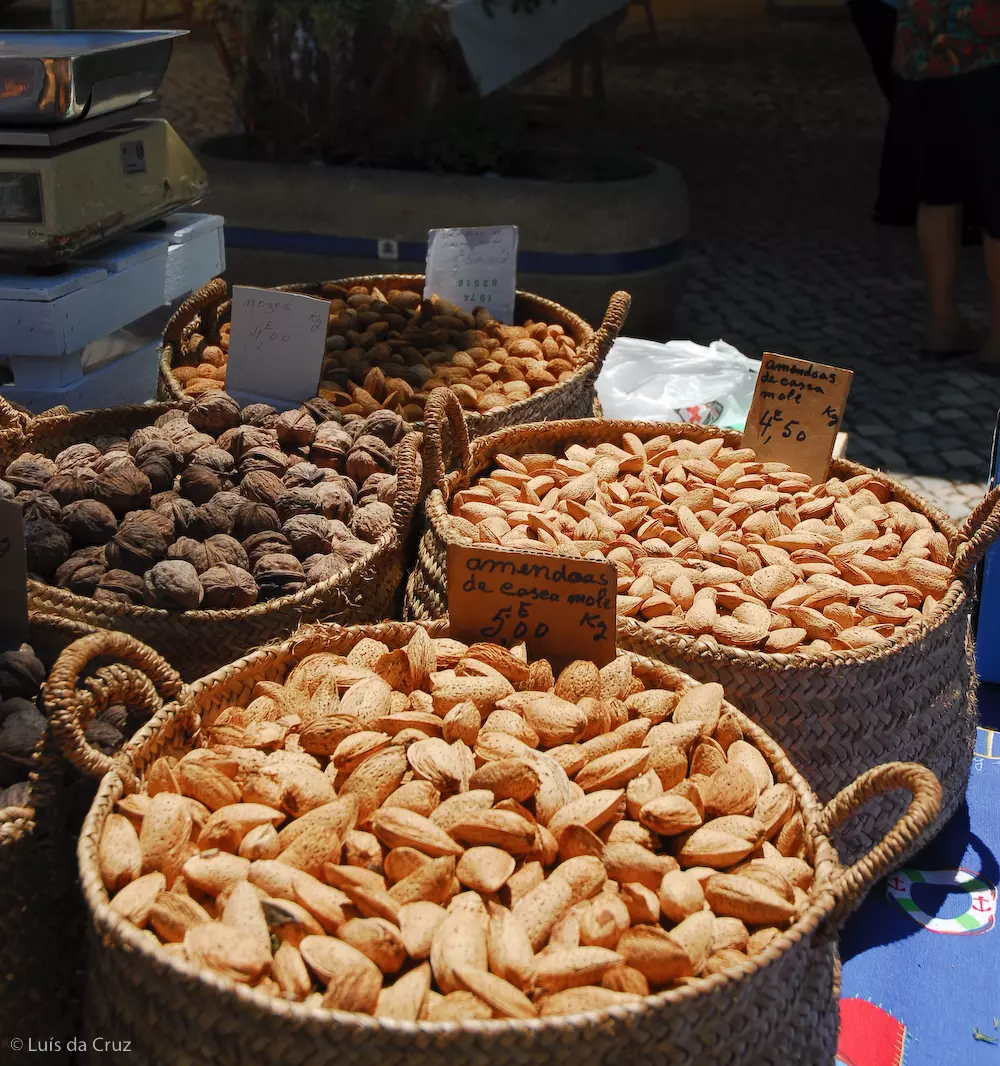
Whether as a marzipan figure, as a Torta de Amêndoa or simply roasted: Almonds are one of the products that define the taste of the region. In every Portuguese bar, visitors at least receive a small handful of almonds with their drinks.
The schnapps of the strawberry trees
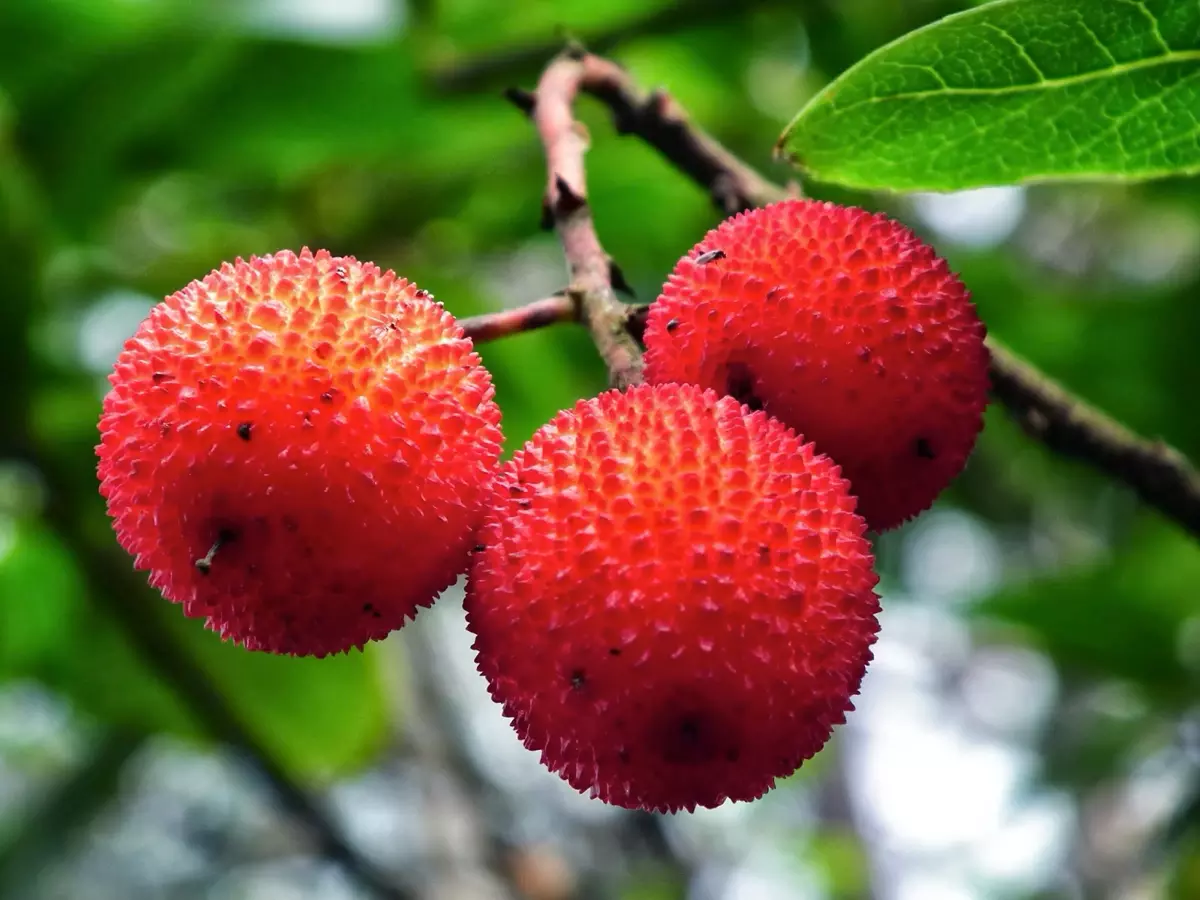
Finally, there is a drop that tastes very exotic to our palate. In the mountains in the hinterland, the strawberry tree grows, whose red fruits (see main picture) shine brightly in autumn. Despite the name, the fruits have little in common with strawberries, but are heather species. They are hardly eaten fresh, but distilled. The result is Medronho, a schnapps that is perfect for the Algarve. Strong, wild, a little edgy. Those who drink it immediately understand why it is so closely linked to the landscape from which it comes.
All these products – the salt, the olives, the oil, the citrus fruits, figs, almonds and finally the Medronho – tell a single, coherent story: that of a rural area that is big in small things. A region whose identity can be collected in bottles, baskets and glasses, without losing its magic.
Salmarim (Flôr de Sal):
https://www.salmarim.com/en
Hélder Madeira (Olives & Spices):
https://heldermadeira.com/en/
Monterosa (Olive Oil):
https://monterosa-oliveoil.com/en/
Dona Laranja (Citrus Fruits):
http://www.donalaranja.pt/de/index.html
Fig products – Docaria do Sul:
https://docariadosul.pt
Almonds – O Cabaz Algarvio:
https://www.facebook.com/ocabazalgarvio
I’m Nat:https://iamnat.pt/en/
Carob – Carob World:
https://www.carobworld.com/en/
Grand Carob:https://grandcarob.com