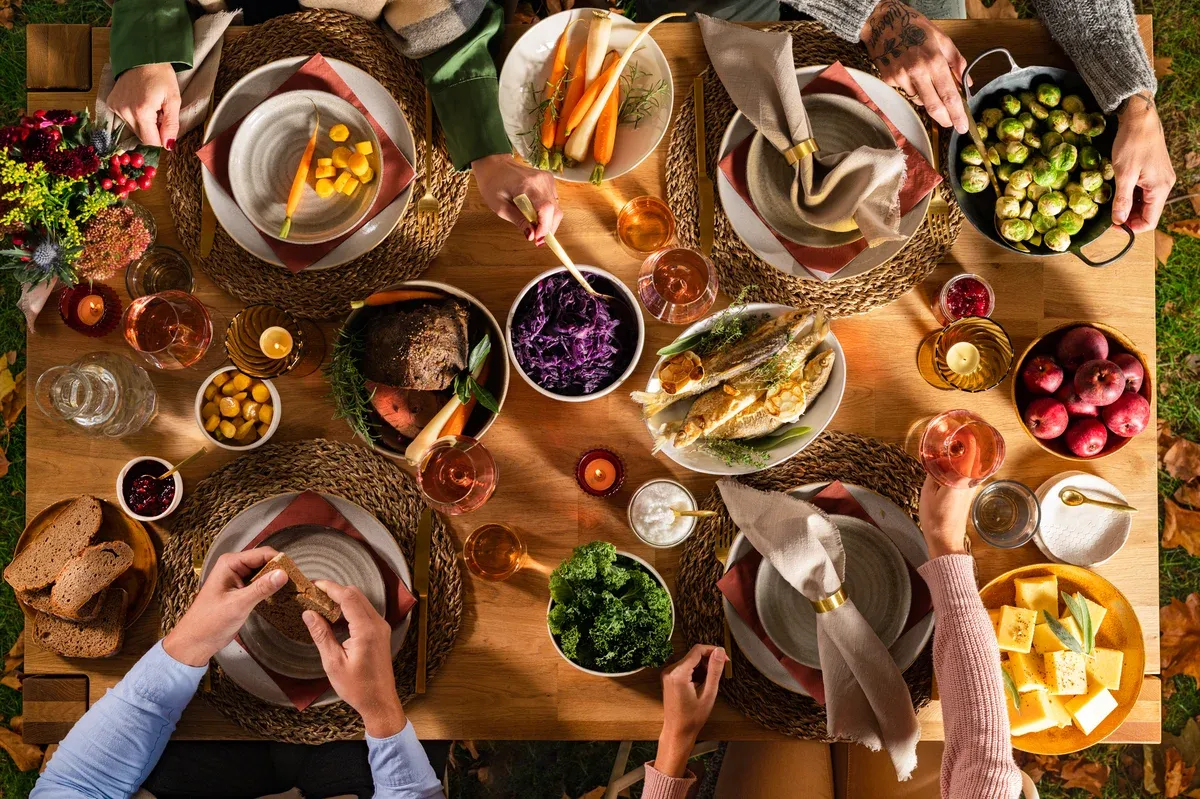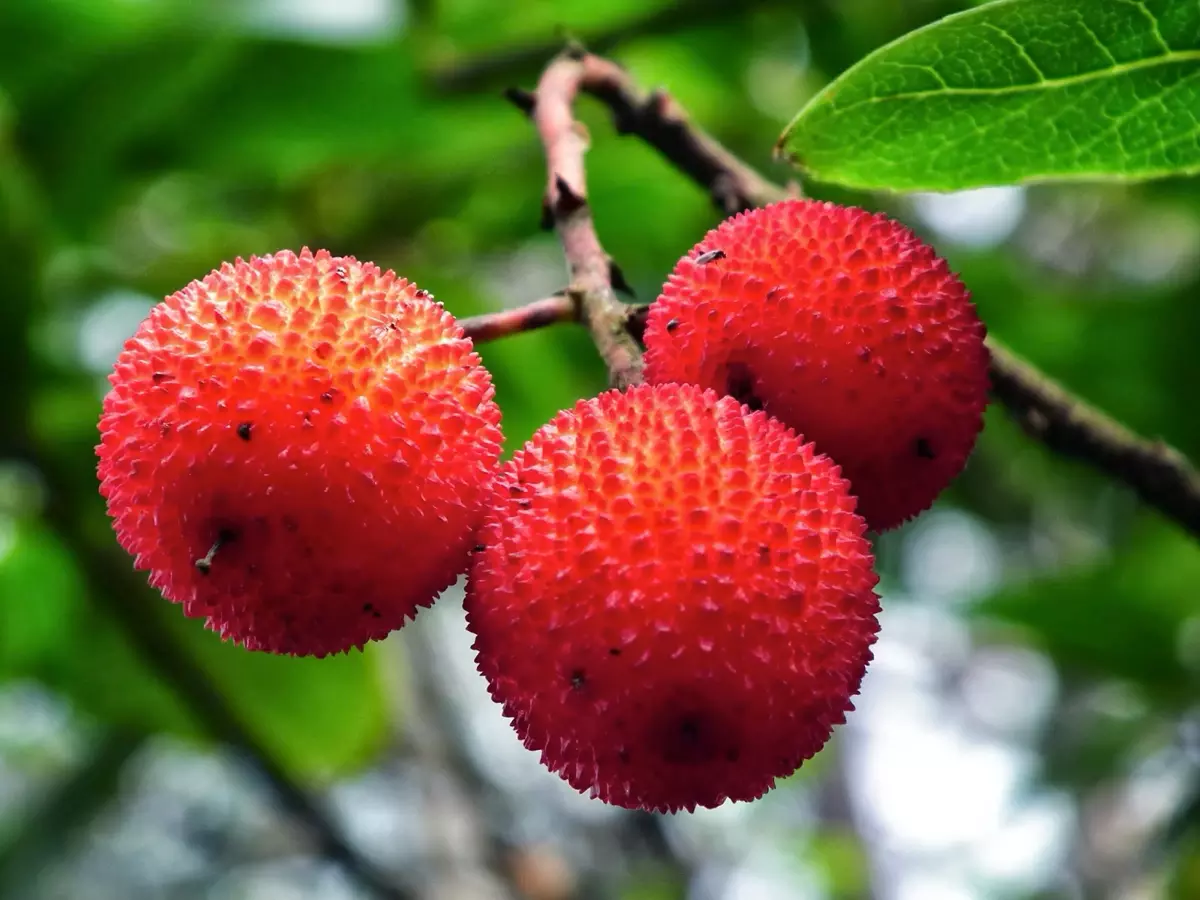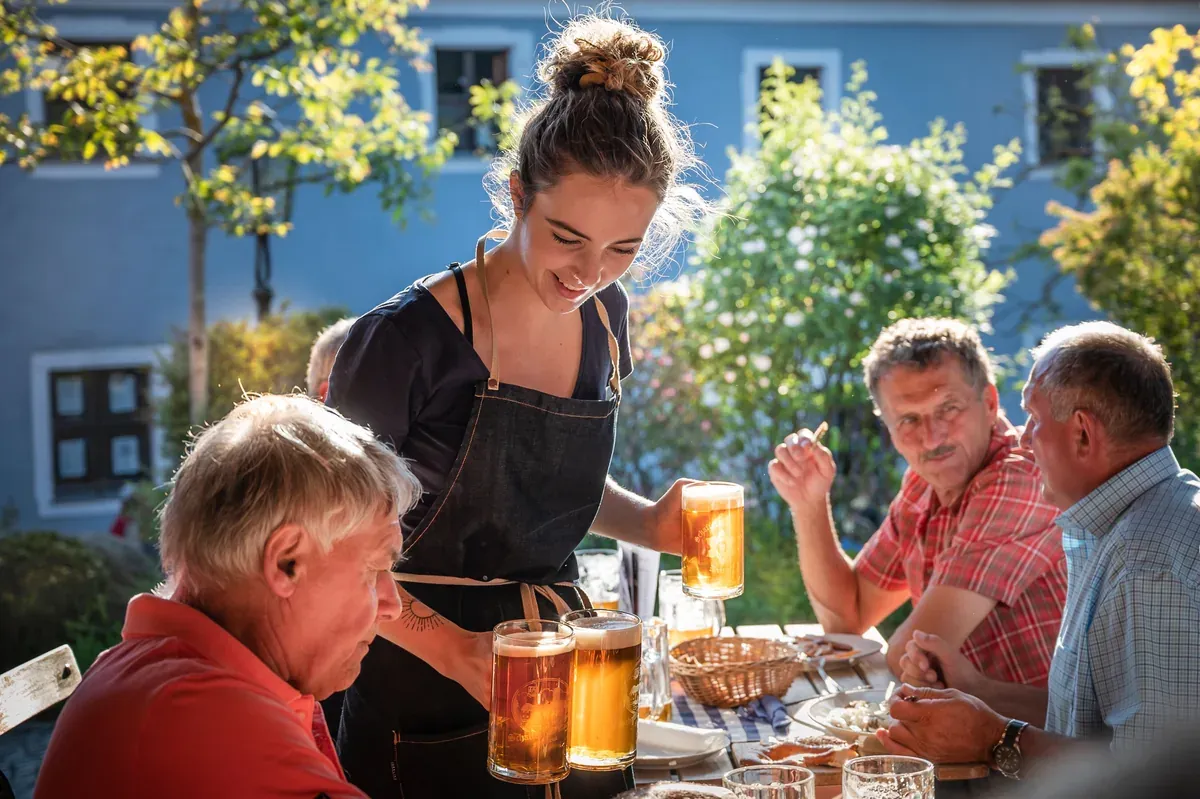
A narrow path leads uphill to the wooden courtyard, which nestles into the gentle hills of the Horjul region, not far from Ljubljana. Brilliant sunshine alternates with showers – autumn in Slovenia. But this does not bother the small group of people who are visiting. The team from the Berlin star restaurant Horvarth is a guest at Luka Košir and his restaurant Grič. Here, you can walk between vineyards, sheep herds and greenhouses and have informal conversations. The chefs pick berries, nettle tips, young carrots, violet herb blossoms. They do not talk about "dishes", but about textures, temperatures and stories. This creates a kind of culinary map: Where does the ingredient come from? How does it grow, how does it thrive? What memory does it carry with it? Sometimes, very spicy chilies are also tasted, the local orange wine is drunk and visits to neighbors who are famous for their sheep cheese are made. It is a exchange of friends, similar in your attitudes and origins.
Two chefs, two philosophies – and yet a common heartbeat
Here, where nature is so present that it dictates your breathing rhythm, Luca Kosic has built his Gric, which is one of the best restaurants in Slovenia – a restaurant that is truly blessed with good local products. Slovenia is a paradise for foodies. The Grič is a family-run restaurant, but with one exception: the head chef has won two "Best Chef Awards". This is top of the top. Luka Košir is considered one of the most important representatives of a new, rooted Slovenian cuisine. His restaurant Grič has wonderful gardens and greenhouses, in which herbs, root vegetables and old vegetable varieties grow, which few people can even name anymore. He collects herbs, gathers mushrooms, the cheese and ham come from sustainable producers from the village, the wines are among others from revolutionary organic winemakers from the Karst region. A highlight is the own duck breeding – a small free-range farm that he has refined over years, with respect for animal welfare and natural rhythms.
On the other side is Sebastian Frank, head chef and creative mind of the two-Michelin-starred restaurant Horváth in Berlin. Frank is a poet of reduction. His cuisine is incredibly creative. And the always curious is patient in his passion to find the best ingredients. So, recipes are sometimes tinkered with for three years, or aubergines are innovatively incorporated into a dessert. Recurring themes are smoke, bitterness, fermentation and a deep study of taste. Frank does not cook loudly, but with respect for freshness and flavor - he also keeps chickens and grows vegetables and herbs, which he then uses in his kitchen.
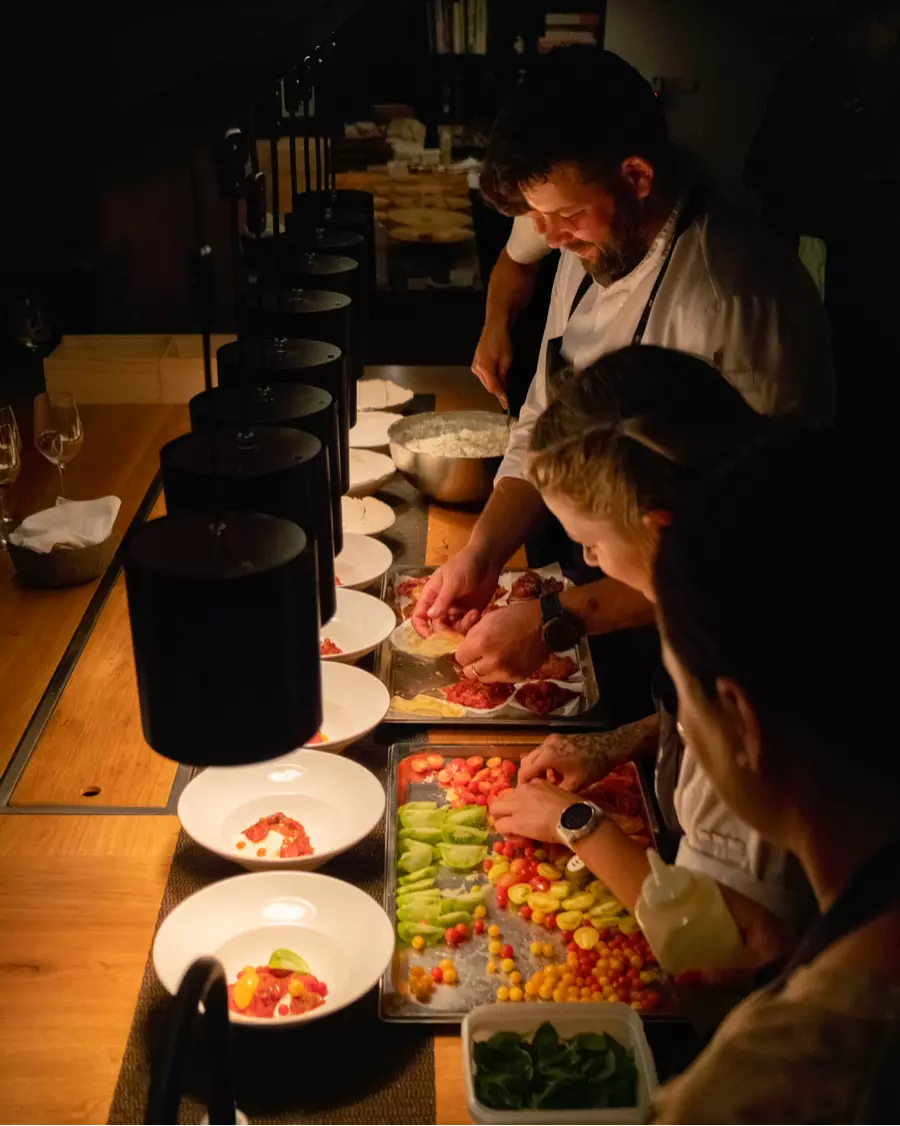
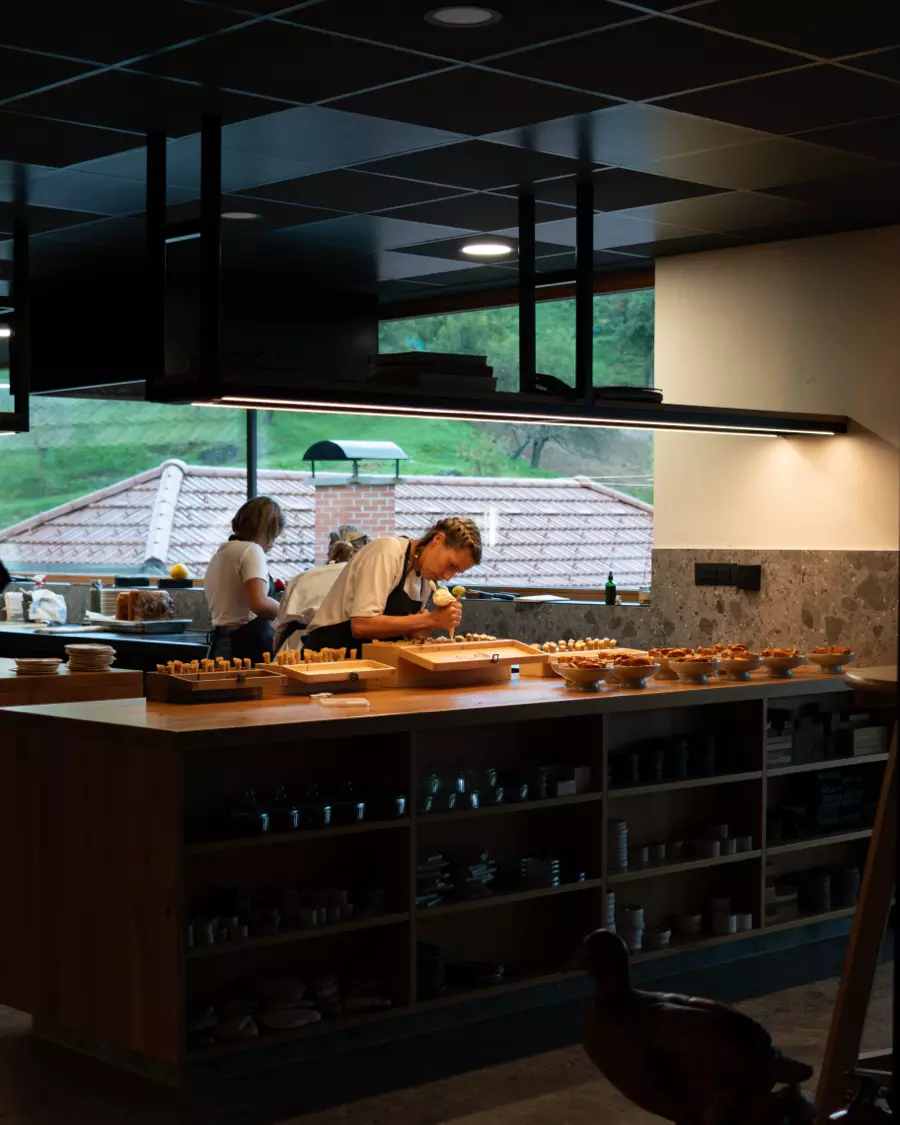
That these two chefs find each other is not a coincidence. Both stand for a culinary claim, in which craftsmanship comes before decoration, origin before exoticism and responsibility before showmanship. It is a cuisine that is earthy and natural. But once translated into the culinary tradition of Slovenia, the other into the modern Berlin, they are interwoven.
Right at the beginning, a catastrophe
The meeting of the two chef teams is planned in advance – and yet something goes wrong that can only go wrong. The lovingly prepared ingredients, the work materials, the knives, the wines that the Horvarth team wants to bring with them, are lost at the Berlin airport. Despite all the efforts – the culinary luggage does not reappear. So, everything has to be thought of from scratch. This is helped by an approach by Sebastian Frank. In his local restaurant, there is a dish "From my garden", in which he composes a homage to nature with fresh vegetables, herbs, eggs from his chickens. He does the same now. And the gardens and cellars of the Grič become a rescue for the "Four Hands Meeting".
Preparations for the big day
In the Grič, preparations are already in full swing the day before, everyone is helping. Bread is baked, meat is marinated, wines are selected, sauces are cooked and desserts are chilled. And in addition, the friendly fish dealer unexpectedly arrives with a 200 kg Bluefin Tuna. This is quickly frozen in the pantry, even though Luka Košir does not fit this into his schedule at all. The fish is stored and now, the guests from Berlin can eat – not a star kitchen, but great Slovenian dumplings with meat filling. With the homemade sauces, which are fermented and cooked from the remaining scraps. Nothing is wasted. The fish dealer and his family also eat together – you know each other, everyone belongs to the culinary big family. To get the Berlin guests familiar with Slovenia, Kosic puts on the "Original Oberkrainer".
The menu – a dialogue, not a duel
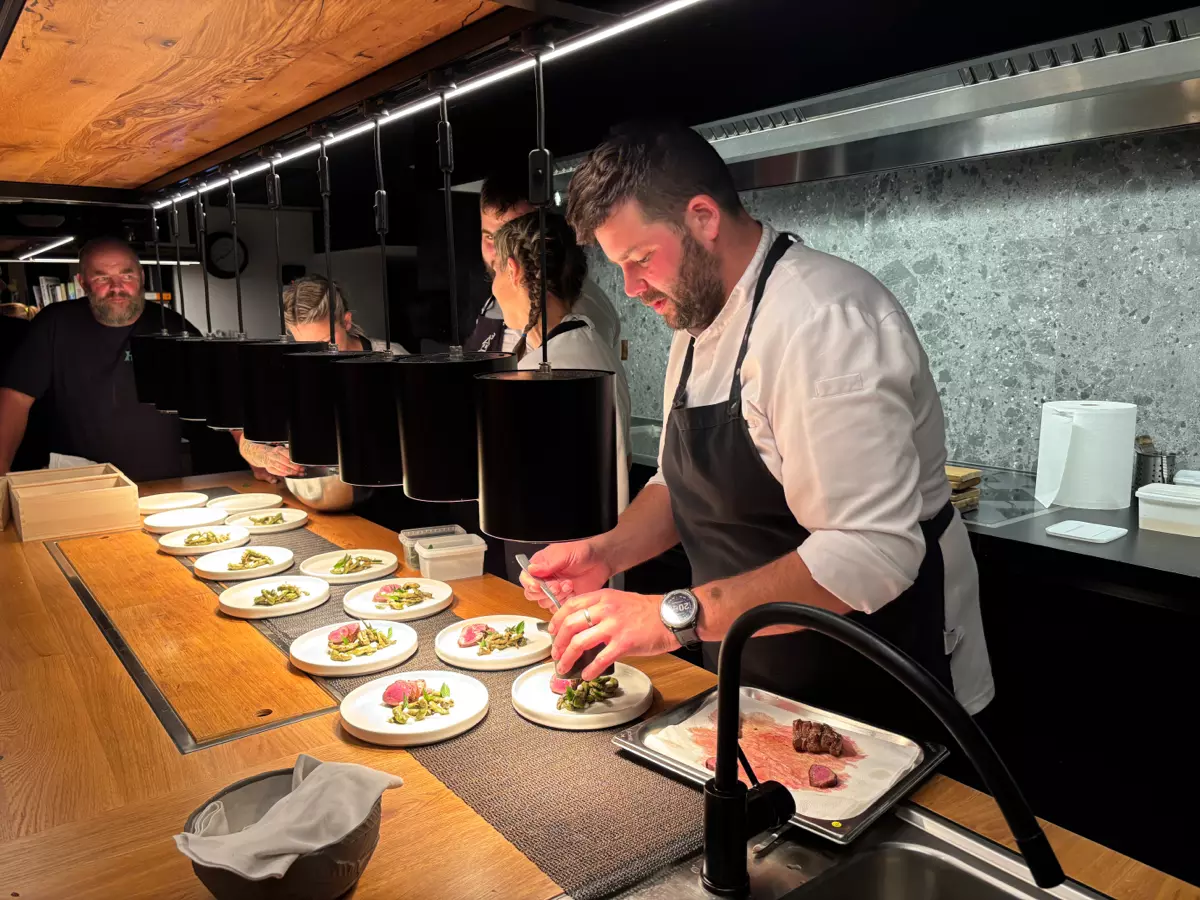
The next day, the big feast takes place. There was no fixed seating arrangement. For the guests, including Ana Roš, the culinary icon of Slovenia and multiple winner of the "World's Best Chef" award, and a couple from Hawaii who had traveled specifically for the culinary experience, there was a lot of Slovenian prominence, ESC participants and other chefs – the "Four Hands Meeting" was an experience – but not in the sense of a spectacle. At the bar, there was wine, with which you wandered from station to station, watched the chefs, tasted, talked to other guests – like a good, old traditional kitchen party – but at star level.
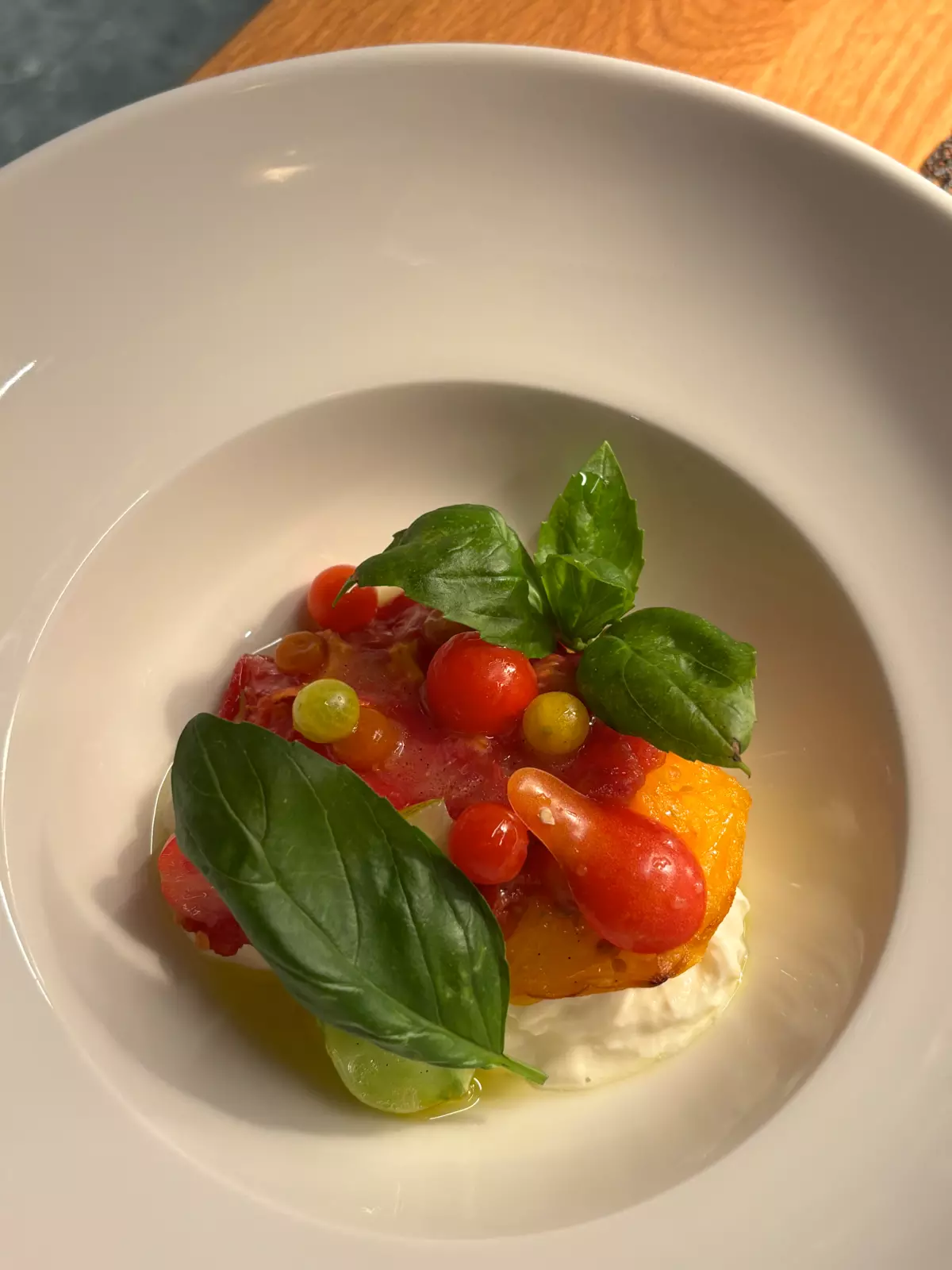
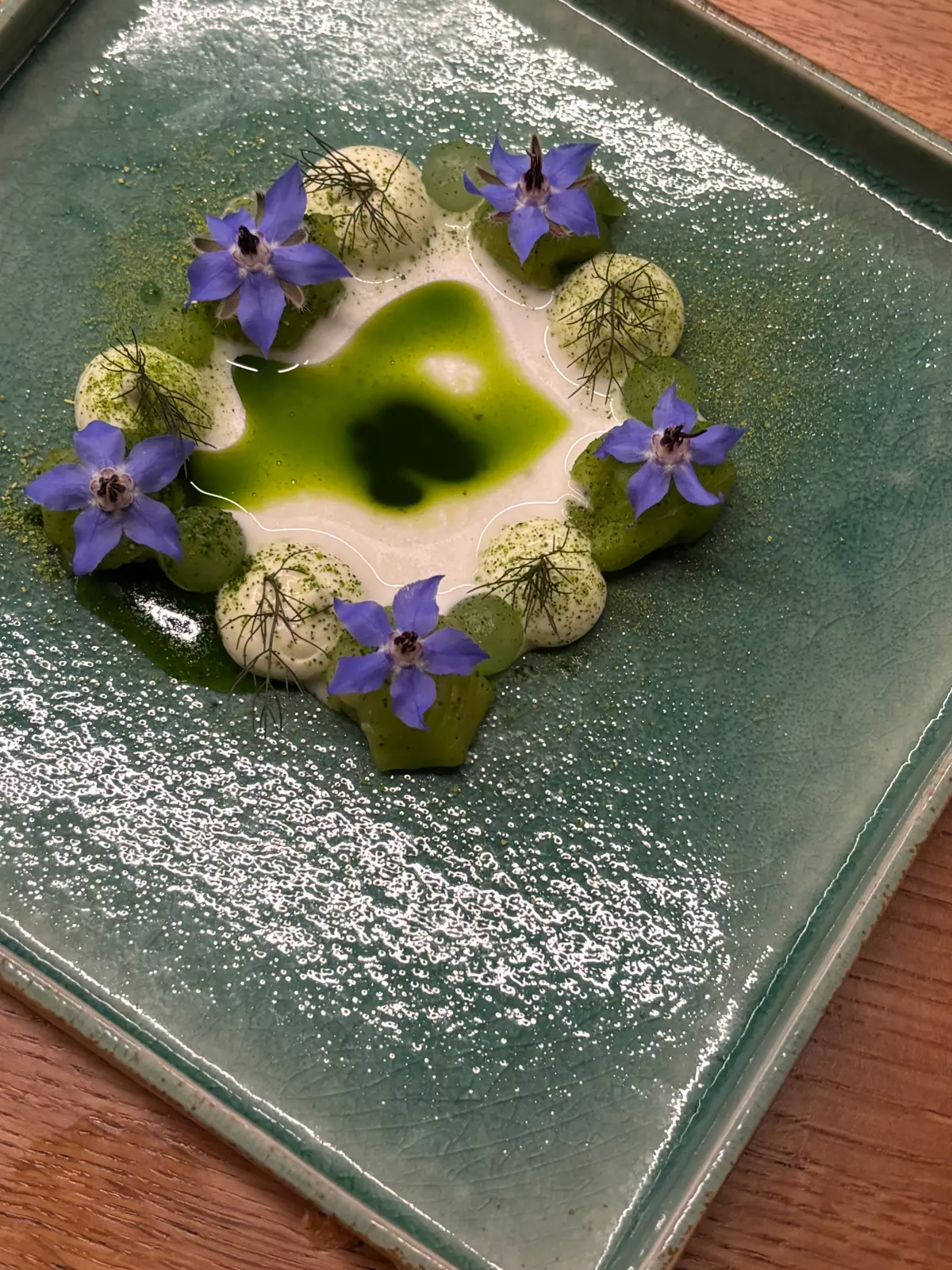
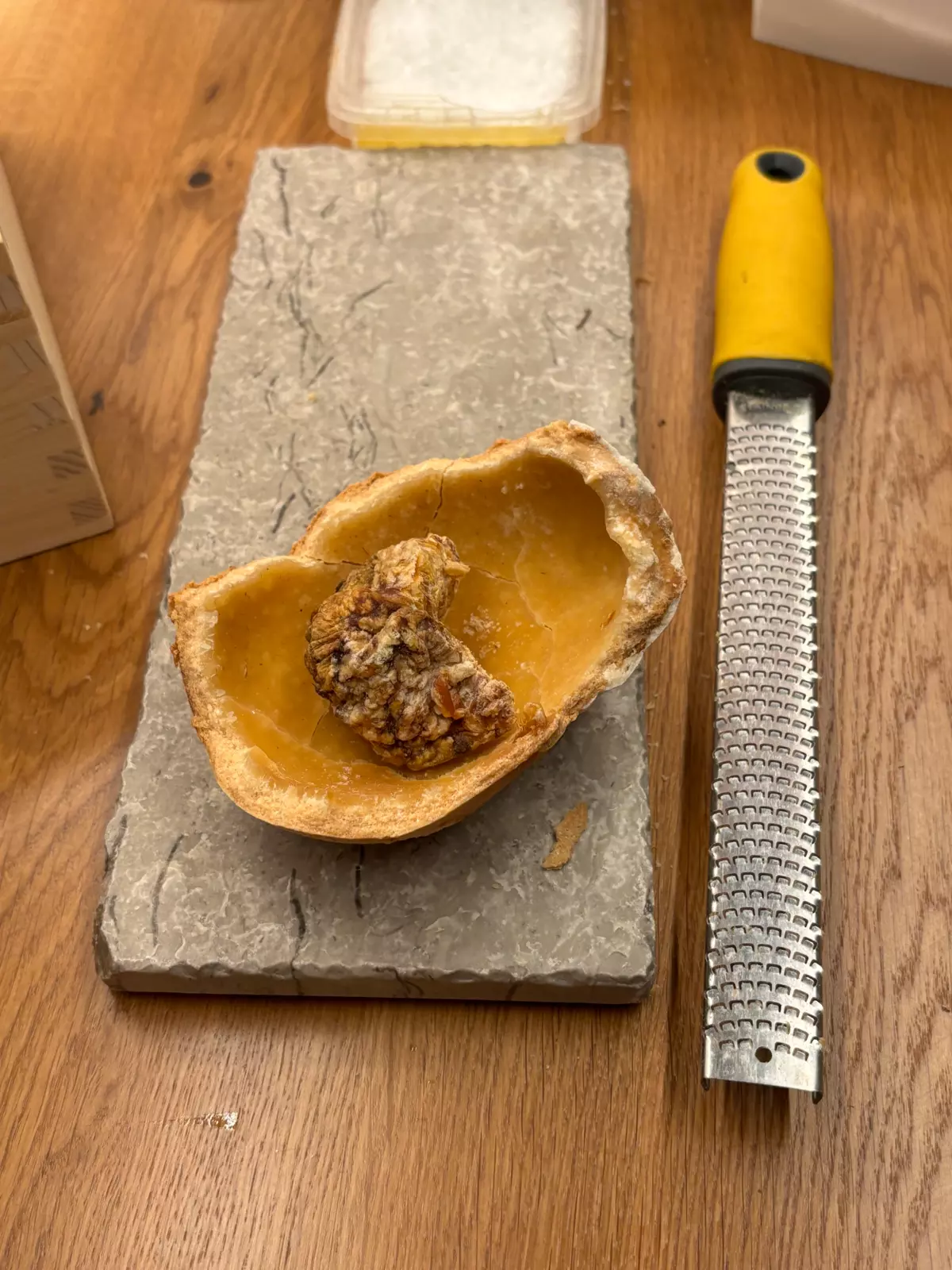
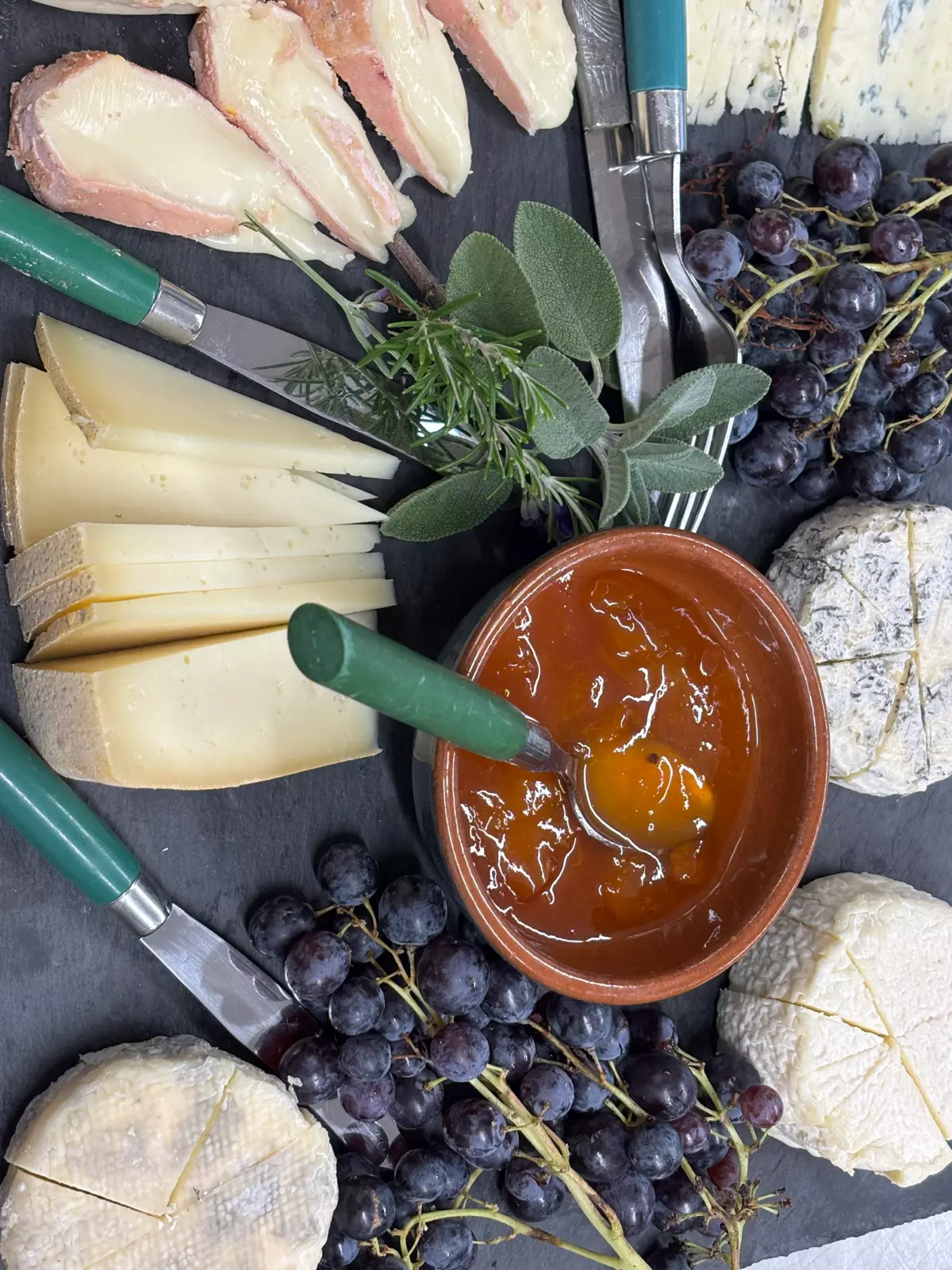
The resulting menu, despite the improvisation, was a feast for all culinary lovers. Or precisely because of that. Some dishes are as simple as an incredibly fresh Burrata with tomatoes and herbs from the garden, the soup is served in lettuce leaves, Spaghetti-Pumpkin with Misocreme is refined, an egg yolk is enhanced with chanterelles or Ravioli are topped with the famous dried Horvarth celery, which remains a whole celery head for a year in its salt crust, until it is completely dry and full of aroma. The celery was brought by Sebastian Frank in his own hand luggage. This is a trademark of the chef and could not be missing. Luka Kosic grilled venison, it comes with green beans on the plate. Instead of the candied aubergines, there was a tomato in the dessert. After the meal, you went to the cellar, where more wines were tasted, ham was cut – a big feast of the best products of Slovenia.
A feast of proximity – and a look to the future
In a world where food is often treated like raw materials, this meeting seems like a gentle counterpoint. It shows that culinary art does not need to discover new worlds, but to rediscover the next. It is a commitment to care, to slowness and a cuisine that not only is consumed, but also understood. Slow Food in the best sense.
And perhaps this is the quiet, but clear message of this meeting: Great cuisine is created where chefs do not only work with ingredients, but with landscape, season and responsibility. Where hands think. And where hands share.
Slovenia:
https://www.slovenia.info/de/geschichten/entdecken-sie-einzigartige-gastronomische-erlebnisse
https://www.slovenia.info/de/planen-sie-ihre-reise/publikationen/kulinarik
Restaurants:
Text and pictures: Katrin Hilger