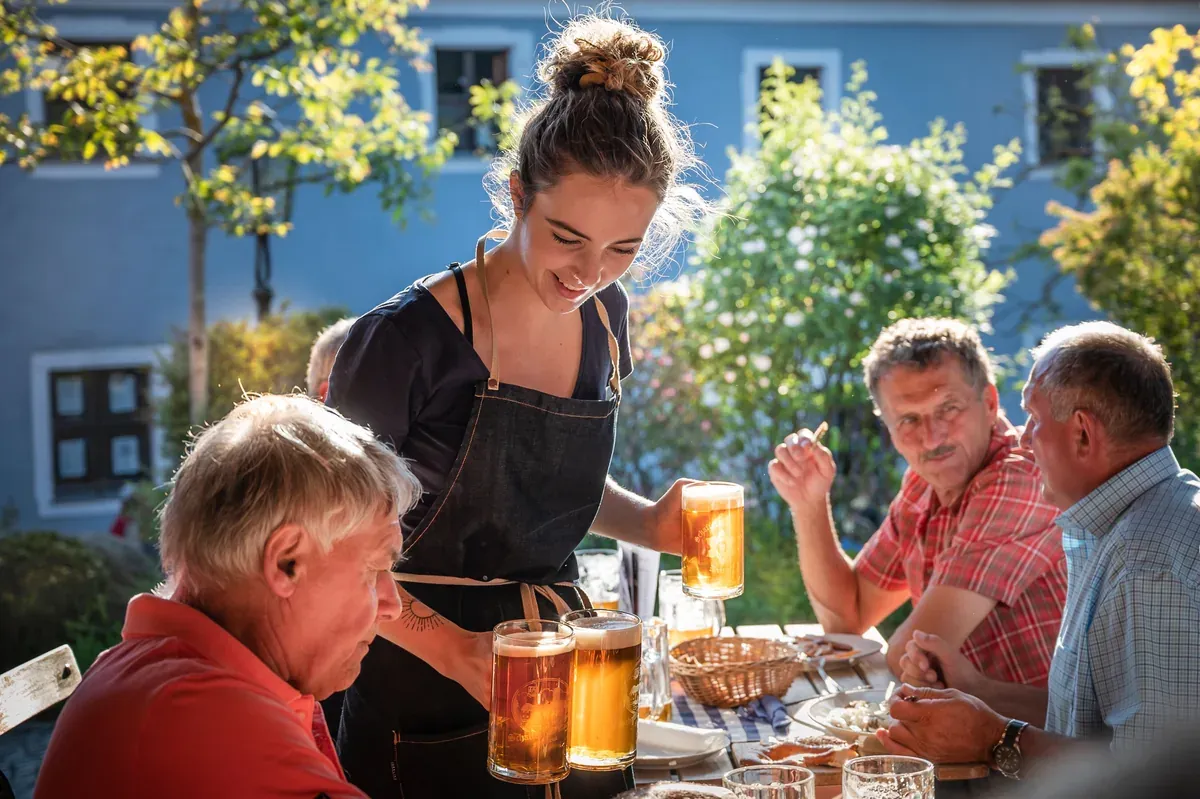
A beer that is known and popular among beer enthusiasts far beyond the Upper Palatinate Forest is the “Zoigl”. The name itself, but especially the masculine article of the beer, causes surprise in everyone who hears it for the first time. To further heighten the surprise, Upper Palatinate residents do not go to the inn to enjoy this fine drink, but rather “to the Zoigl”.
Long tradition: Citizens brew for citizens
This regional specialty is about much more than simply producing and marketing a drink. The “Zoigl culture” also includes the particularity of who brews this very special beer and where it takes place. And the serving is also accompanied by specific rituals and communication forms. The Zoigl culture is highly identity-forming for the northern Upper Palatinate.
This is one of the last remaining relics of the brewing tradition in many parts of southern Germany, which has been in the hands of citizens since the High Middle Ages. The advantages for the privileged right holders were diverse: the raw materials could be produced themselves. The beer-brewer – with its high protein content, was an excellent feed for the animals in winter, and the profit that the brewer made improved his income. In 1854, there were still 84 such communal breweries in the area of the Upper Palatinate, located in the north-east of Bavaria, in 75 municipalities. Today, the “real Zoigl” is only brewed in the five communal breweries of Eslarn, Falkenberg, Mitterteich, Neuhaus and Windischeschenbach by a community.
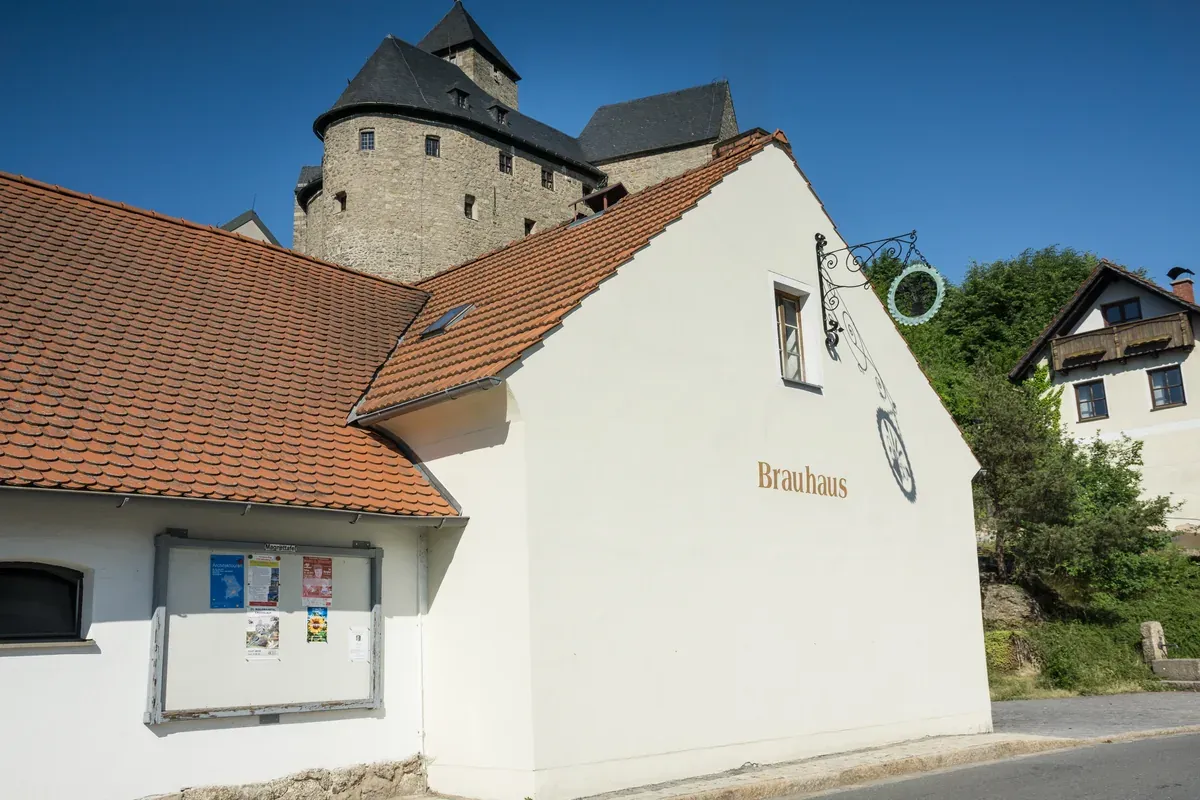
The brewing right was once granted by the then-ruling lords, and according to the property register, it lies on the respective properties. Originally, only the owners of these – now protected – properties could brew. In the meantime, several residents of the municipality who have the right to brew, finance and operate the small breweries jointly.
Archaic brewing art
They bring their “brewing equipment”, consisting of barley, hops and firewood, to the “Darren”, i.e. the drying of the germinated grain. In the Sudpfanne over the wood fire, the mash – a mixture of water and barley malt – is initially cooked, then hopped and finally heated again as “wort”. This wort is then filled into a large open container, the “cooling ship”, where it cools overnight. Subsequently, it comes to the Zoigl-host at home, where it ferments in a barrel with yeast. After about ten days of fermentation, the beer matures, cooled for up to twelve weeks in barrels or tanks. This regional specialty, brewed in this traditional way, is an under-fermented, unfiltered and therefore “natural” beer with a normal alcohol content. “Natural” because it is not artificially preserved.
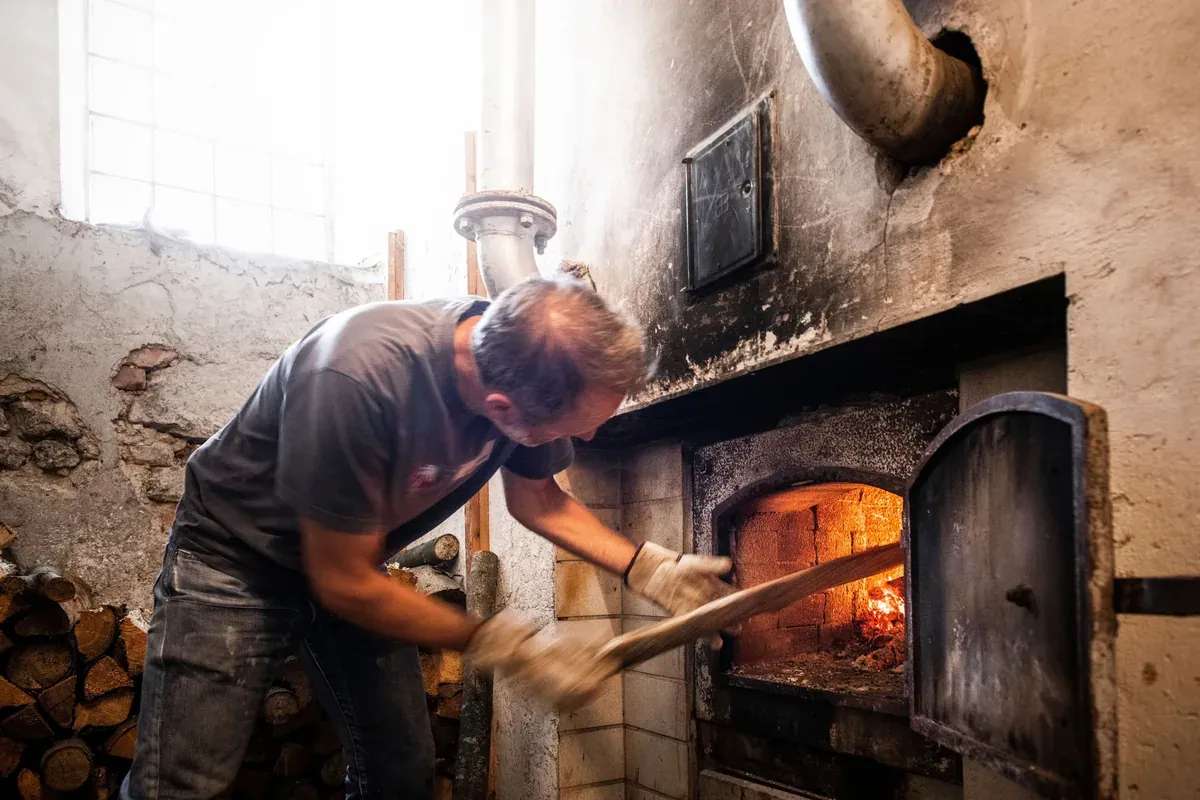
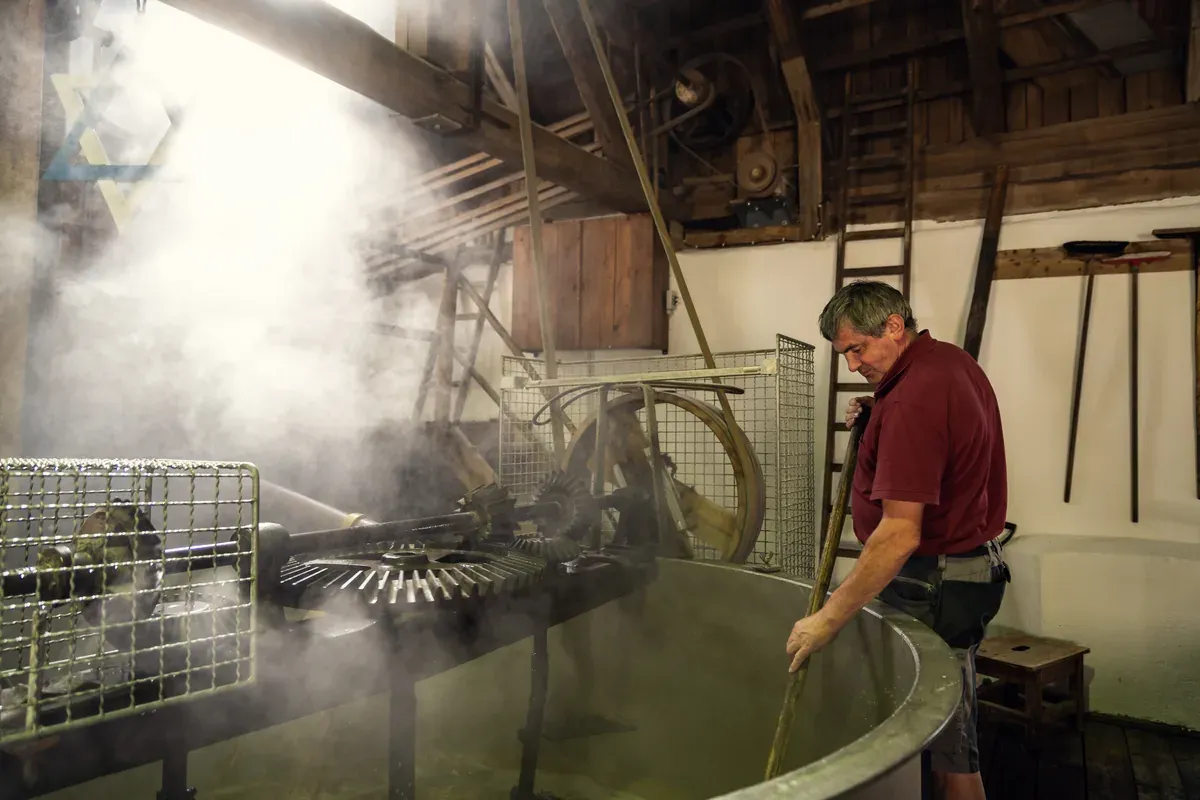
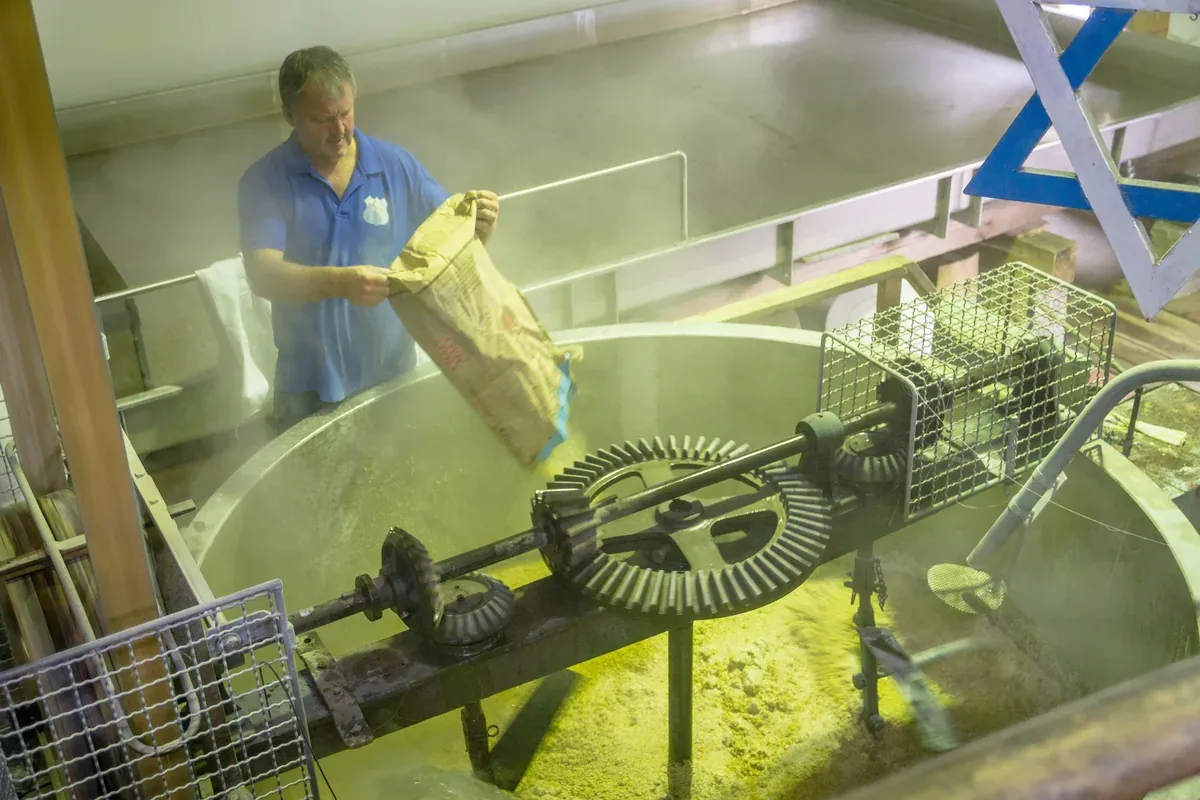
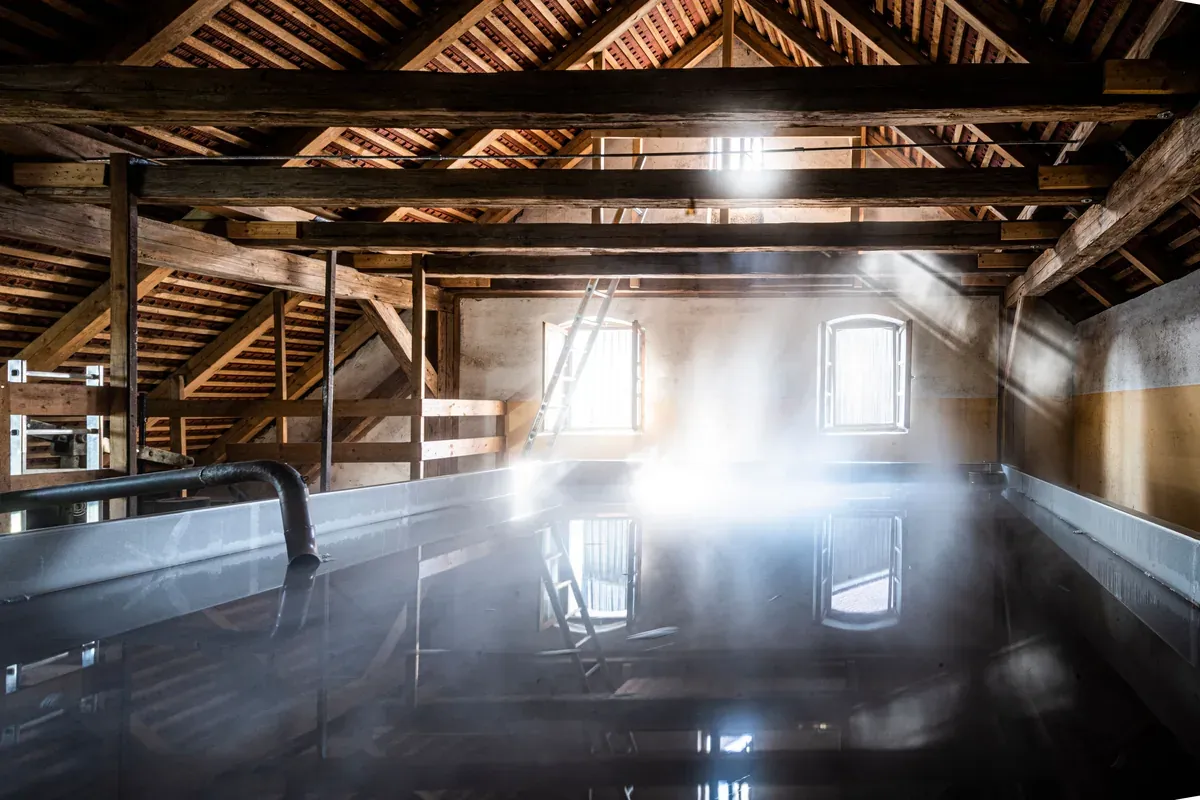
Only the locally available, mostly pre-industrial equipment is used, such as open Sudpfannen and cooling ships, as well as wood-fired stoves. Due to the handcraft brewing process based on traditional recipes, the beer has a high taste variation, i.e. each brewing result tastes different. Every brewer has his own recipe, according to which the ratio of the ingredients is determined. Even with the same Zoigl host, there can sometimes be differences. Thus, this drink is so individual and multifaceted.
The knowledge of this special craft is usually passed down orally. Individual, often volunteer-based, trained brewers act as contact persons for quality assurance, which also contributes to the lively exchange among amateur brewers.
Sales in a predetermined schedule
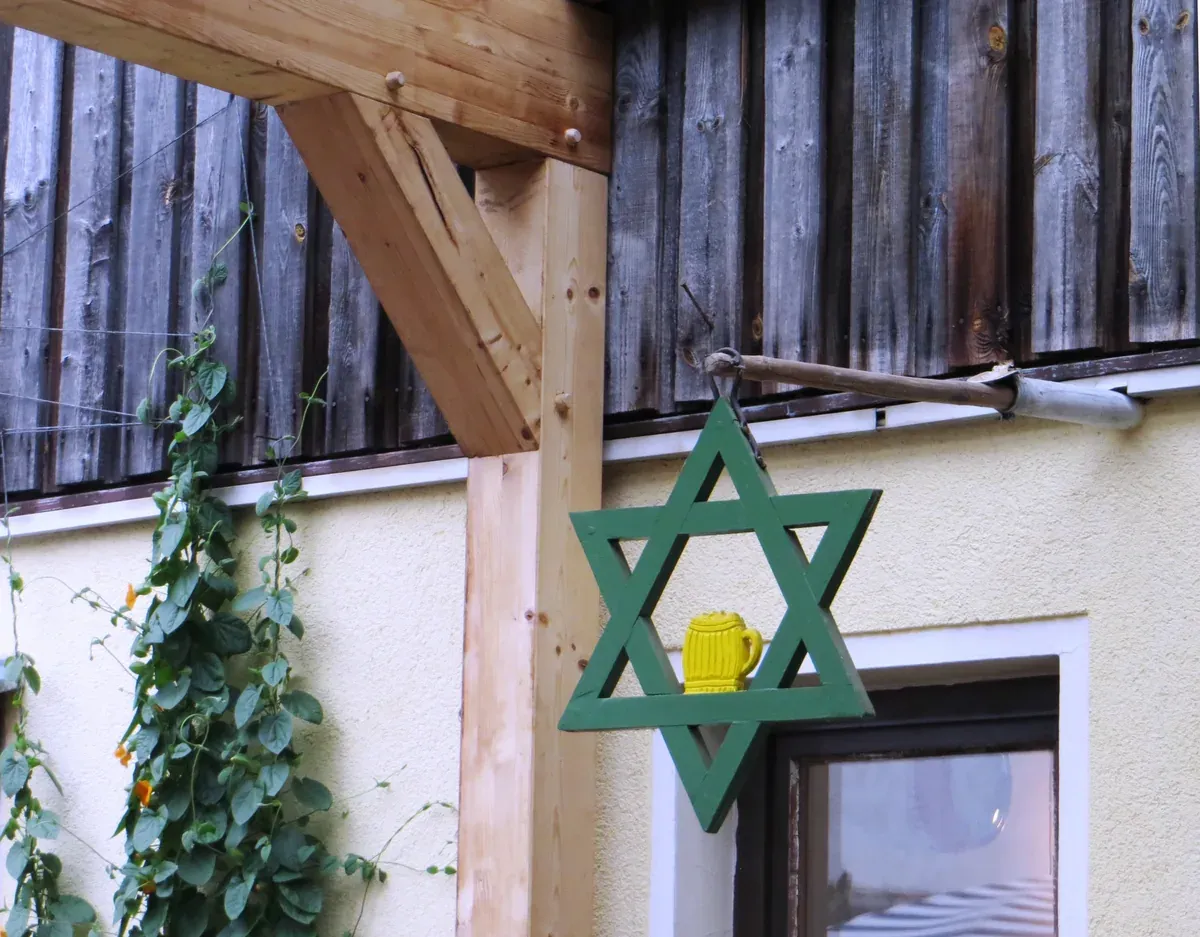
After maturation, the beer is served in the local Zoiglstuben by the brewers. In which house this is the case at any given time, guests can already see from the outside, namely at the “Zoiglstern”, which then hangs from the fence or the gable. It has the shape of a hexagram, which represents two interlocked equilateral triangles. Its six corners symbolize the elements fire, air and earth, as well as the ingredients water, hops and malt.
In addition to this, similar to the Jewish Star of David, symbol of the brewers, a branch or bundle of twigs is sometimes used to indicate the serving. This visibility of a temporary offer of self-brewed drinks also has tradition in German wine-growing regions. There, the businesses are called “besen- or flower gardens”, in four Austrian federal states they are called “Buschenschänken”.
Information on which restaurants are allowed to serve beer in which period for 3-4 days is provided by a special Zoigl calendar of the “Schutz-Gemeinschaft Echter Zoigl” on the internet (see link below). With the “Zoigl” app, you also have access to the data from anywhere.
In four of the five mentioned towns, there are several Zoiglstuben each, in Windischeschenbach with its district Neuhaus there are even 14. Although other restaurants in the northern Upper Palatinate also offer Zoigl beer, they are not considered “real” communal brewery Zoiglstuben in the classic sense. And even individual “real” breweries have a (pseudo-)Zoigl in their range, but this is, as expected, not produced in the traditional way.
Name and Award
The name Zoigl does not derive from the brew itself in the Upper Palatinate dialect, but from the sign, which, as described, indicates the serving, i.e. the Zoiglstern or the besen. It is therefore the pointer or Zeigel, which the beer owes its name. And because it is the pointer/Zeigel, the masculine gender has been adopted.
Brewing the original Zoigl beer is part of Bavarian cultural heritage, and since 2018, the Upper Palatinate Zoigl culture has also been recognized as intangible cultural heritage by UNESCO.
A hearty bread meal is part of it
Zoigl is served with bread, which often comes from the host's own production. I was able to enjoy this culinary experience myself during my reportage trip in the beautiful Steinwald region. This included a visit to a Zoiglstuben. At that time, the specialty was being offered in Falkenberg by the Kramer Wolf brewery. Because the host also ran his own butcher shop, there was a correspondingly large selection of hearty side dishes for the communal beer. Non-vegetarians had a difficult choice in the face of the variety of delicacies. The menu included, for example, a whole pig or roast meat, a generous bread plate, smoked meat, Sulz, Presssack, Leberkäs and sausage salad. And vegetarians could also enjoy a "Obazda" – a bread spread made from Camembert, which is mixed with butter and cream cheese.
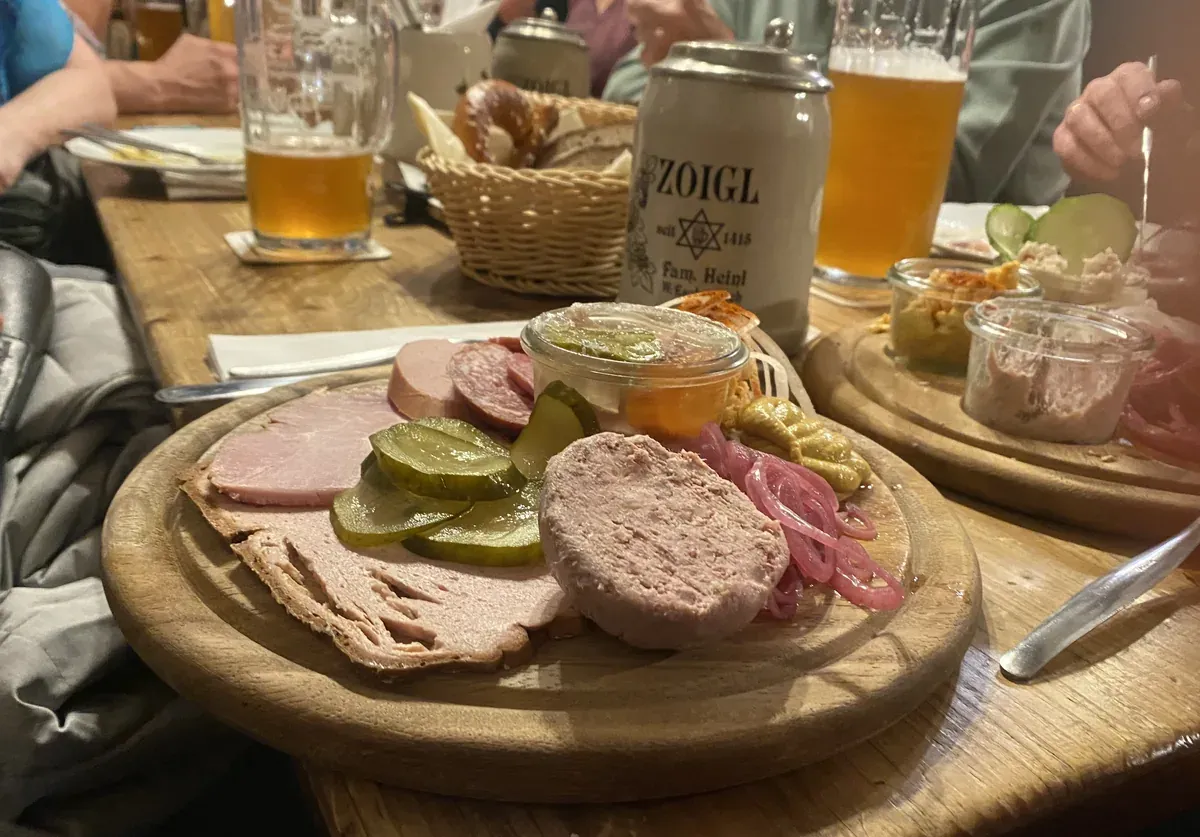
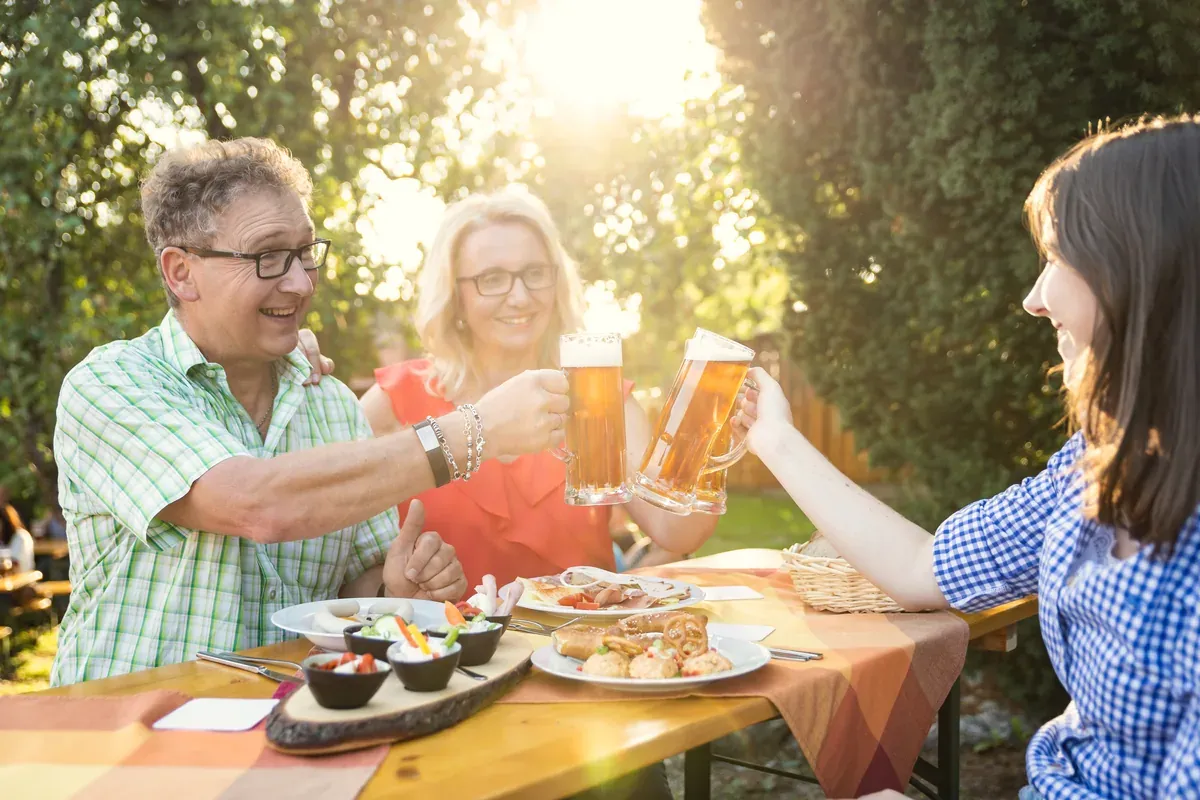
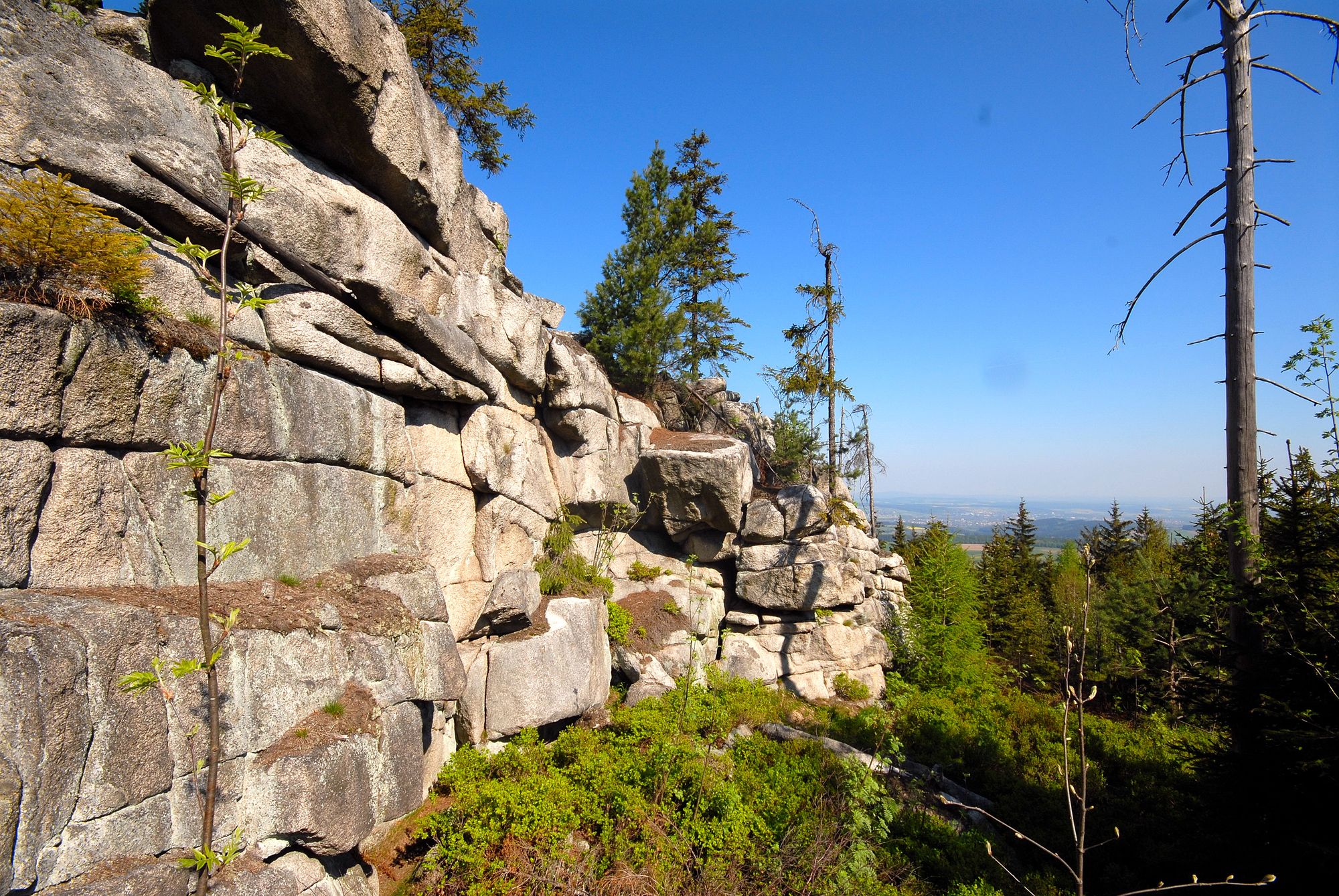
What struck me as a Munich resident, besides the excellent quality of my chosen bread plate, was the relatively low price level of the offered dishes. In other words: the price-performance ratio is very attractive. Not only because of the special, regionally typical culinary culture, but also because of the enchanting landscapes with original forests, ponds and the valley of the Waldnaab, a visit to the Steinwald with its nature park and the Öko-Modell-Region is definitely at the top of my travel list.
And I will definitely "go to the Zoigl" again. Wherever the Zoiglstern is hanging, because, as I have been assured, the other Zoiglstuben will not lag behind the Kramer Wolf in any way.
Links:
Good overall overview of the topic including presentation of Zoiglstuben and Zoigl-radways:https://www.oberpfaelzerwald.de/zoigl-und-bier/zoigl
Zoigl appointments:https://zoiglbier.de/zoigltermine/
Zoigl app:https://zoigl-app.de/
Main location of the Zoigl culture:https://windischeschenbach.de/freizeit-tourismus/
List of brewers and report of two "Zoigl-Hoheiten":https://zoiglbier.de/der-zoigl/
UNESCO Zoigl culture:https://www.unesco.de/staette/oberpfaelzer-zoiglkultur/
List of Zoiglstuben:https://zoiglbier.de/die-brauer/
Everything about the Braustern:https://www.flens.de/verstehen/detail/die-faszinierende-geschichte-des-brauersterns/
Article about the Steinwald region:https://www.natur-nachhaltig-erfahren.de/natur-erleben/6-natur-pur-steinwald-teil-1/