Europe – Your Mountains
A vast mountain range runs across the whole of Europe, from the Atlantic west to the Black Sea. The Western European Alps form its largest and best-known part, and the most extensively developed one.
Things look quite different in the part of this mountain range that stretches to the east of it from northwest to southeast, from Slovenia all the way to Albania. This intensely karstic part, the Balkan Mountains or Dinaric Alps, is very finely subdivided. In detail it forms a rather confusingly structured region with peaks reaching almost to the three-thousand-metre mark, rugged, canyon-like valleys and gentle high plateaus with abundant forest cover and clear lakes and rivers. The inaccessibility resulting from this fragmentation is one reason for the solitude of this natural landscape that has been preserved to this day – though only one of several.
The Komovi Mountains
Anyone who associates Montenegro above all with the Adriatic coast is in for a surprise in the east of the country, where, between the Adriatic and the Pannonian Plain, they discover a completely different world. The charm of the Mediterranean coastal landscape gives way to a rather forbidding tangle of rugged peaks, high pastures, mountain lakes and deep gorges with a high-alpine, cool and rather dry climate.
-
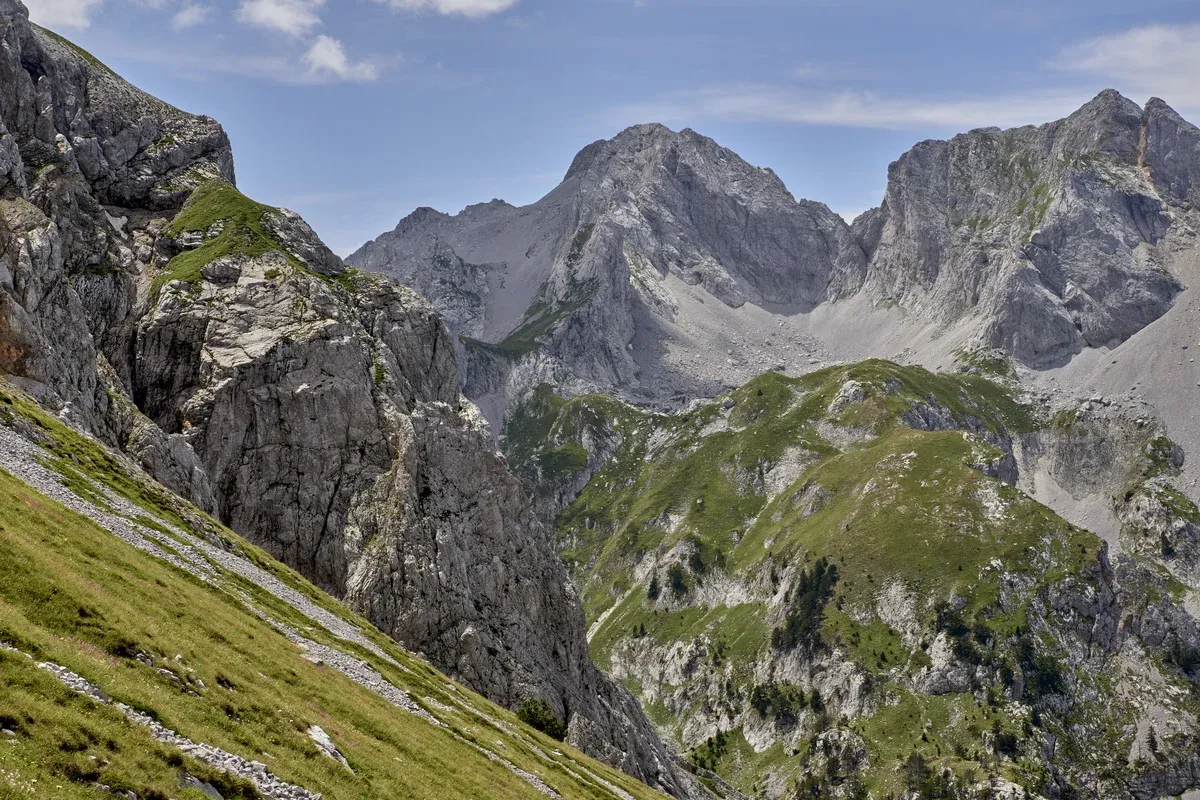
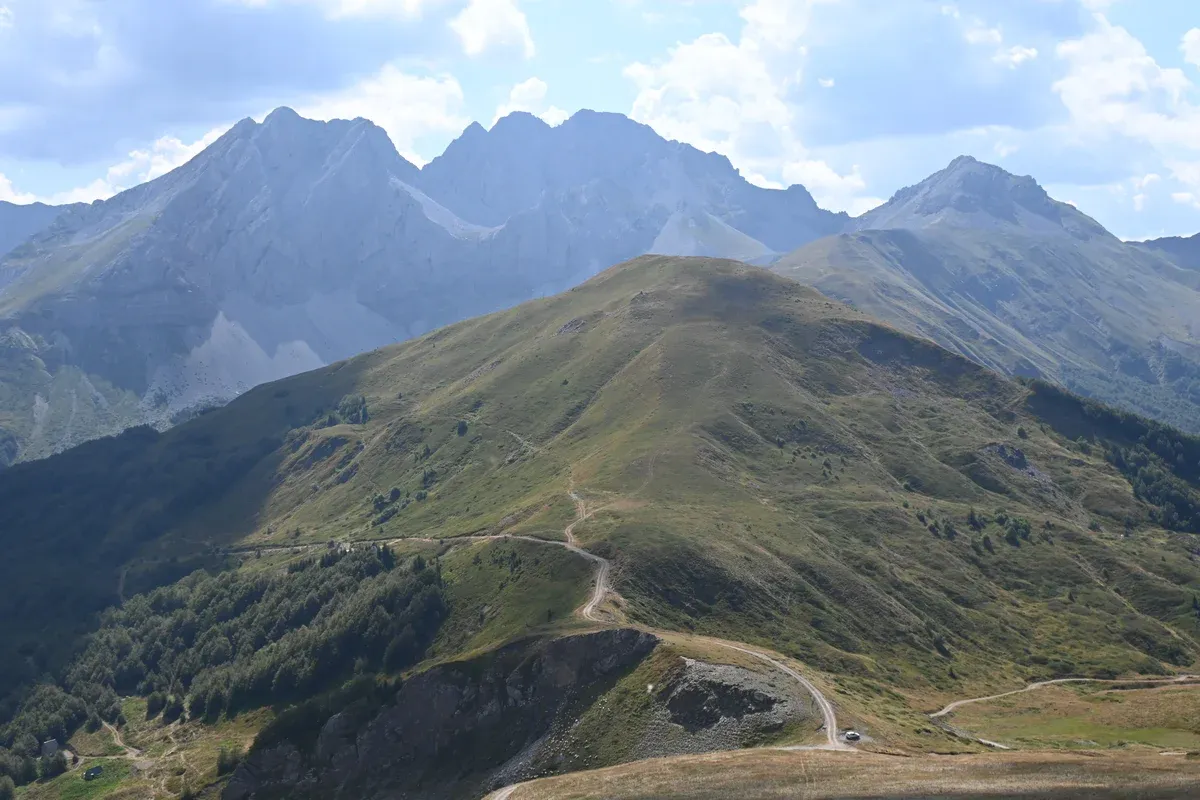
The pale, rugged summit regions of the Komovi massif -
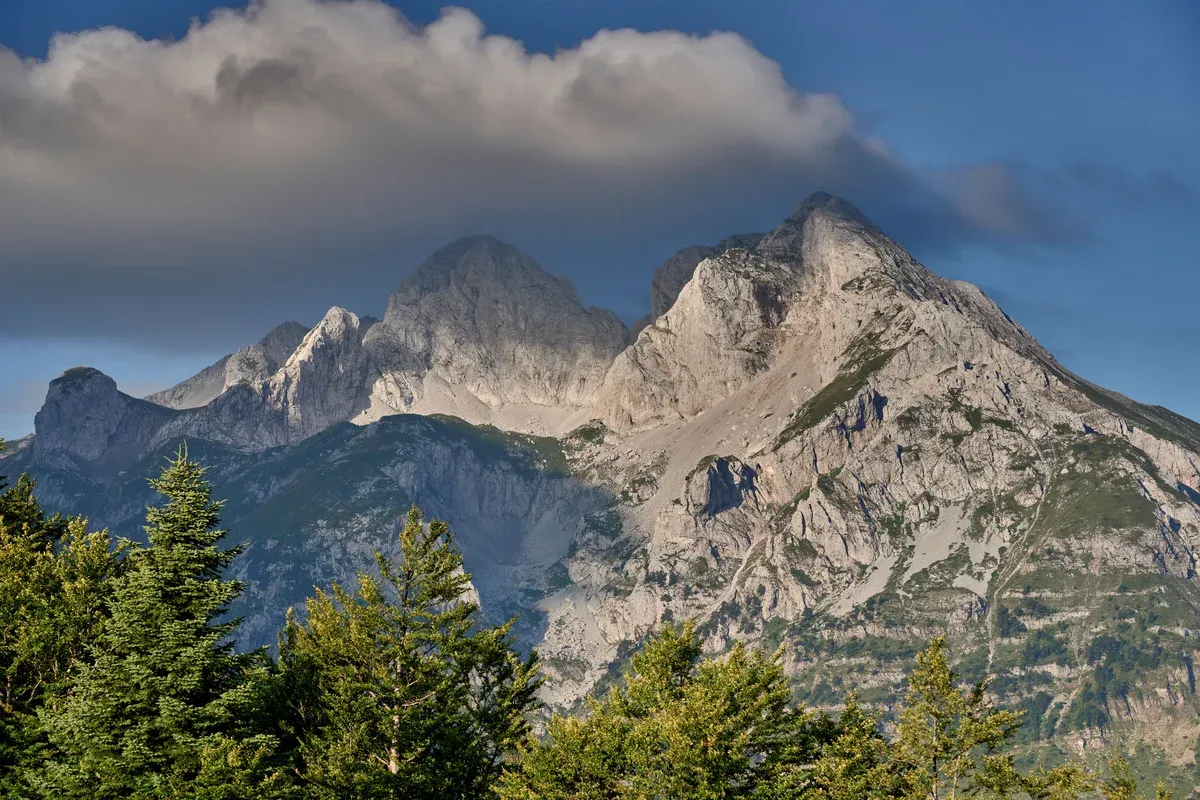
Easy to imagine that spirits dwell here
The Komovi mountain massif, often also referred to as the „Montenegrin Dolomites“, is a significant massif of the Dinarides and rises to almost 2,500 metres in height. The rivers Tara and Lim rise in this region; they flow into the Drina, which comes from Serbia, and ultimately release their waters into the Black Sea via the Danube. The Tara is the longest river in Montenegro, and probably also the most impressive, for it forms a gorge that, in length (78 km) and with a depth of up to 1,300 metres, is regarded as the largest and wildest gorge in all of Europe, and the second largest on the entire planet.
The Geology
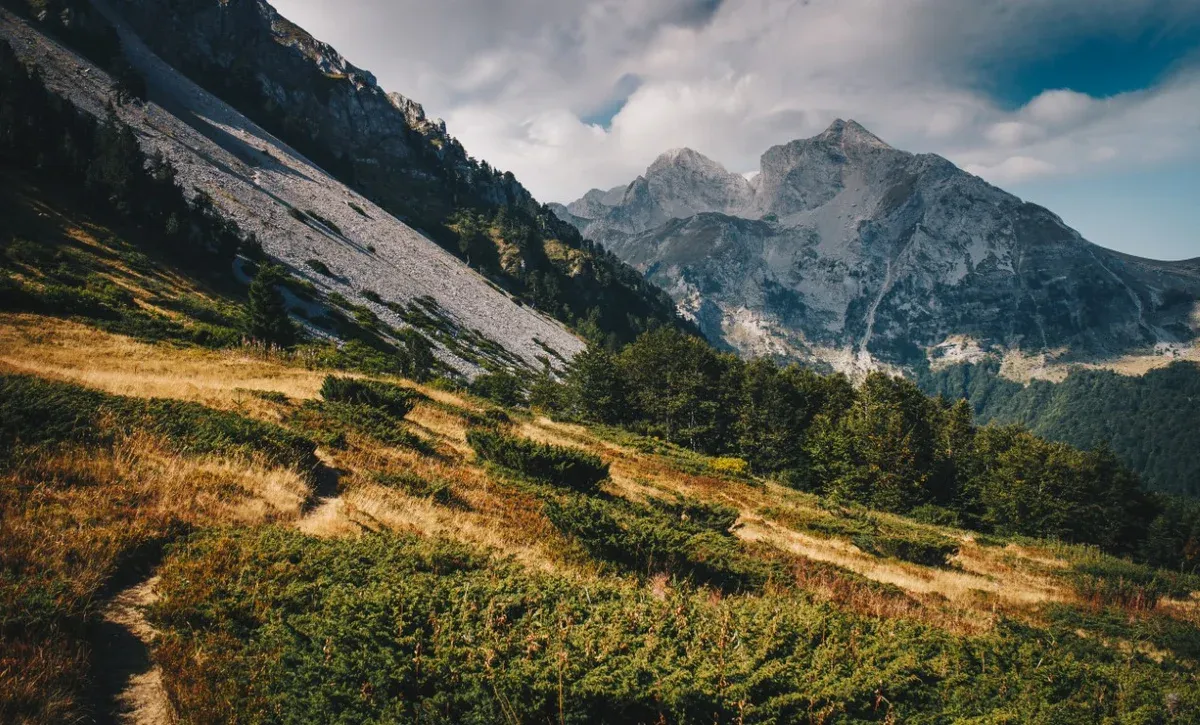
The geology, and with it the appearance of the landscape, is likewise extremely fascinating. Built up mainly of Werfen shale with a thickness of up to 400 metres and overlain by dolomite rock, the geology points to repeated flooding by the Tethys Sea in the Cretaceous period with subsequent reshaping. The shale layers emerge above all in the gorges as mighty bands. At the surface, dolomite formed in the Triassic dominates and gives rise to numerous block and scree slopes, which shape above all the summit areas. Here are found numerous clear mountain lakes of glacial origin, which vividly justify their designation as the „eyes of the mountains“, as well as the most extensive scree slopes on the entire Balkan Peninsula. A few small glaciers still just barely present indicate that during the Mindel glaciation the area was almost entirely glaciated.
The Nature Park
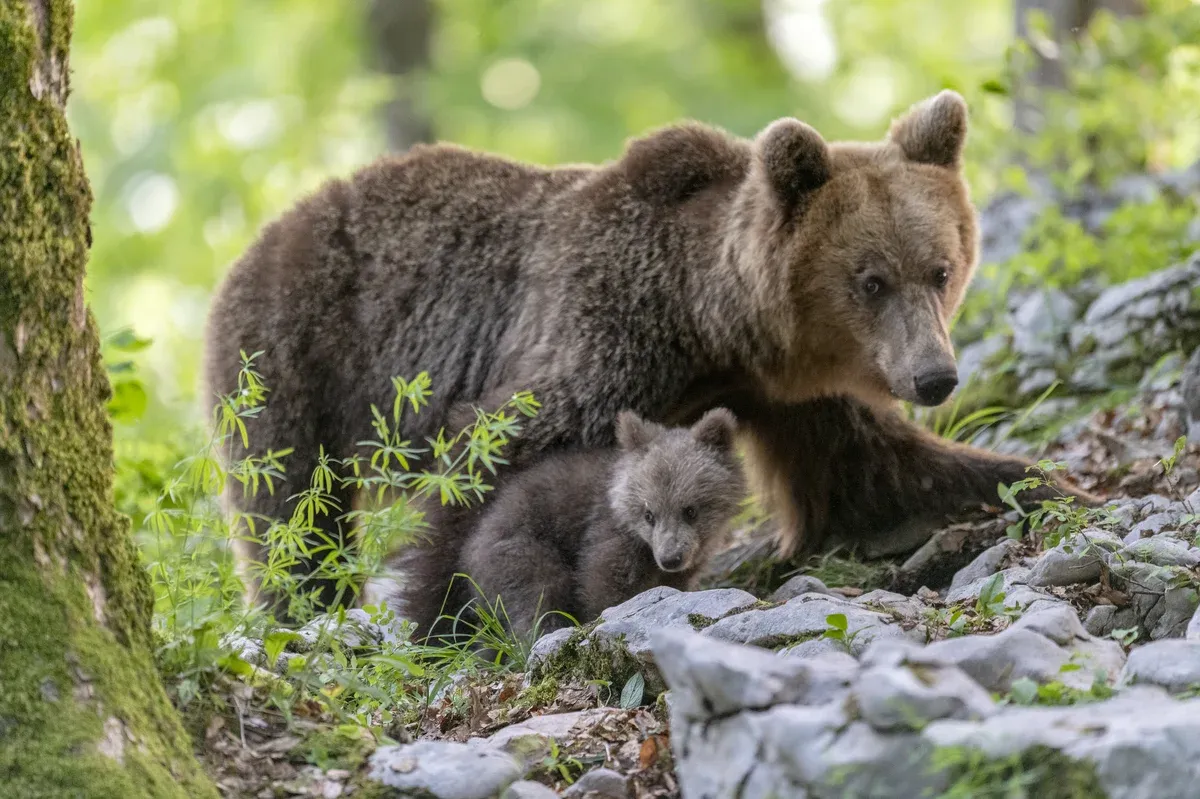
It bears the name of the mountains and offers an impressive diversity of flora and fauna, especially populations of alpine birds of prey, bears, lynxes and wolves as well as chamois. Species that in the heavily frequented regions of the Western and Eastern Alps are largely in retreat.
The flora, too, has its highlights, among them dozens of orchid species, edelweiss, gentian, mountain avens and other alpine flora species that cope well with cool temperatures and poor, acidic soils.
Within the framework of the international EU Interreg project „Mystical Danube“, the Komovi Nature Park is coming into focus for sustainable nature and culture experiences. The administration is striving to establish a nature-oriented, individually rooted tourism that locates most of the value creation with the local population and is characterised by personal relationships on an equal footing and a cultural dialogue of tradition.
The new themed route „Between Two Lakes – The Path of Mountains and Legends“, only about a two-hour drive from the Montenegrin capital Podgorica, leads through one of the most pristine mountain landscapes of Southeastern Europe and into an almost forgotten world full of myths.
The Katun Culture
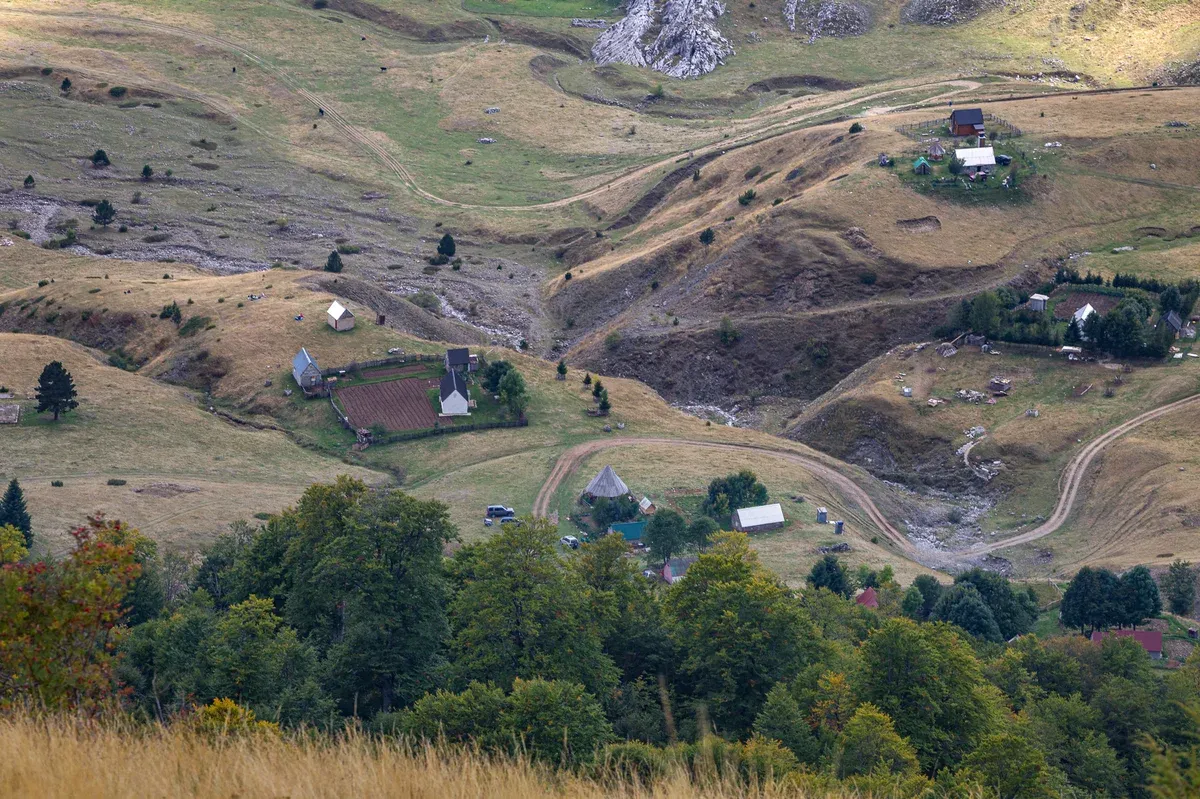
As often happens with comparatively isolated mountain regions in Europe and elsewhere around the world, cultural traditions play a major role in the life of the population. This concerns the tangible cultural heritage such as settlement structure, architecture and craftsmanship just as much as the intangible. Regional customs and a close interweaving with the immediate environment, often in a heterogeneous mix of deeply devout religiosity and a magically tinged understanding of nature, determine everyday life. A mode of economy based on smallholder structures, with its consistently nature-oriented, locally and seasonally shaped cuisine, is omnipresent and contributes to the appeal of this unity of nature and culture in a special way.
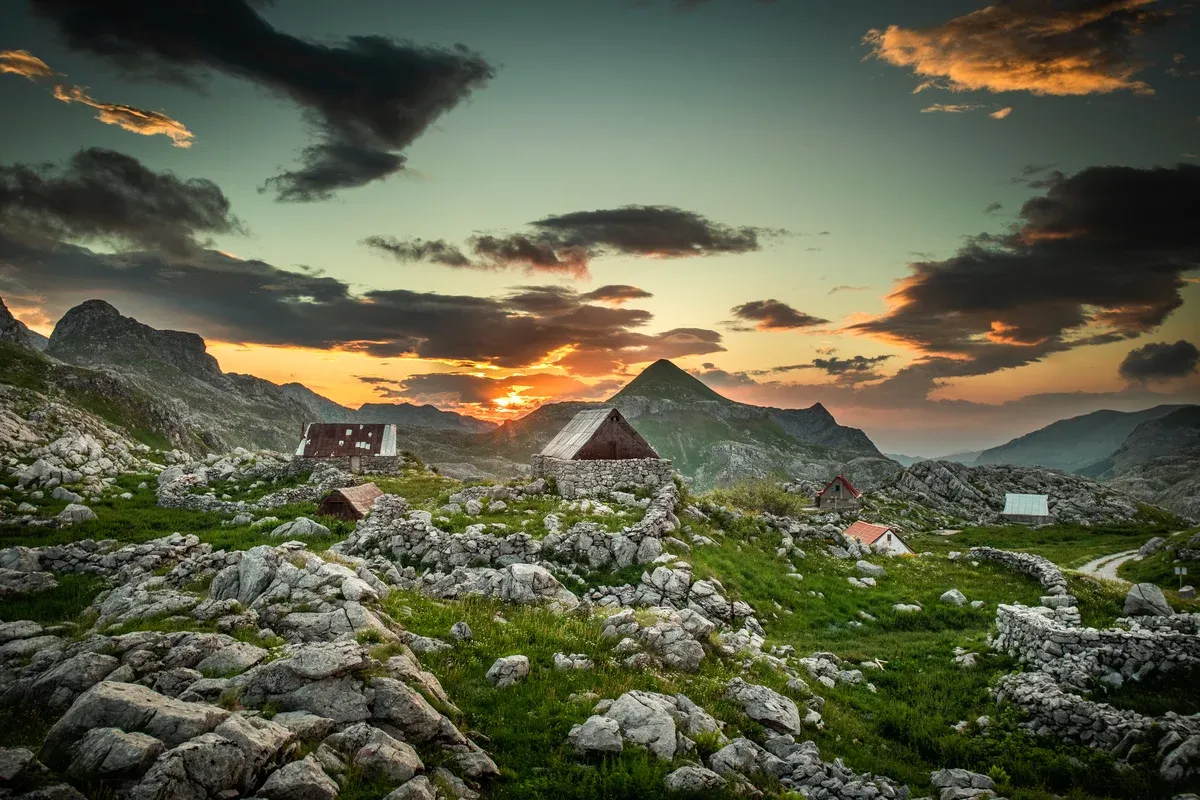
The term „Katun culture“ refers to the regional, often semi-nomadic or seasonal way of earning a living based on alpine pasture farming or extensive grazing, with the scattered smallholdings or huts or alpine pastures that for centuries have been harmoniously embedded in the landscape. The simple scattered settlements, built from a combination of natural stone and wood, are characteristic of the Dinaric Alps, but definitely have their counterparts in comparably structured areas such as in South Tyrol or the Pyrenees.
The original population springs from the Kuči tribe, an association of two sub-tribes with a total of around 15,000 members, who over the course of time have, in supra-regional terms, mostly felt themselves to belong to the Albanians, Serbs or Bosniaks, and yet have preserved a pronounced awareness of their origins. In matters of faith they wavered in the past between Orthodox confession, Catholicism and Islam, whereby syncretistic forms often appeared, usually mixed with a touch of nature religion. Politically, the mountain dwellers experienced almost continuously turbulent times, from the Ottoman wars and Turkish rule to Serbian hegemonism and the turmoil of the Yugoslav War; there are even said to have been genocide-like events on several occasions.
Mysticism
Mountain, lake and mystical tales. Enchanted spirits have always dwelt in the mountains. Whether it be the dwarf king Laurin in the Dolomites, the spirits of miserly alpine dairymaids on the Hochkönig in the Salzburg region, the giant Waller in the Walchensee who threatens the Bavarian uplands, the rock face in Triglav National Park, wild women everywhere, Rübezahl in the Giant Mountains or the sleeping Emperor Barbarossa, who even has several resting places. Or indeed in Lake Bukumir, which can boast a whole multitude of dragons, strange water creatures and vanished peasant communities, and the mountain spirit „Kom“, who lives in the stony heights and guards fabled treasures.
The Mystical Danube Themed Route
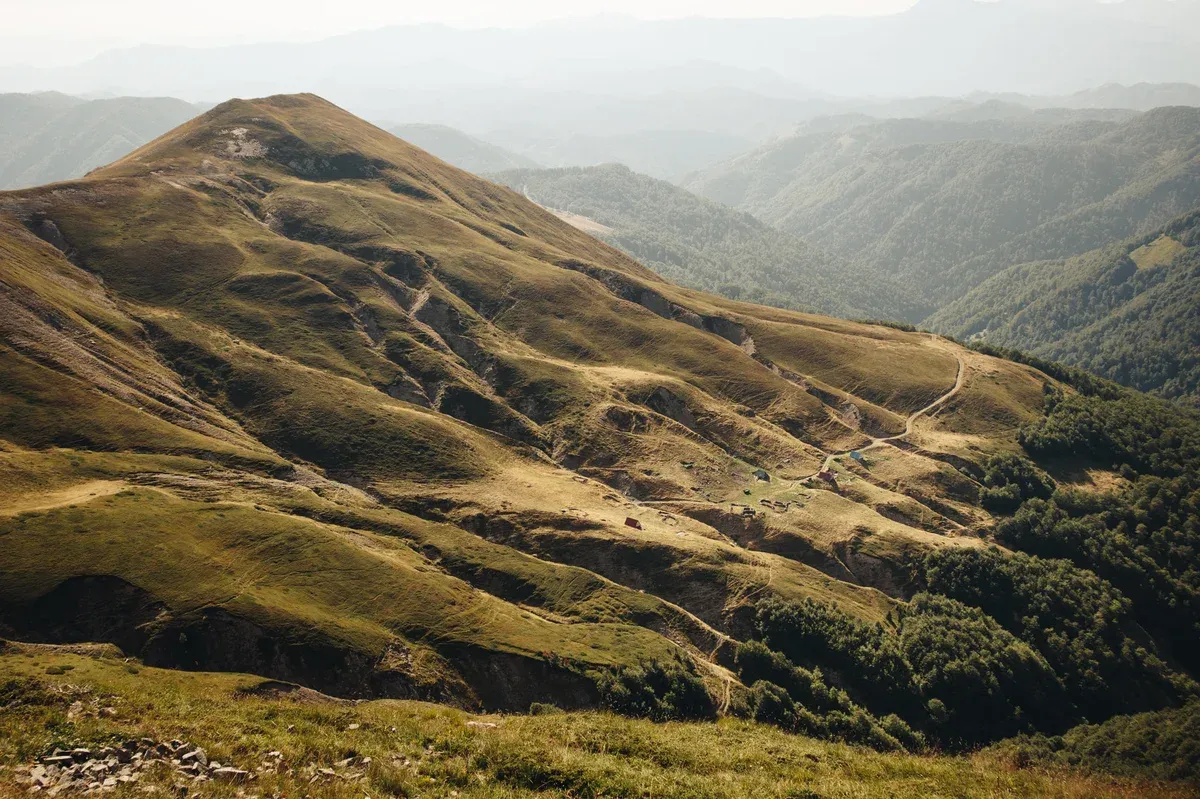
Within its framework, as mentioned, the new themed route „Between Two Lakes – The Path of Mountains and Legends“ came into being; only about a two-hour drive from the Montenegrin capital Podgorica, it leads through one of the most pristine mountain landscapes of Southeastern Europe and into an almost forgotten world full of myths. The barely eleven-kilometre trekking tour, running through more or less impassable terrain, connects Lake Bukumir (also Bukumirsko Lake) with its counterpart, the Rikavačko Lake shimmering in many colours. Along the way hikers come across traces of the centuries-old shepherd culture, glacial lakes and tales of dragons, mountain fairies and vanished tribes. The impressive surroundings and the knowledge of the handed-down stories, above all those relating to Lake Bukumir, almost inevitably create a magical atmosphere which, combined with certain weather events or light conditions and the all-encompassing solitude, can express itself almost as a slight, pleasant thrill of the eerie. Or, less enthusiastically, simply as the wonderful feeling of being connected in the most intimate way with a mountain world as forgotten as it is sublime.
-
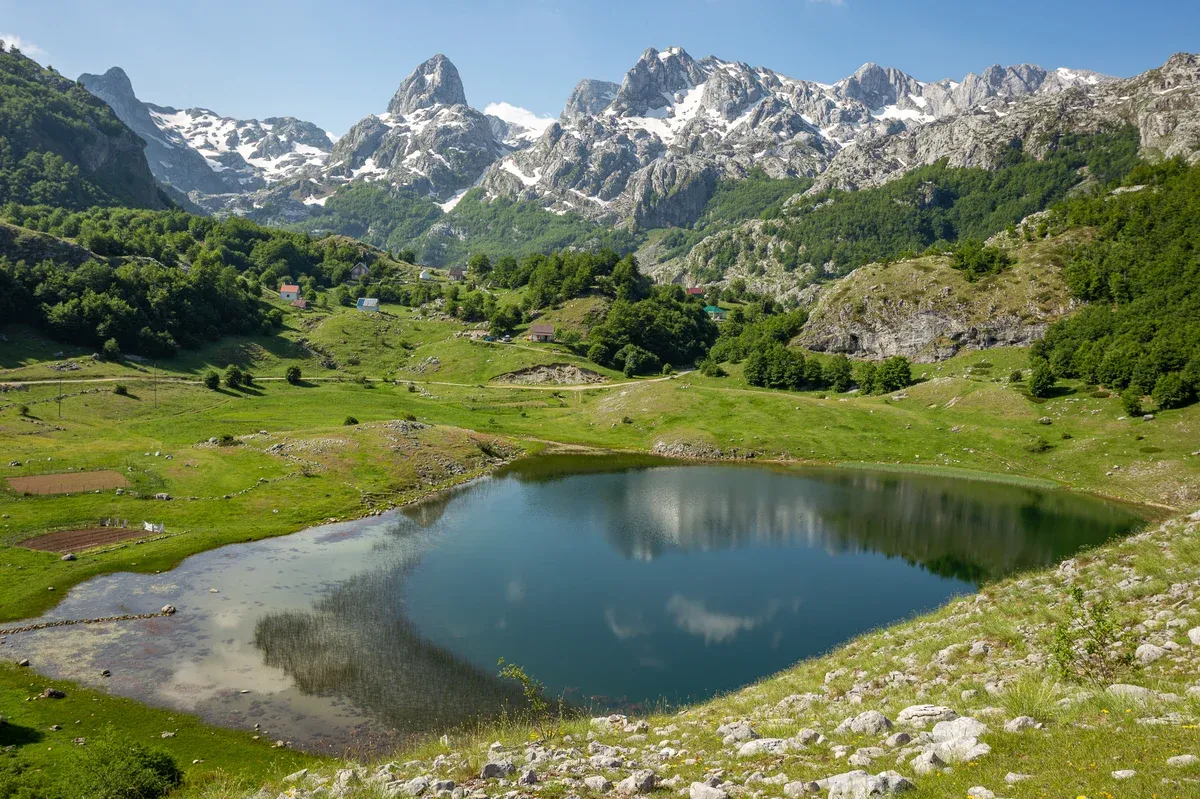
Lake Bukumir before the imposing backdrop of the Žijovo massif -
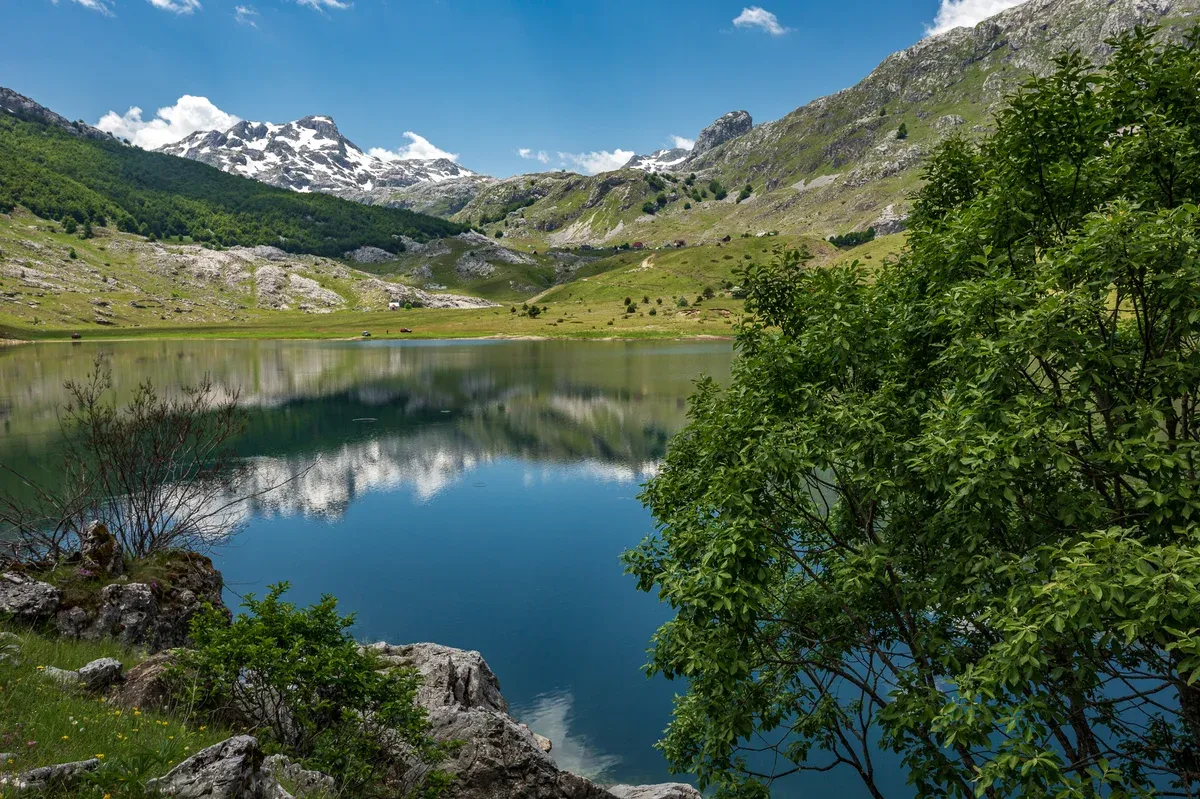
And the Rikavačko Lake, shimmering in different colours depending on the incidence of light
The themed route came into being within the framework of the project „Green and Mystical Danube Storytelling Route“. The EU-funded Interreg project brings together partners from several Danube countries with the aim of making natural and cultural heritage tangible through modern storytelling and strengthening rural regions sustainably.
For Montenegro, the Agency for Protected Areas Management of Podgorica is developing new experience offerings in the Komovi Nature Park together with regional partners. The route between Lake Bukumir and Rikavačko Lake forms a central building block of the project.
It combines striking landscapes, local legends, traditional ways of life and gentle outdoor tourism into a deceleration-focused travel experience. At its heart is not the hike itself alone, but the deliberate linking of nature experience, cultural identity and intangible heritage.
The themed route came into being within the framework of the project „Green and Mystical Danube Storytelling Route“. The EU-funded Interreg project brings together partners from several Danube countries in order to make natural and cultural heritage tangible through modern storytelling and to strengthen rural areas sustainably. For Montenegro, the Agency for Protected Areas Management of Podgorica is developing new experience offerings in the Komovi Nature Park together with regional partners. The route between Lake Bukumir and Rikavačko Lake forms a central component of the project: it combines landscape, local legends, traditional ways of life and gentle outdoor tourism into a deceleration-focused travel experience. At its heart is not the hiking route itself alone, but the deliberate connection of nature experience, cultural identity and intangible heritage.