What is a mountaineering village?
A mountaineering village is pretty much the exact opposite of alpine communities that have been shaped by concrete high-rise hotel complexes and garish event venues in the wake of mass tourism.
In a mountaineering village you will find no monolithic luxury hotels and shopping miles planted into the landscape, no sprawling, extensively developed ski slopes with the corresponding lift infrastructure, no asphalted giant car parks right next to the valley station of the mountain railways, no exclusive discos and luxury boutiques. Any place that wants to be a mountaineering village has to meet a correspondingly strict set of rules, drawn up by the regional alpine associations such as the DAV, ÖAV, CAI, as well as the Swiss Alpine Club (SAC) and the Slovenian Alpine Association in accordance with their own statutes.
Mountaineering villages have an intact village structure, a mountaineering and mountain-farming tradition, a locally oriented circular economy, a lived, craft-based economy, and a regionally and seasonally focused cuisine served in smaller, family-run guest establishments. And a transport network borne above all by public local transport – in short, things are more leisurely and relaxed here, offering the guest a synthesis of nature experience, physical activity, traditional cuisine and culture.
Where does the concept come from?
The concept of mountaineering villages has its origin in the effort to protect the Alpine region and extends across all eight alpine bordering states. The union of this "alliance of states" found its legal form in the Alpine Convention and its concrete realisation, among other things, in the establishment of a form of alpine tourism that is shaped by sustainability and takes responsibility for the natural environment. The term "natural environment" contains many components: animate and inanimate nature, the local population together with their organically grown culture, their identity, their values, their coexistence with the environment, their craftsmanship and their cuisine.
The Alpine Convention was enshrined in 1991 as Europe's first cross-border nature conservation project and sets out the goals, the scope, the implementation and monitoring of projects, including their scientific support. It concerns the entire canon of alpine nature and cultural conservation. The design of a responsible transport infrastructure, the use of energy and the management of visitor flows are addressed just as much as the preservation of a mountain-farming village culture and value orientation, the introduction of a locally dominated circular economy, climate control and biodiversity projects.
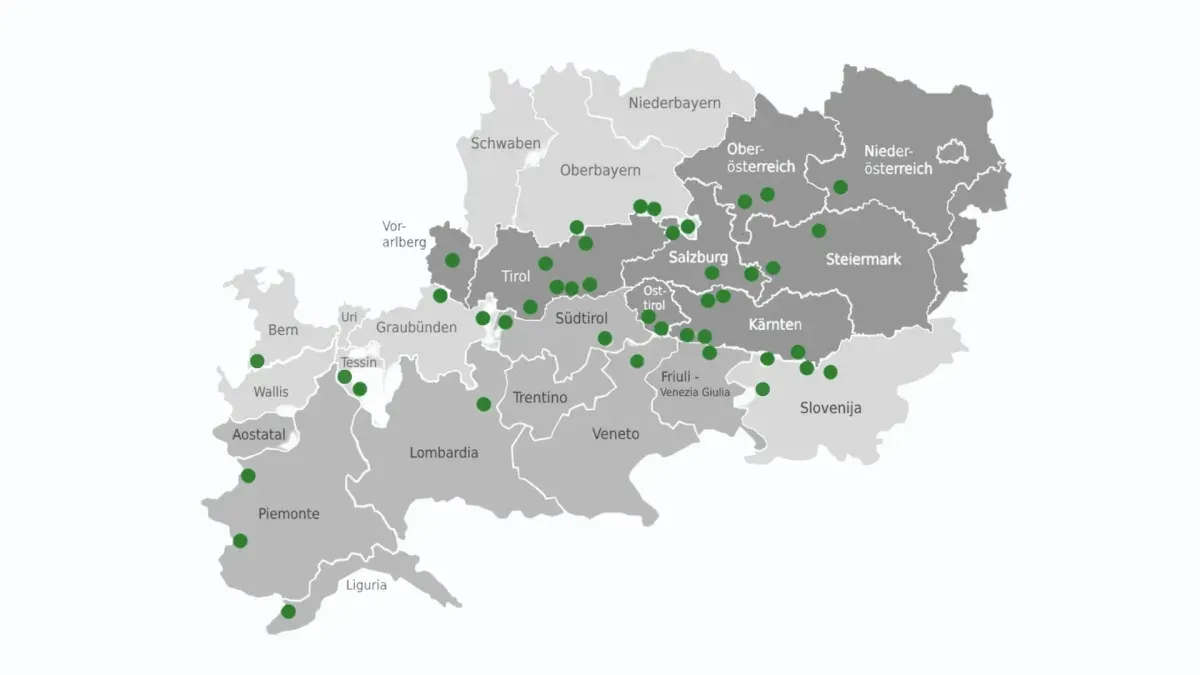
The founding of a transnational network of mountaineering villages is only one, but a central, implementation measure of the convention. Founded by the Austrian Alpine Association, four German municipalities also belong to this alliance, among others: Kreuth, Sachrang, Schleching and Ramsau b. Berchtesgaden. The bulk of the mountaineering villages, with twenty-one participating municipalities, are in Austria, followed by Italy with seven and Switzerland with five municipalities.
Mountaineering villages in Slovenia
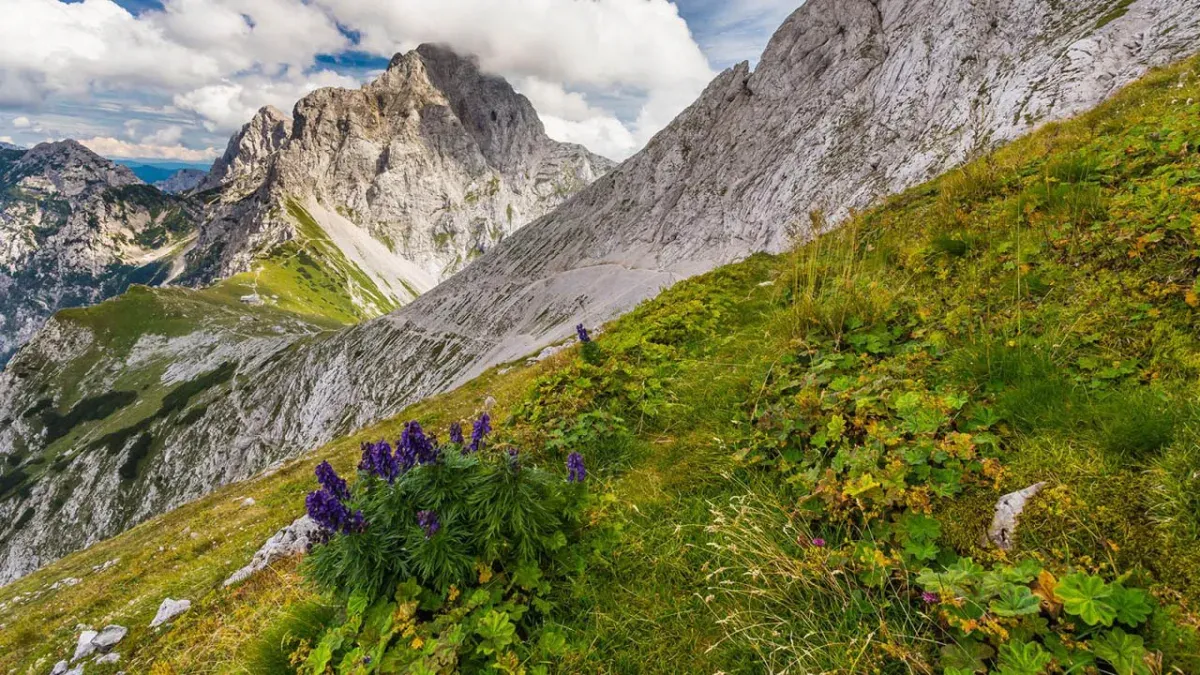
Currently, four Slovenian mountain villages hold the status of a mountaineering village. Although all in the same spirit, the Slovenian representatives are quite individual and different in their respective character. These are: Jezersko, Luče, Dovje-Mojstrana and Baška grapa. Two of these destinations are located in the area of the Kamnik-Savinja Alps, also known as the Steiner Alps, and another two in the Julian Alps, north and south of the Triglav massif respectively. There, where Austria, Italy and Slovenia form a tri-border corner and the Carnic Alps end, the Julian Alps "take command", which they then hand over further east to the Kamnik range, which, like these, belongs to the Southern Alps or the Southern Limestone Alps.
Jezersko, the green valley between the Karawanks and the Kamnik range
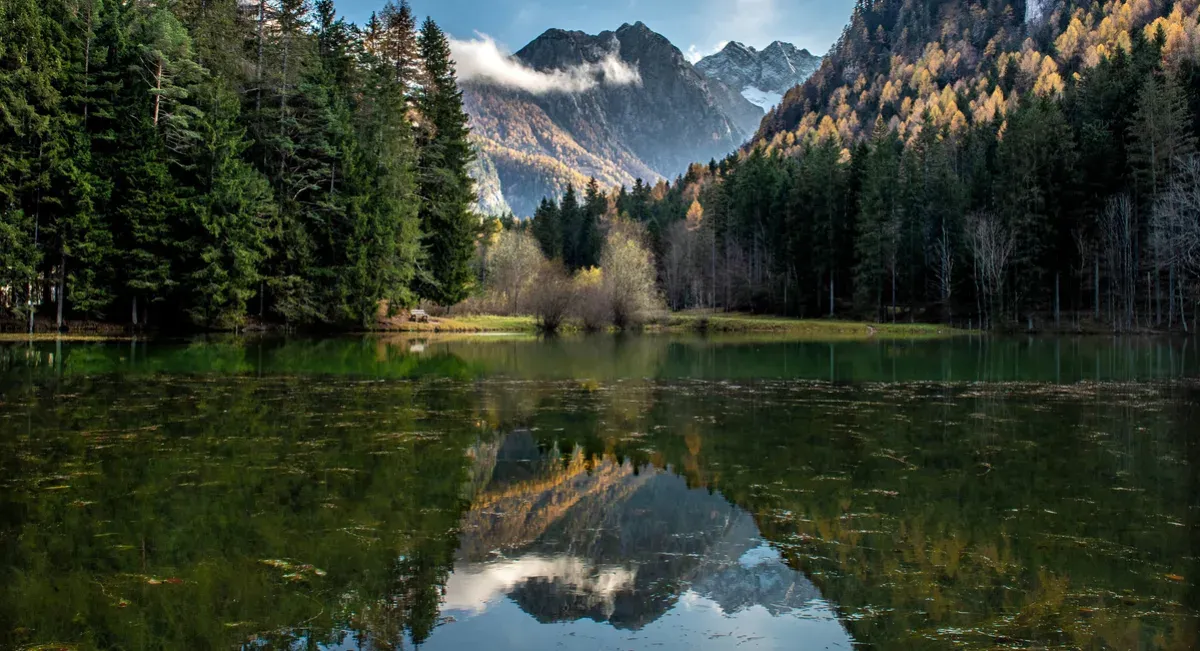
Jezersko is a green valley bordered in the east by the mountain range of the Kamnik-Savinja Alps. From the north to the west it is surrounded by a coral reef more than three million years old and in the north by the Austria-Slovenia state border. In the south the valley leads on to the longest village in Slovenia – Kokra, where Slovenia's oldest limestone is found, and further into the green pearl of Europe – central Slovenia. Jezersko is a pioneer, the first of the Slovenian mountaineering villages to be brought to life. It is one of the central places of the Steiner Alps, which boast numerous peaks over 2,000 metres high and, with the Grintovec at almost 2,600 metres, can also lay claim to a true mountain giant. Otherwise this area offers a cloak of green – three quarters are covered by forest. With the heart-shaped Planšarsko Jezero lake, from whose predecessor – a glacial lake that dried up in the fourteenth century – the name of the place derives, one of the many tranquil yet no less impressive destinations for lingering presents itself.
Luče: a "nest" in the middle of the mountains
Luče is a settlement area in the Steiner Alps, populated since the twelfth century, at the confluence of the Savinja and the Lučnica, at the foot of Raduha, Rogatec and the karst plateau Dleskovška planota. First documented in 1426, Luče has more than once been named the most beautiful village in Slovenia. As a member of the mountaineering village network, the village relies on authenticity, tranquillity and a responsible approach to the environment. Here you experience things most intensely while travelling on foot, in contact with the nature of the mountain world and with a feeling for the place and its customs. A special feature of Luče is that numerous marked mountain trails already begin in the village, which is why the village is an ideal starting point for mountain hiking. Lovers of karst caves are just as well catered for here as fans of spectacular waterfalls. Otherwise a lush southern alpine flora and fauna prevails, with small isolated farmsteads seemingly scattered across the landscape.
-
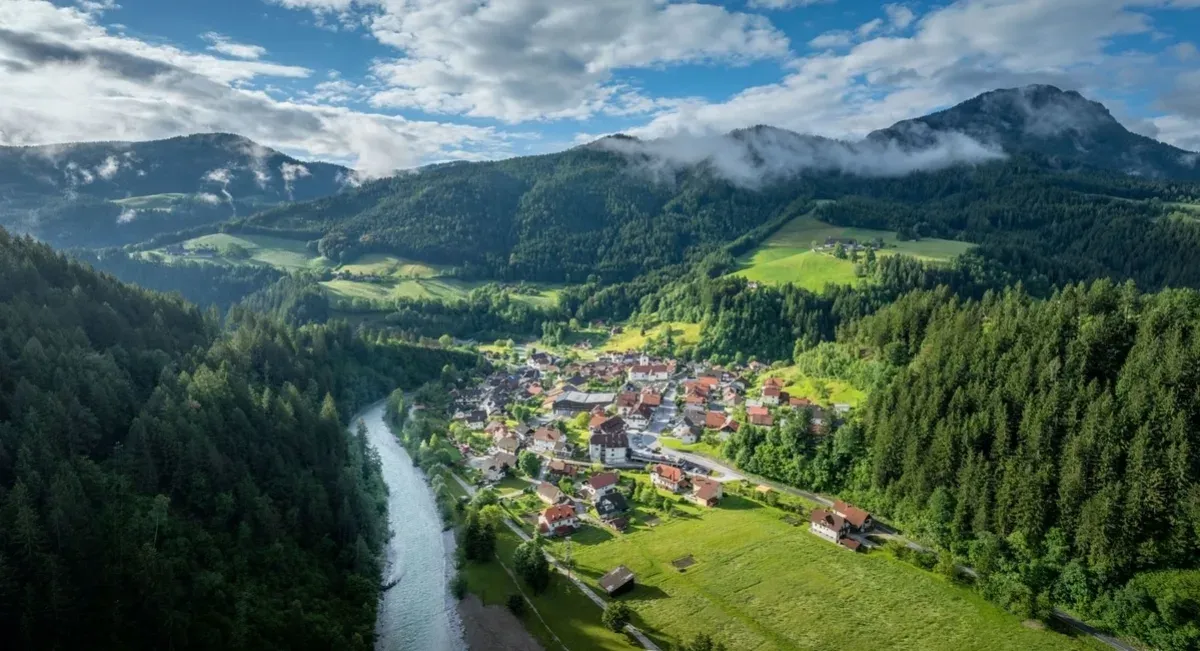
Picturesquely, the village of Luče nestles against the bank of the Savinja -
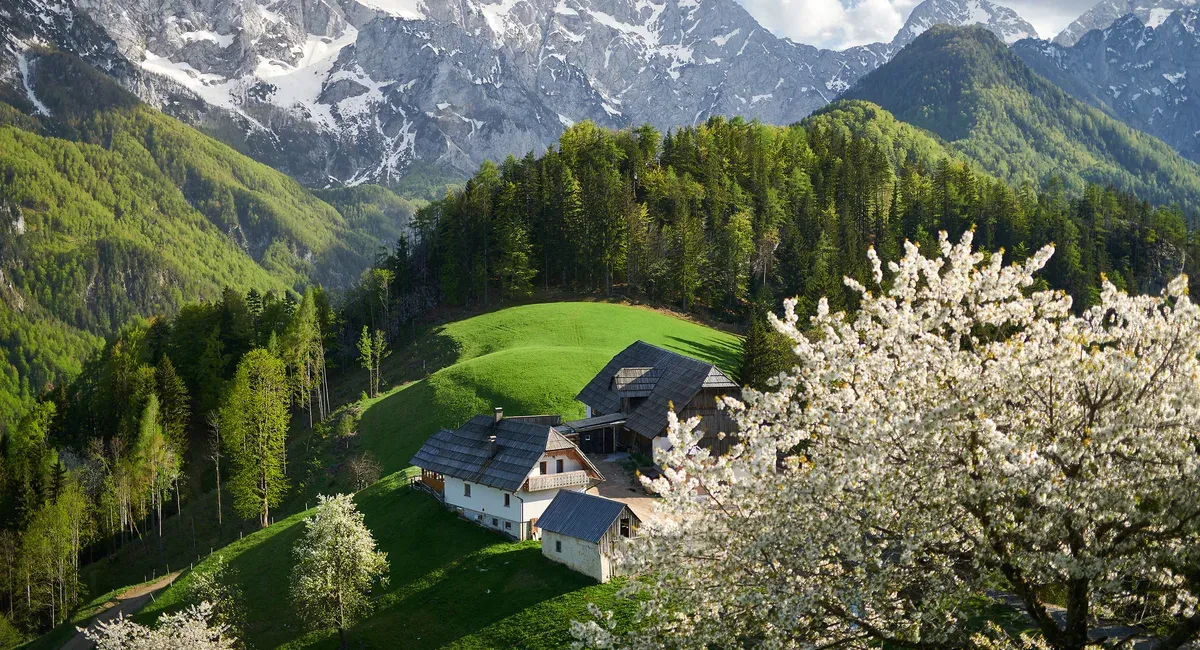
The Savinja rises in the Steiner Alps and flows through the picturesque Logar Valley
Dovje-Mojstrana: a paradise between Triglav and the Karawanks
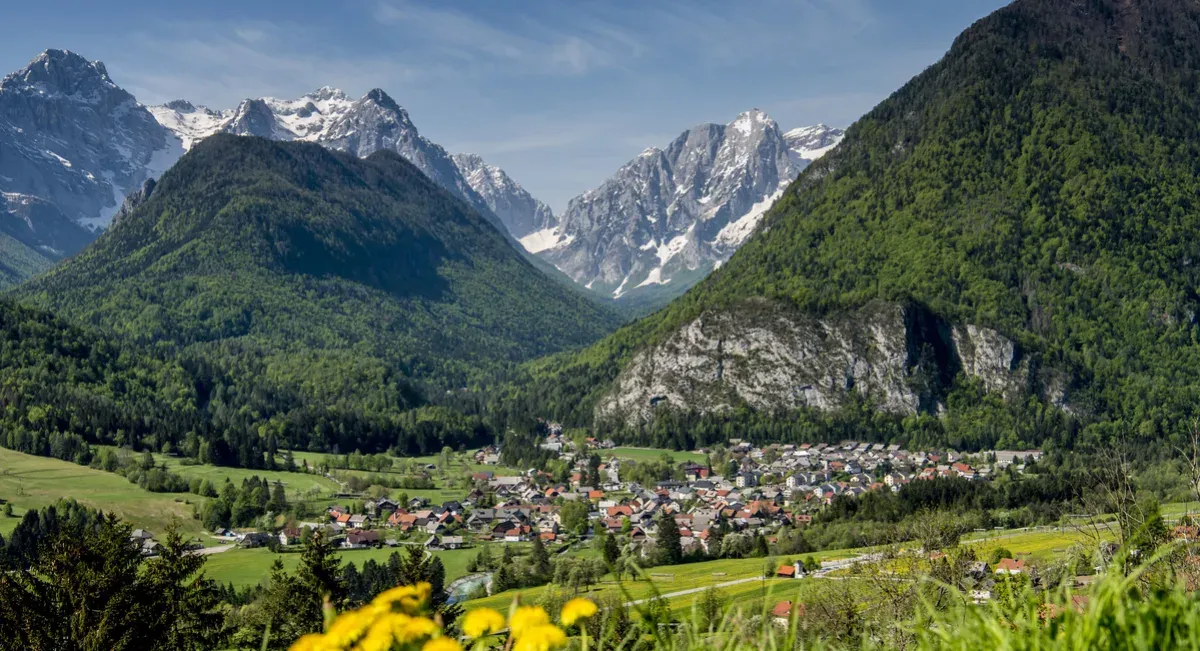
At the state border between the Austrian federal state of Carinthia and Slovenia, as a continuation of the Carnic Alps, the Karawanks rise mainly in a west-east direction between the river Drau and the valley of the Save. South of the Karawanks tower the Julian Alps. The widely known winter sports resort of Kranjska Gora forms the northern "entrance" to Triglav National Park, Slovenia's only one.
The duo Dovje-Mojstrana, with the surrounding settlements, lies as a district of Kranjska Gora on the threshold of Triglav National Park. Surrounded on the northern side by the relatively easily accessible peaks of the Karawanks, the mighty Triglav massif in the Julian Alps extends to the south. The alpine valleys such as Kot, Krma and Vrata are popular starting points for the ascent to the summit of Slovenia's highest mountain with its 2,864 metres above sea level. The bond with the mountains is reflected in the villages by a rich mountaineering tradition, presented among other places in the mountain museum "Slovenski planinski muzej".
Baška grapa: A botanical jewel of the Slovenian Alps
Baška grapa is one of the wildest and at the same time most impressive areas of the Julian Alps, right at the southern entrance to Triglav National Park. In this alpine valley on the river Bača, numerous picturesque villages and hamlets lie on steep slopes and sunny terraces. The Baška grapa is known for its exceptional plant diversity, which is why the slopes above the valley are a magnet for lovers of alpine flora; because of its botanical variety, the Črna prst is also referred to as the "Botanical Garden of Europe". Through the valley runs one of the most beautiful alpine railway lines, the Bohinj Railway, with one of the longest railway tunnels in the Alps and a magnificent viaduct – an invaluable cultural heritage from the era of the Habsburg Monarchy, which built a rail connection here from the heartland to the Adriatic. Remarkable is the fact that Baška grapa today is 100% energy self-sufficient.
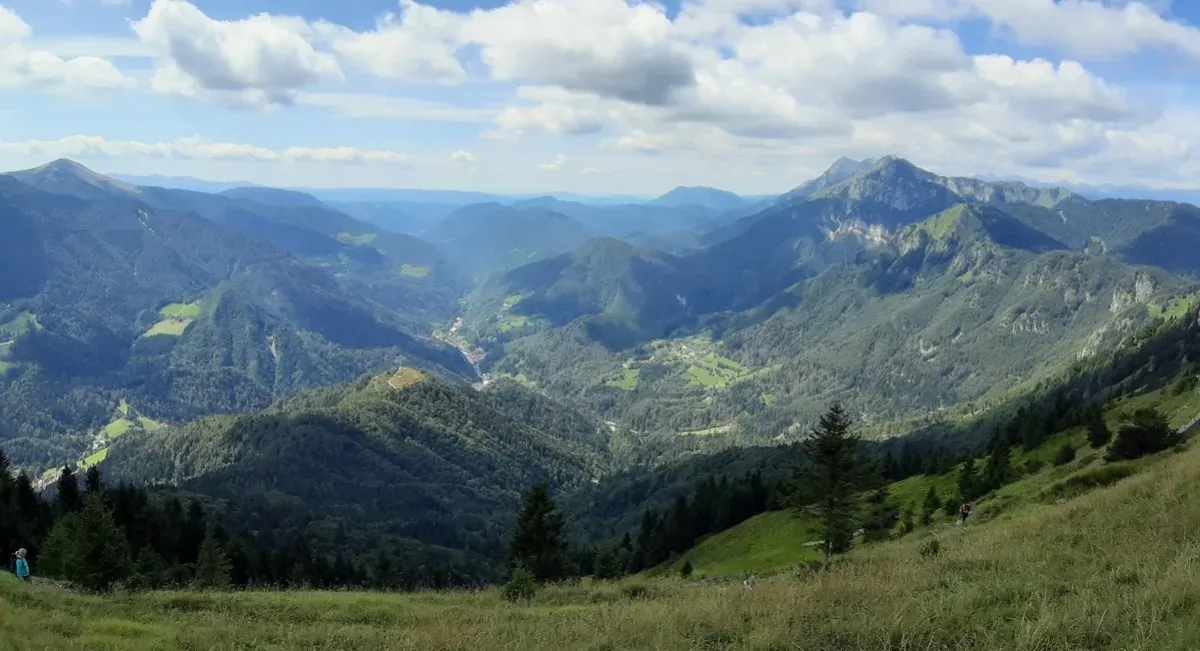
You really do have to take a closer look at the map to find the mountaineering villages presented here, but that fits perfectly into the concept. Once you have found them in reality, you will delight in the memories for a lifetime. The Slovenian mountaineering villages are a good example of what a sustainably healthy and gentle tourism concept can look like – to the benefit of nature, of tourists and of the local population.
https://www.bergsteigerdoerfer.org/
https://www.slovenia.info/de/geschichten/bergsteigerdorfer-in-slowenien
https://www.bergsteigerdoerfer.org/61-0-Bergsteigerdorf-Jezersko.html
https://www.bergsteigerdoerfer.org/3755-0-Bergsteigerdorf-Luce.html
https://www.bergsteigerdoerfer.org/9100-0-Bergsteigerdorf-Dovje-Mojstrana.html
https://www.bergsteigerdoerfer.org/12656-0-Bergsteigerdorf-Baska-grapa.html