Where the slopes of the Black Forest gradually give way to the broad rift valley of the Rhine, for instance in the Markgräfler Land, the Ortenau or the Kaiserstuhl, a very special, sweet fruit grows: the Black Forest cherry - whose harvest has just begun.
The Black Forest
Germany's highest low mountain range is the „ruin“ of an ancient massif that, during the Eocene, was split by the Upper Rhine into a western part, the Vosges, and a part lying east of the river, the Black Forest. It is built up of Bunter sandstone, granites and metamorphic rocks (gneiss).
In simplified terms, the Black Forest can be pictured as a large fault block that tilts down from southwest to northeast like a lectern, and which is roughly divided from south to north into three parts, between which the rivers drain either westward into the Rhine or eastward into the Danube.
Originally the Black Forest was covered by mixed forests, but ever since humans began to reshape the landscape on a large scale, the mixed forest turned more and more into a spruce monoculture dotted with charcoal-burner settlements. One of the decisive factors was the Upper Rhine, already navigable here. It served the huge demand for timber from the Netherlands, whose urban development rested on spruce trunks from the Black Forest.
The Rhine Rift Valley
The valley floor in the west would actually be up to 4,000 metres deep had it not been constantly „filled up“. Filled up with sediments from the mountainous upper course of the Rhine, the Alpine Rhine, which over time have decomposed into a very fertile loess soil. In the middle of the Rhine valley the Kaiserstuhl, a Tertiary volcanic cone, heaves itself up and, together with the sedimentary rock soils mentioned, forms one of Germany's most productive wine-growing areas and an important region for cherry cultivation.
The Climate
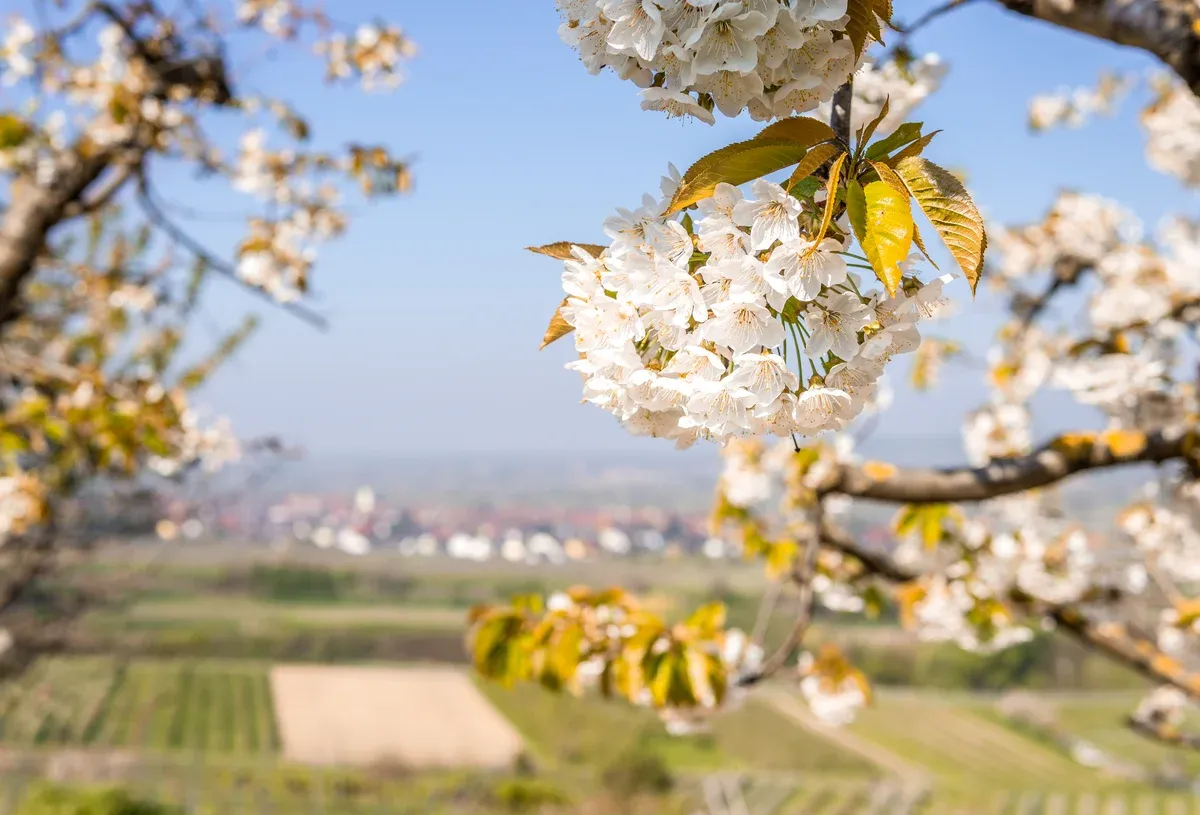
While the High Black Forest is exposed to a rather harsh, cool and rainy climate, and the plain to its west, in the rain shadow of the Vosges, shows an almost Mediterranean character, the western flattening of the range offers a favourable climatic mix of warmth, mild breezes descending from the slopes and predominantly dry weather that allows heat-loving plants such as fruit and cherries to thrive. Thus the meadow orchards in the valley and hill locations form, as a counterpoint to the wooded areas, part of the defining landscape.
The Black Forest Cherry
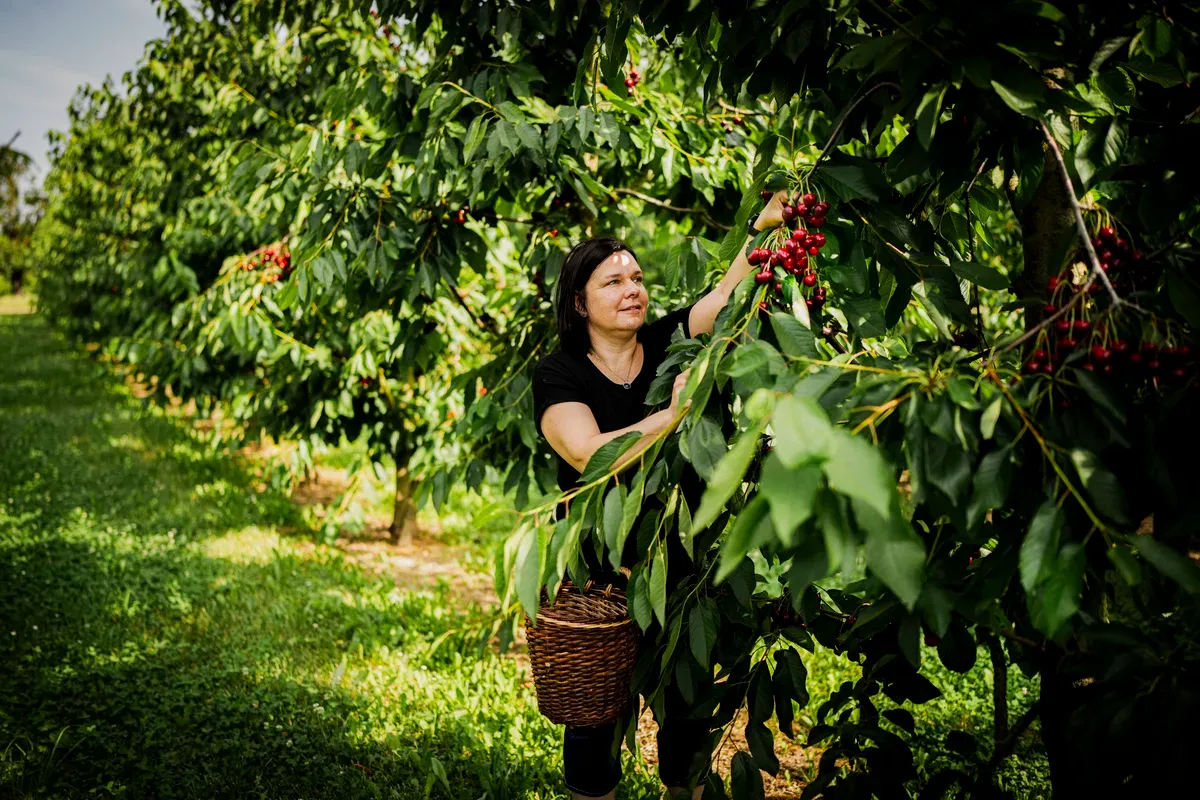
On the western edge of the Black Forest holiday region, cherries are among the most important traditional special crops – in terms of landscape, cuisine and culture. The Kaiserstuhl was for a long time Germany's largest sweet-cherry district. In the Markgräflerland, especially in the Eggenertal, loess soils and a mild climate produce the famous Markgräfler sweet cherry: deep black and aromatic with a marzipan note – ideal for jam, juice and Kirschwasser. The Renchtal, the Achertal and the Durbachtal in the Ortenau have also been a preferred growing area for fruit farmers for centuries. From the sea of blossom to the summer harvest there are many ways to enjoy the cherry: as fresh fruit, in ice cream, as jam, in the cherry cake and in Kirschwasser, as well as on hiking trails such as the „Kirschbaumpfad“ (Cherry Tree Trail) or at festivals with the „Cherry Queen“.
The Sweetest Temptation: Black Forest Cherry Cake
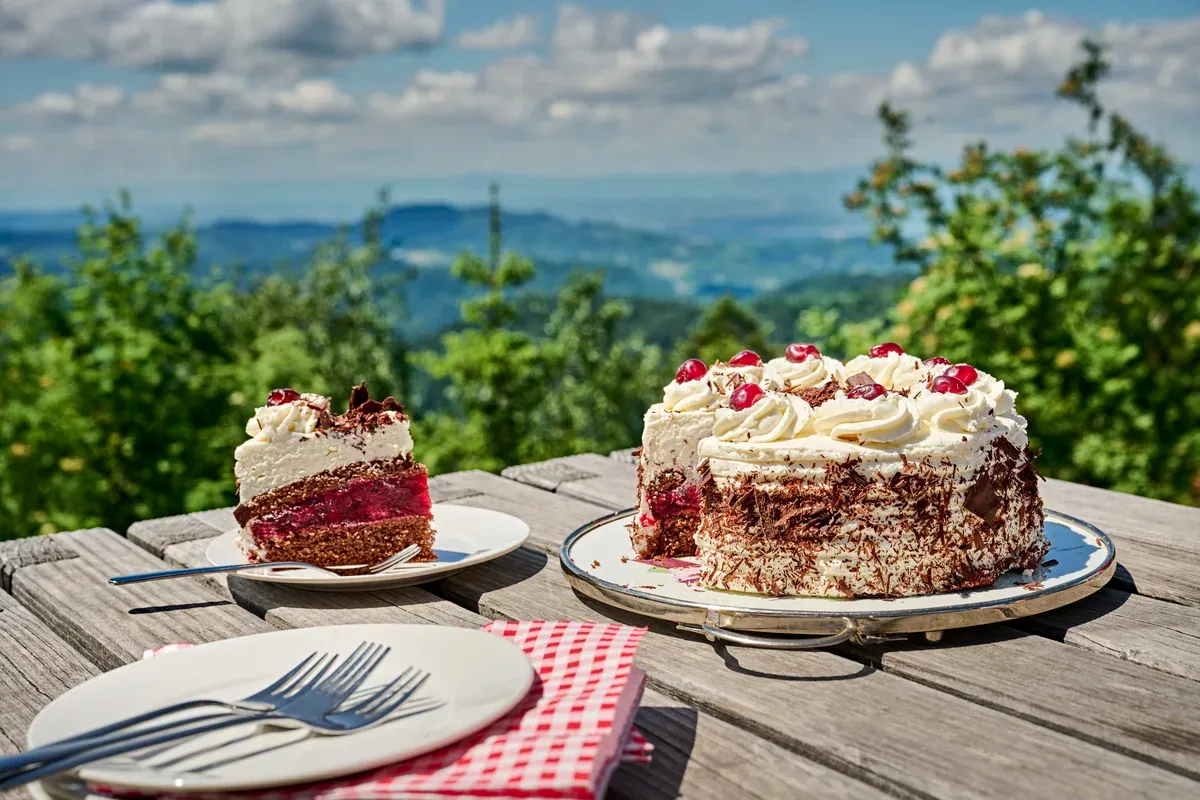
It is round, mighty, layered and tipsy. Its colours are black, white and red: the Black Forest cherry cake is the sweetest temptation in the Black Forest and an internationally renowned ambassador of the holiday region. Among the cake's most important ingredients are cherries and Black Forest Kirschwasser, as it is made only here. It is offered in almost every café and hotel and gladly ordered. Courses and seminars are also offered for interested guests to learn the secrets of cake-making, among others at the „Hotel Hirsch“ in Enzklösterle, the „Café am Eck“ in Baiersbronn, the „Café Pause“ in Freudenstadt, the „Café Zum gscheiten Beck“ in Feldberg-Bärental and the „Café Zimmermann“ in Todtmoos. Every two years (next date in 2027) the best version is sought out and crowned at the „Black Forest Cherry Cake Festival“ in Todtnauberg.
Kirschwasser and Much More: 300 Years of Distilling Rights in the Black Forest
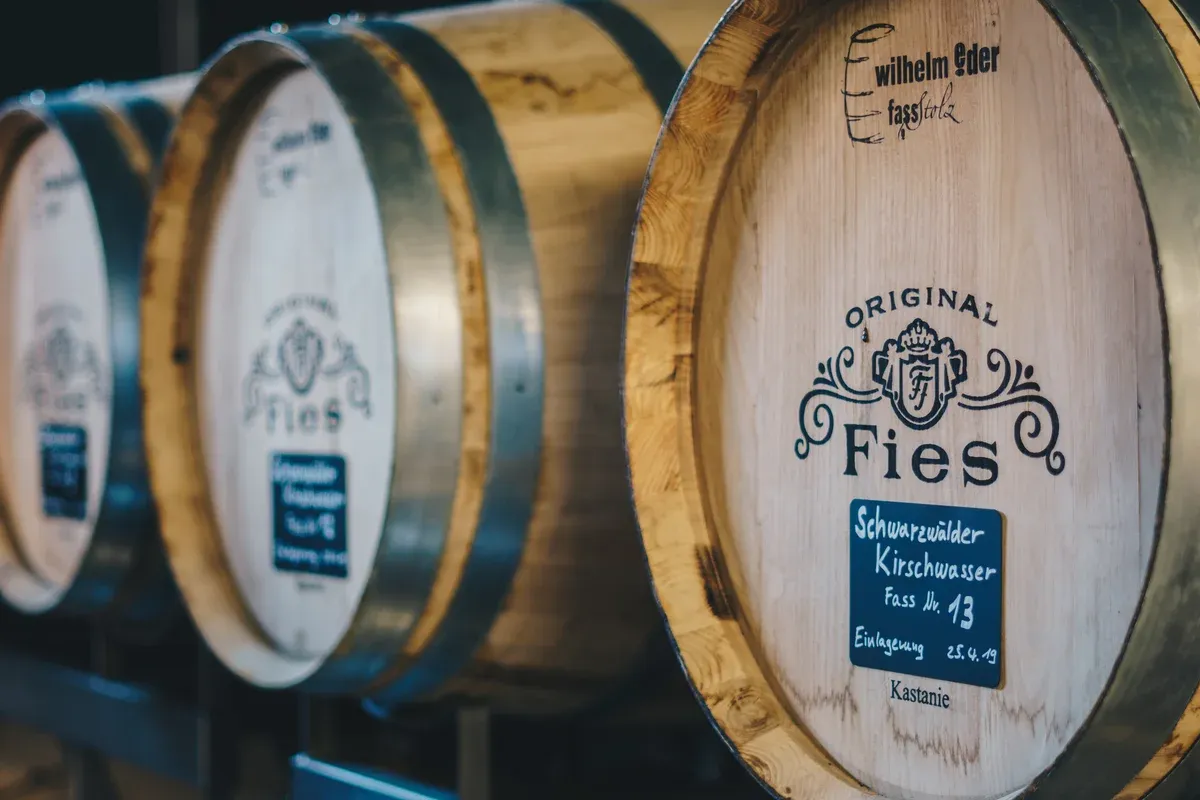
Kirschwasser is one of the culinary flagships of the holiday region. The Renchtal in particular looks back on a rich distilling tradition – for 300 years the distilling right has shaped the region, its people and its variety of pleasures. It goes back to a decision by the Strasbourg prince-bishop Armand Gaston de Rohan, who in 1726 allowed his peasant subjects in the district of Oberkirch to distil fruit for their own use: the farmers could supplement their income, the region's economy was strengthened, and tax money flowed into his coffers. This distilling tradition, still alive today, can be discovered for example on the „Brennersteig“ (Distiller's Trail) and at the „Heimattage Ba-Wü“ (Baden-Württemberg Heritage Days) in Oberkirch. In Oberkirch alone, with 21,000 inhabitants, around 700 home distilleries are registered – which makes Oberkirch the unofficial „distilling capital“ of Europe. To mark the anniversary in 2026, the Oberkirch distillers have brought a joint fine brandy to market, a Kirschwasser cuvée with the region's most exquisite drops, bottled and refined at the Fies fine-fruit distillery in the Ringelbach district.
Blossom Hike around Endingen
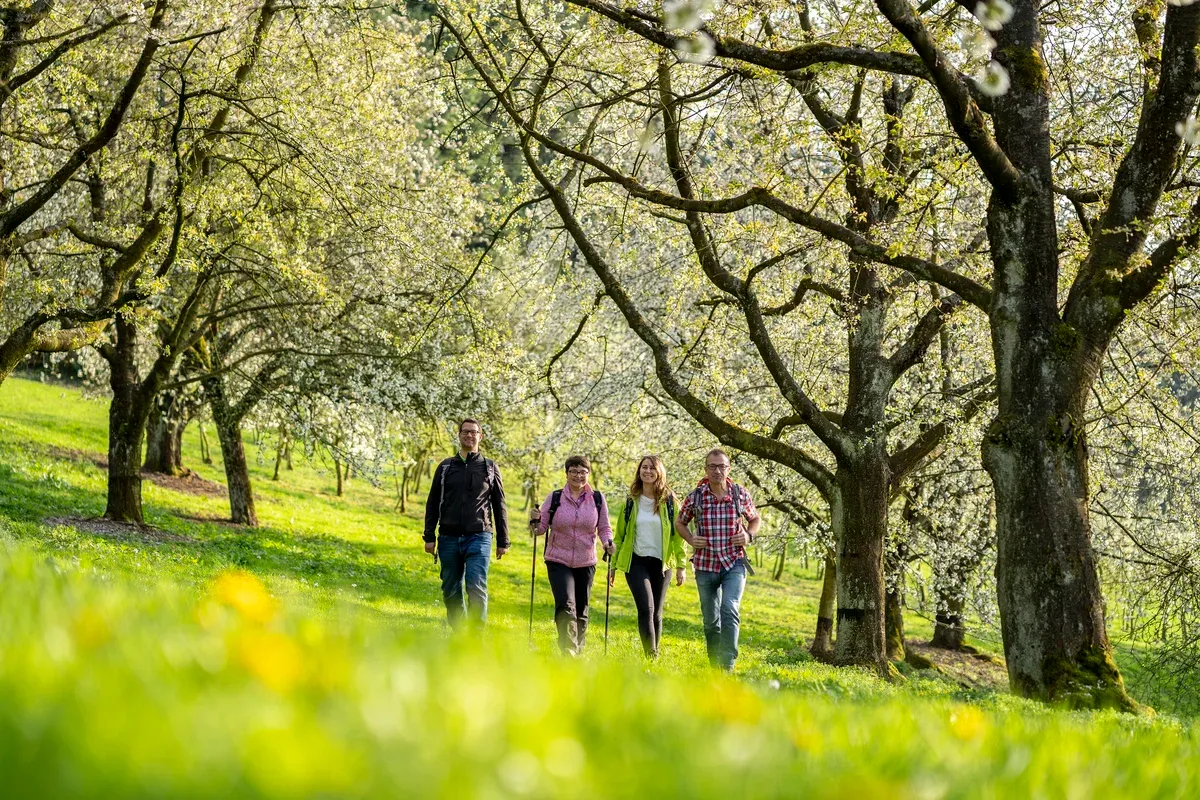
Thousands of cherry trees between Königschaffhausen and Kiechlinsbergen in the northern Kaiserstuhl provide an unforgettable backdrop for a blossom hike: along the roughly eight-kilometre trail, hikers young and old can experience the awakening of spring intensely. Anyone who fills their backpack in advance with regional specialities can spread out their picnic blanket right under the fruit trees.
Meadow Orchards and Roman Traces on the „Kirschbaumpfad“
The „Kirschbaumpfad“ (Cherry Tree Trail) in the Kaiserstuhl, on the western edge of the Black Forest holiday region, unfolds its full magic in the spring months. Over a length of around 18 kilometres it leads through meadow orchards with imposing standard trees from Sasbach to Riegel. The trail runs parallel to old Celtic and Roman trade routes and settlements, remains of which can still be admired at the Limberg and near Riegel. You can also take a rest beneath the huge „Kaiser-Stuhl“ (Emperor's Chair) near Leiselheim.
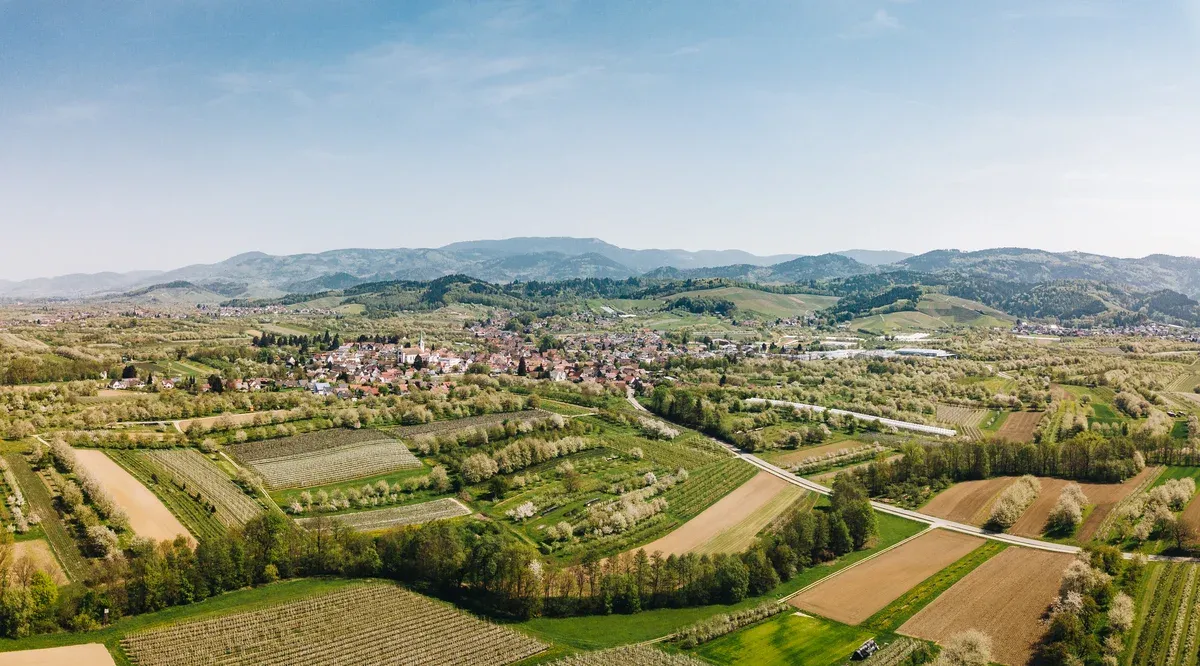
Picnic beneath the White Sea of Blossom in the Eggenertal
The cherries point the way – both on the trail waymarker and around the small villages: the Eggenertal near Schliengen in the Markgräflerland is characterised by countless thousands of cherry trees. In early to mid-April the cherry blossom turns the valley into a white sea of blossom. Beneath the splendour of blossom, families and friends can spread out their picnic blankets. The circular route through the Eggenertal is also suitable for off-road pushchairs. It runs about 12 kilometres around the small villages of Niedereggenen, Obereggenen and Schallsingen.
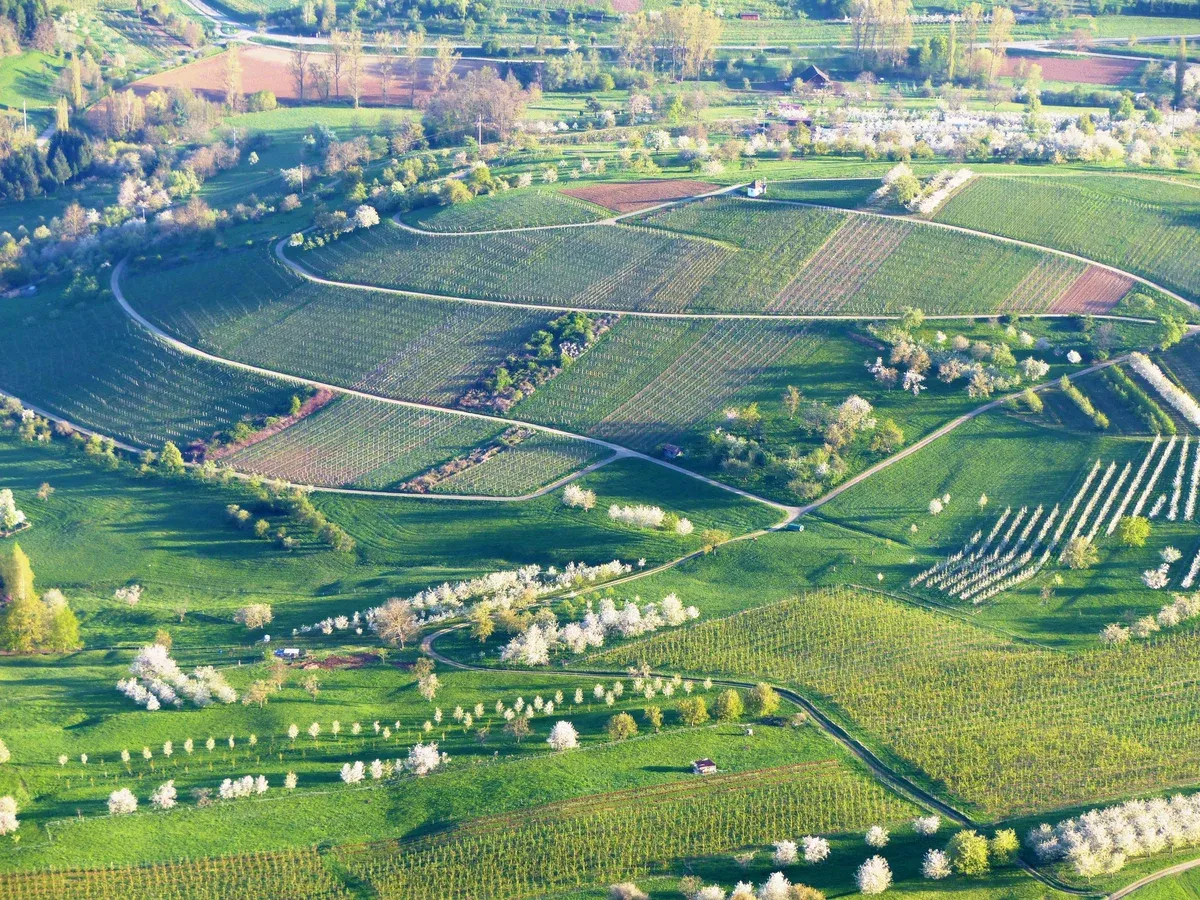
The „Dreikirschenweg“ near Achern
The cherry blossom can be experienced especially impressively around Achern on the 18.5-kilometre „Dreikirschenweg“ (Three Cherries Trail), which leads through blossoming orchards and over gentle hills and sunny vineyards. The starting point of the scenic circular tour in the national park region is Achern railway station. From there the trail runs via Fautenbach into the „three-cherry village“ of Mösbach, which every two years in April celebrates a festival all about the fruit with its popular „Kirschblütenzauber“ (Cherry Blossom Magic) (next date in 2027). Numerous fruit farmers offer their fresh products directly from the farm along the route – from apple juice and liqueur to handmade cherry jam. The tour delights with quiet forest paths, idyllic spots such as the Oberachern forest lake and wide vistas. They stretch across the Achertal and the Rhine plain over into Alsace. Culinary stops are offered by the country inn „Grüner Baum“ in Mösbach or various establishments in the town centre of Achern.
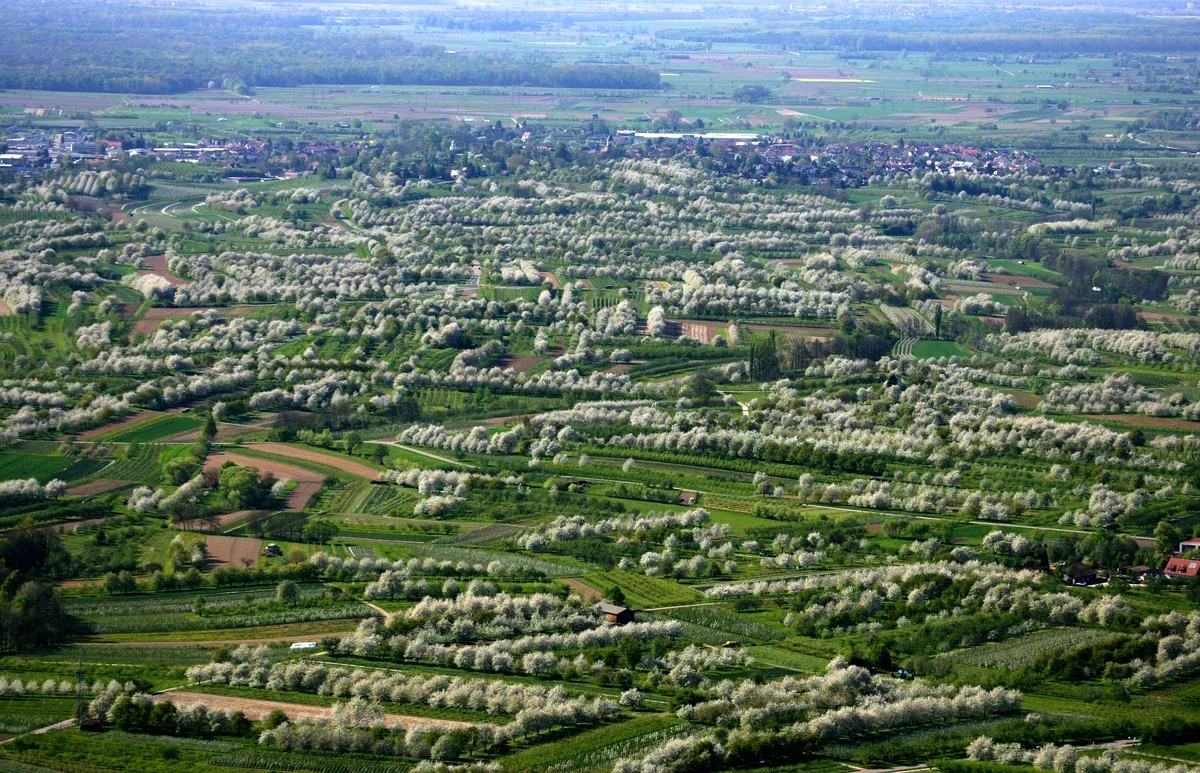
Numerous Cherry Trees in the Durbachtal Too
Ebersweier is the „cherry village“ in the Durbachtal in the central Black Forest. Anyone who wants to see the wealth of cherry trees there for themselves should head for the nearly 12-kilometre circular route around the village: it is made up of three easily combinable trails. Without major differences in altitude, the striking spots of the Durbach district can be reached. From the vantage points at the Plauelrainer Köpfle, the Maiglöckchenhütte and the St. Anton chapel ruin, again and again there are views of the cherry trees worth seeing.
So anyone who wants to enjoy the seasonal cherry magic should not hesitate for long – after all, the harvest has already begun. But away from the harvest activity too, the region has its very own charm, and there as well – if you like – the cherry sets the „direction“. Kirschwasser, cake and jam are, after all, available all year round.