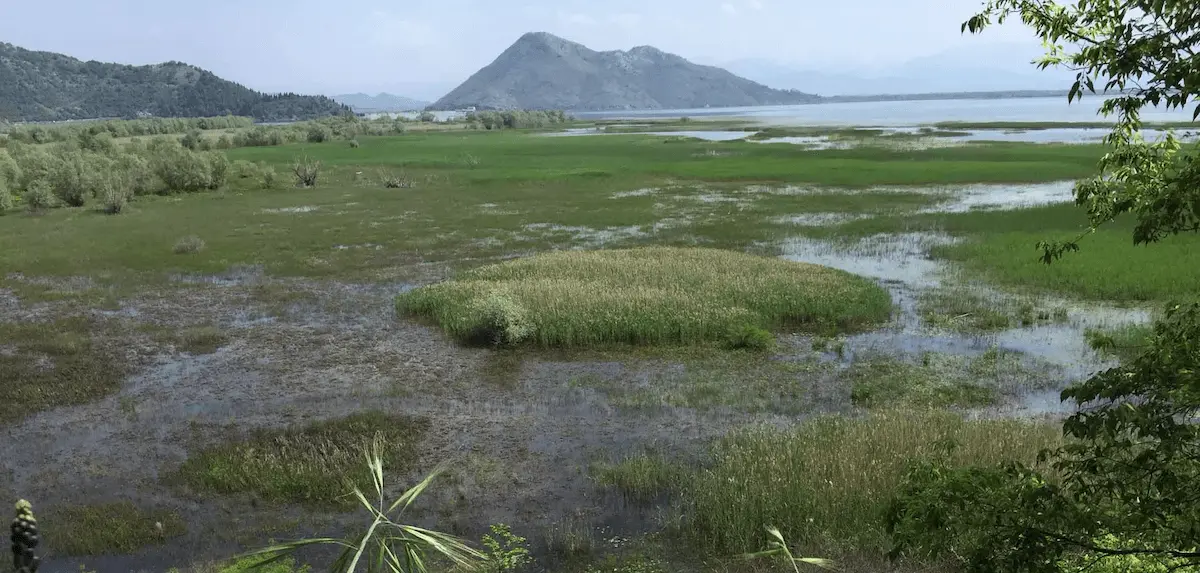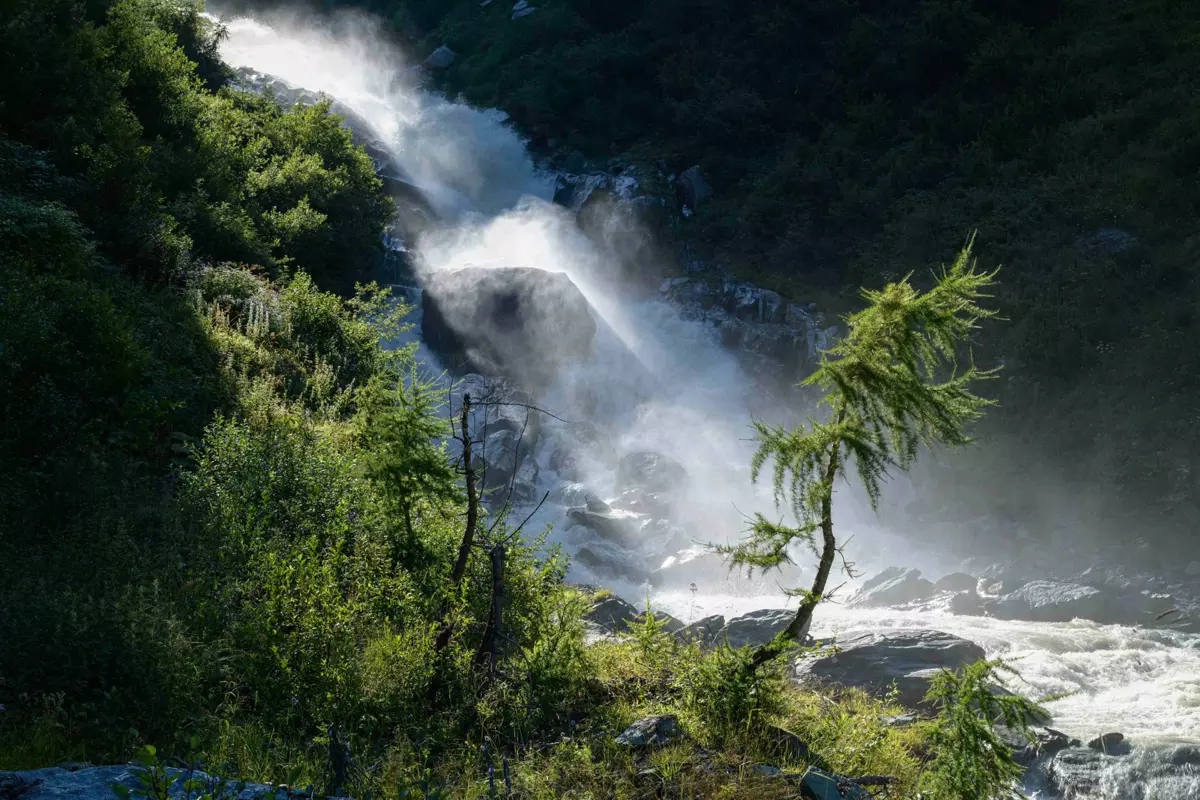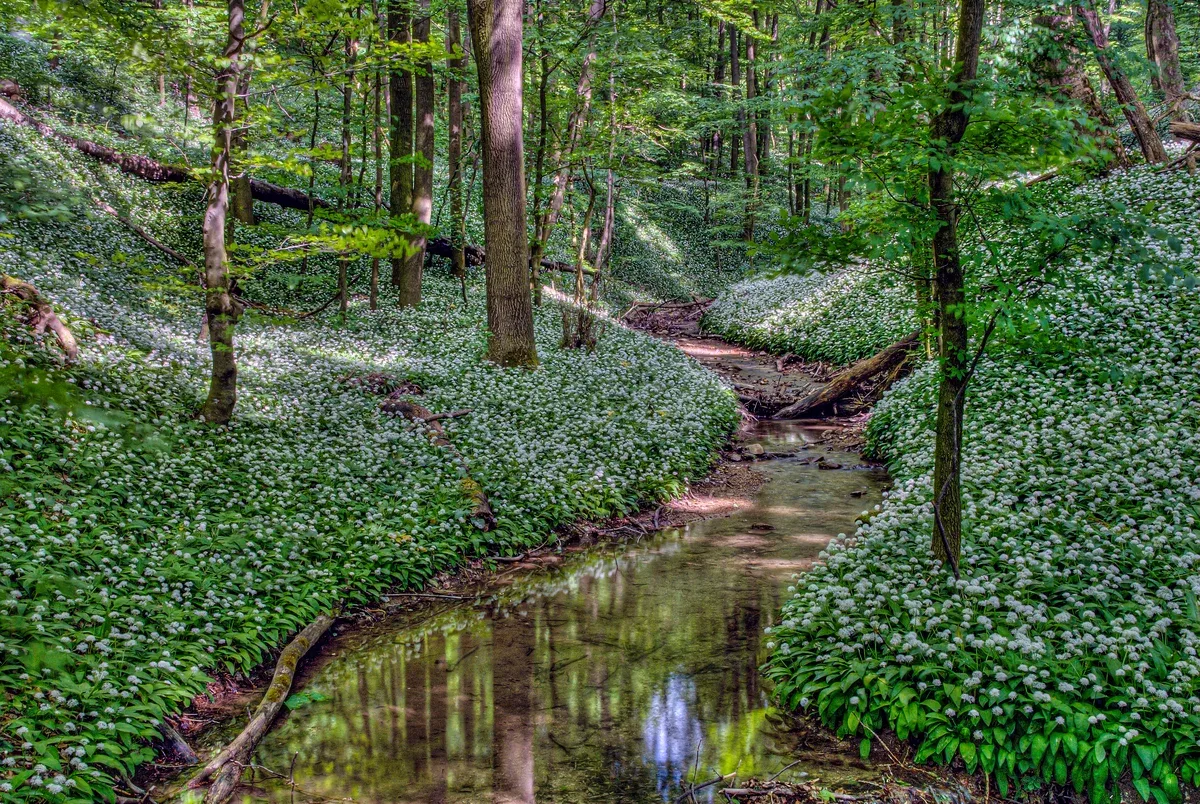
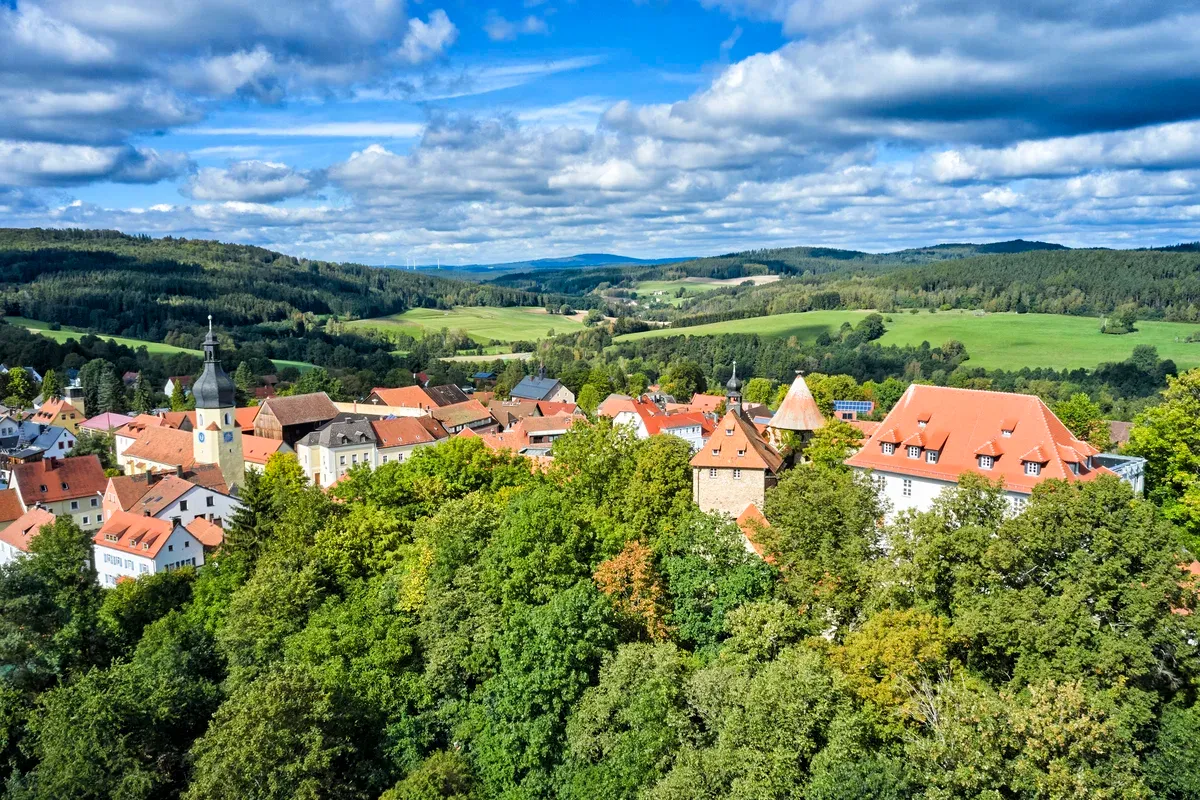
There, where the landscape in northeastern Bavaria rises from the plains and transforms into a mosaic of rock, forest, moors and water, lies a stretch of earth with a very special character. The forested mountain chain of the Fichtelgebirge, with its well-known thousand-metre peaks Schneeberg and Ochsenkopf, encloses a highland plateau like an open, horseshoe-shaped rampart – a plateau also known as the Sechsämterland.
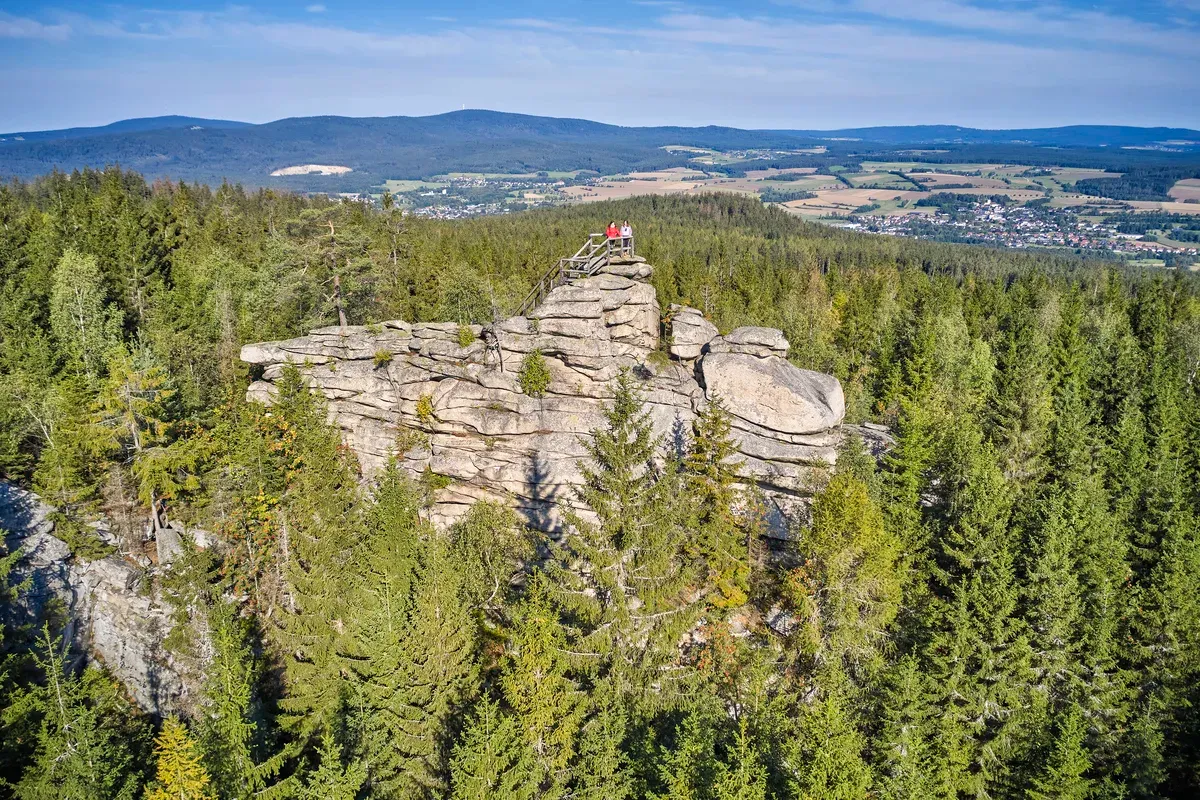
Primeval rock formations crown the summits of this low mountain range, which offers plenty not only to nature lovers but also to those with an interest in geology. Here they find slate, gneiss, basalt and soapstone as well as marble and even crystals. Above all, however, it is granite that shapes the landscape. Within the horseshoe stretches a cultural landscape of expansive, herb-rich meadows, running streams and tranquil villages. And with the Main, Saale, Eger and Naab, no fewer than four rivers rise in the Fichtelgebirge – as if they meant to supply the world in every direction with the purest of spring water.
Two climate zones create diversity
In keeping with the region's two distinct natural environments, the respective climatic conditions also differ. The western, mountainous part, with its high rainfall and cool temperatures, has an Atlantic character. As a result of this harsh climate, numerous moors and natural mountain forests are found in the higher elevations.
Acting as a barrier against the prevailing wind direction, the mountain chain shields the Inner Fichtelgebirge from precipitation coming from the west. At the same time, the opening to the east brings influences from the continental climate zone. This has allowed a wide variety of habitats to develop side by side within a relatively small area. Accordingly, these different habitats support a great diversity of plant and animal species. Biodiversity is further increased by the fact that the Fichtelgebirge forms a mountain node between the Frankenwald, Franconian Switzerland, the Upper Palatinate and Bavarian Forest, and the Ore Mountains. It is therefore not only a refuge for many rare species that have long since died out in other natural landscapes, but also offers them, on land and in water, a corridor for spreading to habitats throughout central Europe.
The nature park – a hub of biodiversity
The Fichtelgebirge Nature Park at the heart of the region covers more than 1,000 square kilometres and is one of the oldest protected areas in Bavaria. Numerous hiking trails lead through ancient forests, over mossy rocks, along clear streams and past silent moors.
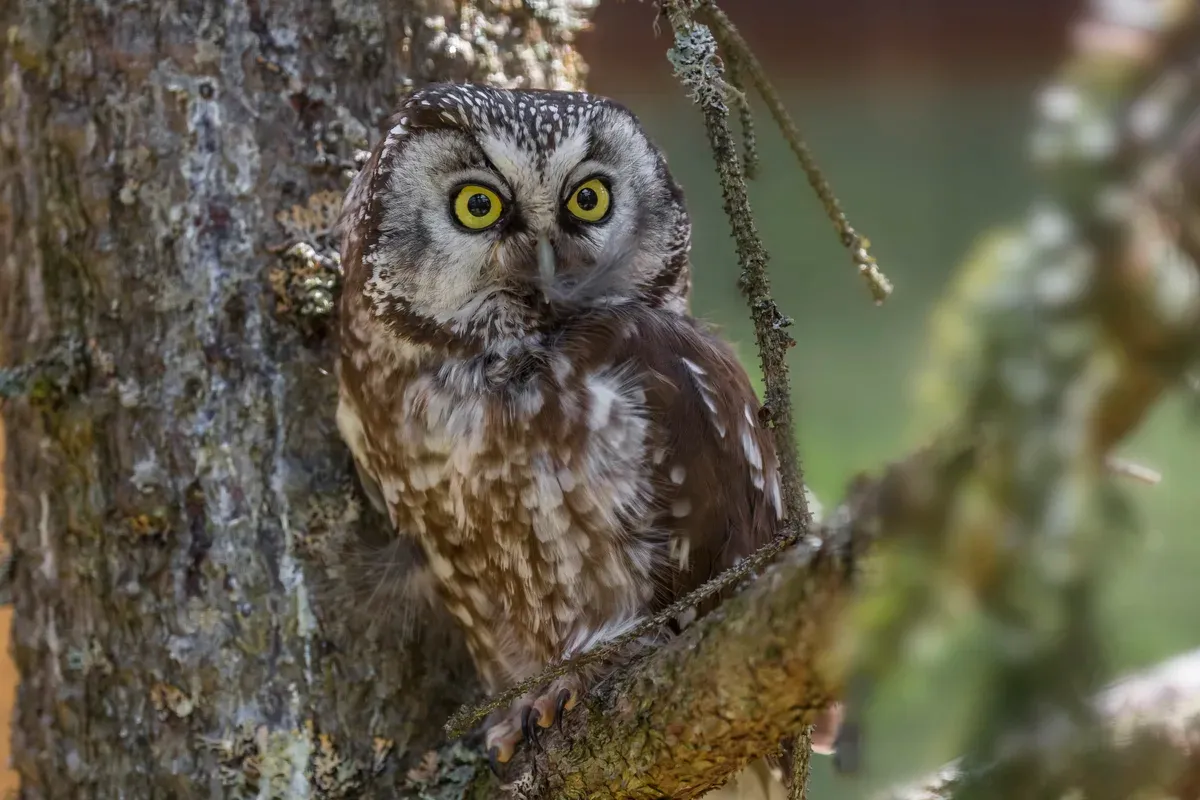
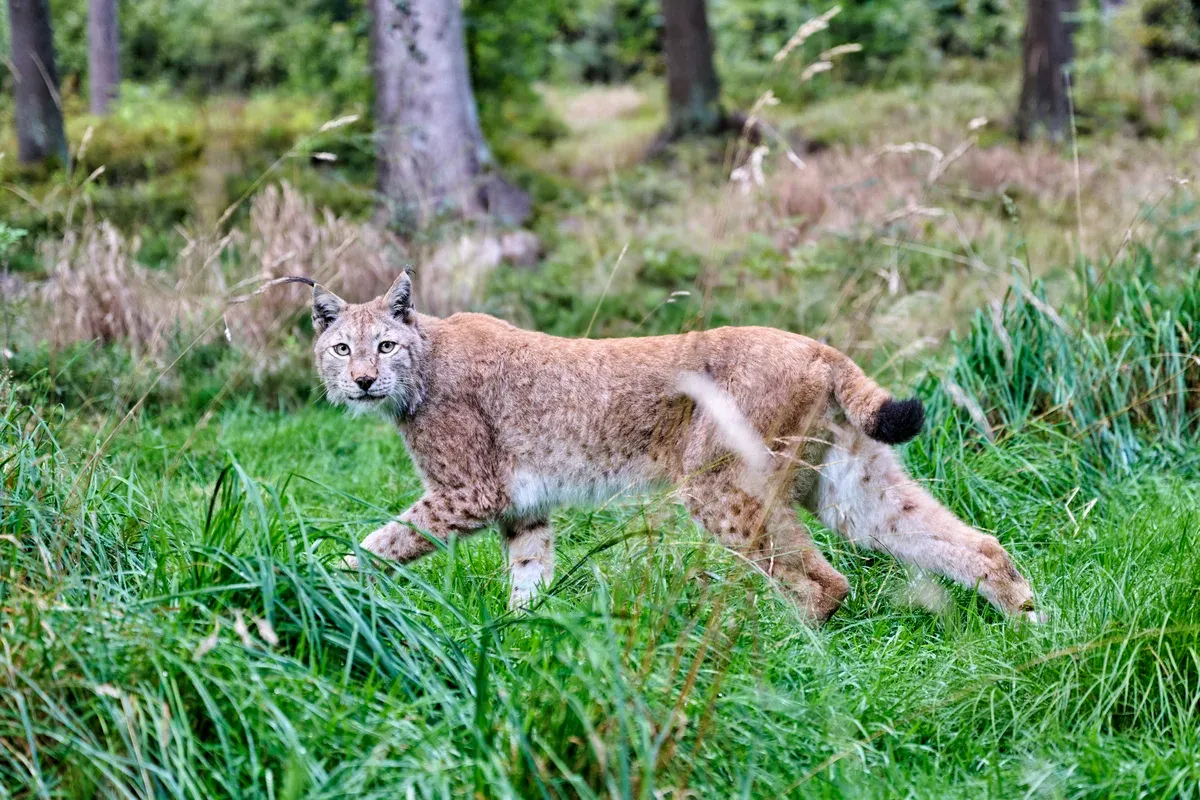
The large, unbroken forests offer shy inhabitants with wide-ranging or specialised habitat needs – such as the lynx, black stork, pygmy owl and Tengmalm's owl, or the European wildcat – ample space and refuge from human presence.
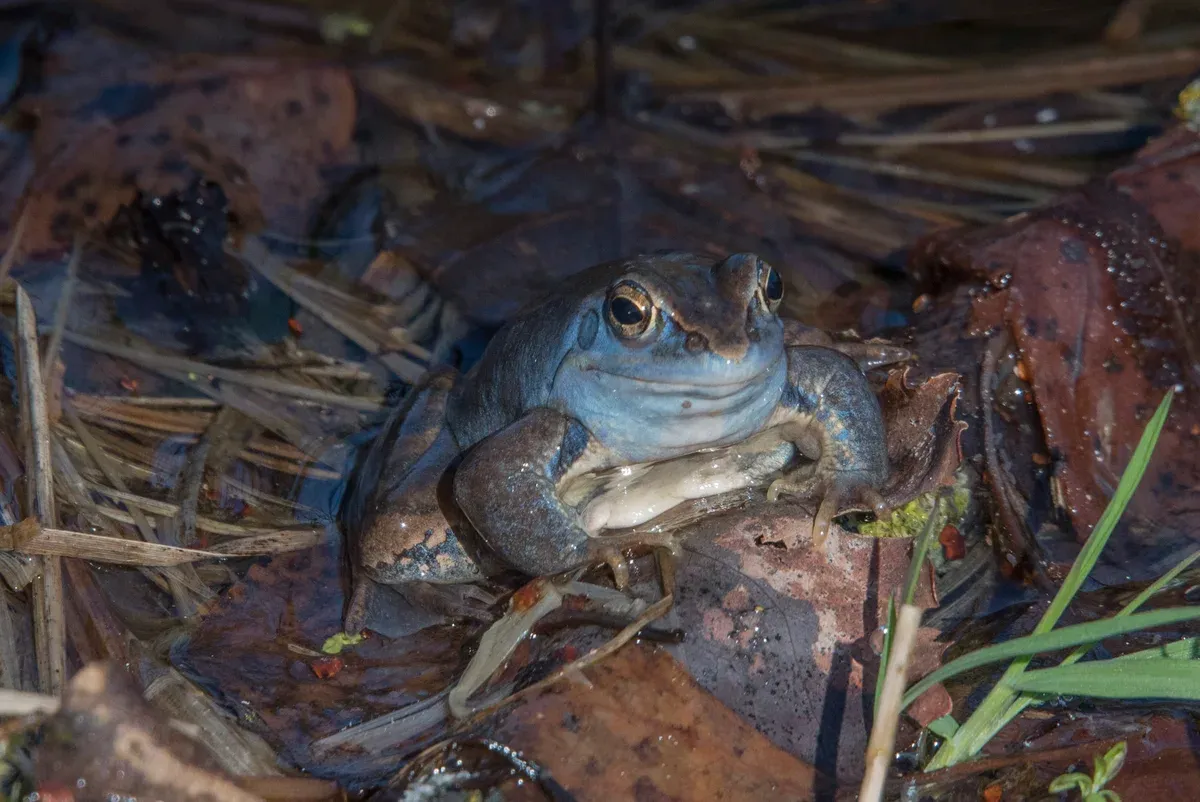
In and along the numerous bodies of water live the otter, beaver, white-throated dipper, brook lamprey and kingfisher. Ponds are home to rare amphibian species such as the moor frog, tree frog and natterjack toad. A particular treasure are the freshwater pearl mussels, which have managed to survive in a few especially clean flowing waters. Among the special treasures of the flora are the shining pond lily and the marsh water plantain, among others.
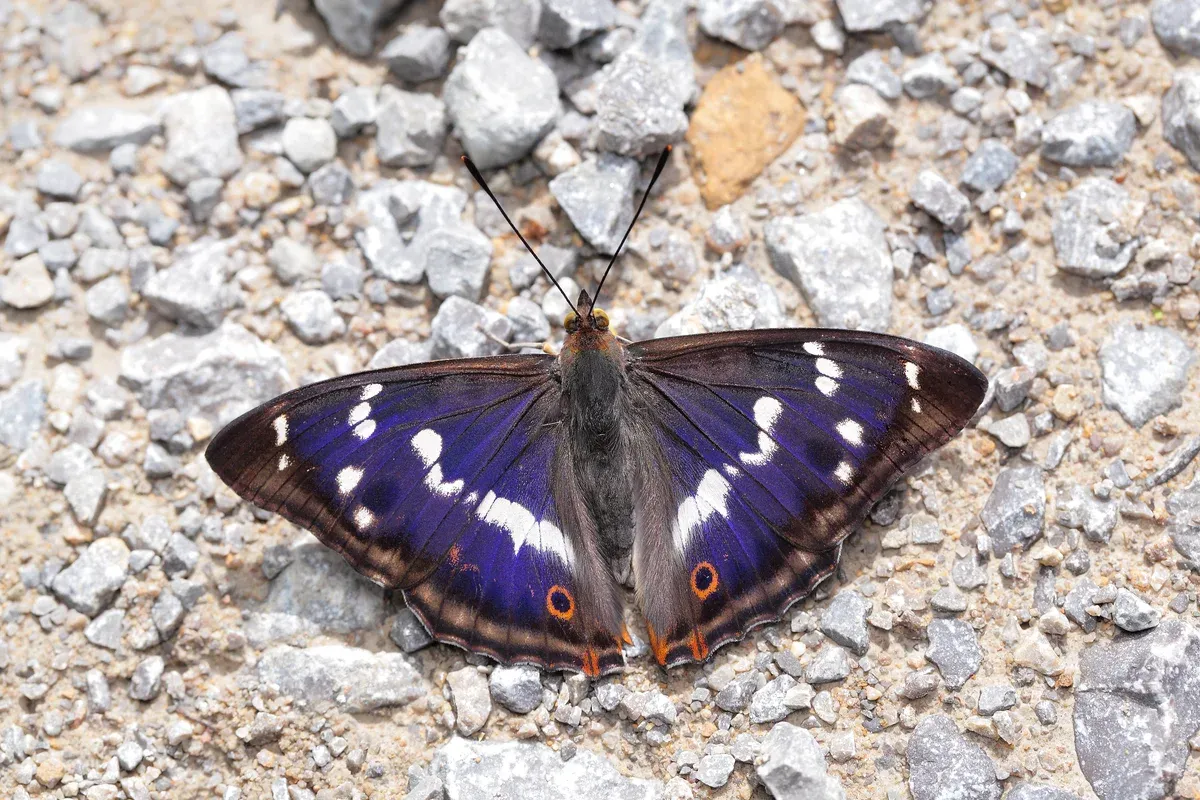
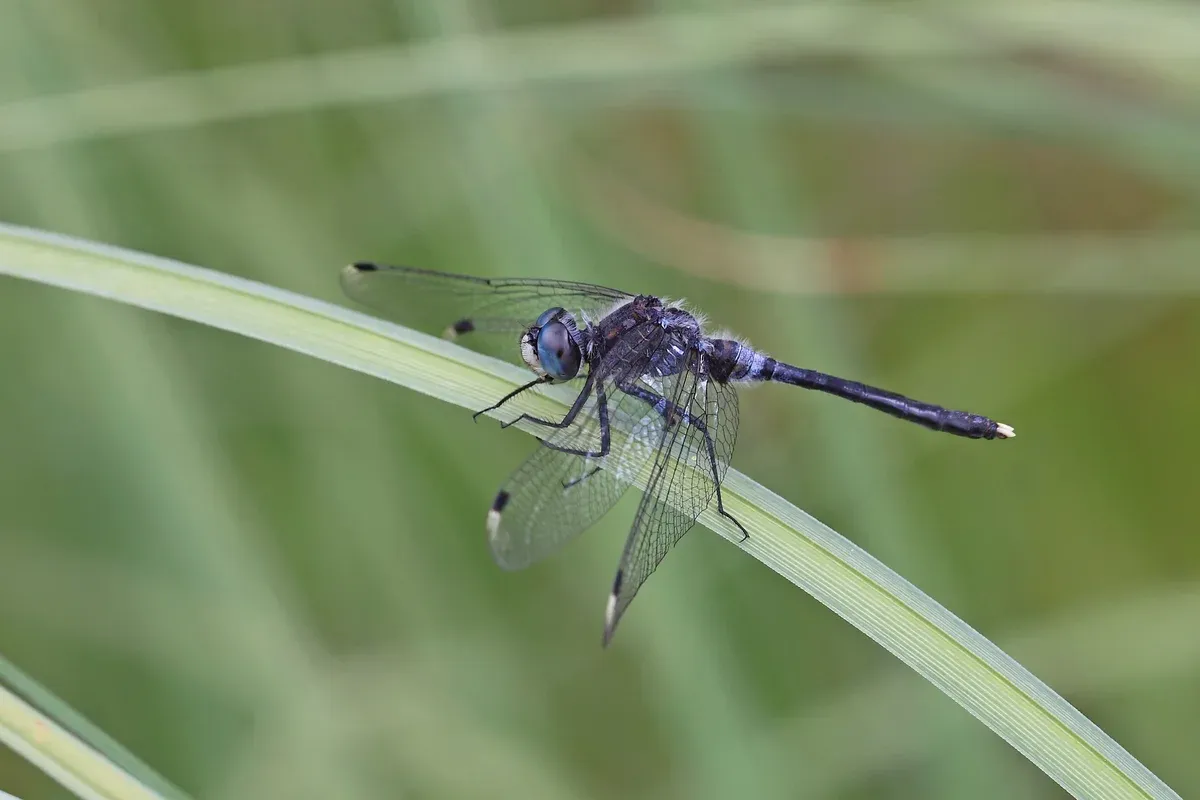
The cultural landscape, too, offers a wide variety of habitats. White storks can be seen on extensively used wet meadows, while whinchats and grey partridges breed in fallow land and field margins. The numerous rock cellars, which once served to store crops, provide frost-free winter quarters for many bat species. In some villages, colonies of the extremely rare barbastelle bat even shelter behind the traditional wooden cladding of old buildings. The insect world, too, is particularly rich thanks to the diverse landscape features: dragonflies, butterflies, ground beetles and spider species, some of which have long since died out in other regions, can still be found here.
Special species-protection projects
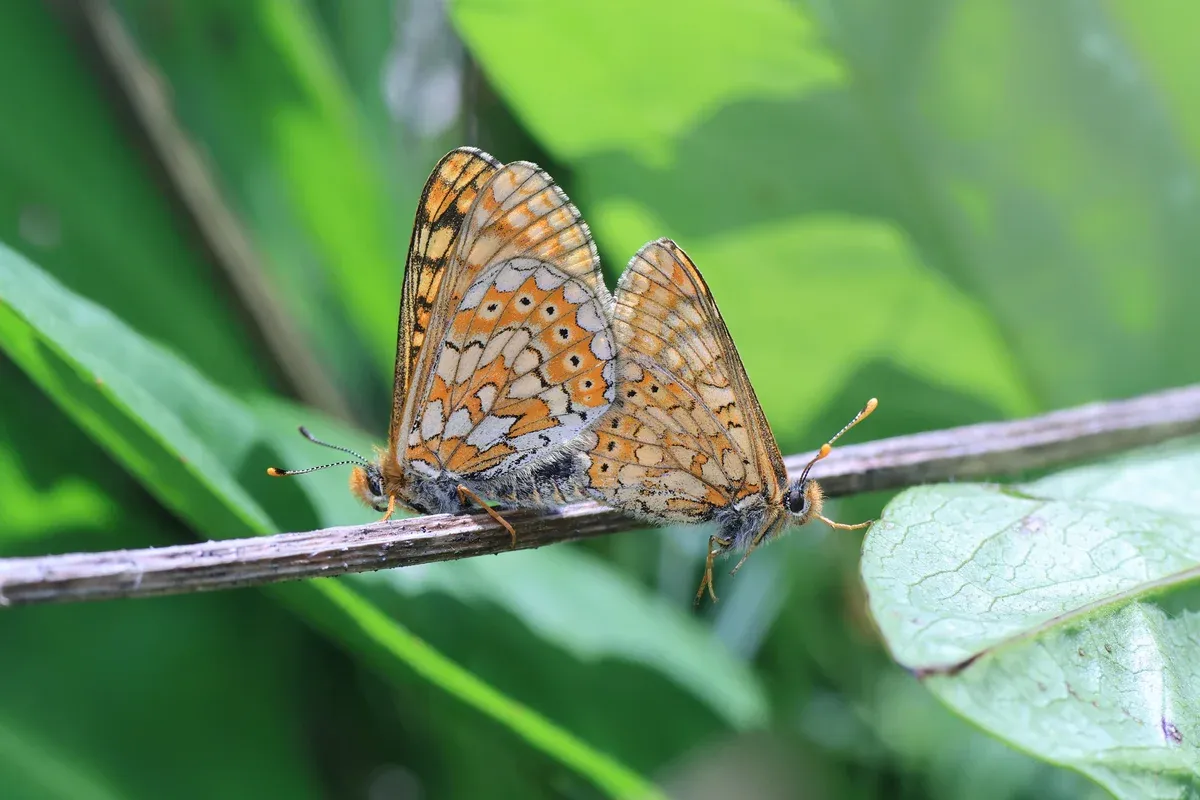
The preservation and improvement of the habitats of endangered species is the concern not only of dedicated staff at official nature-conservation bodies but also of numerous experts and members of clubs and associations such as the Bavarian Society for the Protection of Birds (LBV) and the Bund Naturschutz in Bavaria, which alone maintains 53 biotopes in the region. Through measures such as connecting habitats or restoring moors, individual species are even specifically supported. These include, for example, the freshwater pearl mussel, the garden dormouse, the marsh water plantain and the marsh fritillary.
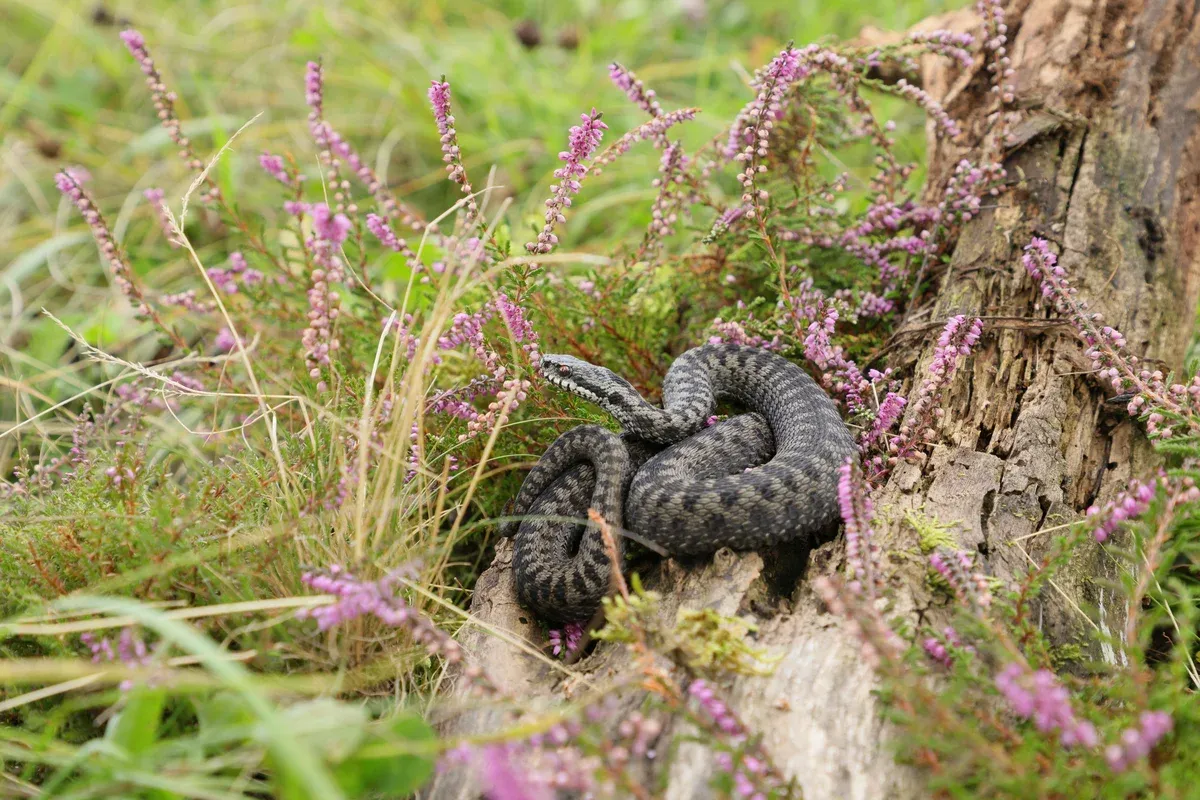
Particularly worth highlighting is the biodiversity project "Adder in the Fichtelgebirge". The region is one of the few remaining refuges of this highly endangered snake in Bavaria. Yet here, too, the population declined for a long time, which is why various support programmes for this species were launched. The catalogue of measures to improve its habitats includes clearing scrub to keep areas open where the animals can find basking spots, as well as creating brush piles that serve them as winter quarters and hiding places. Information signs are put up along cycle paths, warning of the danger of running over the snakes resting there, and under the motto "Endangered, not dangerous" hikers are made aware to treat the adder with respect.
What is more, locals and tourists exploring nature are even actively involved in the protection measures for the endangered species. Using a dedicated mobile app, which is promoted in the media and elsewhere in spring, hikers can enter the location of their adder sighting and send it to the nature park. There the data is recorded and transferred onto a distribution map. This then forms the basis for targeted protection measures.
Exciting activities and information on offer
Visitors to the Fichtelgebirge are presented with countless encounters with nature, but they also have the opportunity to take advantage of attractive information and educational offerings. A wonderful way to experience the flora and fauna up close is to take part in guided walks with the nature park's rangers. From adder safaris and moor and bee tours to night hikes with bat detectors or geological excursions – there is something for every nature enthusiast. The nature park's website provides information on the individual offerings. It is also worth looking at the event programmes of the nature-conservation associations, which, alongside interesting talks, likewise offer walks and excursions.
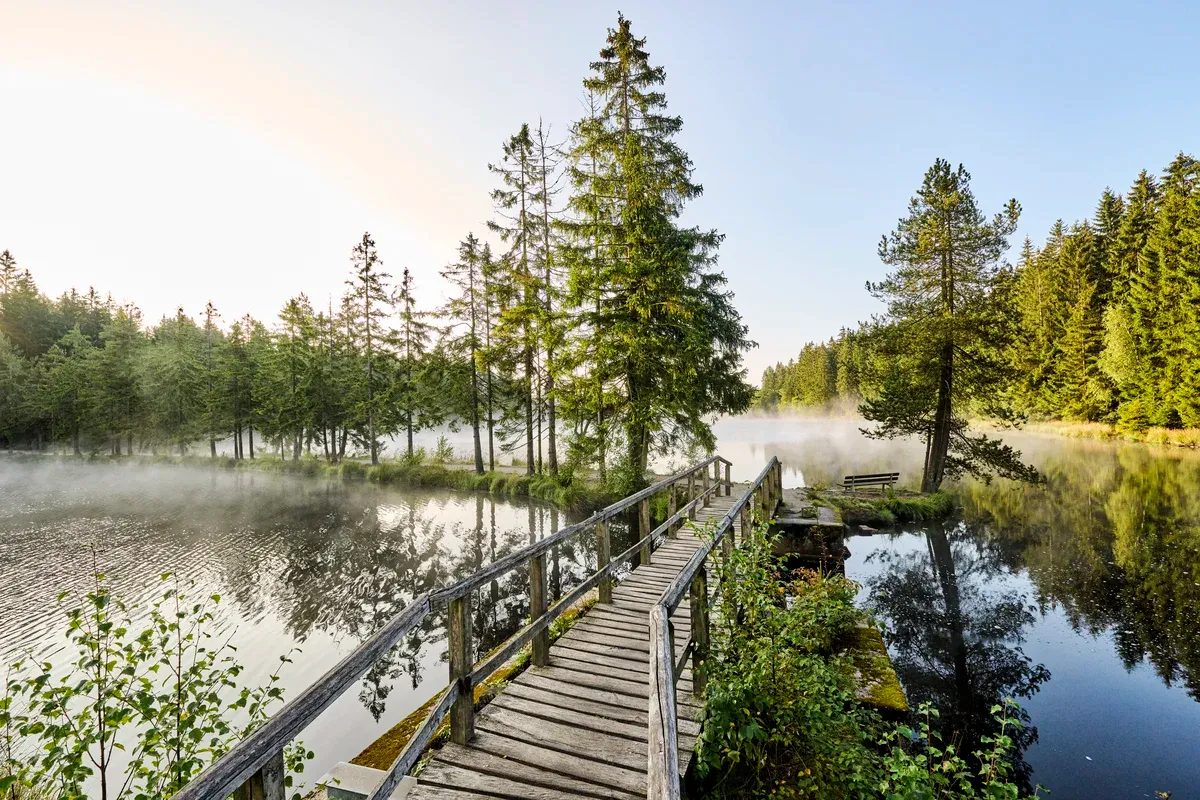
Anyone wishing to marvel at the region's wild animals in a safe setting will find the right place at the Mehlmeisel Wildlife Park. The animals live in spacious enclosures and are nonetheless present thanks to clever visitor routing.
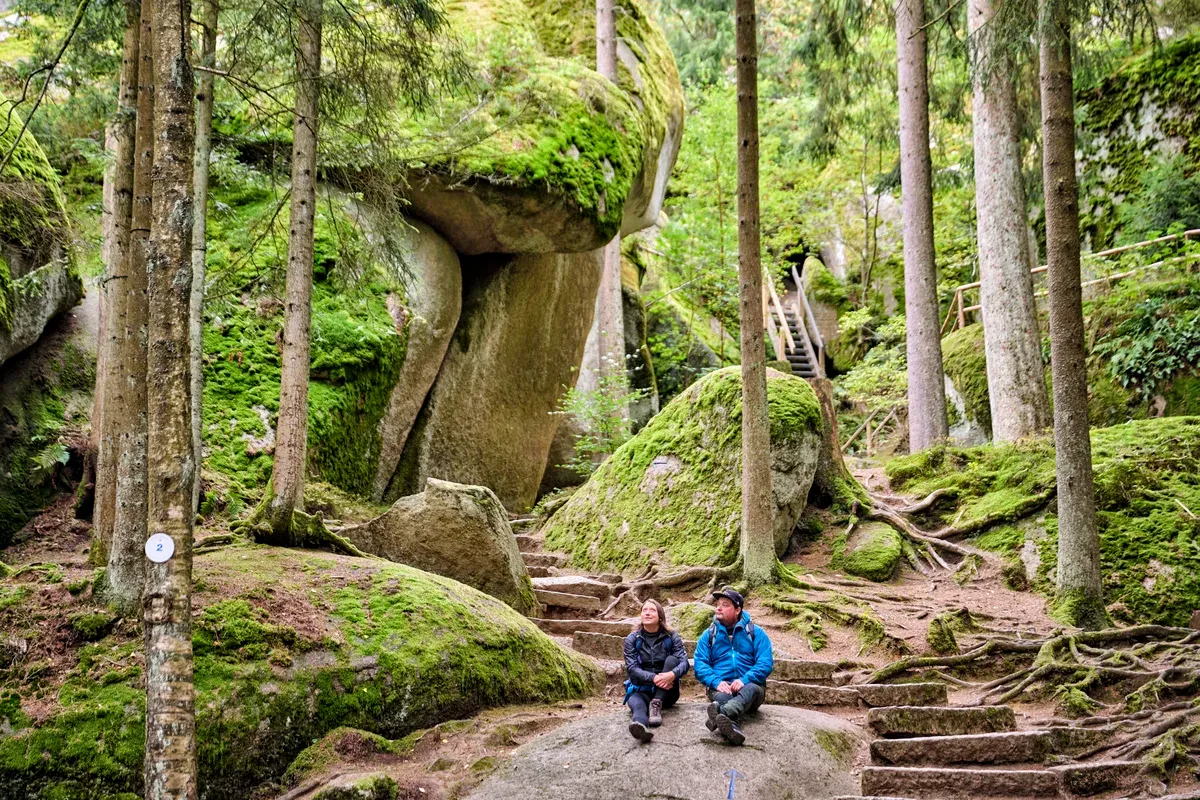
Visitors can gain unique impressions of the rock formations of the Fichtelgebirge at the famous Luisenburg Rock Labyrinth near Wunsiedel, which, as the largest of its kind in Europe, has only just been awarded the title of National Natural Monument.
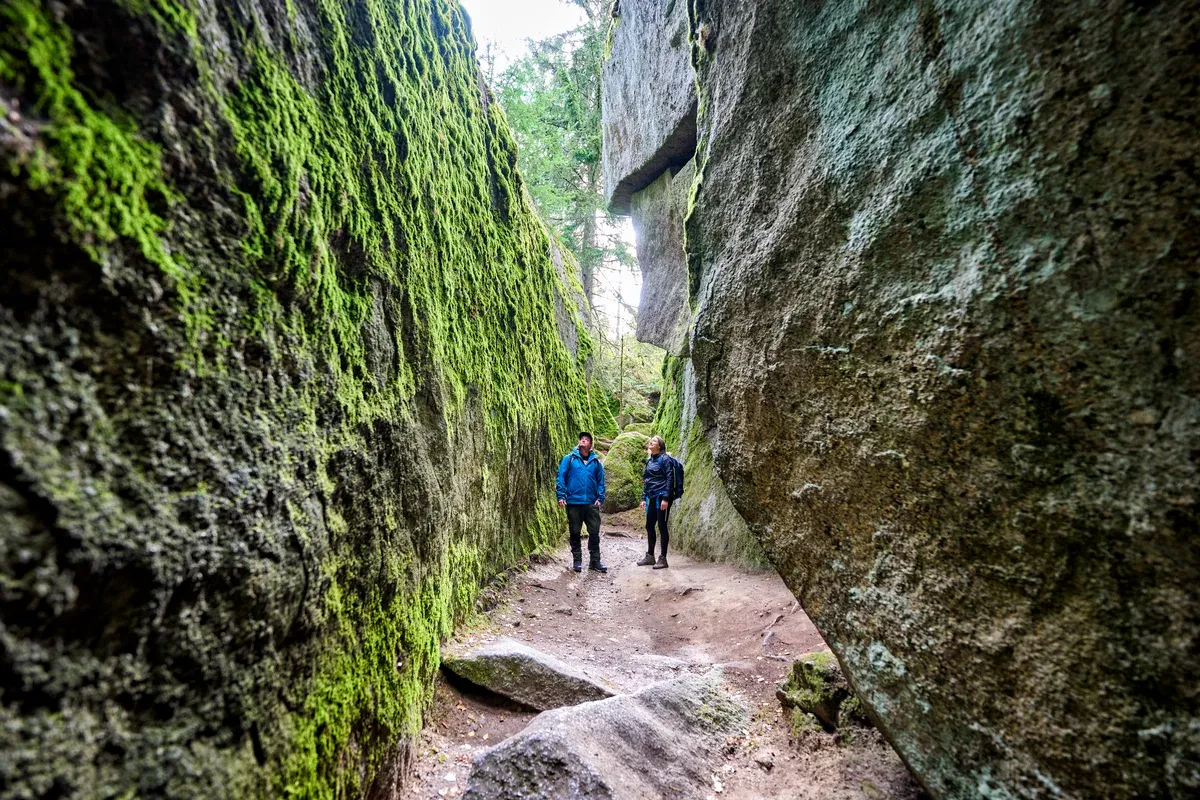
Over millions of years, frost and erosion shaped the characteristic block fields and rock formations here, giving the impression that a giant had carelessly piled them one on top of another. A walk through this surreal landscape of granite blocks is a must on any tourist itinerary.
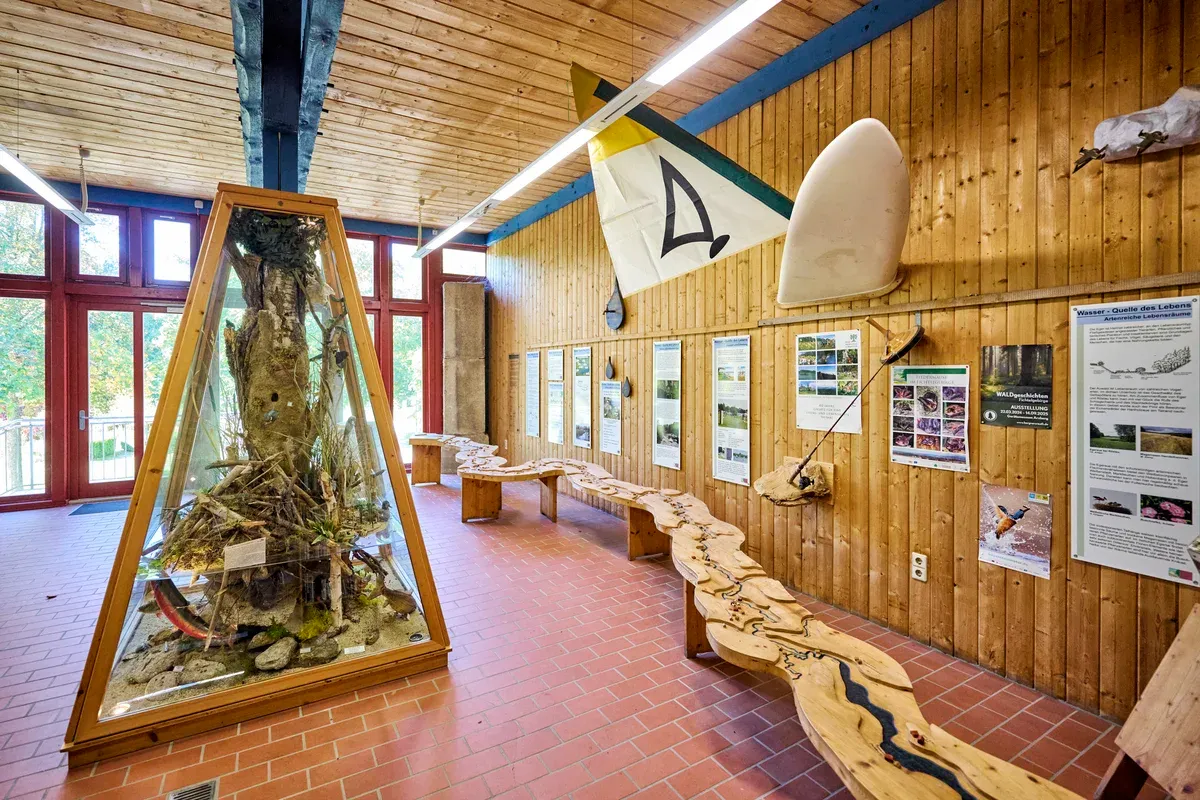
At several information points run by the nature park, visitors can learn interesting facts about the flora, fauna and geology of the Fichtelgebirge.
The Ark Village of Kleinwendern
Although many people are aware that the extinction of species among wild plants and animals continues to advance, few register that biological diversity in agriculture is also declining ever further. Today, high-performance varieties and breeds predominantly dominate the agricultural sector, while plants and animals ideally adapted to climate and location are increasingly left behind – and with them their important genetic potential and their role as living cultural heritage of a region.
In Germany, more than 100 breeds already appear on the "Red List" of the Society for the Conservation of Old and Endangered Livestock Breeds (GEH). To save these from extinction and to inform the public about their merits, the association launched the "Ark Project". At many "Ark Farms", visitors can gain an impression of the former diversity and, in some cases, buy products from these animals in farm shops – true to the motto "Conservation through consumption". Some of these animal rarities are consequently promoted specifically by Slow Food as "passengers of the Ark of Taste".
A special attraction is the "Ark Village" in Kleinwendern near Bad Alexandersbad. There, seven farms and hobby breeders have joined forces and keep more than 200 animals of 11 rare breeds.
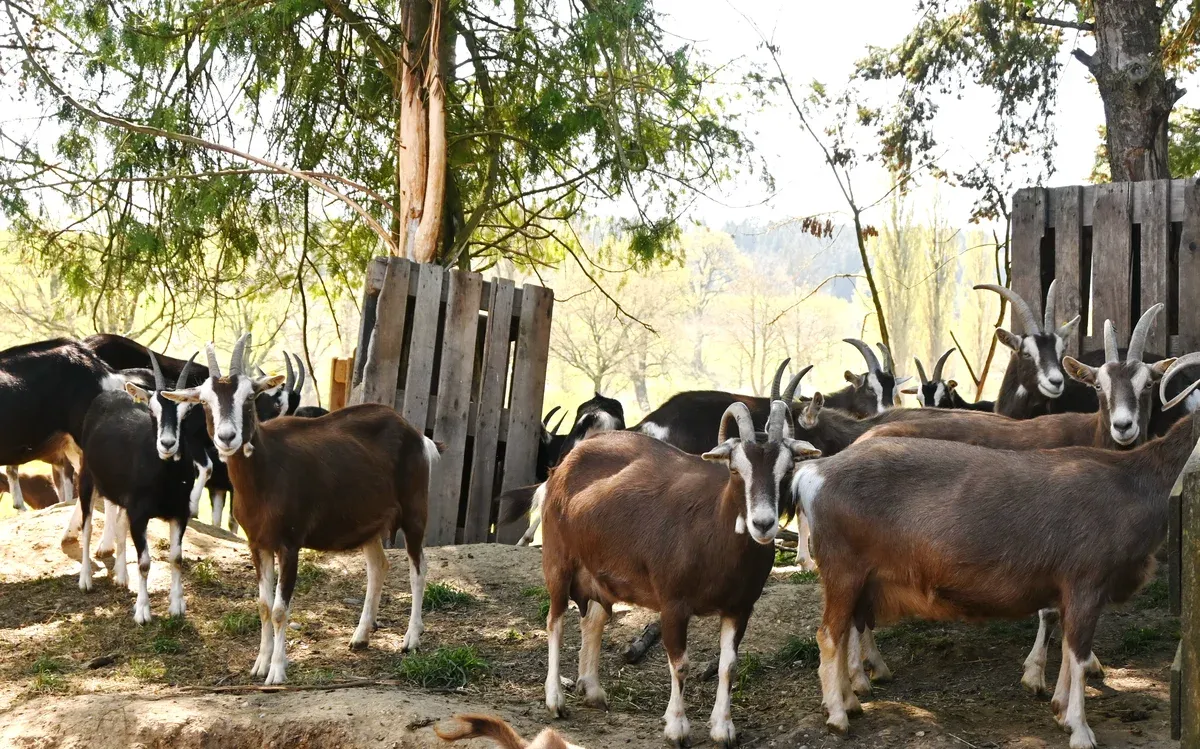
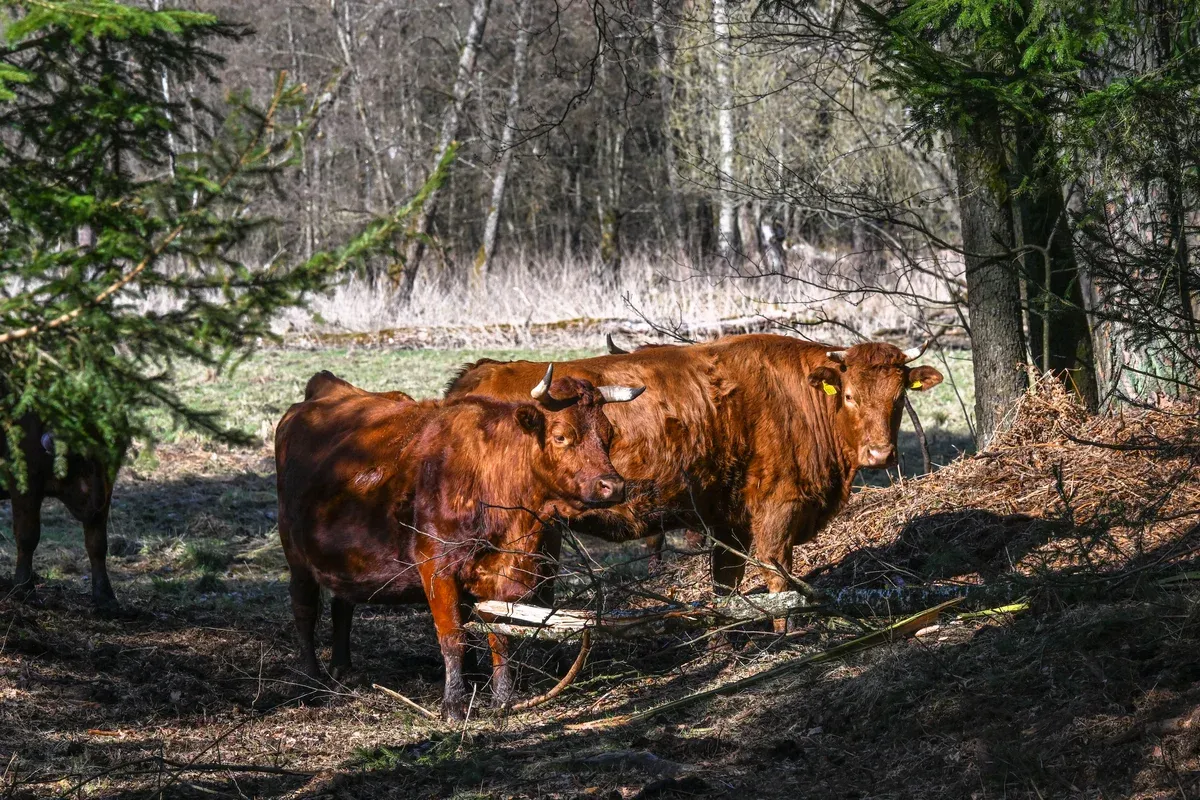
When a cattle pasture for the robust low-mountain breed "Red Highland cattle" was established in Kleinwendern in 2012 on the initiative of the nature park, this sparked a community project unique in all of Bavaria. For before long, one rare farm animal after another moved into the idyllic village.
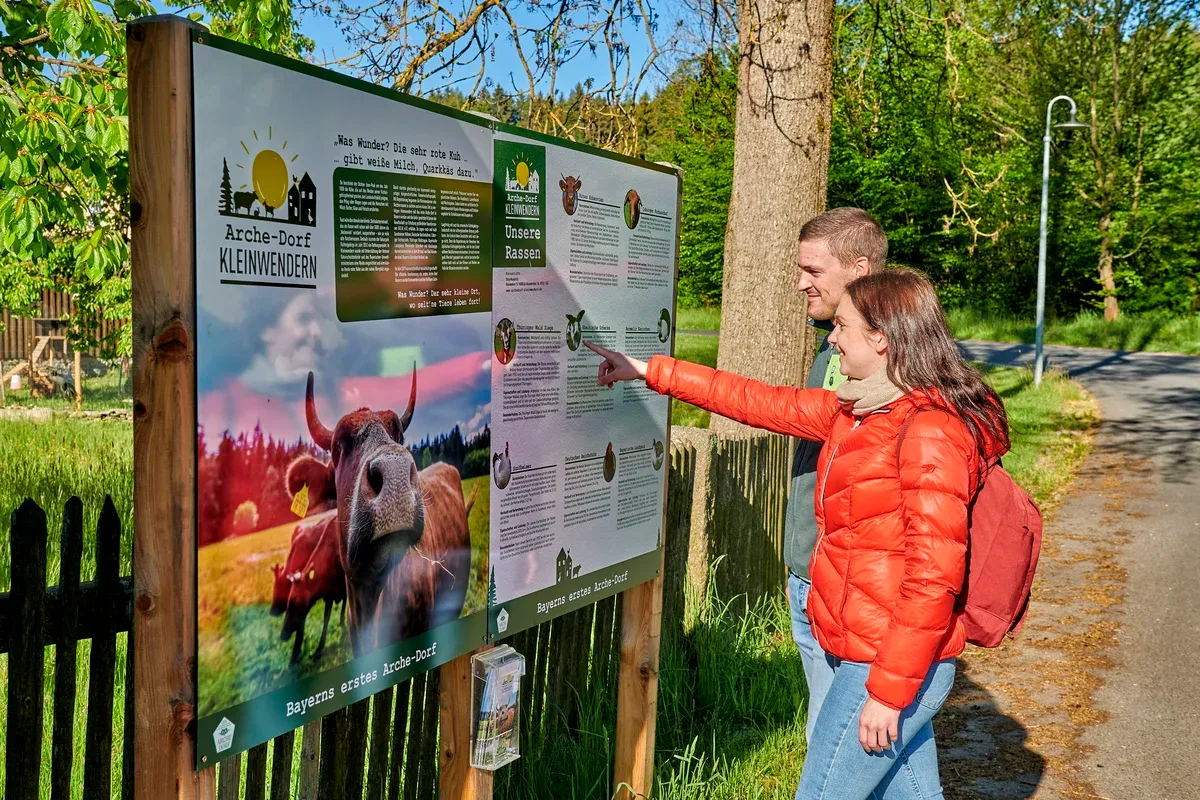
A stroll through the small village is a real experience, for here you still come across animals grazing in the pastures and hens contentedly bathing in the sand.
Links:
Discover nature: https://www.fichtelgebirge.bayern/natur/entdecken
Nature park: https://naturpark-fichtelgebirge.org/
Nature park information points: https://www.fichtelgebirge.bayern/natur/entdecken/naturpark-infostellen and https://naturpark-fichtelgebirge.org/erleben/infostellen/
Hiking: https://www.fichtelgebirge.bayern/natur/wandern
Eating and drinking: https://www.fichtelgebirge.bayern/kulinarik/gastronomie
Accommodation: https://www.fichtelgebirge.bayern/uebernachten