Bitterly persecuted scapegoat
In 1913, when the last specimen of a supposedly ferocious beast was killed in the Aosta Valley of Italy, many farmers in the Alpine region breathed a sigh of relief. Eventually, they also included shepherd boys and young children in their diet, allegedly even snatching them from the sight of their parents. These myths gave the creature the nickname "Lämmergeier".
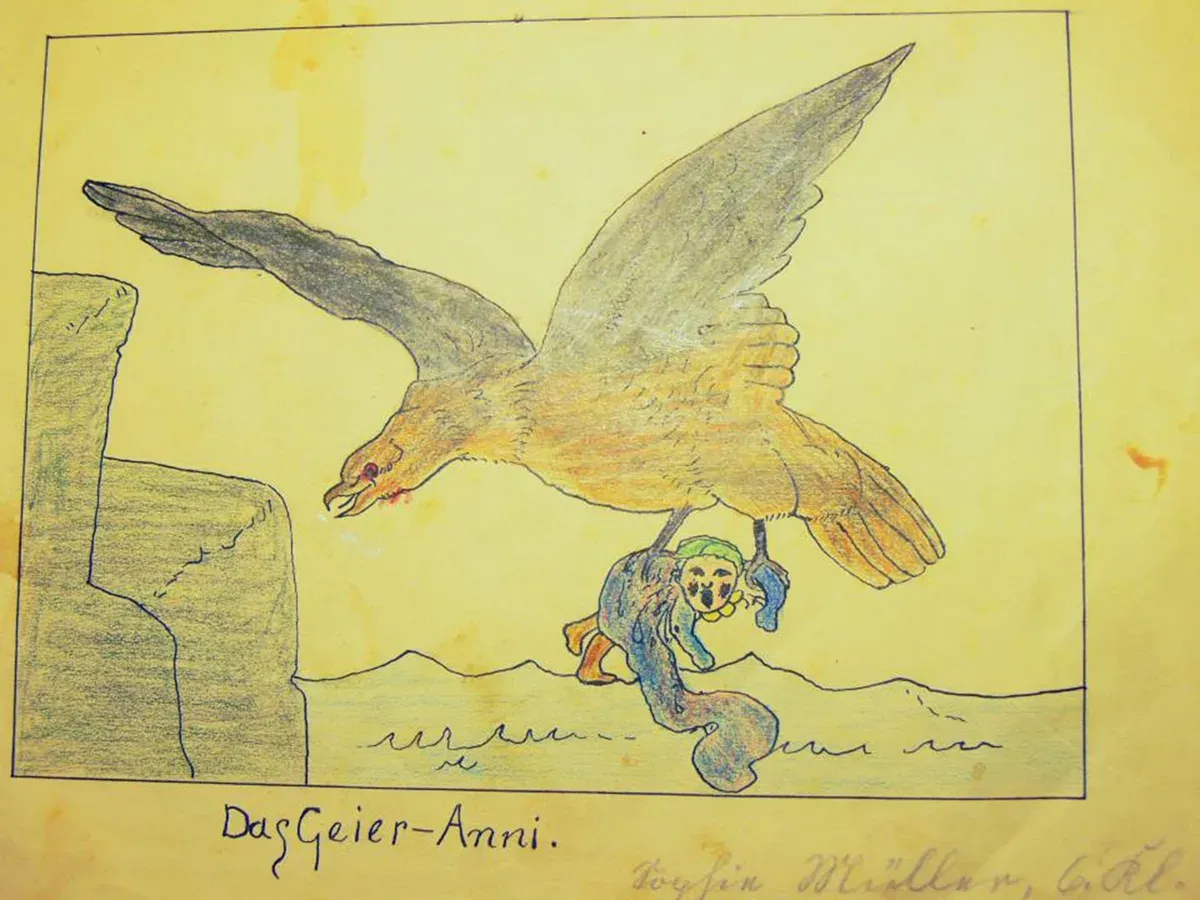
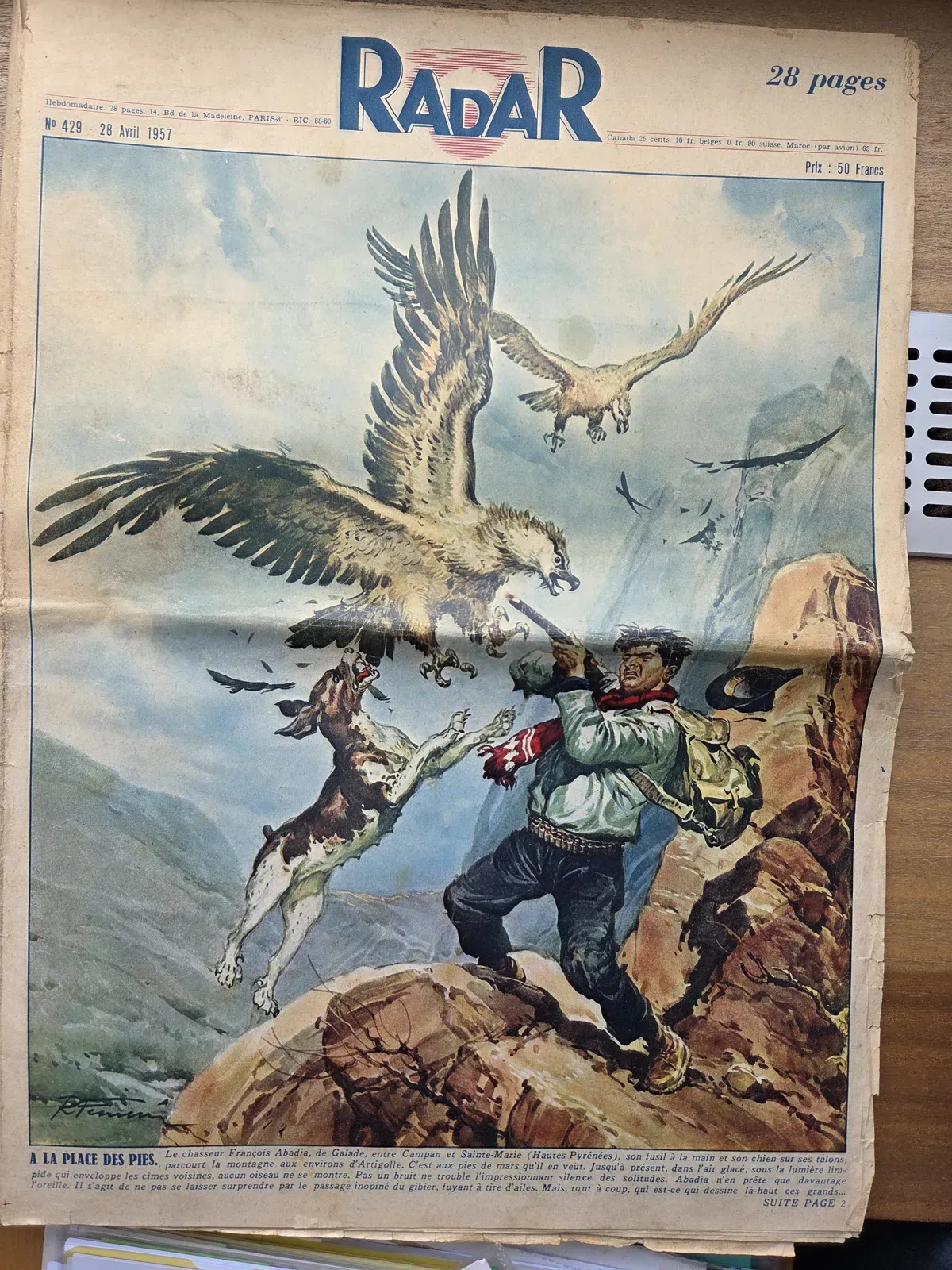
Some experts even suspect that such "fakes" were deliberately spread to cover up child murders. In any case, all vulture species in the Alps - unlike eagles, which have long been glorified as emblems - were associated with poverty and greed. And so it came to pass that the bearded vulture was relentlessly hunted and its killing rewarded with prizes.
The food specialist
Unlike in old fairy tales, the bearded vulture is actually not a hunter; it does not even have claws suitable for hunting.
Strictly speaking, it is different from its relative, the griffon vulture, and is not a typical scavenger, as it feeds almost exclusively on the bones of deceased ungulates. Since they cannot digest these yet, chicks are initially fed with meat from dead wild and domestic animals during their rearing.
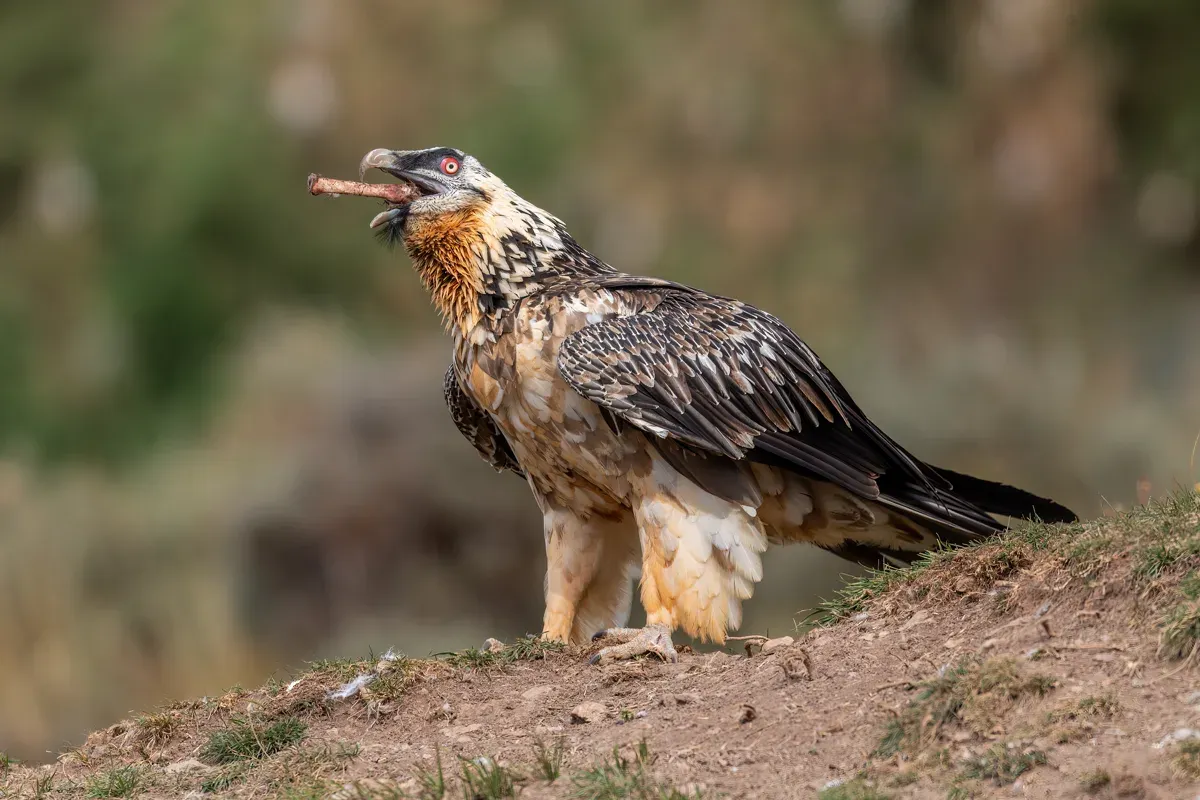
Bones contain not only calcium but also many nutritious fats and proteins, but are difficult to digest. The bearded vulture is able to process this specific food thanks to its extremely acidic stomach juices. To be able to swallow even bulky bone fragments, it has a particularly large beak opening. In the event that a piece is still too large to swallow completely, the persistent vulture uses a special tactic. It carries the bone fragment into the air and lets it fall from great heights onto rock slabs, the "bone smiths," where it splinters. This clever strategy earned the bearded vulture the nickname "Bone Breaker".
An unusual representative of its species
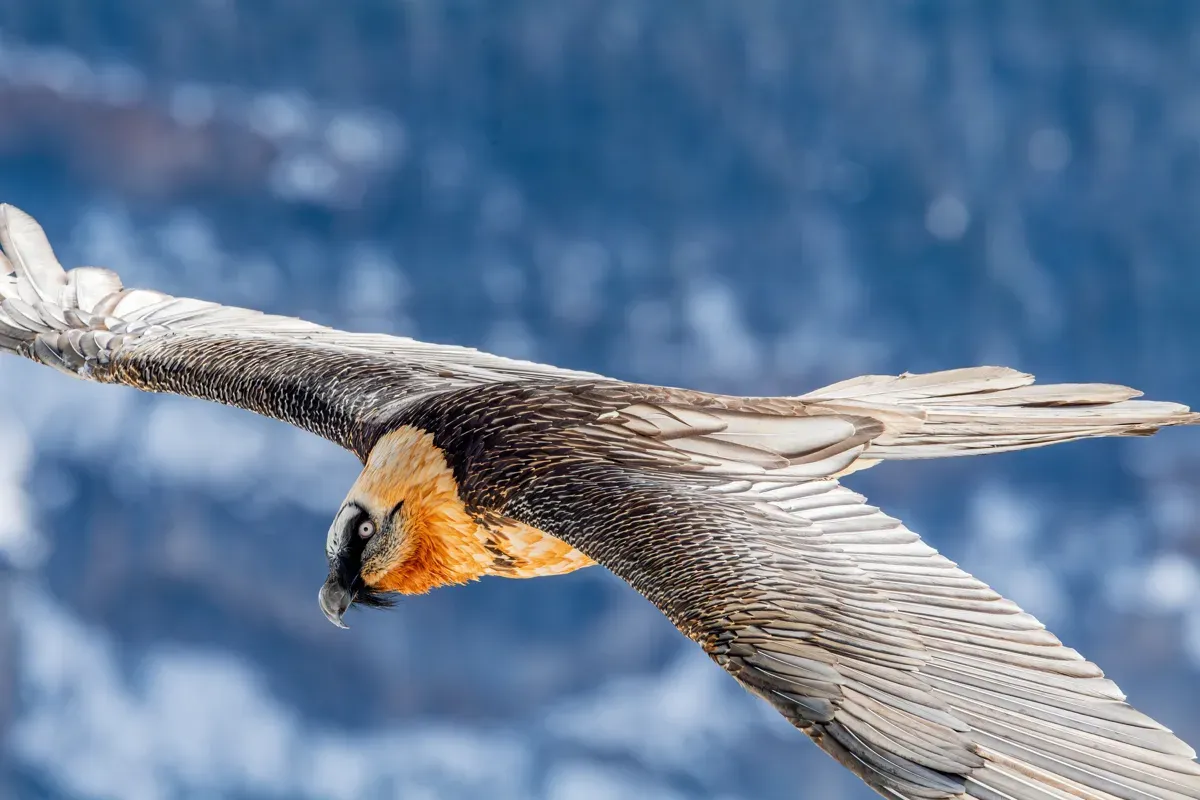
Not only in its diet does the bird differ from other vulture species. With a wingspan of up to 2.90 meters, it is, besides the cinereous vulture, the largest representative among European raptors. The impressive and attractive appearance of the bearded vulture is also due to its distinctive plumage on the head and neck, which is largely absent in the griffon vulture.
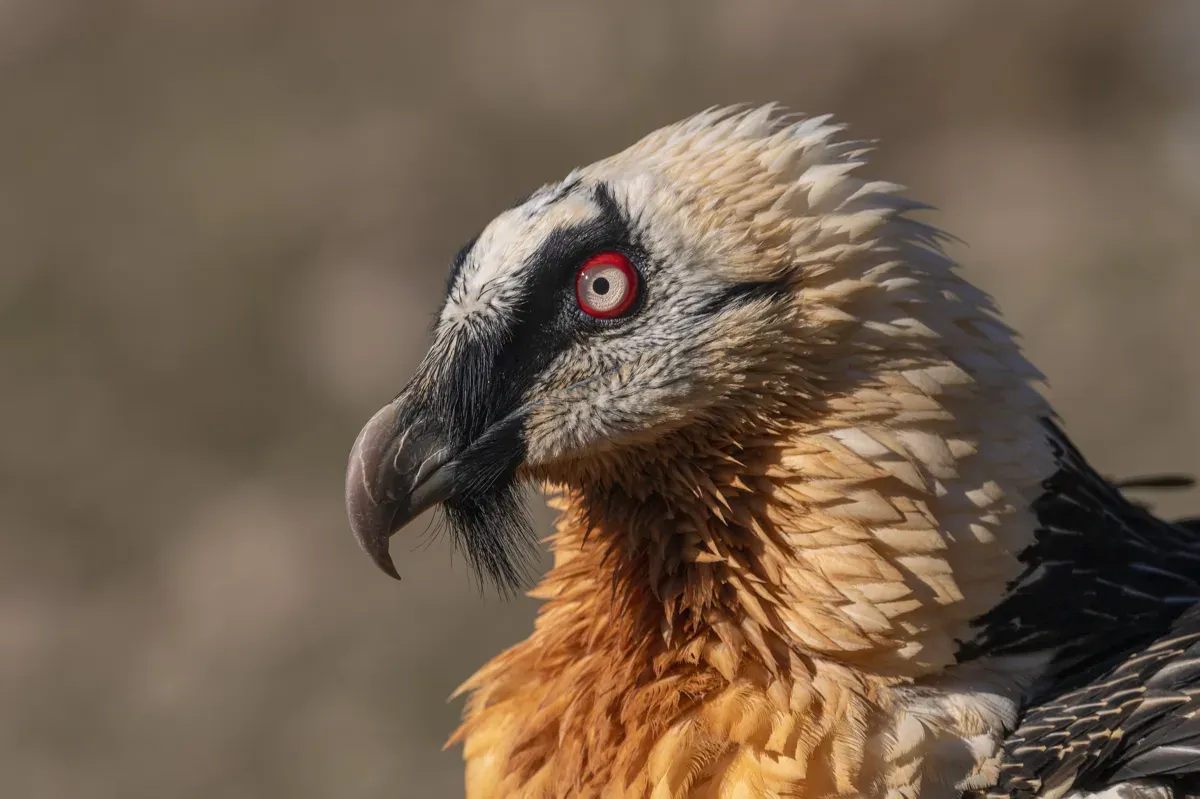
This allows it to penetrate deep into the carcasses to obtain food. The relative lack of feathers prevents larger ones from becoming soiled and entangled. Unlike its close relative, the vulture has a consistently magnificent plumage, which also exhibits a beautiful rusty red color in adult birds. However, this is not a natural trait, but rather a cosmetic effect achieved by bathing in water sources containing iron oxide-rich mud.
Return to the Alps
Already in the 1970s, unfortunately unsuccessful, reintroduction attempts in the French Alps with animals originating from Afghanistan were undertaken. In Austria, the first release took place in 1986 in the National Park Hohe Tauern, since then, 63 bearded vultures have already been released there.
To prevent existing wild populations in Asia and other regions from being weakened and endangered through capture, efforts are focused on raising young bearded vultures from zoos and animal parks. It is also now known that the release of very young birds from captive breeding is more successful than the release of captured wild animals.
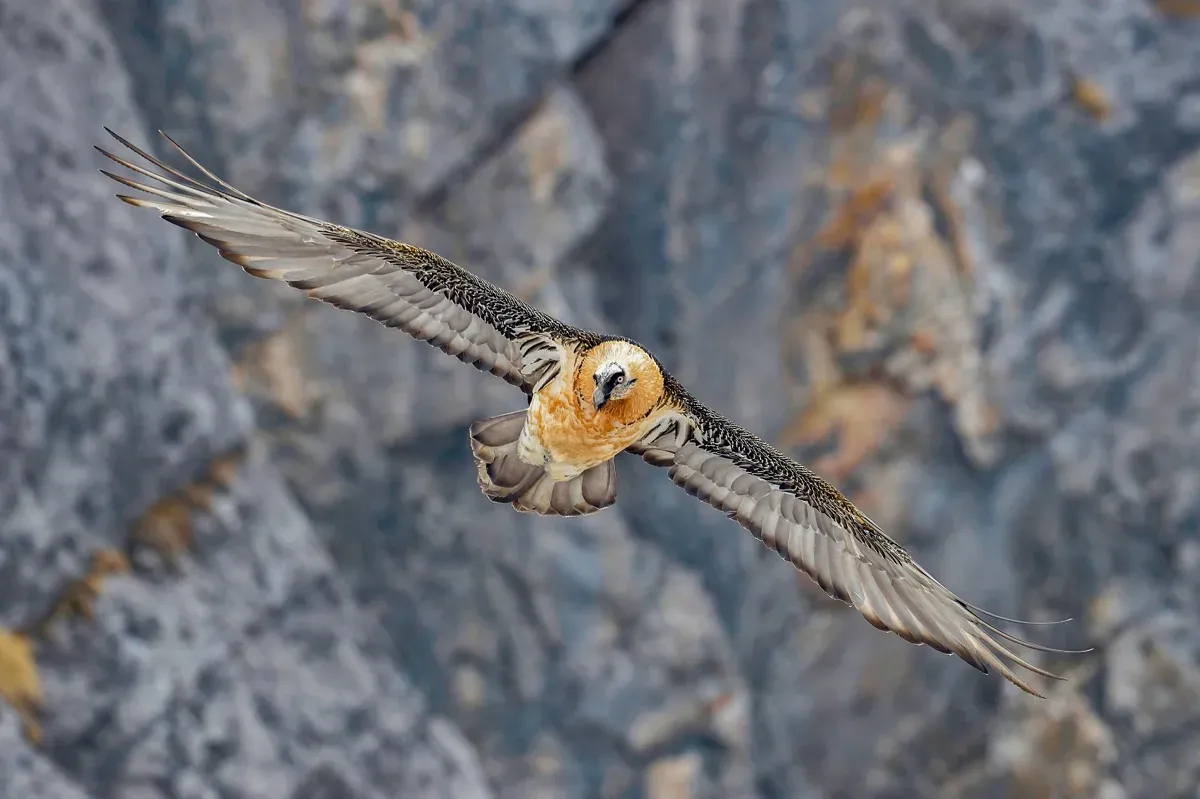
In Switzerland, dedicated conservationists launched the first reintroduction project in the early 1990s. Today, the "Stiftung Pro Bartgeier" organization, officially recognized by the government, is responsible for releasing bearded vultures in Switzerland and cooperates closely with various partners from other Alpine countries. A central aspect of this is the collaboration with the "Vulture Conservation Foundation", which is committed to protecting the four European vulture species.
The reintroduction of the bearded vulture in Switzerland is proceeding very successfully, with new breeding areas continuously being added in five cantons, resulting in a steadily growing population of breeding pairs. In 2025, a record year was recorded with 26 fledglings.
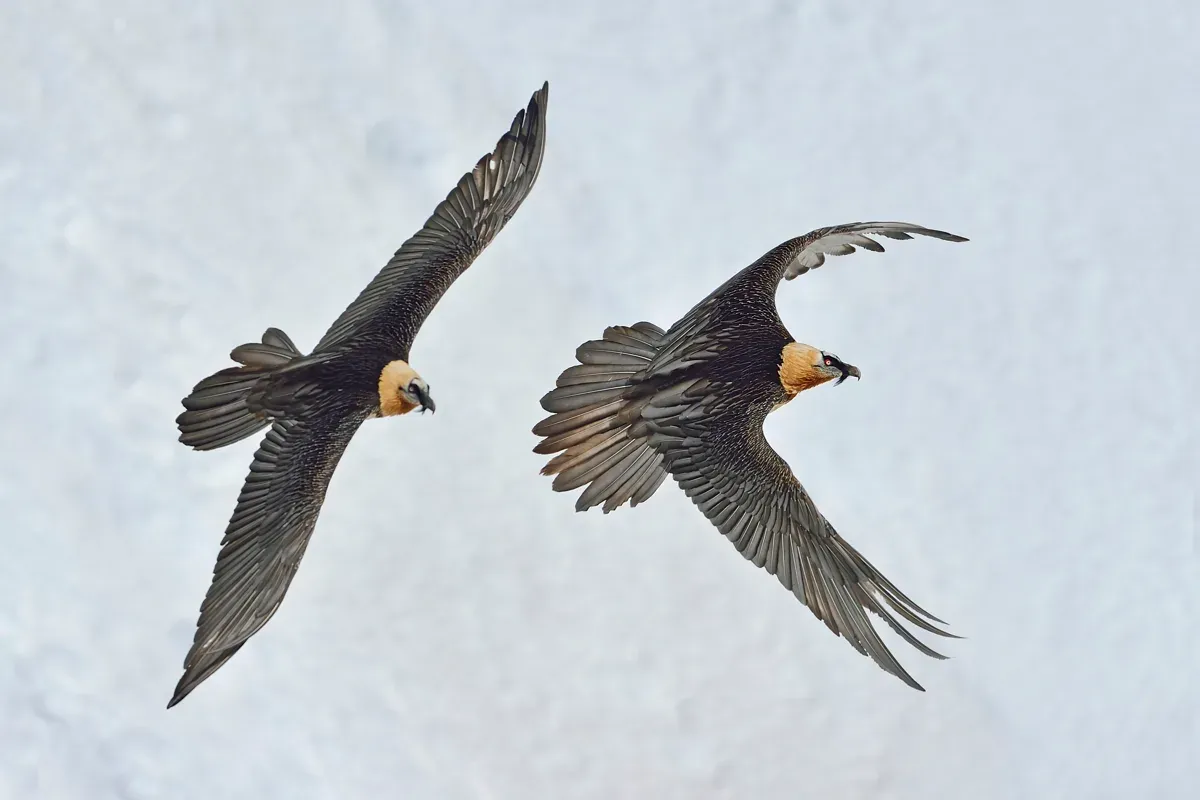
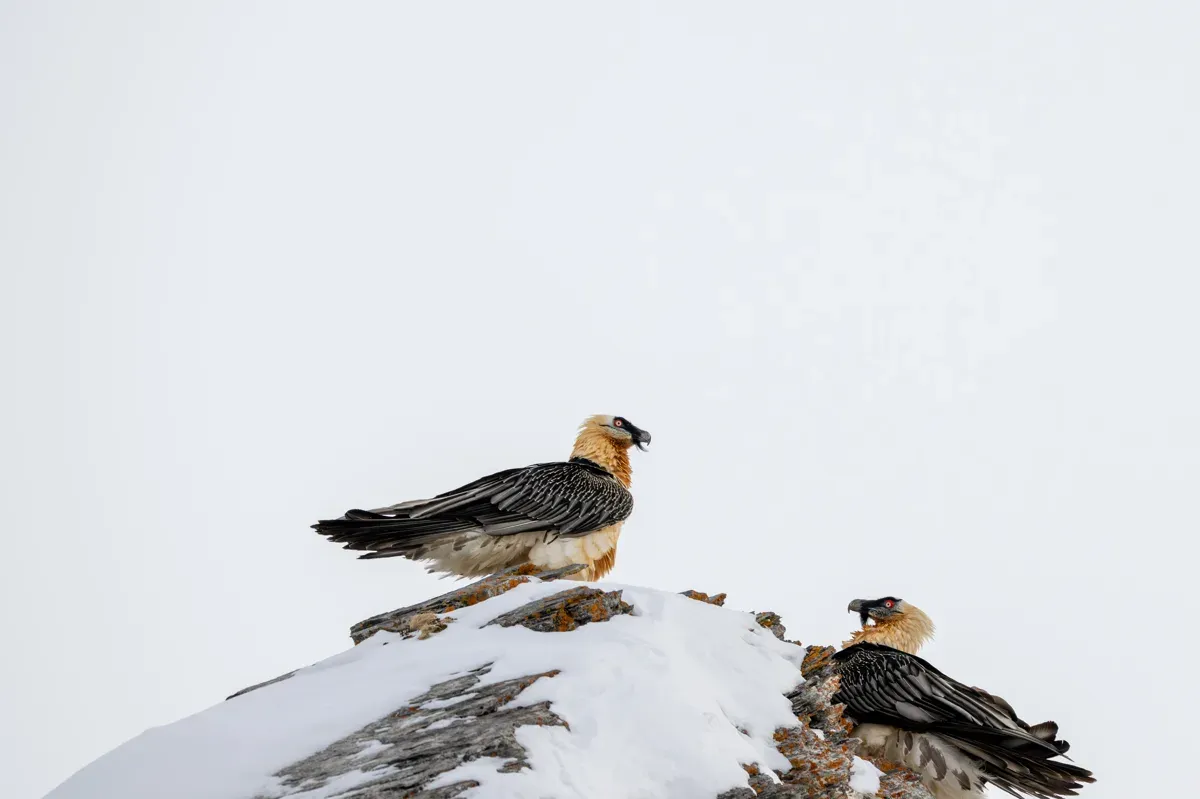
Although much has been achieved in the meantime and already 350 bearded vultures are circling in the Alps, the reintroduction is not yet complete, as the current population still has a limited genetic diversity, which requires ongoing supplementation.
Reintroduction in Bavaria
In Bavaria, the Landesbund für Vogel- und Naturschutz (LBV) and the National Park Berchtesgaden are working together to reintroduce this rare species. In June 2021, young bearded vultures were first released in the region around the Watzmann. Since then, the project participants have transported two young, flightless birds annually in carrying boxes to a 1,300-meter-high fenced rock niche, where they are placed in nests made of fir branches and sheep's wool and are usually fed with goat bones.
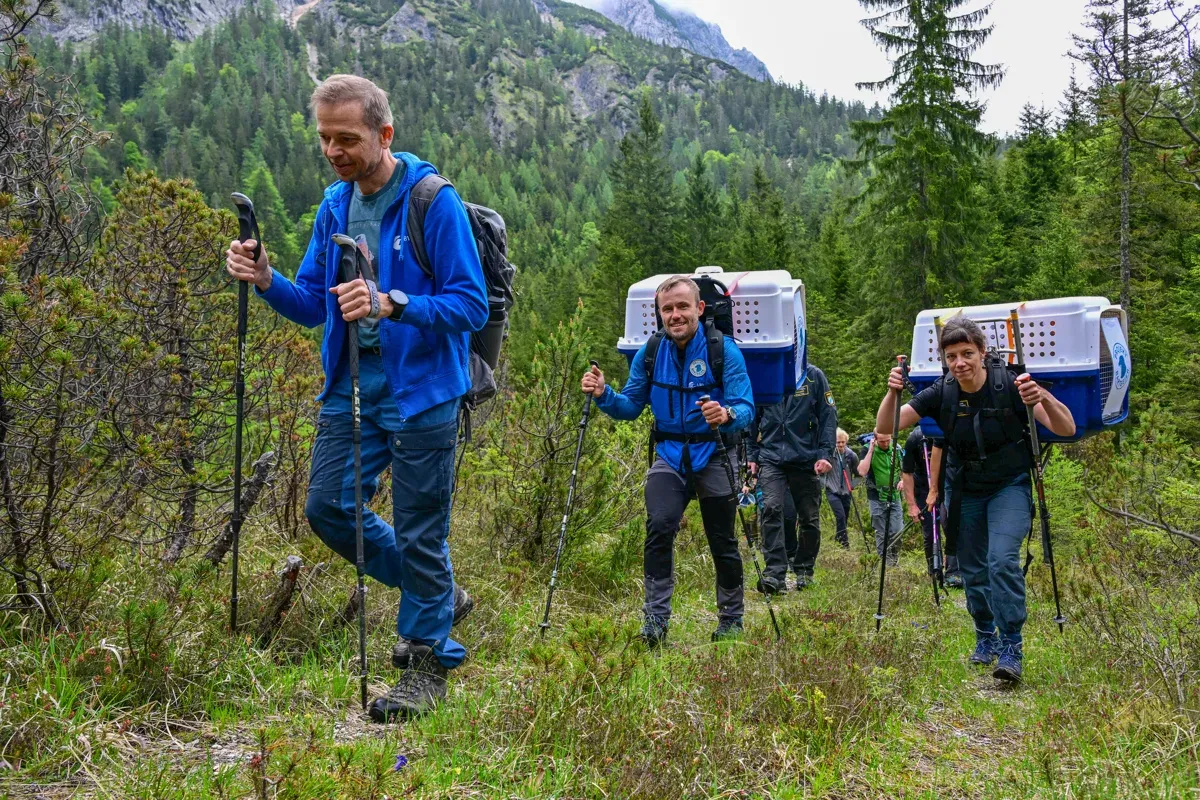
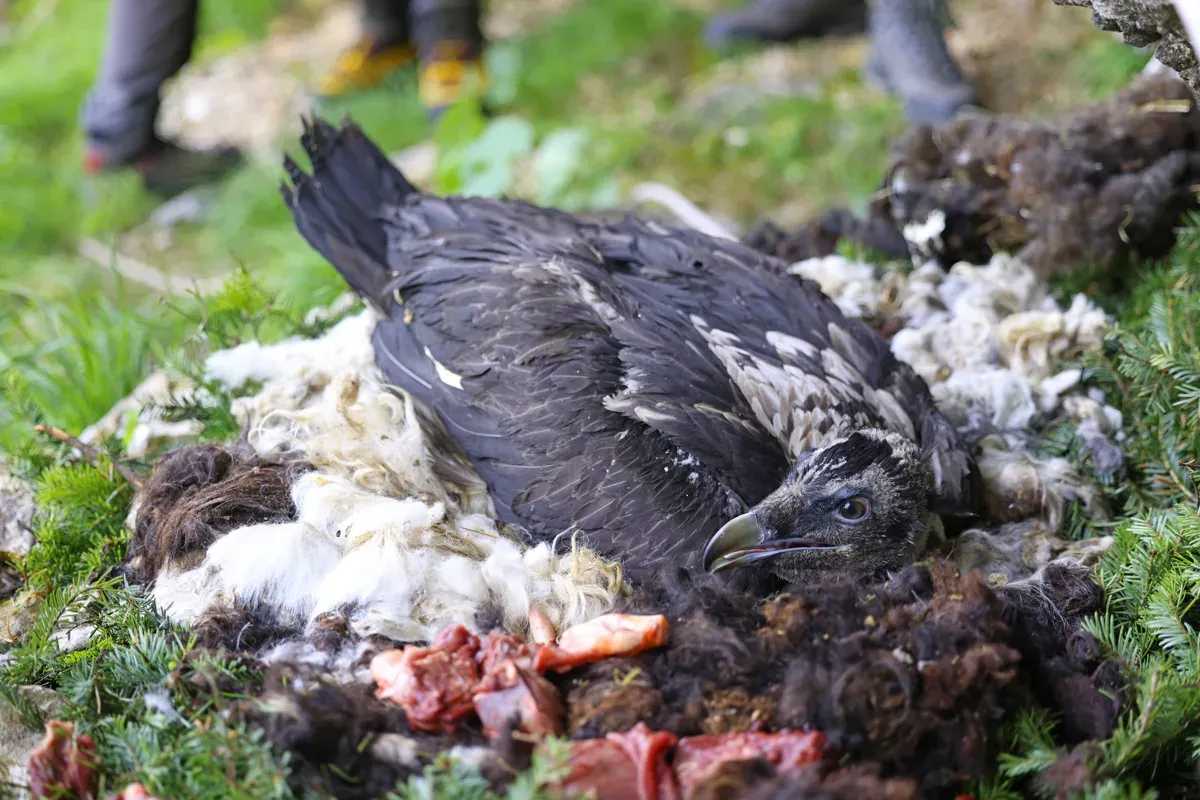
Over the following months, scientists monitor the birds around the clock using installed infrared cameras and a live stream that interested birdwatchers can also follow. To continue tracking the birds' movements after fledging, GPS transmitters are attached to them. The first bearded vultures released in previous years are now regularly returning to the region of the national park, after their long, and for the species typical, journeys in their youth. And even wild-born bearded vultures from the Alpine region are now visiting the Berchtesgadener Alps.
"We expect the formation of the first breeding pairs in the coming years, and the hope grows that the first bearded vulture chick in Bavaria could hatch within a foreseeable time, after more than 140 years"
Toni Wegscheider, LBV project manager
The female young vultures released this year (2026) both originated from France, "Zierl" from the Beauval Zoo and "Alosa" from the Asters breeding center. While the former behaved similarly to the previously released juvenile birds upon arrival in late June, Alosa proved to be a true adventurer, which presented significant challenges for the project team. Specifically, she took to the air for the first time at just 97 days old, which subsequently caused her noticeable difficulties. "It's one thing to take a few flaps and get airborne, but quite another to then navigate the completely unfamiliar steep slopes, marshy fields, and rocky areas with unexpected wind and thermals," said Toni Wegscheider.
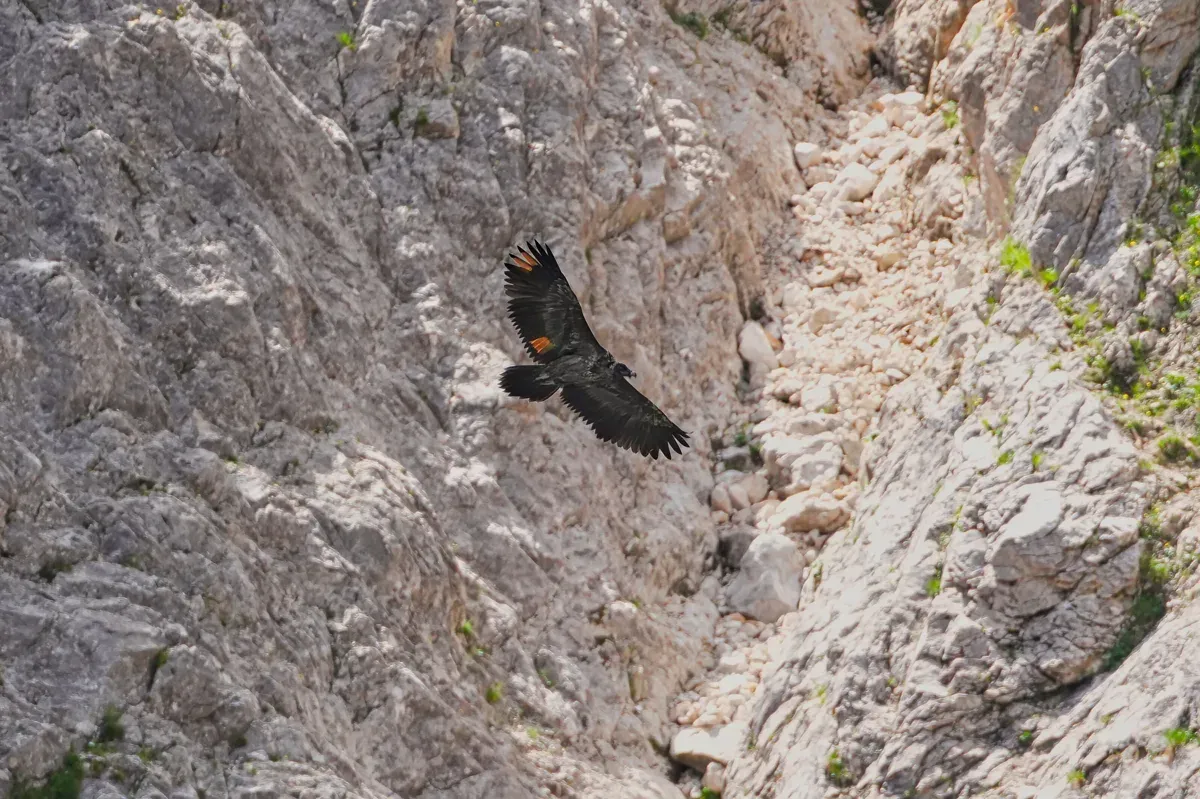
Despite having no prior experience, the "Alosa" birds were carried by the updrafts during their flight exercises, reaching the high altitudes of Reiteralm within a few days. The experts then had to provide them with food in challenging ascents through partly unpaved steep terrain. As usual, the project team paid close attention to a discreet approach when distributing the food, so that the birds would not establish a connection between humans and food.
On July 17th at 12:03 PM, it was also time for Zierl, who had reached the typical age of 118 days and emerged from the release niche in the Klausbach Valley. Her peer, "Alosa," who had already been released shortly after, followed her companion's first flight from the higher slopes of the Knittelhorn.
At the LBV and the Berchtesgaden National Park, there is great confidence that these two bearded vultures, which hatched this year, will also play an important role in the return of the endangered scavengers in the Alps.
Hansruedi Weyrich, the bearded vulture photographer

The Swiss photographer has been passionate about nature since his childhood. When he first encountered a bear in Alaska 32 years ago, his passion for nature photography was ignited. Since then, he has won several awards in international photography competitions. In the Alps, he mainly focuses on photographing birds and mammals, particularly bearded vultures. For many years, he has accompanied the reintroduction projects in his home country and in Germany with his camera.
Book recommendation
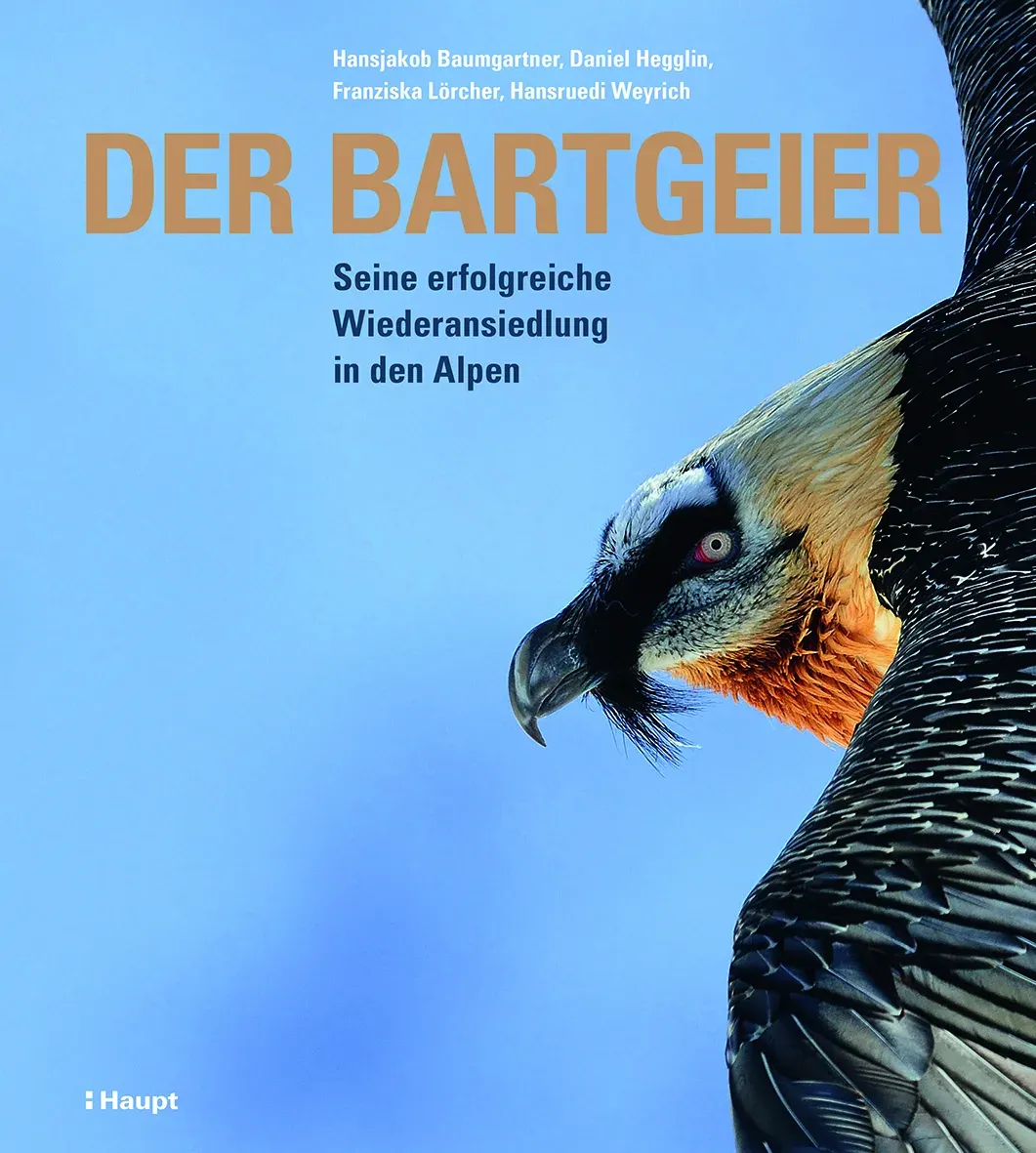
Those who, while hiking in the high Alpine regions, occasionally look up at the sky, today have a chance, with some luck, to rediscover an impressive animal species that had disappeared from there completely over 80 years ago: the bearded vulture.
Because it was accused of stealing young livestock, and even of mimicking human infants, the "Lämmergeier" was once mercilessly hunted and eventually exterminated.
The book „Der Bartgeier“ introduces this fascinating bird of prey, which in reality feeds on 90 percent of bones from hoofed animals, and tells the story of its successful reintroduction. It provides background knowledge on the biology, ecology, and behavior of the bearded vulture, as well as the dangers it still faces. And it is distinguished by the breathtaking images of nature photographer Hansruedi Weyrich.
Der Bartgeier
His successful re-establishment in the Alps
Hansruedi Weyrich / Hansjakob Baumgartner / Daniel Hegglin / Franziska Lörcher
ISBN 978-3-258-08192-2
Haupt Verlag, 248 pages, 48,00 Euros
Links:
Information about guided bearded vulture tours in Bavaria:
www.nationalpark-berchtesgaden.bayern.de in the area „Events“ and bartgeier@lbv.de
Bearded vulture webcam:
https://www.lbv.de/naturschutz/arten-schuetzen/voegel/bartgeier/bartgeier-webcam/
Infos zur Auswilderung in Bayern:
www.lbv.de/bartgeier-auswilderung
Stiftung Pro Bartgeier: https://bartgeier.ch/
National Park Hohe Tauern: https://hohetauern.at/de/natur/tierwelt.html
and https://hohetauern.at/de/forschung/greifvogelmonitoring/bartgeier-online